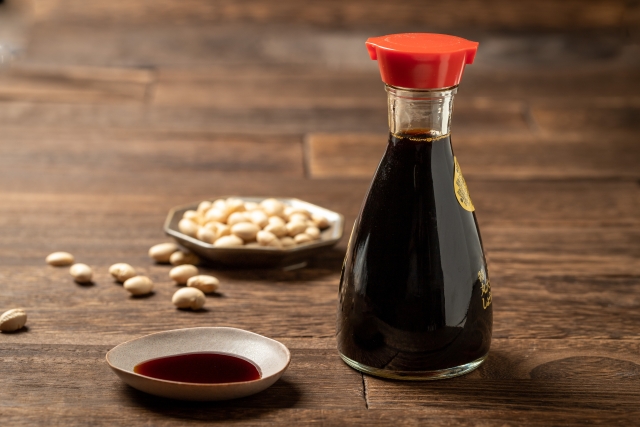
Soy sauce is one of Japan's best-known seasonings, but outside Japan, it is often understood mainly as the dark sauce served with sushi.
In Japan, its role is much broader.
Japanese soy sauce, or shoyu, is used in simmered dishes, grilled foods, noodle broths, rice dishes, sauces, and everyday home cooking. Sometimes its flavor is easy to recognize. At other times, it blends with dashi, mirin, sake, sugar, or vinegar and becomes one part of a larger balance.
Soy sauce does more than add saltiness. Fermentation, aging, and heating develop its characteristic aroma, savory depth, and reddish-brown color.
This article explains what Japanese soy sauce is, how it is made, why several types exist, how it appears in modern Japanese homes, and what it reveals about Japanese food culture.
Quick Summary
- Shoyu is the Japanese word for soy sauce.
- Standard Japanese soy sauce is usually brewed from soybeans, wheat, salt, water, and koji.
- Koikuchi is the everyday standard, but several other types exist.
- Soy sauce is used in cooking as well as for dipping and finishing.
- Modern airtight bottles help slow changes after opening.
- Soy sauce supports many flavors without making every dish taste alike.
What Is Japanese Soy Sauce?
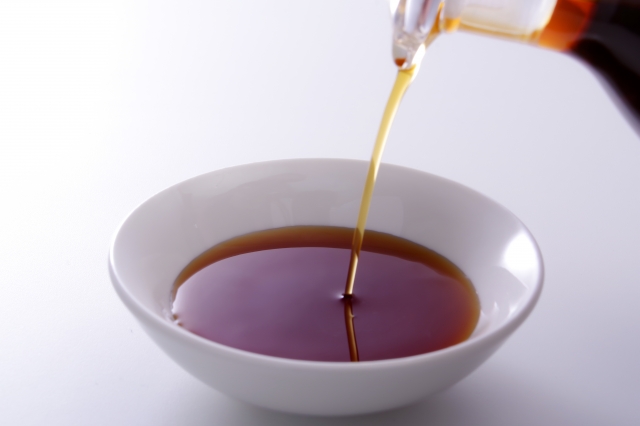
Japanese soy sauce is a fermented liquid seasoning with a naturally reddish-brown color.
Japanese soy sauce is a fermented liquid seasoning known as shoyu (醤油).
Standard Japanese soy sauce is generally made from soybeans, wheat, salt, water, and koji, a fermentation culture made with a beneficial mold also used in foods and drinks such as miso and sake. Fermentation transforms these simple ingredients into a seasoning with a complex aroma, savory character, and distinctive color.
Soy sauce is one of the most familiar ingredients in Japanese kitchens. It may be used to season a simmered dish, deepen a noodle broth, add fragrance to grilled food, or finish tofu with only a few drops.
The English term "soy sauce" covers many sauces produced across East and Southeast Asia. Japanese shoyu is one member of this larger family, with its own ingredients, production methods, varieties, and culinary roles.
Unless a Japanese recipe specifies another type, it usually means koikuchi shoyu, the standard everyday soy sauce used throughout Japan.
How Japanese Soy Sauce Is Made
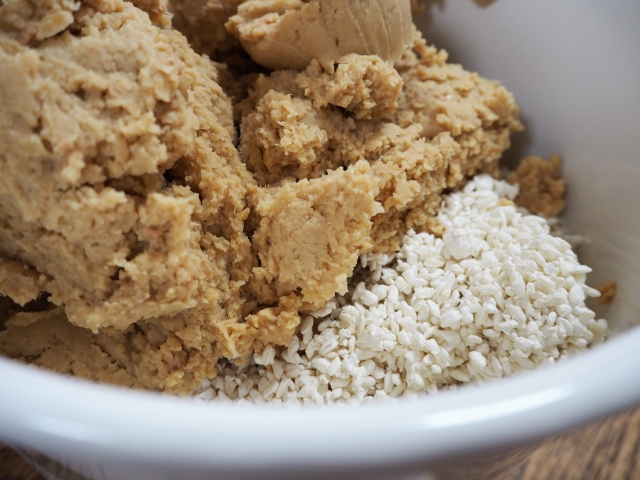
Cooked soybeans are combined with koji as part of the fermentation process used to make Japanese seasonings.
The usual brewing process begins with cooked soybeans and roasted, crushed wheat.
The two are mixed with koji culture to produce soy sauce koji. Salt water is then added, creating a mash called moromi. During fermentation and maturation, enzymes and microorganisms gradually break down the proteins and starches in the ingredients and develop the sauce's flavor and aroma.
Once the moromi has matured, it is pressed to separate the liquid from the remaining solids. The liquid is then clarified and usually heated before bottling. This heating step helps stabilize the product and contributes to its familiar aroma and color.
The exact ingredients, fermentation period, and production method differ among producers. Not every soy sauce is aged for the same length of time, and not every bottle is produced through an identical process.
Why Soy Sauce Is More Than Salt
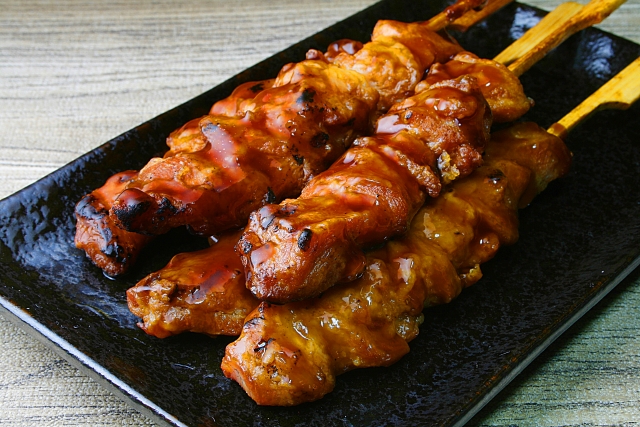
Soy sauce helps give tare-grilled yakitori its savory depth, glossy finish, and appetizing color.
Soy sauce is salty, but saltiness alone does not explain its role in Japanese cooking.
Fermentation, aging, and heating create a layered flavor that includes umami, mild sweetness, acidity, bitterness, and aroma. Its reddish-brown color can deepen the appearance of a simmered dish, while its fragrance becomes especially noticeable when it touches a hot pan, grill, or freshly cooked food.
Soy sauce also rarely works alone.
Many Japanese dishes combine it with dashi, mirin, sake, sugar, or vinegar. Dashi may provide the foundation, mirin may add sweetness and gloss, and soy sauce may deepen and connect the other flavors.
Timing matters as well. Soy sauce added early becomes integrated into a simmering liquid or sauce. When added near the end, more of its aroma remains noticeable. A few drops placed directly on chilled tofu therefore have a different effect from soy sauce cooked into a broth or glaze.
Its purpose is not always to make food taste strongly of soy sauce. Often, it helps the other ingredients feel more complete.
Why There Is More Than One Kind of Soy Sauce
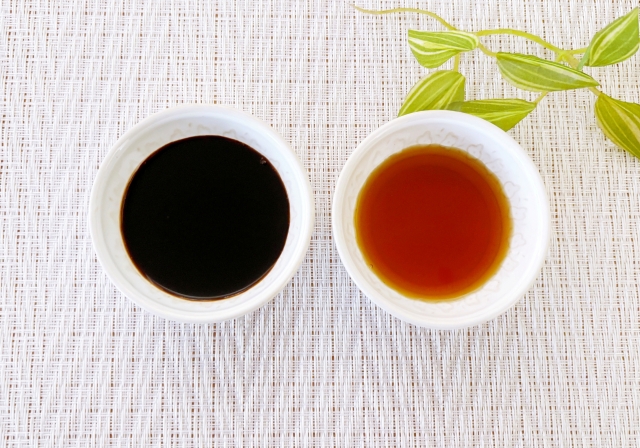
Different types of Japanese soy sauce are made for different dishes and culinary purposes.
Japanese soy sauce is not a single uniform product.
The five main types are koikuchi, usukuchi, tamari, saishikomi, and shiro shoyu. They differ in ingredient proportions, brewing methods, color, aroma, and intended uses.
Koikuchi shoyu is the standard all-purpose variety. It is widely used both for cooking and at the table.
Usukuchi shoyu is lighter in color and is useful when cooks want to season food without darkening it as much. Despite its name, it is not a low-sodium soy sauce and commonly contains at least as much salt as koikuchi.
Other types include soybean-rich tamari, deeply flavored saishikomi shoyu, and very pale, wheat-rich shiro shoyu. Each has its own history and culinary role, which is why they are better explored in separate articles rather than treated as a long list here.
The important point is not that one type is universally better. Different soy sauces suit different dishes and preferences.
Soy Sauce at the Table and in the Kitchen
Outside Japan, soy sauce is often imagined mainly as a dipping sauce.
In Japan, it is just as important in the kitchen.
A larger bottle may be used for simmered dishes, noodle broths, rice dishes, marinades, and sauces. These forms of cooking require more than a few drops, so a larger and more economical bottle is practical.
At the table, soy sauce is normally used much more sparingly. A small amount may be added to chilled tofu, natto, tamago kake gohan, or certain pickles. Sashimi is commonly dipped lightly into a small dish of soy sauce rather than having soy sauce poured over the entire plate.
How Soy Sauce Containers Have Changed
Older dining tables were often associated with refillable glass soy sauce dispensers. Today, small airtight squeeze bottles have become a familiar sight in supermarkets, homes, and many casual restaurants. They dispense a controlled amount without requiring a separate tabletop container to be refilled.
This design is useful because table soy sauce is consumed slowly. When only a few drops are used at a time, one bottle can remain open for a considerable period before it is finished.
Why Airtight Bottles Matter
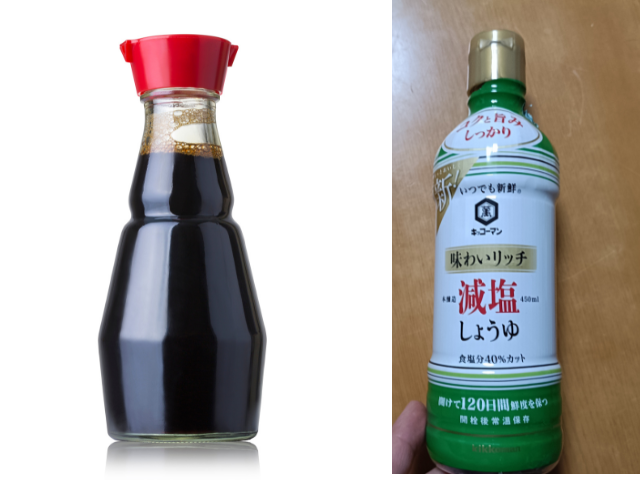
Once opened, soy sauce gradually changes as it is exposed to air. Its aroma becomes less fresh, and its original reddish-brown color grows noticeably darker. Airtight bottles reduce the amount of air entering during use and help slow these changes.
The soy sauce inside is not necessarily a special "table soy sauce." Different varieties are sold in airtight containers, and people can choose according to their own preferences.
Airtight packaging should also not be confused with nama shoyu. Nama shoyu refers to soy sauce that has not received the usual final heating step, while an airtight bottle simply describes the packaging.
The distinction between table and kitchen use is mainly practical: a large bottle is convenient for cooking, while a smaller airtight bottle is suited to slow, occasional use at the table.
How Soy Sauce Is Used in Japanese Cooking
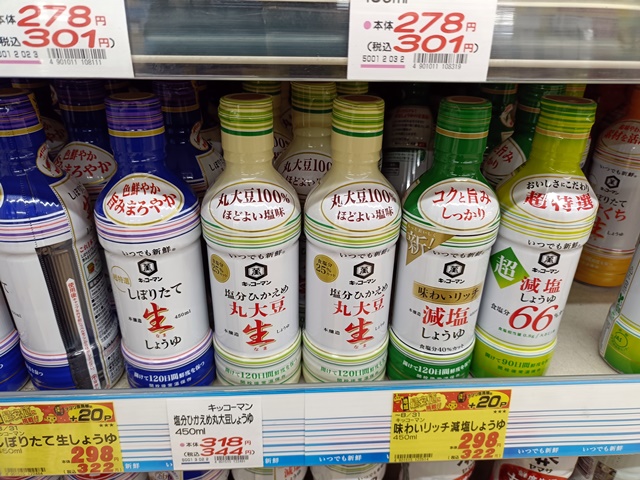
Airtight bottles are now available for many kinds of soy sauce, allowing shoppers to choose by flavor and preference.
Soy sauce takes on different roles depending on the dish.
In simmered foods, it becomes part of the cooking liquid, often alongside dashi, mirin, sake, or sugar. It may season vegetables, tofu, fish, meat, or other ingredients as they absorb the liquid.
In grilled and pan-cooked foods, soy sauce contributes fragrance and surface color. It appears in teriyaki-style sauces and gives yaki onigiri its familiar toasted aroma when brushed onto the rice before or during grilling.
Soy sauce is also used in rice dishes such as takikomi gohan, where it seasons the rice as it cooks with vegetables, mushrooms, meat, or seafood.
In noodle dishes, it may form part of a broth or dipping sauce. The final taste depends not only on the soy sauce but also on the dashi, sweetness, acidity, and proportions used.
At the table, its role changes again. Rather than becoming part of the dish during cooking, it allows the diner to make a final adjustment.
Using more soy sauce does not necessarily make food better. Too much can cover the ingredients, increase the saltiness, and make otherwise different dishes taste similar. Its usefulness comes partly from knowing how little may be needed.
Why Japanese Food Does Not All Taste Like Soy Sauce
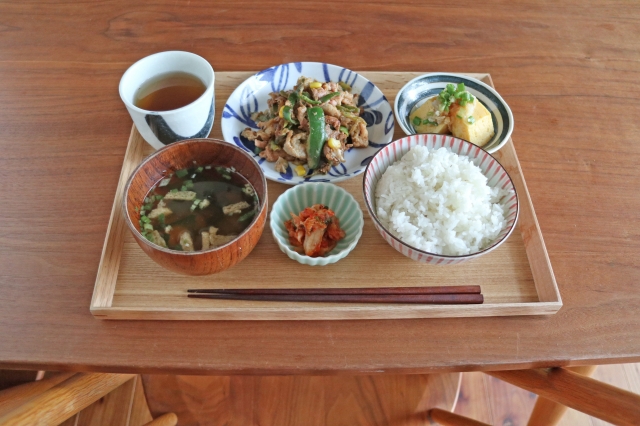
Soy sauce may appear in many Japanese meals, but a single table still contains many different flavors, textures, and seasonings.
Soy sauce appears so often in Japanese cooking that beginners may wonder why Japanese food does not all taste the same.
The answer lies in quantity, combination, and technique.
Some dishes contain only a small splash. Others use soy sauce as part of a larger mixture. The same seasoning can therefore create very different results depending on what surrounds it and when it is added.
Many Japanese dishes also use little or no soy sauce. They may depend more on salt, miso, vinegar, citrus, sesame, or the natural taste of the ingredients.
Soy sauce is common, but it is not the only flavor of Japanese food.
Japanese Soy Sauce and Regional Differences
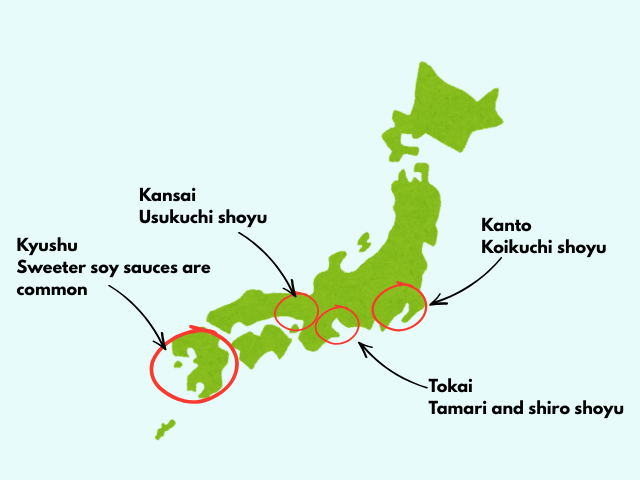
Broad regional tendencies in Japanese soy sauce include koikuchi in Kanto, usukuchi in Kansai, tamari and shiro shoyu in Tokai, and sweeter soy sauces in Kyushu. These are general patterns rather than strict boundaries.
Soy sauce varies across Japan.
Although koikuchi shoyu is produced and used nationwide, regional cuisines have developed different preferences. Usukuchi shoyu has a strong historical association with Kansai cooking, while tamari is closely connected with the Tokai region.
Sweeter soy sauces are also familiar in parts of western and southern Japan. They may be preferred with sashimi or used in local cooking, although their sweetness, ingredients, and terminology vary among producers and areas. In some products, sweetness is added after brewing rather than developing through fermentation alone.
These patterns should not be treated as fixed borders. Japanese supermarkets sell products from many regions, and individual households have their own tastes.
Still, the variation shows that soy sauce has adapted to local cooking rather than giving every region one uniform flavor.
How Japanese Soy Sauce Differs from Other Soy Sauces
Soy sauce is produced in many parts of Asia, and there is no single sauce that represents every country or cuisine.
Japanese koikuchi shoyu is commonly brewed with both soybeans and wheat. Other soy sauces may use different proportions of grain, different fermentation processes, added sweetness, or styles intended for different culinary purposes.
For this reason, two bottles labeled simply "soy sauce" may differ considerably in saltiness, sweetness, aroma, color, and thickness.
It is more accurate to understand Japanese shoyu as one tradition within a broad family of fermented seasonings than to treat it as the universal standard, or as superior to other traditions.
When following a Japanese recipe, using a Japanese-style soy sauce generally produces the result intended by the recipe. That is a question of culinary fit, not quality or national superiority.
Is Japanese Soy Sauce Always Made with Wheat?

No.
Most standard Japanese koikuchi shoyu contains wheat, but some soy sauces use little or none.
Many tamari products contain a higher proportion of soybeans and less wheat than standard koikuchi. However, the name tamari does not automatically guarantee that a product is wheat-free or gluten-free.
Anyone with celiac disease, a wheat allergy, or another medical need to avoid gluten should check the individual label rather than relying only on the type of soy sauce.
What Shoyu Reveals About Japanese Food Culture
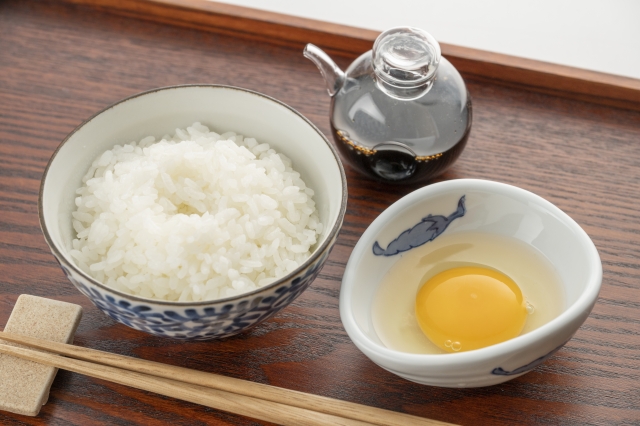
Soy sauce is an ordinary part of everyday Japanese meals, quietly shaping familiar foods without needing to take center stage.
Shoyu shows how Japanese cooking often builds flavor through combination rather than dependence on one dominant seasoning.
Soy sauce may provide depth, fragrance, or color, but it usually shares the work with dashi, mirin, sake, sugar, vinegar, and the ingredients themselves. Its role changes according to how much is used, when it is added, and what surrounds it.
It also shows how an everyday ingredient can be culturally important without feeling ceremonial.
Soy sauce may sit in a large bottle in the kitchen or a small airtight bottle on the table. It appears in home cooking, restaurants, prepared foods, and ordinary meals. Because it is so familiar, most people in Japan have little reason to stop and think about it.
Yet removing soy sauce would change the character of countless dishes.
Once you notice how it is used, Japanese food becomes easier to understand, not as a collection of foods covered in one dark sauce, but as a cuisine in which one fermented seasoning can take on many different supporting roles.
Author's Note
Growing up in Japan, I never thought of soy sauce as a particularly special ingredient. It was simply somewhere in the kitchen and brought to the table when it was needed.
The containers have changed. The refillable soy sauce dispensers I associate with older dining tables are now often replaced by airtight bottles that slow the changes caused by exposure to air.
But the basic role remains familiar.
Soy sauce may become part of a simmered dish, add aroma to grilled rice, or appear as only a few drops on tofu or an egg. It can be present in many different foods without making all of them taste alike.
That ordinary versatility may be the most important thing about shoyu. It does not need to be the main ingredient to shape the meal.
FAQ
What is Japanese soy sauce made from?
Standard Japanese soy sauce is generally made from soybeans, wheat, salt, water, and koji. The mixture is fermented and matured before the liquid is pressed from the moromi mash.
What does shoyu mean?
Shoyu is the Japanese word for soy sauce.
What is the most common soy sauce in Japan?
Koikuchi shoyu is the standard everyday soy sauce used for both cooking and table seasoning.
Is usukuchi shoyu less salty?
Not necessarily. Usukuchi means light in color, not low in sodium.
Is all Japanese soy sauce made with wheat?
No. Most standard Japanese soy sauce contains wheat, but some products contain little or none.
Is tamari always gluten-free?
No. Some tamari contains wheat, so the product label should always be checked.
What kind of soy sauce is used for sushi?
Standard koikuchi shoyu is common, although restaurants may use specialty soy sauces, adjusted sauces, or their own blends.
Should soy sauce be refrigerated after opening?
Storage instructions vary by product and container. Follow the directions on the bottle to preserve its flavor and aroma.
Related Reading
- What Is Tamari?
- What Is Miso?
- What Is Dashi?
- What Is Umami?
- What Are Japanese Soybean Foods?
- What Is Tofu?
- What Is Tamago Kake Gohan?
- What Is Onigiri?
- What Is a Japanese Breakfast?
- What Is Ichiju Sansai?

