Onigiri is one of the most familiar everyday foods in Japan.
It is often translated as a Japanese rice ball, but that phrase only describes its shape. Onigiri is more than rice pressed into a triangle or round form. It is a way of making rice portable, practical, and easy to eat with one hand.
You can find onigiri in lunch boxes, convenience stores, train stations, school trips, family kitchens, and even emergency food supplies. It can be homemade and personal, or wrapped in plastic and bought quickly on the way to work.
The dish is simple: cooked Japanese rice, a little salt, sometimes a filling, and often a sheet of nori seaweed. But that simplicity is exactly why onigiri fits so naturally into Japanese daily life.
This article explains what onigiri is, why Japanese rice works so well for it, and what this simple food reveals about Japanese food culture.
Quick Summary
- Onigiri is a Japanese rice ball, usually shaped by hand and often filled or wrapped with nori seaweed.
- It is common in Japan because Japanese short-grain rice is soft, moist, and slightly sticky, making it easy to shape and hold together.
- Onigiri is not sushi. Sushi rice is seasoned with vinegar, while onigiri is usually made with plain cooked rice and salt.
- Fillings such as salted salmon, umeboshi, tuna mayo, kombu, and pickled vegetables add flavor and make the rice more satisfying.
- Onigiri is popular because it is portable, inexpensive, quick to eat, and easy to adapt to different tastes.
- It reflects the Japanese habit of turning rice into a practical everyday meal that can be carried, shared, and eaten almost anywhere.
What Is Onigiri?
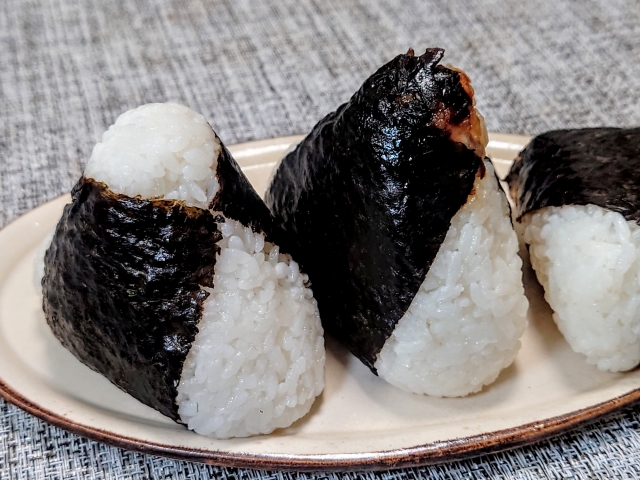
Onigiri is a Japanese food made by shaping cooked rice into a compact form.
The most common shape is a triangle, but onigiri can also be round, oval, or cylindrical. It may be plain, lightly salted, filled with ingredients, wrapped in nori seaweed, or coated with seasonings such as sesame seeds or furikake.
The word onigiri comes from the verb nigiru, meaning to grasp or hold in the hand. Another common word is omusubi. In everyday conversation, the two are often used almost interchangeably, though some people associate omusubi with a slightly warmer, more traditional, or regional feeling. Travelers may encounter both words in Japan, but both usually refer to the same basic food: rice shaped by hand into a portable form.
At its simplest, onigiri is cooked rice shaped by hand with salt. The salt seasons the surface and brings out the rice's mild sweetness. A filling may be placed in the center, or ingredients may be mixed into the rice.
Common fillings include salted salmon, umeboshi pickled plum, tuna with mayonnaise, kombu seaweed, bonito flakes, cod roe, pickled mustard greens, and various grilled or seasoned ingredients.
Because onigiri is small and portable, it can be eaten without chopsticks or a bowl. This is one reason it became so useful in everyday life — turning rice, which is usually eaten at the table, into something that can be carried and eaten almost anywhere.
Why Japanese Rice Works for Onigiri
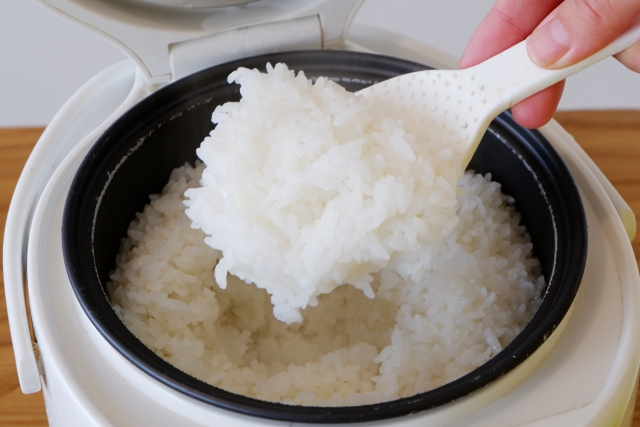
Onigiri depends on Japanese rice.
Japanese rice is usually short-grain Japonica rice. When cooked, it becomes soft, moist, and slightly sticky. The grains cling together naturally, allowing the rice to hold its shape when pressed gently by hand.
This texture is essential. If the rice is too dry or too separate, it will fall apart. Long-grain rice, such as jasmine or basmati, does not behave in the same way because the grains stay more distinct after cooking.
Japanese rice does not need glue, sauce, or heavy pressure to hold together as onigiri. Its own moisture and stickiness make shaping possible.
At the same time, good onigiri should not be pressed too tightly. If compressed too hard, the rice becomes dense and heavy. A good onigiri holds together, but the rice still feels soft when eaten.
This balance matters. Onigiri is not simply a lump of rice. It depends on the texture of Japanese rice and the gentle pressure of the hands.
This is why onigiri is so closely tied to Japanese rice culture. The same rice that works well in a bowl can become a portable meal when shaped with a little care.
Why Onigiri Is So Common in Japan
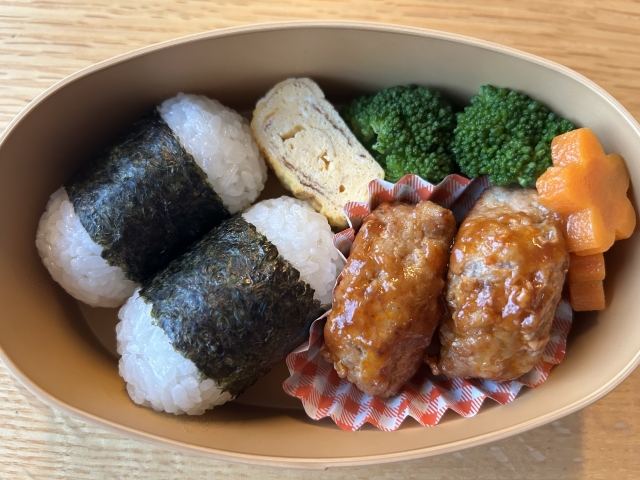
Onigiri is common in Japan because it solves a very practical problem.
Rice is central to Japanese meals, but rice in a bowl is not easy to carry. Onigiri changes that — taking cooked rice and turning it into something compact, portable, and easy to eat without a table.
This makes onigiri useful in many situations: packed in a bento, eaten during travel, bought at a convenience store before work or school, made quickly at home from leftover rice, or handed to someone as a simple meal.
Onigiri is also flexible. A single rice ball can be a snack. Two or three can become a light meal. A filling can add saltiness, sourness, richness, or protein. Nori can add aroma and make the rice easier to hold.
This flexibility helps explain why onigiri appears across so many parts of Japanese life — not limited to special occasions, but belonging to school lunches, family outings, train rides, office breaks, late-night snacks, and quick everyday meals.
In this sense, onigiri is not only a food. It is a way of making rice fit daily movement.
The Role of Salt, Fillings, and Nori
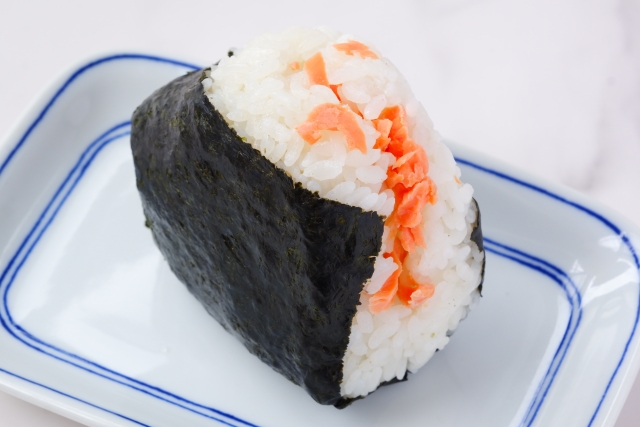
Onigiri may look simple, but each element serves a purpose.
Salt is usually the first seasoning. A small amount applied to the hands seasons the outside of the rice and brings out its mild sweetness. It also helps the onigiri taste complete even when the filling is modest.
Fillings add contrast. Because rice has a gentle flavor, even a small amount of filling can change the character of the whole onigiri.
Umeboshi adds sharp sourness and saltiness. Salted salmon adds savory richness. Tuna mayo adds softness and fat. Kombu adds sweet-salty umami. Bonito flakes with soy sauce add smoky depth. Pickled vegetables add crunch and aroma.
The filling does not need to be large. In most onigiri, the rice remains the main part, and the filling acts as a concentrated accent at the center.
Nori also plays a role. It adds aroma, a slight crispness when fresh, and a flavor that pairs naturally with rice. It also makes the onigiri easier to hold without touching the rice directly.
Some onigiri are wrapped in nori immediately, allowing the seaweed to soften. Convenience store onigiri often keep the nori separate until the package is opened, so it stays crisp. This small detail shows how much texture matters.
Together, salt, filling, and nori turn plain rice into something more satisfying — without making it complicated.
Yaki Onigiri: Grilled Rice Balls
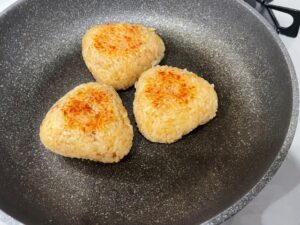
Onigiri can also be grilled. Yaki onigiri, brushed with soy sauce or miso and cooked until the outside turns crisp and fragrant, changes the texture entirely while keeping the same basic idea: shaped rice made more satisfying through simple seasoning.
Onigiri Is Not Sushi
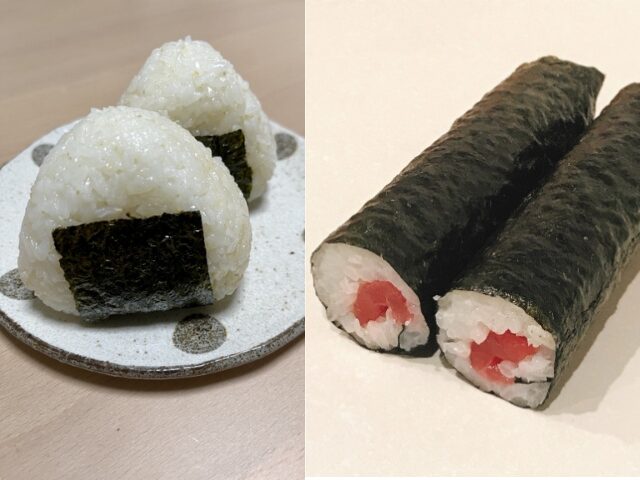
Onigiri and sushi may both use rice and nori, but they are made differently and play different roles in Japanese food culture.
Onigiri is sometimes confused with sushi outside Japan, but the two are quite different.
Sushi is made with rice seasoned with vinegar, sugar, and salt, and is typically paired with raw fish, seafood, egg, vegetables, or other toppings. It is commonly associated with restaurants, special occasions, or prepared sushi counters.
Onigiri, by contrast, is usually made with plain cooked rice and salt. It is not seasoned with vinegar, and it is far more closely connected to home cooking, lunch boxes, convenience stores, and everyday meals.
The difference is not only in the ingredients. It is also in the role each food plays.
Sushi is often served as a prepared dish with its own occasion and presentation. Onigiri is more practical and portable. It is rice shaped for carrying.
This is why calling onigiri "sushi" can be misleading. Onigiri may contain fish, seaweed, or pickled ingredients, but its underlying logic is different. It is not vinegared rice arranged with toppings. It is cooked rice shaped by hand into a compact, everyday meal.
Understanding this distinction helps explain why onigiri feels so ordinary in Japan. It is not a restaurant food first. It is everyday rice made portable.
From Homemade Onigiri to Convenience Stores
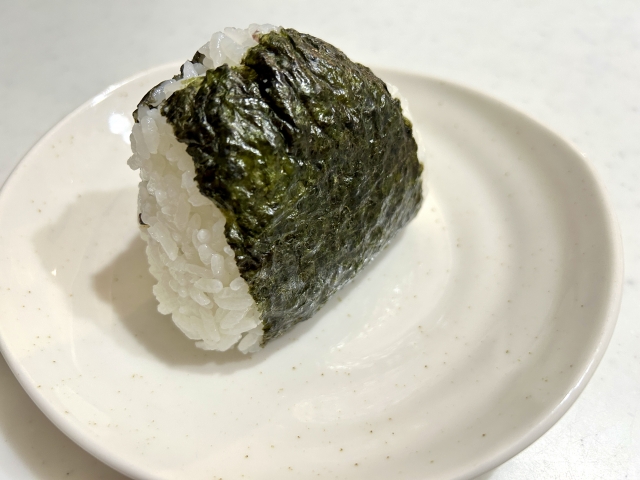
Onigiri has a strong connection to home cooking.
Many people in Japan remember onigiri made by family members for lunch, school trips, sports days, picnics, or travel.
Homemade onigiri often reflects household taste: the amount of salt, the shape, the choice of filling, the softness of the rice, and whether the nori is wrapped early or added just before eating.
A homemade onigiri can feel personal because it is shaped by someone's hands. Even when the ingredients are simple, the result carries a sense of care.
Homemade onigiri is also practical. When rice is already cooked at home, it can be shaped quickly into a meal or snack. The size, saltiness, and filling can be adjusted to the person who will eat it.
Convenience Store Onigiri
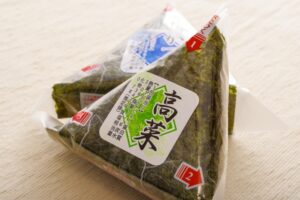
At the same time, modern onigiri is deeply connected to convenience stores — and convenience store onigiri should not be seen simply as a cheaper substitute for homemade.
The rice is selected and prepared to taste good even when no longer hot. The texture is reliable, the seasoning is consistent, and the fillings are carefully balanced.
Convenience store onigiri also makes certain combinations more accessible.
Tuna mayo is straightforward in theory, but opening a whole can of tuna for a single rice ball is rarely practical at home.
A high-quality umeboshi can be similarly inconvenient to buy and use in small amounts. Convenience store onigiri makes these fillings easy to enjoy one at a time.
The packaging is part of the experience too. Many convenience store onigiri are designed so the nori stays separate from the rice until the package is opened, keeping the seaweed crisp even though the onigiri was prepared in advance.
Different Roles, Not Competitors
Homemade onigiri and convenience store onigiri serve different purposes rather than competing directly.
Homemade onigiri is often more economical when rice is already cooked at home. It can be made in the size, shape, and flavor a household prefers, and it carries the warmth of being made by hand.
Convenience store onigiri offers reliability, variety, and ease outside the home. It allows people to buy one rice ball at a time and eat onigiri during commutes, travel, work breaks, or a busy day.
The basic idea remains the same across both forms: rice made easy to carry and eat.
Onigiri in Bento, Travel, and Everyday Life
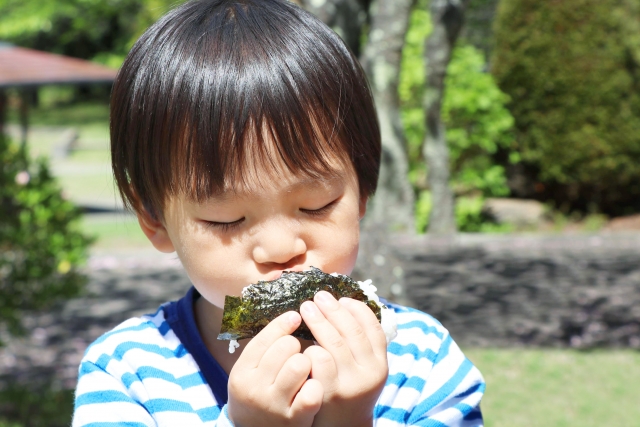
Onigiri appears in many everyday situations because it moves easily.
In a bento, onigiri can take the place of a plain portion of rice — shaped into individual pieces that are easier to eat, especially for children or during outdoor events.
On school trips, picnics, and sports days, onigiri is especially common. It needs no utensils, can be wrapped individually, and is filling without being messy.
Onigiri also suits travel well. It can be eaten on a train, during a break, or while moving between places. For many people, buying onigiri before a journey feels natural — it is quick, familiar, and easy to carry.
It can also appear in more serious situations. After disasters, rice balls are sometimes distributed as emergency food — not because onigiri is a luxury, but because it is practical, familiar, and easy to hand out in large numbers.
But in daily life, onigiri is usually remembered in far smaller and warmer moments: a lunch packed for school, a quick bite before work, something picked up at a convenience store, or a simple rice ball made at home with whatever filling is on hand.
These different situations show how adaptable onigiri is. It can be ordinary lunch food, travel food, comfort food, or emergency food.
Few dishes move so naturally between home, public life, and convenience. Onigiri fits because it takes rice — the center of Japanese meals — and gives it a shape that can go wherever people go.
What Onigiri Reveals About Japanese Food Culture

Onigiri reveals several important ideas in Japanese food culture.
First, it shows how central rice is. Onigiri begins with rice and keeps rice at the center. The filling supports the rice rather than replacing it.
Second, it shows the importance of texture. Japanese rice is soft and sticky enough to hold together, but good onigiri should still feel light. The difference between gently shaped rice and tightly compressed rice matters.
Third, it shows how Japanese food values small contrasts. A little salt, a sour plum, a strip of nori, or a modest amount of salmon can change the entire eating experience.
Fourth, it shows the practical side of Japanese meals. Onigiri turns a bowl of rice into something portable — making rice fit work, school, travel, and daily movement.
Finally, onigiri shows that ordinary food can carry emotional meaning. A rice ball made for a child's lunch, bought at a convenience store on a busy day, or eaten on a train can each feel familiar in its own way.
Onigiri is simple, but that simplicity is part of its strength.
It is rice shaped for life outside the bowl.
Author's Note
For many people in Japan, onigiri does not feel like a special food.
It feels ordinary in the best way.
I think that is why it is so powerful. Onigiri can be made at home without much effort, bought at a convenience store, packed for a trip, or eaten quickly when there is no time for a full meal.
The shape also matters. Rice in a bowl belongs to the table. Onigiri belongs to the hand. That small change completely transforms how rice fits into daily life.
Once rice is shaped into onigiri, it can leave the table. It can go into a lunch box, a backpack, a train station bag, or someone's hand on a busy day. The same rice that usually sits at the center of a meal becomes something portable and personal.
There is also something important about the fact that onigiri is shaped by hand. A homemade onigiri does not have to be perfect. In fact, that slight unevenness can make it feel more human. Many people in Japan associate handmade onigiri with care, family, and the quiet warmth of someone preparing food for another person.
I do not think homemade onigiri and convenience store onigiri replace each other. They belong to different moments. Homemade onigiri feels close to the kitchen, lunch boxes, and family routines. Convenience store onigiri belongs more to movement: commuting, travel, work breaks, and quick meals away from home.
I also think onigiri goes especially well with green tea. The tea does not compete with the rice. It refreshes the mouth, softens the saltiness, and lets the aroma of nori and filling linger. It is a quiet pairing, but a very natural one.
On YUNOMI, I often return to the idea that Japanese food culture is shaped by small everyday forms. Onigiri is one of those forms: simple rice, shaped by hand, made ready for daily life.
FAQ
What is onigiri?
Onigiri is a Japanese rice ball made by shaping cooked rice into a compact form. It is often filled with ingredients and wrapped with nori seaweed.
Is onigiri the same as sushi?
No. Sushi is made with vinegared rice, while onigiri uses plain cooked rice and salt. Onigiri is more closely associated with everyday meals, lunch boxes, and convenience food.
Why is onigiri usually made with Japanese rice?
Japanese short-grain rice is soft, moist, and slightly sticky when cooked, which allows it to hold its shape when formed into a rice ball.
What are common onigiri fillings?
Common fillings include salted salmon, umeboshi pickled plum, tuna mayo, kombu seaweed, bonito flakes, cod roe, and pickled vegetables.
Why is nori used on onigiri?
Nori adds aroma and flavor, and makes the onigiri easier to hold. Some use soft nori wrapped early; convenience store onigiri often keep the nori separate until opened to preserve its crispness.
Is onigiri eaten for breakfast, lunch, or dinner?
Onigiri can be eaten at any time of day — as breakfast, lunch, a snack, travel food, or a quick light meal.
Can onigiri be vegetarian or vegan?
Yes, if the filling is plant-based, such as umeboshi, kombu, pickled vegetables, or seasoned mushrooms. Some fillings, however, contain fish or mayonnaise.
Why are convenience store onigiri so popular in Japan?
They are affordable, easy to find, portable, and available in many flavors. The packaging typically keeps the nori separate from the rice until opening, so the seaweed stays crisp.
Can onigiri be eaten cold?
Yes. Onigiri is often eaten at room temperature or slightly chilled, especially from lunch boxes or convenience stores. It does not need to be served hot.
What does onigiri reveal about Japanese food culture?
Onigiri shows how Japanese food culture turns rice into something practical, portable, and emotionally familiar. It reflects the central role of rice, the importance of texture, and the value of simple everyday food.

