
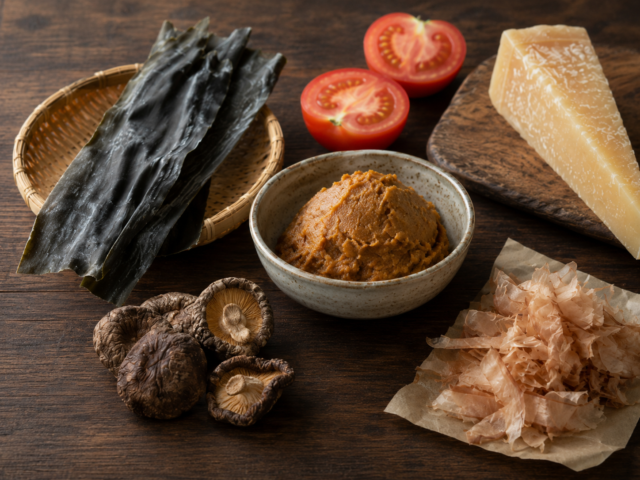
Umami is one of the best-known Japanese food words in the world.
It is often translated as “savory,” while some explanations describe it more loosely as “deliciousness.” It may even be presented as a mysterious quality that makes Japanese food especially satisfying.
But umami does not simply mean that food is delicious.
It is one part of a dish’s overall balance, much like saltiness, sweetness, acidity, or bitterness. It can add depth and fullness, but more umami does not automatically make food better.
Understanding this distinction makes it easier to see how dashi, soy sauce, miso, tamari, kombu, dried fish, and other Japanese ingredients work together.
Quick Summary
- Umami is one of the five basic tastes.
- It does not mean “delicious” by itself.
- Like saltiness or acidity, it works as part of a dish’s overall balance.
- Japanese cooking often develops umami through dashi, fermentation, drying, and combinations of ingredients.
What Is Umami?
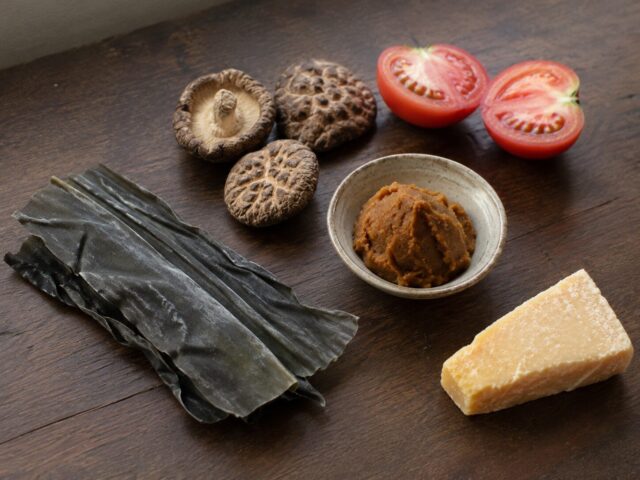
Umami is found in both Japanese ingredients and familiar foods from around the world.
Umami is commonly described as the fifth basic taste, alongside sweetness, saltiness, sourness, and bitterness.
Unlike sourness or saltiness, it can be difficult to identify on its own. It often makes food feel fuller, rounder, or more complete rather than creating a sharp or immediately obvious taste.
A broth, for example, may look light and clear but still feel satisfying on the tongue.
Umami is not mysterious. It is simply a taste that many people recognize more easily when it works with other flavors.
Does Umami Mean “Delicious” in Japanese?

A home cook ladling soup into a small bowl beside a pot in a Japanese kitchen.
No. Umami and deliciousness are related ideas, but they are not the same thing.
The word umami is related to umai, a Japanese word that can mean delicious. This can make it sound as though umami simply means “good taste.”
In food science and modern cooking, however, umami refers to a particular basic taste.
Deliciousness is much broader. It can depend on saltiness, sweetness, acidity, aroma, texture, temperature, freshness, appearance, personal preference, and even memory.
Umami may contribute to deliciousness, but it cannot create it by itself.
A soup may contain plenty of umami but still taste unpleasant if it is too salty. A sauce may be rich in umami but feel heavy if it overwhelms the other ingredients.
Umami is one part of the whole.
What Does Umami Taste Like?
Umami is often translated as “savory,” but that word does not describe every part of the experience.
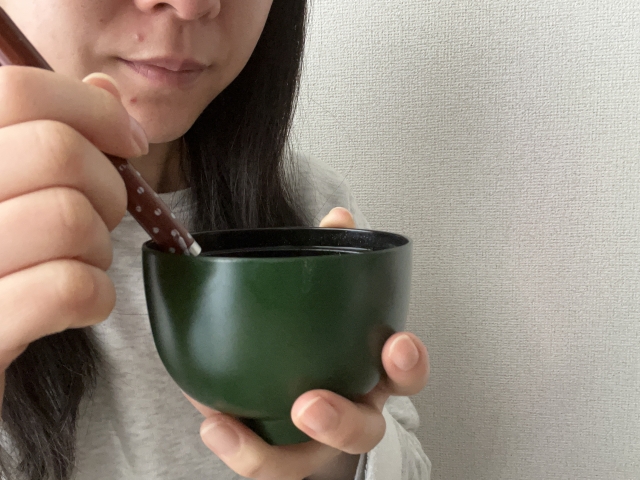
Umami is often noticed as a rounded, lingering depth rather than a sharp or immediately obvious taste.
It may be described as:
- rounded
- brothy
- mouth-filling
- lingering
- deep
- satisfying
It can make a liquid feel as though it has more body, even when it contains little fat.
Umami is not the same as meatiness. Meat contains umami, but so do kombu, tomatoes, mushrooms, soy sauce, miso, and aged cheese.
It is also not the same as richness. Fat, sweetness, aroma, and texture can make food feel rich without producing a strong umami taste.
Where Does Umami Come From?
Umami is associated with several naturally occurring compounds.
The best known is glutamate, found in foods such as kombu, tomatoes, fermented soybean products, and aged cheese.
Other compounds include inosinate, commonly found in meat and fish, and guanylate, found in dried mushrooms.
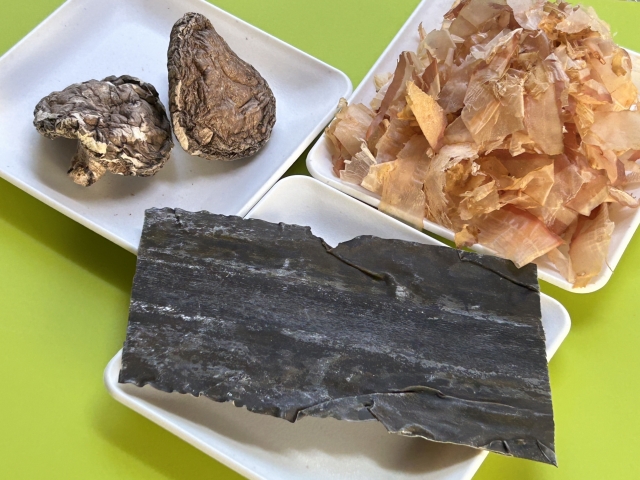
Kombu, katsuobushi, and dried shiitake mushrooms provide different natural sources of umami.
Their effects can become more noticeable through fermentation, drying, aging, and cooking. This is why ingredients such as katsuobushi, niboshi, dried shiitake mushrooms, miso, soy sauce, and tamari can contribute so much flavor in small amounts.
The chemistry can become complicated, but the practical idea is simple: ingredients and preparation methods affect how clearly umami is experienced.
More Umami Does Not Always Mean Better Food
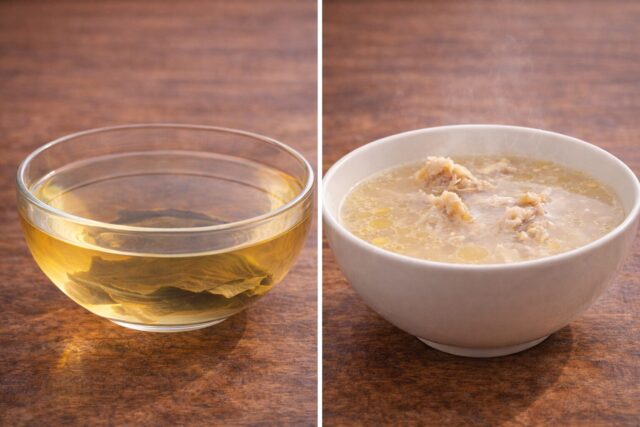
A stronger or more concentrated taste is not automatically better. Umami still works best as part of a balanced dish.
Umami is sometimes described as though it were a secret ingredient that automatically improves food.
That is misleading.
More salt does not always improve a dish. Neither does more sweetness or acidity. Umami works in the same way.
When it supports the other flavors, it can make food feel complete. When it becomes too strong or is combined poorly, the result may feel heavy, dull, or unbalanced.
A well-balanced broth may have clear umami while still feeling light. Another broth may contain more strongly flavored ingredients but become tiring after a few mouthfuls.
The goal is not to maximize umami. It is to use it in balance.
How Japanese Cooking Builds Umami
Japanese cooking develops umami through several familiar techniques.
Dashi

Kombu, katsuobushi, niboshi, dried shiitake mushrooms, and other ingredients can be soaked or heated in water to create dashi.
Dashi forms the foundation of miso soup, noodle broth, simmered vegetables, hot pots, and many other dishes.
Its role is often to support the food rather than dominate it.
Fermentation
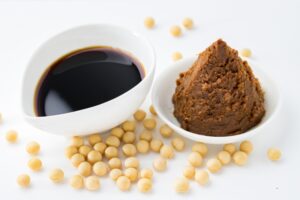
Soy sauce, miso, and tamari contain saltiness, aroma, sweetness, acidity, and umami.
They do more than make food salty. A small amount can connect the flavors of rice, vegetables, tofu, fish, or meat.
Drying and Aging

Drying preserves food, but it also changes flavor.
Katsuobushi, niboshi, dried shiitake mushrooms, and dried seaweed take on culinary roles that are different from those of their fresh forms.
Fermentation and aging create similar changes in miso, soy sauce, cheese, and cured foods.
Combining Ingredients
Japanese cooking often combines ingredients with different sources of umami.
Kombu may be used with katsuobushi. Dried shiitake mushrooms may be combined with kombu. Dashi may then be seasoned with miso or soy sauce.
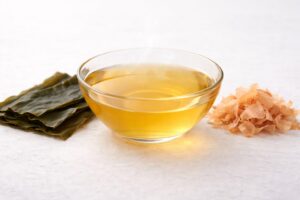
These combinations can deepen flavor, but they still have to work with saltiness, aroma, sweetness, acidity, texture, and the main ingredient.
Umami Is Not Unique to Japanese Food
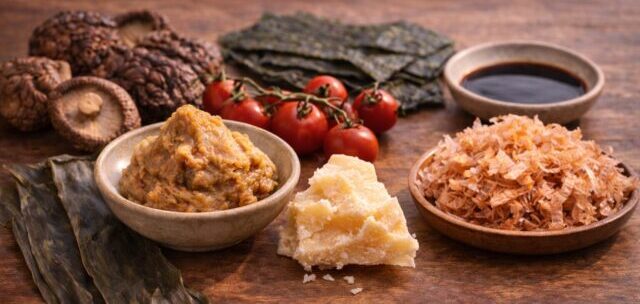
Umami is found in both Japanese ingredients and familiar foods from around the world.
Umami is strongly associated with Japan because the word is Japanese and Japanese food culture has paid particular attention to it.
But the taste exists throughout the world.
Tomatoes, Parmesan cheese, cured meat, mushrooms, fish sauce, meat stock, and slow-cooked sauces can all contain or develop umami.
A tomato sauce finished with aged cheese may combine umami-rich ingredients in much the same way that Japanese cooking combines kombu and dried fish.
What is distinctive about Japanese cooking is not the existence of umami, but the range of familiar techniques used to draw it out and combine it.
Why Umami Matters in Japanese Food Culture
Supporting Ingredients Can Shape the Whole Dish
Umami helps explain why Japanese cooking often depends on ingredients that do not appear to be the main part of the meal.
Kombu may be removed before serving. Katsuobushi may be strained out of a broth. Soy sauce or miso may be used only in a small amount.
Yet these supporting ingredients can shape the entire dish.
Simple-Looking Food Can Have a Complex Flavor Structure
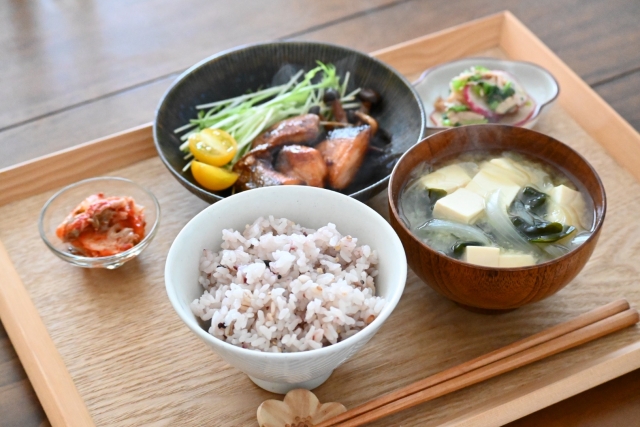
Japanese food is sometimes described as simple or lightly flavored, but that can be misleading. Some dishes are delicate, while others are salty, sweet, fatty, fermented, or strongly seasoned.
What many dishes share is not necessarily lightness, but an underlying structure of flavor.
A clear broth may contain several layers. A simple bowl of rice and miso soup may depend on dried ingredients, fermented seasoning, and carefully adjusted saltiness.
The food may look modest without being simple in construction.
Practical Techniques Also Create Flavor
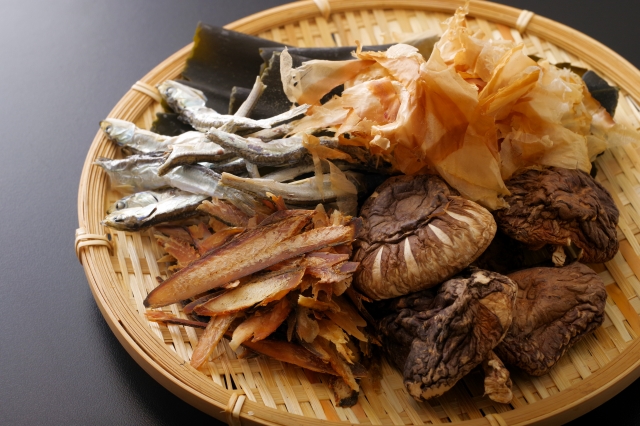
Drying and preserving ingredients can change their flavor and give them new roles in Japanese cooking.
Umami also shows how practical techniques can transform ordinary ingredients. Seaweed becomes broth. Soybeans become miso, soy sauce, and tamari. Fish becomes katsuobushi or niboshi. Mushrooms take on a different role after drying.
Most importantly, umami is not a magical source of deliciousness. It is one part of how a meal comes together.
Is Umami the Same as MSG?
No.
Umami is a basic taste. MSG, or monosodium glutamate, is one substance that can produce that taste.

MSG is one source of umami, but umami itself is a basic taste found naturally in many foods.
Saying that umami and MSG are the same would be like saying sweetness and sugar are the same.
Sugar produces sweetness, but sweetness can also come from fruit or honey. In the same way, MSG produces umami, but umami also occurs naturally in foods such as kombu, tomatoes, mushrooms, meat, cheese, soy sauce, and miso.
Author’s Note
Japanese people do not usually sit down to a meal and think about glutamate, inosinate, or guanylate.
In everyday cooking, someone may say that the dashi is working well, that a soup has depth, that a dish needs more flavor, or that the seasoning feels too strong.
Umami is part of that experience, but it is rarely separated completely from everything else.
For me, this is why describing umami simply as “deliciousness” feels inaccurate.
Too little umami can make a dish feel thin. Too much can make it feel heavy.
The right amount depends on what the dish is trying to be.
FAQ
Is umami really a basic taste?
Yes. Umami is generally recognized as one of the five basic tastes, alongside sweetness, saltiness, sourness, and bitterness.
Does umami mean delicious?
No. Umami is one taste that can contribute to deliciousness. Whether food tastes good also depends on aroma, texture, temperature, seasoning, freshness, balance, and personal preference.
Can vegetarian food contain umami?
Yes. Kombu, tomatoes, mushrooms, dried shiitake mushrooms, soy sauce, miso, tamari, and aged cheese can all contribute umami.
Can food have too much umami?
Yes. More umami does not automatically make food better. Like saltiness, sweetness, or acidity, it can make a dish feel heavy or unbalanced when it becomes too strong.

