Tofu is well known around the world today.
In many countries, it is often introduced as a vegetarian food, a vegan protein, or a substitute for meat. Those uses are real, but they do not fully explain how tofu is understood in Japan.
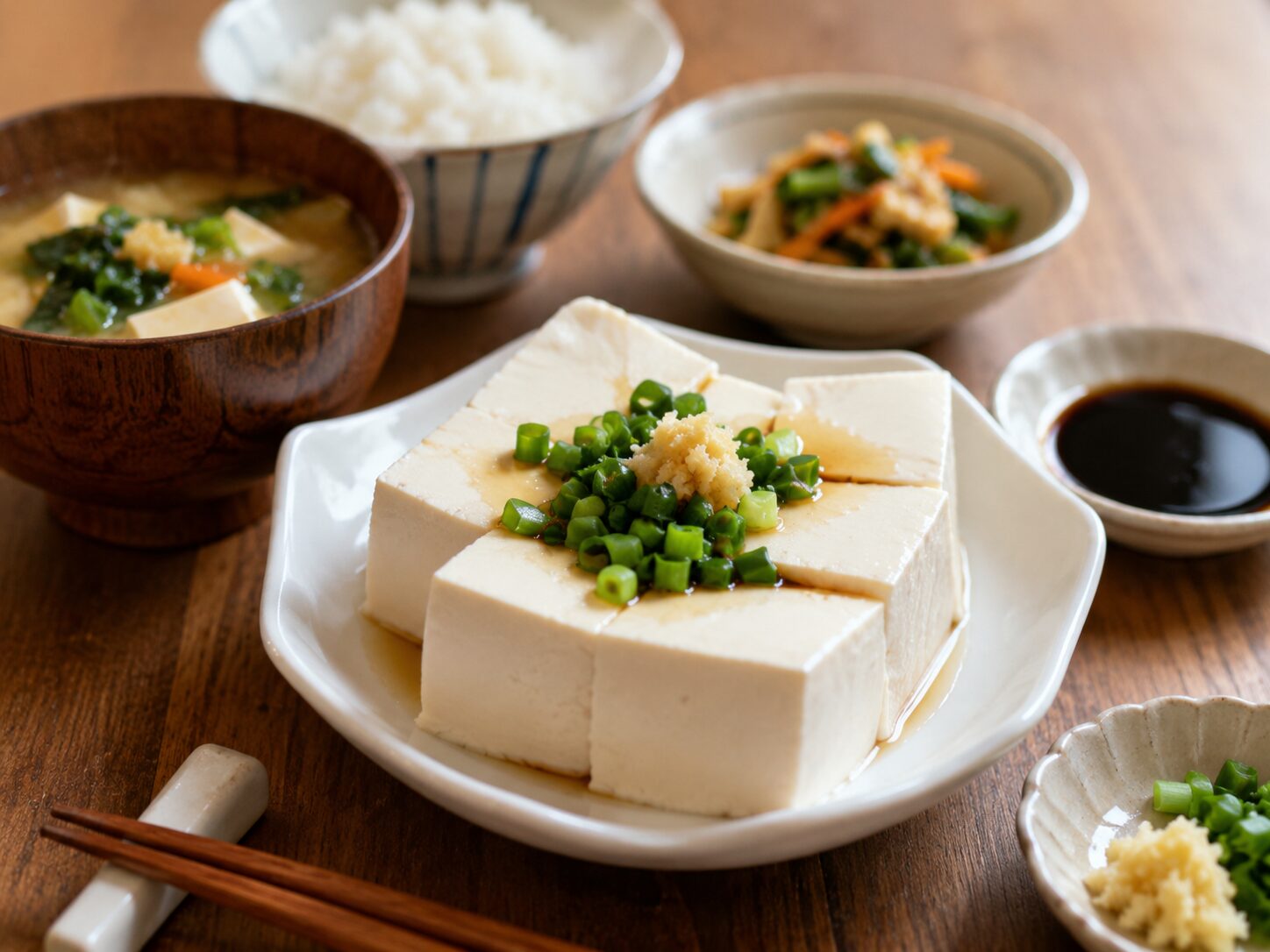
In Japan, tofu is not mainly treated as a meat substitute. It is an ordinary everyday ingredient with its own place in the meal. It can be eaten cold with soy sauce and green onion, warmed in miso soup, simmered in dashi, added to hot pots, fried, dried, grilled, or served as a simple side dish.
Its mildness is not a weakness. Tofu receives flavor. It works with dashi, soy sauce, miso, ginger, green onion, bonito flakes, mushrooms, vegetables, and seasonal ingredients without overpowering any of them.
This article explains what tofu is, why it is so common in Japan, and what this quiet soy food reveals about Japanese food culture.
Quick Summary
- Tofu is a food made from soybeans, usually by coagulating soy milk and forming it into soft blocks.
- In Japan, tofu is not mainly seen as a meat substitute or a special health food. It is an ordinary everyday ingredient.
- Its mild flavor allows it to take on the taste of dashi, soy sauce, miso, ginger, green onion, and other seasonings.
- Tofu is not just one product. Silken tofu, firm tofu, grilled tofu, fried tofu, and dried tofu are used in different ways.
- Common tofu dishes in Japan include hiyayakko, miso soup, yudofu, nabe, agedashi tofu, mabodofu, sukiyaki, and simmered dishes.
- Tofu also appears in processed forms such as aburaage, atsuage, yaki-dofu, and koya-dofu.
- Tofu reflects Japanese food culture through softness, flexibility, affordability, seasonality, and its quiet ability to support a meal.
What Is Tofu?
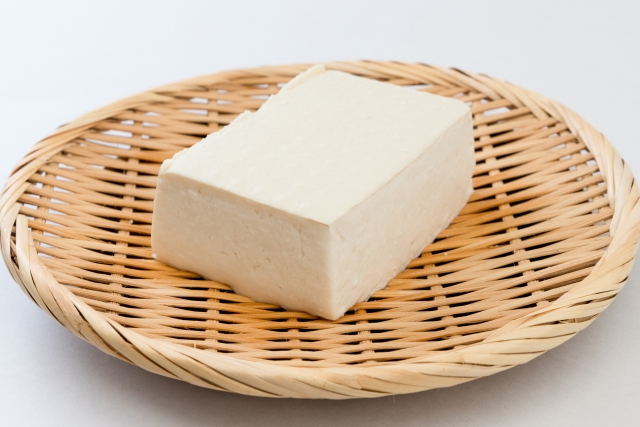
Tofu is a food made from soybeans.
In simple terms, soybeans are soaked, ground, cooked, and strained to produce soy milk. A coagulant is then added to help the soy milk set. The result is tofu: a soft, pale food that can be cut, served, cooked, or processed in many ways.
Tofu originally came to Japan from China, but it became deeply rooted in Japanese cooking over centuries. Today, it is one of the most familiar soy foods in Japan.
It is commonly sold in small blocks at supermarkets, convenience stores, tofu shops, and local markets. Some tofu is delicate and smooth. Some is firmer and better suited to cooking. Some is grilled, fried, frozen, or dried.
Because tofu has a mild flavor, it can seem plain at first. But in Japanese cooking, that plainness is exactly what makes it useful.
Tofu does not need to dominate a dish. It can quietly receive the flavors around it.
Tofu Is Not Just a Meat Substitute
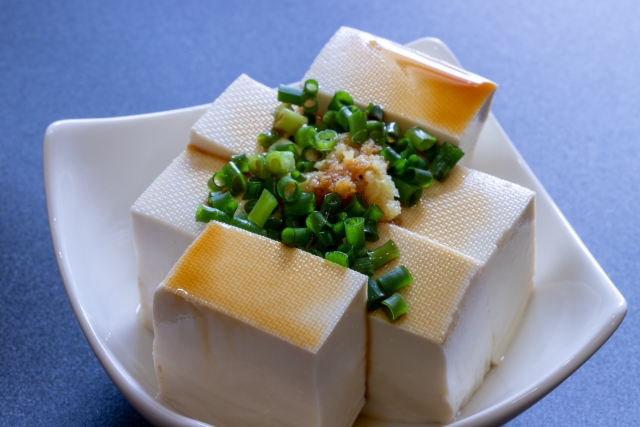
Hiyayakko shows how tofu is often eaten in Japan as a dish in its own right, not as a substitute for meat.
Outside Japan, tofu is often described as a meat substitute.
This makes sense in some modern contexts. Tofu contains plant-based protein, and it is widely used in vegetarian and vegan cooking. In many countries, people first encounter tofu as an alternative to meat.
But this is not the main way tofu is understood in Japan.
Japanese people did not start eating tofu because they needed a modern replacement for animal protein. Tofu already had its own place in Japanese cooking. It was eaten as tofu — not as an imitation of something else.
Hiyayakko, a cold tofu dish served with soy sauce and toppings, is not trying to replace meat.
Yudofu, tofu gently warmed in water or broth, is not a meat substitute.
Tofu in miso soup is not a substitute either. These dishes use tofu because tofu itself fits the meal.
This distinction matters. If tofu is understood only as a replacement, its role in Japanese cuisine becomes too narrow.
In Japan, tofu is valued because it is soft, mild, affordable, and easy to combine with many flavors. It is one of the ordinary ingredients that help make everyday meals feel balanced.
Why Tofu Is So Common in Japan
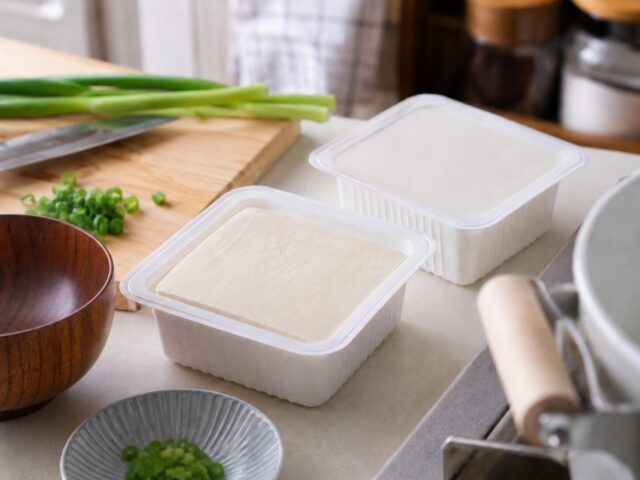
Tofu is common in Japan because it meets many practical needs at once.
It is easy to find. It is usually affordable. It can be eaten cold or hot. It can serve as a side dish, a soup ingredient, a hot pot ingredient, or the center of a light meal. It can feel refreshing in summer and warming in winter.
Tofu also provides a practical form of everyday protein. In Japan, protein does not always have to come from a large piece of meat. Fish, eggs, soy foods, beans, and small side dishes all contribute to the meal. Tofu fits this pattern naturally.
This does not mean people are always thinking about nutrition when they eat tofu. Most of the time, it is simply useful — light, familiar, inexpensive, and easy to prepare.
Its convenience matters too. A block of tofu can become a dish with very little effort. It can be placed in miso soup, added to a hot pot, served cold with soy sauce and toppings, or used in a quick stir-fry.
In some neighborhoods, traditional tofu shops — tofu-ya — still make and sell freshly prepared tofu. Even though many people now buy tofu at supermarkets, these shops are a reminder that tofu has long belonged to everyday local food life, not only to modern packaged food.
Types of Tofu: Silken, Firm, and More
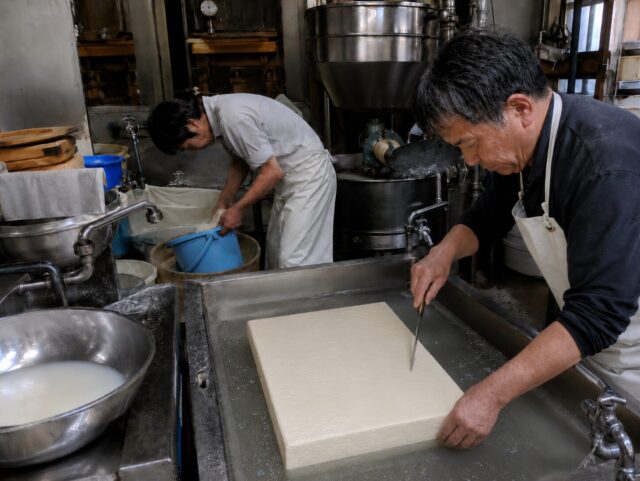
Tofu is often described as a single food, but in Japan it comes in many forms.
Two of the most common are silken tofu and firm tofu.
Silken tofu, or kinugoshi-dofu, has a smooth, soft texture — delicate and almost custard-like. It is often used for hiyayakko, miso soup, and dishes where a gentle texture is important.
Firm tofu, or momen-dofu, is denser and contains less water. It holds its shape more easily and is often used in stir-fries, simmered dishes, and hot pots.
The names are worth noting. Kinugoshi means "silk-filtered," while momen means "cotton." These names point to differences in texture: smooth and delicate on one side, firmer and more substantial on the other.
Other forms are also common in Japan.
Yaki-dofu is grilled tofu with a firmer surface, often used in sukiyaki, where tofu needs to hold its shape in a sweet-salty sauce.
Aburaage is thin deep-fried tofu. It appears in miso soup, kitsune udon, and inari sushi.
Atsuage is thick deep-fried tofu — firmer on the outside, soft within — often used in simmered or grilled dishes.
Koya-dofu is frozen and dried tofu. Once rehydrated, it absorbs dashi and seasoning readily, making it well suited to simmered dishes.
These forms show that tofu is not only one soft white block. It can be smooth, firm, grilled, fried, absorbent, dried, or preserved.
Common Japanese Tofu Dishes
Tofu appears in many familiar Japanese dishes.
Simple Tofu Dishes
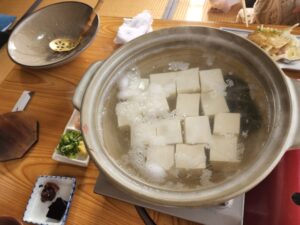
Yudofu is a simple winter dish that warms tofu gently without hiding its mild flavor.
Hiyayakko is one of the simplest tofu dishes. It is cold tofu served with toppings such as grated ginger, green onion, bonito flakes, and soy sauce. It is especially common in warm weather, when its cool texture feels refreshing.
Yudofu is tofu gently warmed in water or kombu-based broth, then eaten with dipping sauce or condiments. It is quiet, warm, and delicate — a dish that feels especially natural in colder months.
Tofu in Soups, Hot Pots, and Simmered Dishes
Miso soup often includes tofu. The tofu adds softness and makes the soup feel more substantial without making it heavy.
Nabe, or hot pot, also often includes tofu. In a shared pot, tofu absorbs broth and sits alongside vegetables, mushrooms, seafood, meat, or other ingredients.
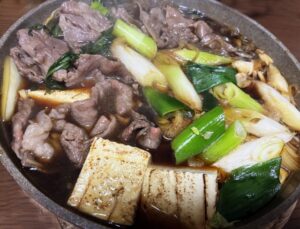
Sukiyaki often uses yaki-dofu, or grilled tofu. Its lightly grilled surface helps it hold together in the sweet-salty sauce while still absorbing flavor.
Aburaage, atsuage, and koya-dofu appear in many simmered dishes. These tofu products absorb seasoning well and add substance without making the dish feel too heavy.
Fried and Stir-Fried Tofu Dishes
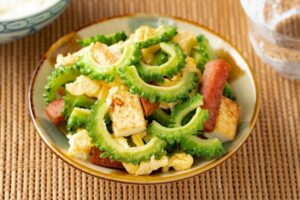
Goya champuru uses firm tofu that can hold its shape during stir-frying.
Agedashi tofu is lightly coated, fried, and served in a savory dashi-based sauce. The contrast between soft tofu and a lightly crisp exterior makes it especially satisfying.
Mabodofu, the Japanese version of mapo tofu, uses stronger flavors, often with minced meat and a thick sauce. Even in this richer dish, tofu provides the soft base that carries the seasoning.
Goya champuru, a stir-fried dish from Okinawa, uses firm tofu with bitter melon, egg, and other ingredients. In this kind of dish, tofu needs enough structure to survive the heat and mixing.
Tofu Changes with the Season
The season also shapes how tofu is enjoyed. Hiyayakko suits summer, while yudofu and nabe feel natural in winter. The same ingredient can cool the body or warm it depending on how it is prepared.
How Tofu Works with Japanese Flavors
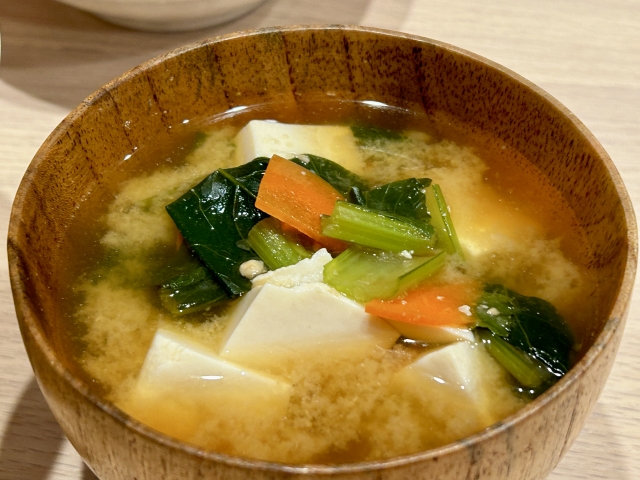
In miso soup, tofu absorbs the surrounding flavor while making the soup feel softer and gentler.
Tofu works well in Japanese cooking because it receives flavor rather than competing with it.
Dashi gives tofu a light savory base. In yudofu, simmered dishes, and hot pots, tofu absorbs the gentle umami of kombu, bonito, mushrooms, or other dashi ingredients.
Soy sauce adds saltiness and aroma. In hiyayakko, a small amount of soy sauce can make tofu feel complete — especially with ginger, green onion, or bonito flakes.
Miso adds fermented depth. In miso soup, tofu softens the soup and gives it body. The miso surrounds the tofu; the tofu makes the soup feel gentler.
This relationship is central to tofu's role in Japanese cooking.
Tofu is not powerful because it has a strong flavor of its own. It is powerful because it gives other flavors a place to settle — carrying dashi, softening soy sauce, absorbing miso, and balancing stronger ingredients.
Japanese home cooking often depends on small combinations rather than one large centerpiece. Tofu fits this style because it adjusts to whatever is around it. It does not fight the other flavors. It receives them.
What Tofu Reveals About Japanese Food Culture
Tofu reveals several important ideas in Japanese food culture.
First, it shows that mildness can be valuable. A food does not need to be bold or strongly flavored to matter. Tofu's quietness is what allows it to work with so many other ingredients.
Second, it shows the importance of texture. Silken tofu, firm tofu, grilled tofu, fried tofu, and dried tofu all create different eating experiences — even when they begin from the same basic ingredient.
Third, it shows the practical side of Japanese home cooking. Tofu is affordable, easy to find, quick to prepare, and useful across many dishes. It can help complete a meal without complicating it.
Fourth, it shows how deeply soybeans are woven into Japanese food culture. Tofu is one part of a larger family of soy foods that includes miso, soy sauce, natto, aburaage, atsuage, koya-dofu, and more.
Finally, tofu shows that an ingredient can be important without being dramatic.
It can sit quietly in miso soup, cool the body as summer hiyayakko, or warm it as winter yudofu. It can be fried, simmered, grilled, dried, or served plain.
Tofu matters in Japan not because it replaces something else, but because it fits.
Author's Note
For many people outside Japan, tofu may first appear as a health food or a vegetarian ingredient.
In Japan, it feels much more ordinary than that.
Tofu is not something people eat only when trying to be healthy. It is the kind of food that shows up naturally in daily life: in miso soup, in a small side dish, in a hot pot, or as cold tofu with soy sauce and green onion.
Personally, tofu appears in my meals several times a week. Sometimes in miso soup. Sometimes cold with soy sauce, green onion, or ginger. Sometimes as mabodofu. The dish changes, but tofu fits each situation quietly.
When I buy tofu, I do not always choose the same kind. For hiyayakko, I prefer smooth silken tofu in a small pack. For mabodofu, firmer tofu holds together better. For goya champuru, a firm tofu that can be drained first works much better. For sukiyaki, yaki-dofu feels natural because it holds its shape in the sauce.
That is one reason tofu feels so ordinary in Japan. It is not a rare ingredient chosen for one special purpose. It is something people select according to the meal, the season, the price, and the texture they want.
I also think tofu is interesting precisely because it does not try to impress you at first. It is soft, quiet, and easy to overlook. But once you start paying attention, you notice how often it appears and how many forms it takes.
Fresh tofu, fried tofu, grilled tofu, dried tofu, tofu in soup, tofu with soy sauce, tofu in hot pot — these are not unusual variations. They are part of the everyday landscape of Japanese food.
The same is true of soybeans more broadly. Once you notice tofu, you start noticing miso, soy sauce, natto, aburaage, atsuage, koya-dofu, kinako, and okara. Japanese food has transformed soybeans in so many directions that tofu feels less like a single ingredient and more like one expression of a much larger food culture.
On YUNOMI, I often write about foods that seem simple until you see the structure behind them. Tofu is one of those foods. It is quiet, but it is everywhere.
FAQ
What is tofu made from?
Tofu is made from soybeans. Soybeans are processed into soy milk, which is then coagulated and formed into soft blocks.
Is tofu a meat substitute in Japan?
Not mainly. In Japan, tofu is treated as an ordinary ingredient in its own right. It can provide plant-based protein, but it is not primarily understood as a replacement for meat.
What is the difference between silken tofu and firm tofu?
Silken tofu is smooth, soft, and delicate. Firm tofu is denser and holds its shape better when cooked. The choice depends on the dish and the texture you want.
Why are there so many kinds of tofu in Japan?
Different forms of tofu suit different dishes. Silken tofu works well for cold dishes like hiyayakko, while firmer tofu is better for cooking, stir-frying, and hot pots. Grilled, fried, and dried forms each serve their own purpose.
How is tofu commonly eaten in Japan?
Tofu is eaten in many ways: cold as hiyayakko, warmed as yudofu, added to miso soup or hot pots, fried as agedashi tofu, or simmered with other ingredients.
Is tofu always eaten hot?
No. Hiyayakko is a cold dish, while yudofu, miso soup, nabe, sukiyaki, and agedashi tofu are served warm or hot.
What is aburaage?
Aburaage is thin deep-fried tofu, used in miso soup, kitsune udon, and inari sushi.
What is atsuage?
Atsuage is thick deep-fried tofu — firmer and richer on the outside, soft within. It is often grilled or simmered.
What is yaki-dofu?
Yaki-dofu is grilled tofu with a firmer surface, often used in sukiyaki because it holds its shape while absorbing the sauce.
What is koya-dofu?
Koya-dofu is frozen and dried tofu. Once rehydrated, it absorbs dashi and seasoning well, making it useful in simmered dishes.
Why does tofu taste bland?
Tofu has a mild flavor, but in Japanese cooking that is not a weakness. Its mildness allows it to take on the flavors of dashi, soy sauce, miso, ginger, green onion, and other ingredients.
Is tofu healthy?
Tofu provides plant-based protein and can be part of a balanced diet. In Japan, however, it is generally understood less as a special health food and more as an ordinary everyday ingredient.
Related Reading on YUNOMI
- What Is Miso? The Fermented Paste at the Heart of Japanese Food Culture
- Why Is Miso Soup So Common in Japan?
- What Is Dashi? The Quiet Broth Behind Japanese Flavor
- What Is Japanese Rice? Why Short-Grain Rice Matters in Japanese Food Culture
- What Is Tamari? The Rich Japanese Soy Sauce Made from Miso Fermentation

