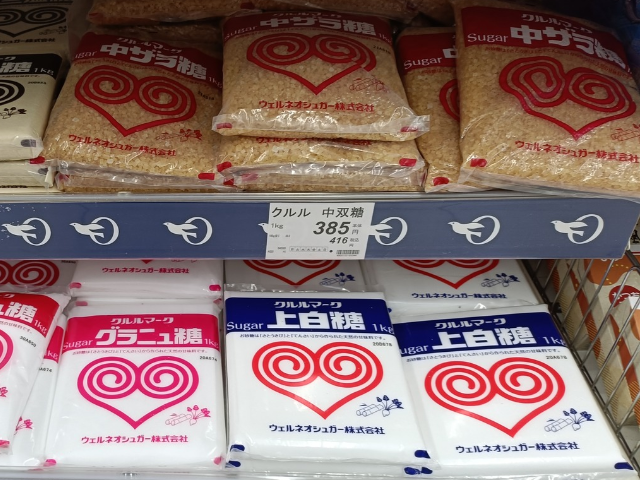
In Japan, when a recipe simply says "sugar," it usually means jōhakutō, a soft, slightly moist white sugar found in almost every supermarket.
But what exactly is jōhakutō?
For many Japanese home cooks, the question might seem strange. It is simply ordinary sugar, something they have used for years without giving it much thought.
Yet the standard white sugar in American kitchens is different. Americans typically use dry, free-flowing granulated sugar, while Japan's everyday white sugar has finer crystals and a softer texture.
This difference is not just about appearance. Even a tablespoon of sugar can contain a different amount depending on which type you use, potentially changing the sweetness of a recipe.
And jōhakutō is only the beginning. Japanese supermarket shelves also hold golden-brown sugars, intensely flavored black sugar, large sugar crystals, and traditional sugars used in Japanese confectionery.
Understanding these differences makes Japanese recipes easier to follow and reveals something interesting about everyday Japanese food culture.
Quick Summary
- Jōhakutō is Japan's standard everyday sugar. It has fine, slightly moist crystals, unlike the dry granulated sugar commonly used in American kitchens.
- Jōhakutō and granulated sugar have nearly the same sweetness by weight, but measure differently. A Japanese tablespoon holds approximately 9 grams of jōhakutō or 12 grams of granulated sugar.
- Japanese sugars differ in flavor, texture, and purpose. Sanontō has mild caramel-like notes, while kokutō has a much stronger, more complex flavor.
- Brown sugar is not automatically healthier. A sugar’s color or price does not reliably indicate its nutritional value, and small differences in minerals often matter little at typical serving sizes.
- American granulated sugar works for most Japanese recipes. Measuring by weight helps avoid differences when substituting for jōhakutō.
What Is Jōhakutō, Japan's Everyday Sugar?
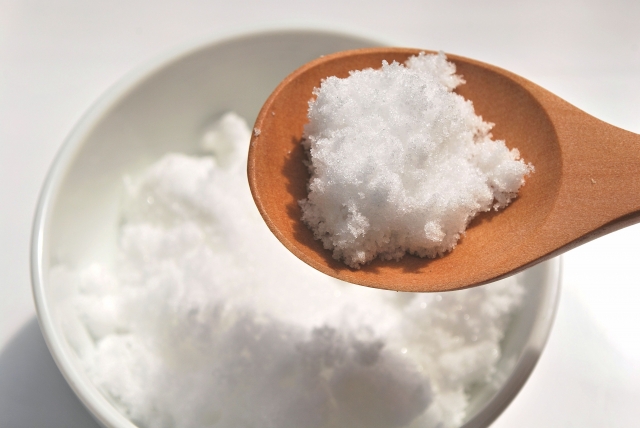
Jōhakutō (上白糖) is the most common type of sugar in Japan. It is used in everything from everyday simmered dishes to cakes, homemade sauces, and sweetened drinks.
According to Japan’s Ministry of Agriculture, Forestry and Fisheries, jōhakutō accounts for approximately half of the country’s sugar consumption. This is a figure reported by the ministry for overall sugar consumption, not a household purchasing rate.
Jōhakutō is an ordinary household ingredient rather than an expensive or specialized product.
Like other conventional white sugars, it can be produced from sugarcane or sugar beets. Its distinctive character comes from how the refined sugar crystals are finished.
Why Is Jōhakutō Slightly Moist?
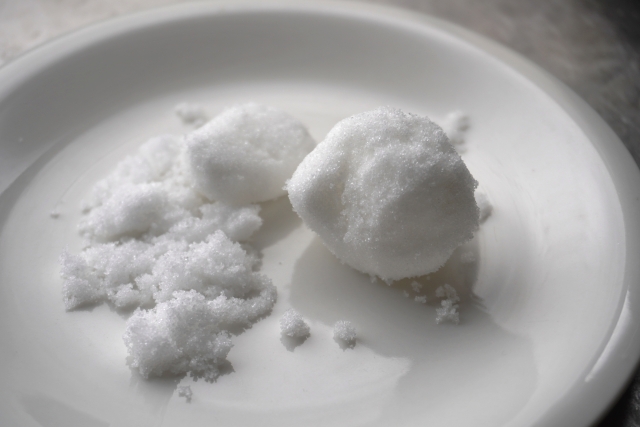
Unlike American granulated sugar, jōhakutō does not pour quite as freely. Its small crystals tend to cling together, giving it a soft, slightly damp texture.
During production, the sugar crystals are coated with a small amount of syrup containing invert sugar. Invert sugar is a mixture of glucose and fructose produced by breaking down sucrose, the main component of ordinary sugar.
These sugars attract and retain moisture, contributing to jōhakutō's characteristic texture. The crystals themselves remain mostly sucrose, so jōhakutō is still fundamentally ordinary refined sugar.
Although it feels slightly moist, it is not wet sugar in the usual sense. The texture comes from a relatively small amount of moisture and syrup on the fine sugar crystals.
Is Japanese White Sugar Bleached?
Jōhakutō does not need to be bleached to look white.
During refining, colored substances and other components are removed from the sugar solution. Pure sucrose crystals are essentially transparent, but a mass of small crystals scatters light and appears white.
The same principle explains why snow looks white even though individual ice crystals are transparent.
How Is Jōhakutō Different from American Granulated Sugar?
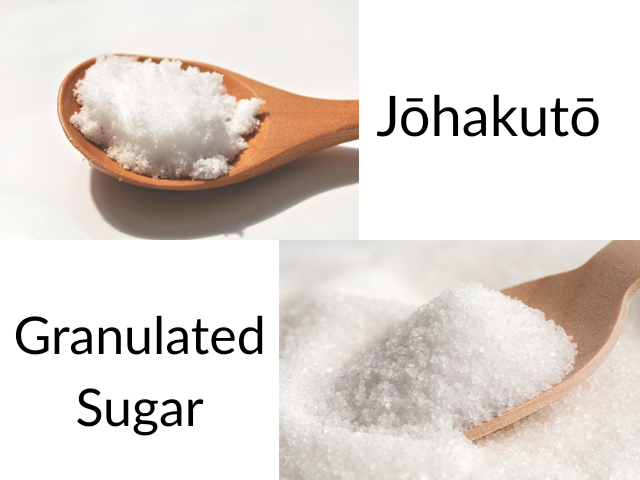
Jōhakutō and American granulated sugar have the same main ingredient: sucrose.
The important differences are their crystal size, moisture content, and small amounts of other sugars. These characteristics influence how the sugar feels, measures, and sometimes behaves during cooking.
Jōhakutō generally has crystals around 0.1–0.2 mm across. Granulated sugar typically has larger, drier crystals that flow more freely.
Jōhakutō is sometimes translated as "caster sugar," but the two are not identical. British caster sugar, also known as superfine sugar in the United States, has similarly fine crystals but lacks jōhakutō's characteristic moist texture.
The small amount of invert sugar in jōhakutō may affect browning and moisture retention in certain foods, but ordinary Japanese home cooking rarely depends on that difference.
Once completely dissolved, jōhakutō and granulated sugar provide nearly the same sweetness when measured by weight. The difference in sweetness is generally much less important than how the sugar is measured.
Why Does a Tablespoon of Sugar Weigh Differently?
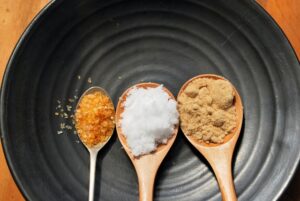
Here is a practical difference that can surprise anyone following a Japanese recipe.
| Sugar type | Approximate weight per Japanese tablespoon (15 mL) |
|---|---|
| Jōhakutō | 9 g |
| Granulated sugar | 12 g |
| Sanontō | 9 g |
The difference comes mainly from how the sugar crystals settle into the spoon.
Jōhakutō is fine and slightly sticky, so its particles can form a relatively loose structure with air spaces between them. Dry granulated sugar generally settles more densely.
This property is known as bulk density. It concerns the space occupied by a collection of particles, not a fundamental difference in the density of individual sucrose molecules.
For example, imagine a Japanese recipe that calls for two tablespoons of sugar.
If it assumes jōhakutō, that means approximately 18 grams. Using two tablespoons of granulated sugar instead gives approximately 24 grams.
That's about 33% more sugar, even though you're using the same measuring spoon.
Actual measurements vary with the product and how the spoon is filled, but the difference is large enough to matter in some recipes.
It is particularly worth remembering when making sweet-and-salty sauces, where sugar, soy sauce, and mirin need to be balanced.
What Types of Sugar Are Used in Japan?
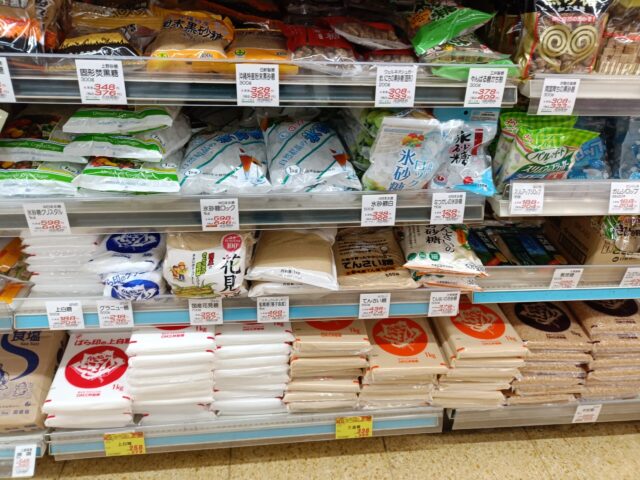
If you visit a Japanese supermarket, you may find an entire shelf devoted to different kinds of sugar.
Some are distinguished by their production methods and flavor. Others exist mainly because different crystal sizes or shapes make them more convenient for particular uses.
Here is a practical overview of the main varieties.
Jōhakutō: Fine, soft, slightly moist white sugar used in everyday home cooking.
Granulated sugar: Dry, neutral-flavored crystals commonly used in baking, drinks, and jam.
Granulated sugar is also common in Japanese stores and kitchens, particularly for baking and sweetening drinks. Jōhakutō is simply the more familiar all-purpose choice.
Sanontō: Light brown sugar with mild caramel-like notes, often used in simmered dishes and sauces.
Kibi sugar: Sugarcane-derived products with varying flavor, used in general cooking and baking.
Tensaitō: Brown beet-sugar products with mellow flavor, used in everyday cooking and baking.
Kokutō: Strong, complex sugarcane flavor, particularly valued in traditional sweets and black sugar syrup.
Wasanbon: Fine traditional sugar with a delicate flavor, used in Japanese confectionery.
Zarame: Large white or brown crystals used in simmered dishes and confectionery.
Rock sugar: Very large, slowly dissolving crystals, often used for homemade fruit liqueurs.
These categories are useful starting points, but products within a category can differ. Color alone does not tell you exactly how a sugar was produced.
Sanontō: Why Is This Japanese Brown Sugar Different?
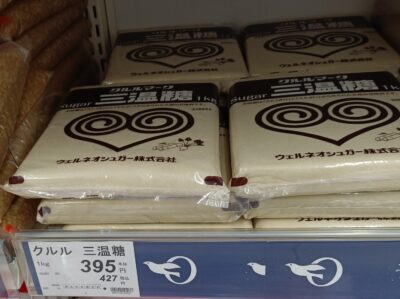
Sanontō (三温糖) is a familiar light-brown sugar in Japanese supermarkets.
Despite its appearance, it is not simply a less-refined version of white sugar. It is a refined sugar produced from syrup remaining after other sugar crystals have been removed.
As this syrup undergoes additional heating, browning reactions give the sugar its characteristic color and mild caramel-like flavor.
This is different from the typical American light brown sugar, which commonly gets much of its color, moisture, and flavor from molasses.
Sanontō has a relatively gentle aroma that can work particularly well with soy sauce or miso. This makes it a popular choice for simmered dishes, although ordinary white sugar works well too.
Its appeal is primarily about flavor, not superior nutritional value.
Kibi Sugar: A Different Kind of Sugarcane Flavor
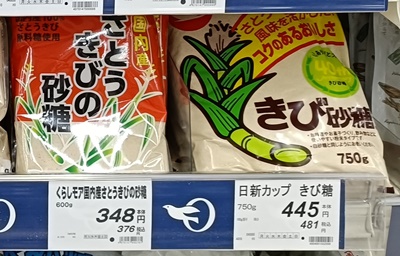
Kibi sugar (きび砂糖) is a name commonly seen on Japanese supermarket shelves.
These products are made from sugarcane, but their production methods and degree of refinement can vary. Some retain more sugarcane-derived flavor components than highly refined white sugar.
The result may be a gentle, rounded sweetness or a more pronounced sugarcane character, depending on the product.
Kibi sugar can work well in everyday cooking, but its flavor is not always completely neutral. In delicate dishes, a strongly flavored product may change the intended balance.
The flavor is a more useful reason to choose a particular kibi sugar than its color alone.
Tensaitō: Brown Sugar Made from Sugar Beets
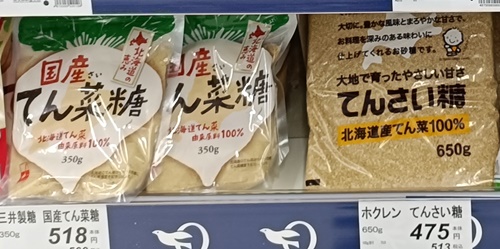
Japanese supermarkets also sell tensaitō (てんさい糖), including brown-colored products made from sugar beets grown in Hokkaido.
These products are often described as having a mellow, rounded sweetness and can be used in everyday cooking, much like sanontō.
Sugar beets are also widely used to produce ordinary white sugar, both in Japan and abroad. Therefore, beet sugar is not necessarily brown. The distinctive color and flavor of Japanese brown tensaitō products come from how they are processed.
Kokutō: Why Does Japanese Black Sugar Taste So Different?
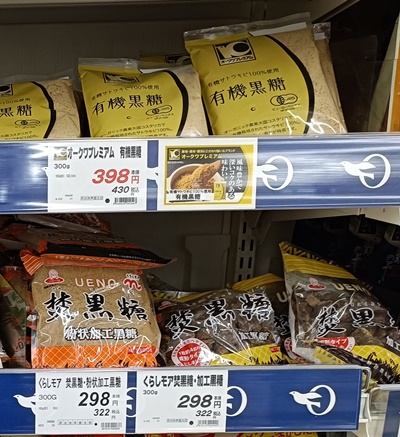
Kokutō (黒糖), commonly called Japanese black sugar, has one of the most distinctive flavors among Japan's sugars.
Traditional kokutō is produced by concentrating sugarcane juice without separating out the molasses. This leaves a broader range of sugarcane-derived components in the finished product.
Its flavor is much more complex than simple sweetness.
Depending on the product, kokutō may have noticeable bitterness, mineral-like notes, a slightly salty impression, and a deep aroma reminiscent of caramel or molasses. These characteristics can create a sense of richness that ordinary white sugar does not provide.
Kokutō is particularly associated with Okinawa and the Amami Islands, where sugarcane cultivation and black sugar production have long histories.
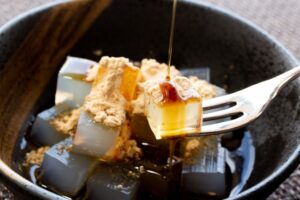
One familiar use is kuromitsu, a dark sugar syrup often served with Japanese sweets such as warabimochi. Kokutō also appears in steamed cakes, traditional candies, and some savory preparations.
A little black sugar can add depth to a strongly flavored sauce or curry, but using it in every dish would overwhelm more delicate ingredients.
Another distinction is worth knowing: Japanese stores also sell processed black sugar (加工黒糖), made by combining black sugar with other sugar ingredients. It may resemble pure kokutō, but the ingredients and flavor can differ.
Wasanbon: Sugar as a Traditional Craft
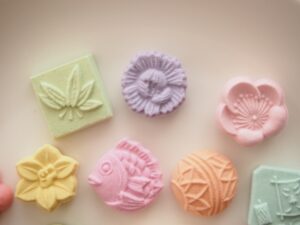
Wasanbon (和三盆) represents a very different side of Japanese sugar culture.
Traditionally associated with Kagawa and Tokushima prefectures, it is produced through labor-intensive methods involving repeated washing and working of sugar crystals.
The finished sugar is exceptionally fine, with a delicate flavor and smooth mouthfeel.
Wasanbon is especially valued in Japanese confectionery, including higashi, the small, dry sweets often served with matcha.
Unlike jōhakutō, wasanbon is not a sugar that most Japanese households use for ordinary cooking. Its appeal lies in its particular flavor, texture, and connection to regional confectionery traditions.
Zarame and Rock Sugar: Why Does Crystal Size Matter?
Not every difference between sugars is primarily about flavor.
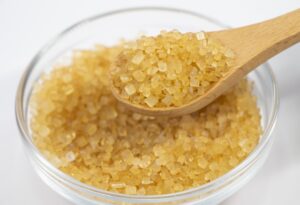
Zarame (ざらめ) refers to sugars with relatively large crystals. White zarame has a clean sweetness, while brown chūzarame often has additional caramel-like flavor.
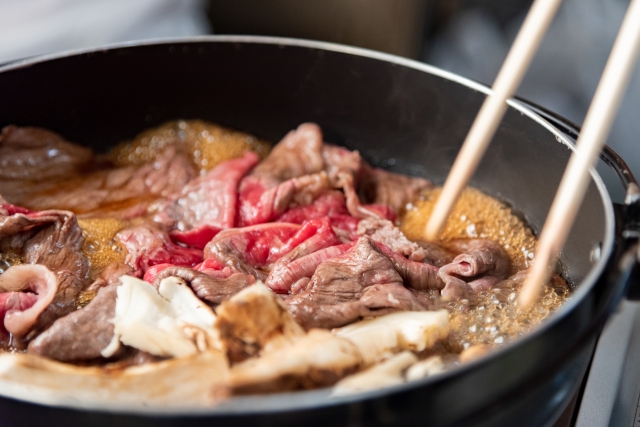
Brown zarame is used in some simmered dishes, including sukiyaki, where its flavor can complement soy sauce. Large crystals also have uses in confectionery and food preparation.
Rock sugar, called kōrizatō (氷砂糖), consists of even larger crystals.
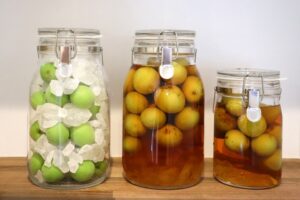
Because these crystals dissolve relatively slowly, rock sugar is commonly used when making homemade fruit liqueurs such as umeshu, or Japanese plum liqueur.
Once fully dissolved, however, crystal size itself does not create a different kind of sweetness. The large crystals are useful largely because of how they behave before dissolving.
How Does Sugar Change the Flavor of Japanese Cooking?
Sugar is not limited to desserts in Japanese cooking.
It regularly appears in savory dishes such as nikujaga, simmered fish, teriyaki, and sukiyaki. Its purpose is often to create a balance of sweetness, saltiness, and umami rather than to make the finished dish taste obviously sweet.
Soy sauce provides saltiness and a complex fermented flavor. Sugar can soften the perception of that saltiness while adding a contrasting sweetness.
The result is the familiar amakara (甘辛), or sweet-and-salty, flavor found in many Japanese dishes.
The type of sugar can also influence the final impression.
Jōhakutō offers a relatively neutral starting point. Sanontō adds mild caramel-like notes that may complement the aroma of soy sauce, while kokutō introduces a much stronger character.
In a strongly seasoned stew, the ingredients, dashi, soy sauce, and cooking method often matter more than the difference between two everyday sugars.
Sugar also has physical effects during cooking. Depending on its concentration and the food being prepared, it can contribute to moisture retention, texture, browning, and preservation.
These effects depend on the amount of sugar and the cooking conditions; the preservation effect seen in high-sugar foods such as jam does not apply to ordinary simmered dishes.
Sugar vs. Mirin: How Are They Different?
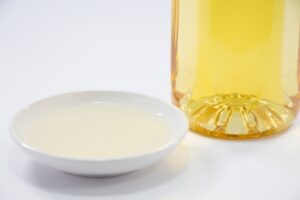
Sugar and mirin both contribute sweetness, but they are not identical ingredients.
Sugar provides a concentrated source of sweetness, with any additional flavor depending on the variety.
Traditional hon mirin contains sugars along with alcohol and other compounds produced during its manufacture. These contribute sweetness, aroma, and additional flavor characteristics.
Japanese cooks sometimes combine sugar and mirin in the same dish, adjusting their quantities to achieve the desired balance.
For more detail, read YUNOMI’s Mirin Guide and guide to soy sauce, mirin, and sake.
Is Brown Sugar Healthier Than White Sugar?
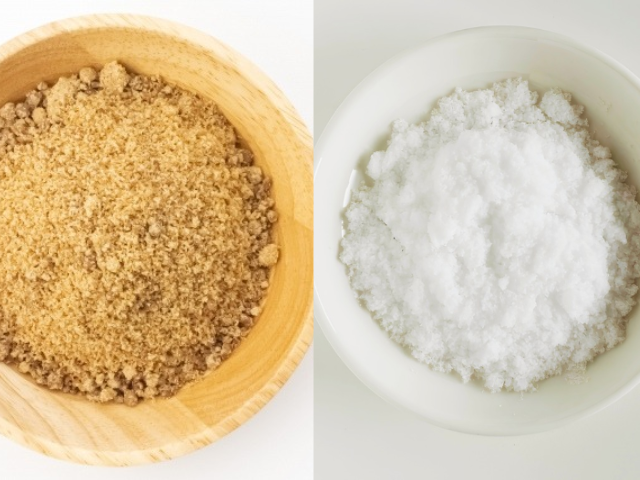
Kokutō contains more minerals than refined jōhakutō, but both are predominantly sugar.
A common assumption is that brown sugar must be healthier because it looks less processed.
But the color of sugar does not reliably indicate how much it has been refined or how nutritious it is.
Sanontō provides a particularly useful example. Its brown color comes mainly from additional heating during the refining process, rather than simply from retaining large amounts of natural molasses.
It contains somewhat more mineral matter than highly refined white sugar, but the difference is small in normal serving sizes.
Even when the difference appears substantial as a percentage, a teaspoon or two of sugar contributes very little toward daily mineral requirements.
Kokutō is different because more components from the original sugarcane juice remain in the finished sugar. It may contain noticeably more minerals and has a richer flavor.
Nevertheless, kokutō is still predominantly sugar. It should not be treated as a nutritional substitute for foods that provide minerals without large amounts of added sugar.
The practical conclusion is simple: choose sugar primarily for its flavor and suitability for the recipe, while paying attention to the total amount consumed.
Why Are Some Japanese Sugars More Expensive?
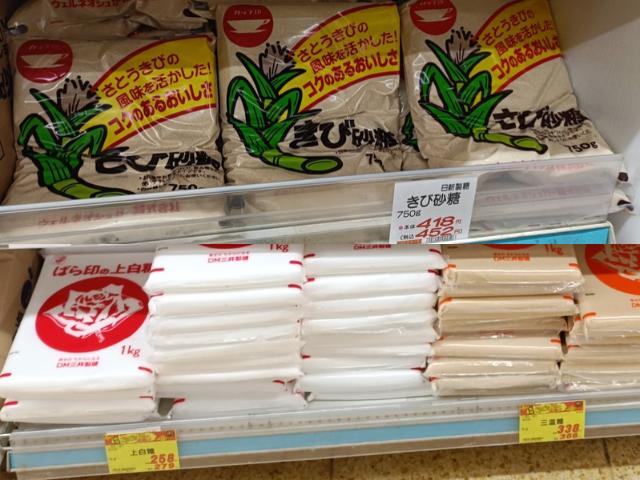
The price difference between ordinary sugar and specialty sugar can be surprisingly large.
A large bag of jōhakutō may be one of the least expensive options on a supermarket shelf. Small packages of traditional or specialty sugars can cost several times as much per gram.
It may seem logical that less-refined sugar should cost less because fewer processing steps are involved. But production costs do not work that simply.
Large-scale refined sugar production benefits from efficient equipment, high production volumes, and established distribution systems.
Specialty sugars may involve smaller batches, particular raw materials, regional production, additional handling, or labor-intensive traditional methods. Their prices may also reflect branding and market demand.
Wasanbon, for example, is valued partly for its traditional production and use in high-quality confectionery.
Kokutō may cost more than everyday refined sugar, but its stronger flavor does not make it a better choice for every recipe.
An expensive sugar is not necessarily more nutritious, more authentic, or more delicious.
For ordinary Japanese home cooking, inexpensive jōhakutō or granulated sugar is often entirely sufficient.
Can You Substitute American Sugar in Japanese Recipes?
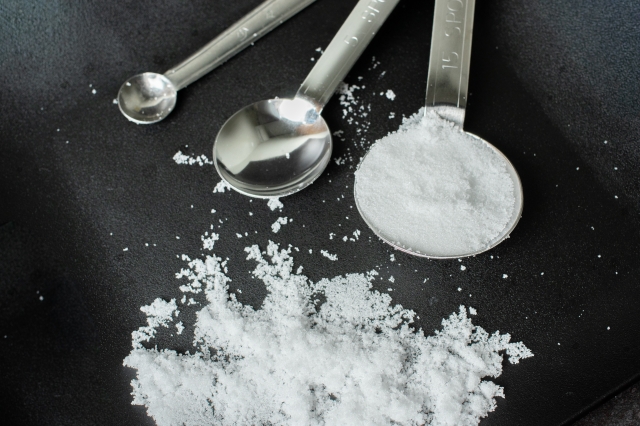
When substituting granulated sugar for jōhakutō, measuring by weight is more reliable than using equal spoonfuls.
Yes. American granulated sugar can replace jōhakutō in most Japanese home cooking without any special ingredients.
The most important precaution is how you measure it.
If a Japanese recipe calls for sugar by weight, the substitution is straightforward. Ten grams of jōhakutō can generally be replaced with ten grams of granulated sugar.
If the recipe uses tablespoons, however, remember that the two sugars have different bulk densities.
A Practical Conversion Guide
If you do not have a kitchen scale, these approximate spoon conversions can help replace jōhakutō with American granulated sugar.
| Jōhakutō in Japanese recipe | American granulated sugar (approx.) |
|---|---|
| 1 tsp (3 g) | ¾ tsp |
| 1 tbsp (9 g) | ¾ tbsp (2¼ tsp) |
| 2 tbsp (18 g) | 1½ tbsp |
| 3 tbsp (27 g) | 2¼ tbsp |
For the most reliable result, use a kitchen scale and match the sugar by weight. The spoon equivalents above are estimates based on typical Japanese measuring values.
The standard Japanese tablespoon is 15 mL, almost identical in volume to the usual American tablespoon. The important difference here is the sugar itself, not the measuring spoon.
These values are approximate, and the weight of a spoonful can vary with how it is filled. Weighing remains the more reliable method.
What About Substituting for Sanontō or Kokutō?
For sanontō, ordinary granulated sugar is often a practical substitute.
American light brown sugar can also work, but its molasses flavor may be stronger or different from sanontō's caramel-like notes. In a delicate Japanese dish, granulated sugar may actually be the more neutral choice.
Kokutō is harder to replace precisely.
American muscovado or dark brown sugar may provide some similar depth, but neither is identical to traditional Japanese black sugar. If the sugar's distinctive flavor is central to the dish, the substitution will change the result.
For everyday simmered dishes, though, there is no need to purchase several imported Japanese sugars. Ordinary American sugar is usually enough.
What Japanese Sugar Reveals About Everyday Food Culture
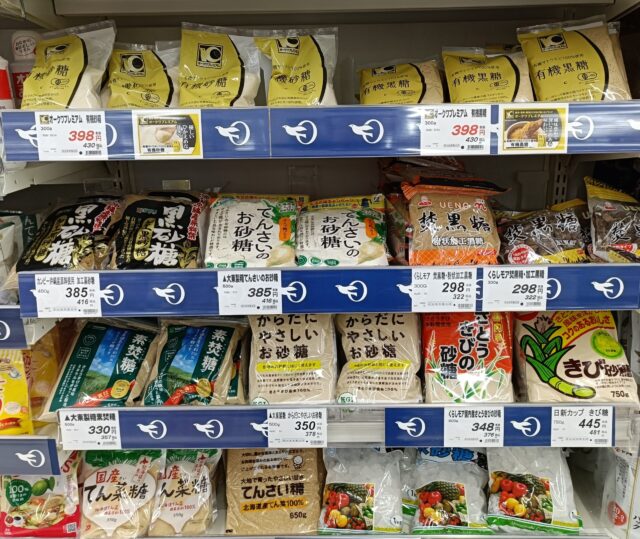
An ordinary Japanese supermarket offers many kinds of sugar, but most households need only a few for everyday cooking.
A Japanese supermarket may offer an impressive selection of sugars, from inexpensive white sugar to regional specialties and large crystals intended for particular recipes.
Yet the number of products on the shelf does not mean that Japanese families routinely use every variety.
For many households, one familiar sugar handles most cooking needs. Others may prefer sanontō for its aroma or keep black sugar for particular sweets and strongly flavored dishes.
Traditional sugars such as wasanbon occupy a different place, connecting sugar production with regional craftsmanship and Japanese confectionery.
There is also no universal rule requiring a particular sugar for every Japanese dish.
The important distinction is between the sweetness a recipe needs and the additional qualities a particular sugar might contribute.
Understanding jōhakutō is a useful starting point because it reveals a simple cultural difference: what one country considers ordinary sugar may not be quite the same as another country's everyday standard.
From there, Japan's many other sugars become easier to understand—not as a ranking from cheap to expensive or unhealthy to healthy, but as ingredients with different characteristics and purposes.
Author's Note
Although jōhakutō is the most familiar everyday sugar in Japan, I generally use sanontō in my own kitchen.
I like its subtle caramel-like aroma, especially when cooking with soy sauce. It adds a little extra character without dominating the overall flavor.
I also enjoy kokutō, but for different reasons. Its slight bitterness, mineral-like notes, and complex sweetness make it particularly appealing in black sugar syrup for warabimochi, steamed cakes, and even small additions to curry.
I find some kibi sugar products more assertive, making them less convenient as a universal substitute. That is a matter of personal taste rather than an indication of quality.
For me, the best sugar is not necessarily the most expensive or least refined one. It is the sugar whose flavor fits what I am cooking.
FAQ
What Is Jōhakutō in English?
Jōhakutō is often described as Japanese soft white sugar or Japanese refined white sugar.
Neither name is a perfect equivalent to an American supermarket product. It is a fine, slightly moist sugar containing a small amount of invert sugar.
Is Jōhakutō the Same as Caster Sugar?
No. Caster sugar, also called superfine sugar in the United States, is a fine-grained form of granulated sugar.
Jōhakutō also has fine crystals, but it contains a small amount of invert sugar that gives it a softer, slightly moist texture.
Can I Use American White Sugar Instead of Jōhakutō?
Yes. Ordinary granulated sugar works in most Japanese recipes.
For accurate substitution, measure the sugar by weight rather than assuming that equal spoonfuls contain equal amounts.
Why Is Japanese White Sugar Moist?
Jōhakutō is finished with a small amount of sugar syrup containing invert sugar.
This contributes to moisture retention and gives the fine crystals their characteristic soft texture.
Is Sanontō the Same as American Brown Sugar?
No. Both are brown-colored sugars, but their typical manufacturing methods and flavor profiles differ.
Sanontō develops its characteristic color mainly through additional heating of refined sugar syrup, while American brown sugar commonly contains added or retained molasses.
Is Japanese Brown Sugar Healthier Than White Sugar?
Not necessarily. Sanontō contains only slightly more mineral matter than ordinary white sugar, and the nutritional difference is small at typical serving sizes.
Kokutō retains more sugarcane-derived components, but it is still predominantly sugar.
What Is the Difference Between Kokutō and Brown Sugar?
Traditional kokutō is produced by concentrating sugarcane juice without separating the molasses.
Typical American brown sugar is usually refined sugar combined with molasses, although production methods vary. The resulting flavor may resemble kokutō in some ways, but the two are not identical.
Do I Need Japanese Sugar to Make Authentic Japanese Food?
For most everyday Japanese dishes, no.
American granulated sugar can produce excellent results. The balance between sugar, soy sauce, mirin, dashi, and other ingredients generally matters more than using a particular brand of Japanese white sugar.
Related Reading
Japanese Pantry Guide — An introduction to the seasonings that shape Japanese home cooking.
What Is Mirin? — How mirin contributes sweetness, aroma, and flavor to Japanese cooking.
Soy Sauce, Mirin, and Sake — Understanding how three fundamental seasonings work together.

