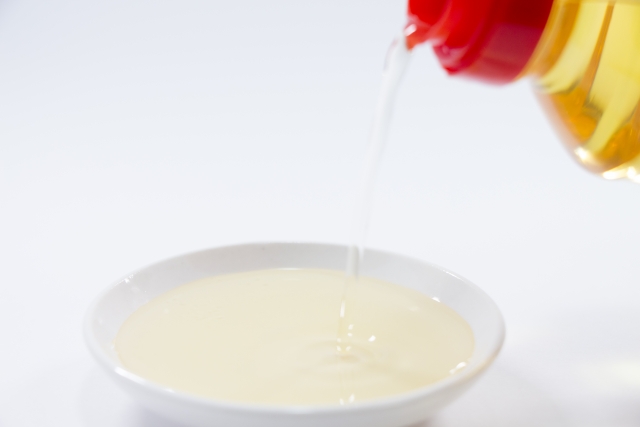
Ask a Japanese home cook what mirin does, and the answer may be surprisingly vague.
“It adds sweetness.” “It gives food a nice gloss.” “It makes the flavor feel more complete.”
All of those answers are true. But none of them fully explains mirin.
That is because mirin does not have just one job. It adds sweetness, aroma, gloss, and balance while also changing how other flavors work together.
Japanese cooks use it constantly, often alongside soy sauce and sake, but many people rarely stop to think about what it actually is. And when you look closely at a Japanese supermarket shelf, things become even more confusing: there are several different kinds of mirin-related seasonings.
So what is mirin, why are there different types, and what is it really doing in Japanese cooking?
Quick Summary
- Mirin is a traditional Japanese rice-based seasoning made with glutinous rice, rice koji, and alcohol.
- Hon mirin develops its sweetness mainly through enzymatic saccharification and aging, rather than through the alcohol fermentation used to make sake.
- Its flavor comes from several sugars, amino acids, organic acids, aroma compounds, and alcohol working together.
- Mirin does several small jobs at once: adding sweetness, gloss, aroma, and balance, and helping reduce unwanted smells.
- Japanese supermarkets commonly sell three mirin-related types: hon mirin, mirin-style seasoning, and mirin-type fermented seasoning.
- Mirin-style seasoning contains very little alcohol and is convenient for cold or unheated dishes.
- Mirin-type fermented seasoning contains alcohol but also added salt.
- Hon mirin is especially useful when mirin itself plays a noticeable role in the final flavor.
- Mirin makes more sense when understood as its own ingredient rather than simply as “sweet cooking wine.”
What Is Mirin?
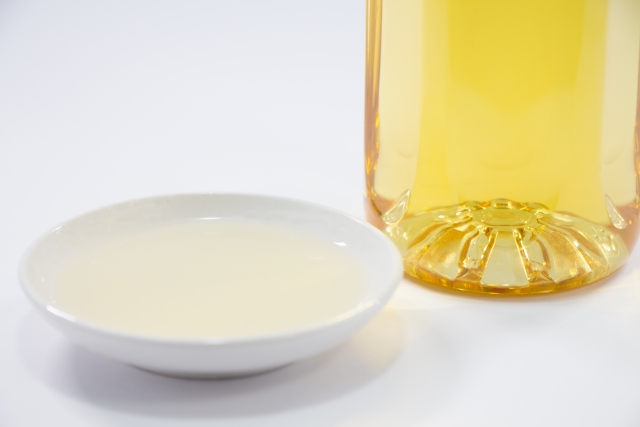
Traditional hon mirin is made mainly from glutinous rice, rice koji, and shochu or brewing alcohol. At first glance, that may sound similar to sake, but the production process is quite different.
In sake brewing, yeast converts sugars into alcohol through fermentation. Hon mirin already contains alcohol as an ingredient, while enzymes from koji gradually break down the rice during saccharification and aging.
The starch in the rice becomes sugars, while proteins are broken down into amino acids and other flavor compounds. This creates a seasoning that is sweet and alcoholic, yet neither simply sake nor a sugar syrup.
Mirin is also made with koji, yet it does not fit neatly into the same category as fermented seasonings such as miso or soy sauce.
In the end, mirin is easiest to understand as mirin: a Japanese seasoning with its own production method and role in cooking.
How Is Mirin Made?
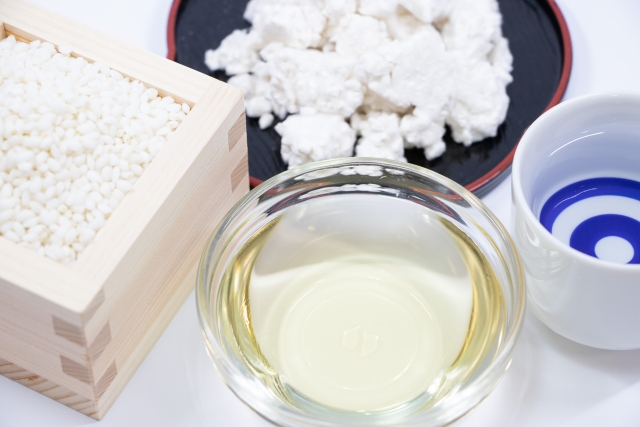
Hon mirin is made from glutinous rice, rice koji, and shochu or brewing alcohol.
The key process in hon mirin is the enzymatic breakdown of rice. Koji provides enzymes that break starch into sugars and proteins into amino acids and related compounds.
Because alcohol is already present, the mixture develops differently from sake. During aging, the rice, koji, and alcohol gradually create a complex liquid containing several kinds of sugars, amino acids, organic acids, and aroma compounds.
This is important because hon mirin is not simply made by mixing alcohol with something sweet. Much of its character develops from the interaction of many compounds over time.
That complexity is one reason mirin is difficult to reproduce through shortcuts.
Why Is Mirin Sweet?
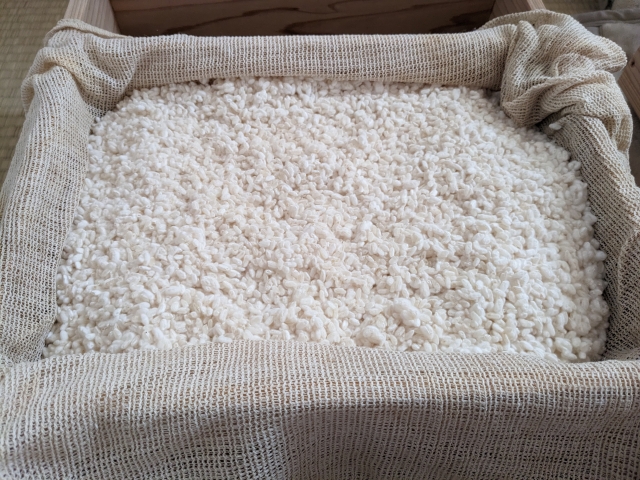
Mirin is sweet because koji enzymes break down the starch in glutinous rice into sugars. Glucose makes up a large part of those sugars, but hon mirin also contains other sugars, including oligosaccharides.
Table sugar, by contrast, is mainly sucrose. Different sugars vary not only in sweetness intensity but also in how their sweetness is perceived, so a mixture of sugars does not taste exactly like an equal amount of table sugar.
This helps explain why mirin can have a softer, more layered sweetness.
But the sugars are only part of the flavor. Amino acids, organic acids, aroma compounds, and alcohol also contribute to how hon mirin tastes and behaves in a dish.
Why Isn’t Sake + Sugar the Same as Mirin?
Sake and sugar can reproduce two obvious features of mirin: alcohol and sweetness. That is why the combination is often recommended as a practical substitute.
But it does not reproduce hon mirin exactly.
The sweetness of hon mirin comes from several kinds of sugars rather than sucrose alone, and the seasoning also contains amino acids, organic acids, and aroma compounds that develop during production and aging.
Sake plus sugar therefore gets reasonably close to the simple idea of “alcohol + sweetness,” but not to the full composition of mirin.
The same principle can be seen with other complex seasonings. Combining sweetness and acidity does not create the character of a matured vinegar, just as salt water and amino acids do not become traditionally brewed soy sauce.
The complexity matters more than any one ingredient.
What Does Mirin Actually Do in Cooking?
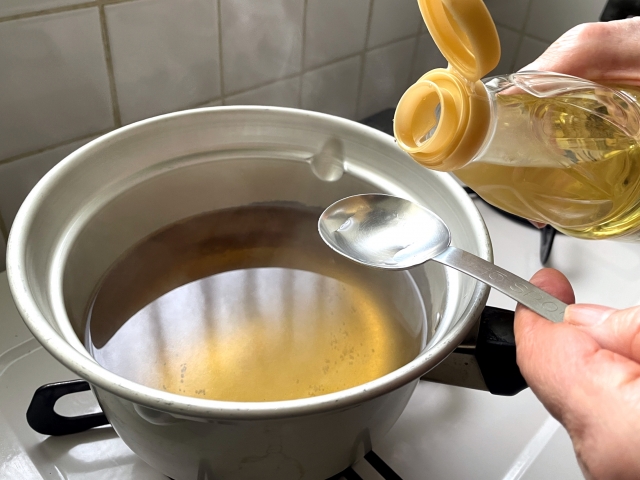
Mirin does not have just one job. Its value comes from doing several small jobs at the same time.
It adds sweetness and helps create the gloss seen in dishes such as teriyaki. Its alcohol can also help reduce unwanted smells from fish and meat, while other components contribute to a fuller, rounder flavor.
Mirin can also help seasoning penetrate ingredients and help foods hold their shape during simmering. None of these effects alone defines mirin, but together they influence the finished dish.
That may explain why leaving mirin out does not necessarily ruin a recipe. The food may still taste fine, but something can feel slightly different: the sauce may be less glossy, the sweetness simpler, or the overall flavor a little less rounded.
This subtlety is one reason even Japanese home cooks can struggle to explain exactly what mirin does.
Three Types of Mirin-Related Seasoning in Japan
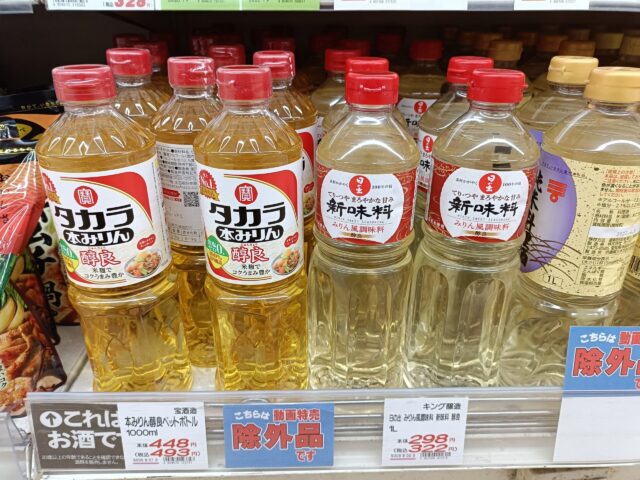
Walk into the seasoning aisle of a Japanese supermarket and you may find several similar-looking bottles sitting next to one another.
The three main types are hon mirin, mirin-style seasoning, and mirin-type fermented seasoning. They are used in many of the same kinds of dishes, but they exist for different reasons.
The easiest way to understand them is not as better and worse versions of the same product, but as three different ways of balancing flavor, alcohol, convenience, and cost.
Hon Mirin
Hon mirin is the traditional form of mirin. It is made mainly from glutinous rice, rice koji, and shochu or brewing alcohol, and typically contains around 14% alcohol with no added salt.
Its sweetness, aroma, and complexity develop as koji enzymes break down the rice and the mixture ages. This gives hon mirin the broadest combination of sweetness, aroma, gloss, and alcohol-related cooking effects.
Hon mirin makes the most sense when those qualities are important to the finished dish. Teriyaki, simmered fish, noodle sauces, and dipping sauces are good examples because the seasoning itself plays a noticeable role in the final flavor.
Mirin-Style Seasoning
Mirin-style seasoning is designed to reproduce some of mirin’s sweetness and cooking functions with very little alcohol, generally less than 1%.
This makes it cheaper and easier to use in situations where the alcohol itself is not especially important. Because there is almost no alcohol to remove, it is also convenient for cold sauces, dressings, and vinegared dishes that may not be heated.
Its role is therefore mainly practical: it provides mirin-like sweetness and convenience at a lower cost, without requiring the cook to think much about alcohol.
Mirin-Type Fermented Seasoning
Mirin-type fermented seasoning fills the middle ground between the other two.
Unlike mirin-style seasoning, it may contain around 10% alcohol, allowing it to retain some of the cooking effects associated with alcohol. However, salt is added to make the product unsuitable for drinking.
This matters under Japan’s liquor-tax system. By making the product undrinkable, it can be sold as a seasoning rather than being treated in the same way as an alcoholic beverage, which helps keep the price lower than hon mirin.
That gives this type a clear practical role: it can provide some alcohol-related cooking benefits while keeping costs down. This can be especially useful in large-scale cooking, such as restaurants, delis, or food-service kitchens preparing large batches of simmered fish or other seasoned dishes.
The trade-off is the added salt. When using mirin-type fermented seasoning, the amount of soy sauce, salt, or other salty ingredients may need to be adjusted.
So although all three products may sit together on the same supermarket shelf, each one exists to solve a slightly different problem.
Does Mirin Need to Be Heated Before Use?
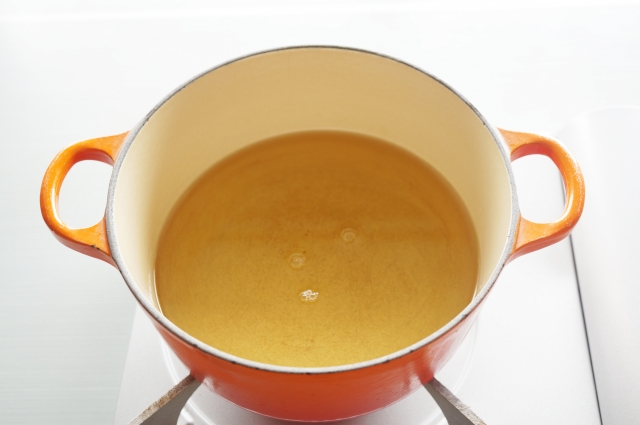
Hon mirin can be heated first to reduce its alcohol for cold or lightly cooked dishes.
Hon mirin contains a significant amount of alcohol. In simmered dishes, teriyaki, and other recipes that are cooked for some time, much of that alcohol is reduced naturally during cooking.
For cold dishes, dressings, marinades, or lightly heated sauces, however, the alcohol can remain noticeable in both aroma and taste. In those situations, hon mirin may be heated first to reduce the alcohol, a preparation often called nikiri mirin.
Mirin-type fermented seasoning also contains a significant amount of alcohol, so the same basic issue applies. However, because it contains added salt, heating and reducing it can make the saltiness more concentrated.
Mirin-style seasoning is different because its alcohol content is generally very low. It can therefore be added directly to many cold or unheated dishes without a separate heating step.
This practical difference helps explain why all three types continue to have a place in Japanese kitchens.
Why Are Soy Sauce and Mirin Used Together?
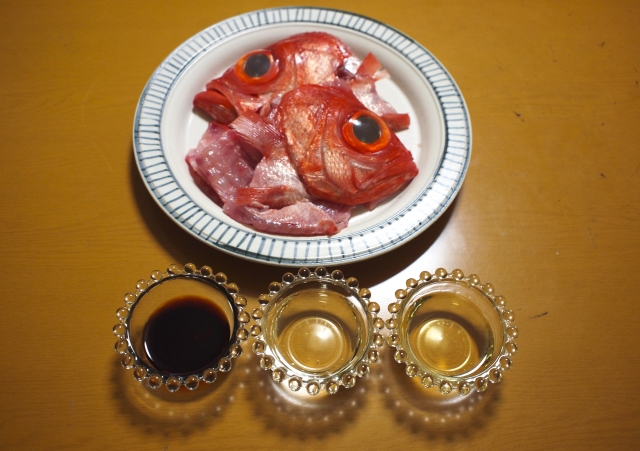
Soy sauce, mirin, and sake are a classic seasoning combination in Japanese home cooking, especially for fish and simmered dishes.
Soy sauce and mirin are among the most familiar pairings in Japanese home cooking. Soy sauce provides saltiness, umami, and a strong savory aroma, while mirin adds sweetness, gloss, and a softer, rounder character.
Sake is often added as a third element, creating one of the most recognizable seasoning combinations in Japanese cooking:
soy sauce + mirin + sake
Each ingredient has a slightly different role. Soy sauce builds the savory base, mirin adds sweetness and balance, and sake contributes its own aroma and cooking effects.
The ratios vary from dish to dish. A beginner may simply follow a recipe that calls for one tablespoon of each, while an experienced cook is more likely to think about what needs adjusting: sweetness, aroma, gloss, saltiness, or overall balance.
This may be one reason professional cooking can feel subtly different from simply following measurements. Mirin is not just an ingredient to add; it is one of several tools for adjusting how the whole dish comes together.
How Do Japanese People Actually Use Mirin?
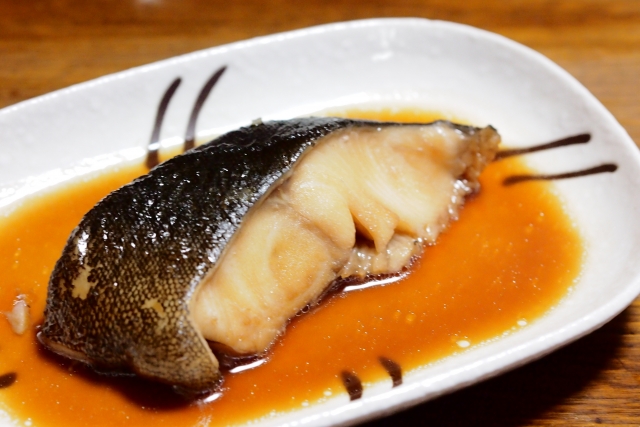
Mirin is not usually treated as a special or exotic ingredient in Japan. It is simply one of those familiar bottles that many households keep near soy sauce, sake, cooking oil, and other everyday seasonings.
It appears in simmered vegetable, fish, and meat dishes, noodle sauces, donburi, soups, dipping sauces, and many other foods. Most people probably do not stop to analyze its chemistry before adding it.
If the recipe says mirin, they add mirin.
And as I found while working on this article, some people may not even be completely sure which type of mirin-related seasoning is sitting in their own kitchen.
That does not mean mirin is unimportant. In fact, its subtle effect may be precisely why it is difficult to explain.
Leave it out, and the dish may still taste perfectly acceptable. But the sauce might look slightly duller, the sweetness simpler, or the edge of the soy sauce a little sharper.
A home cook may not be able to identify exactly what changed. They may simply think, “Maybe it is because I did not use mirin today.”
Is “Sweet Cooking Wine” Really the Right Translation?
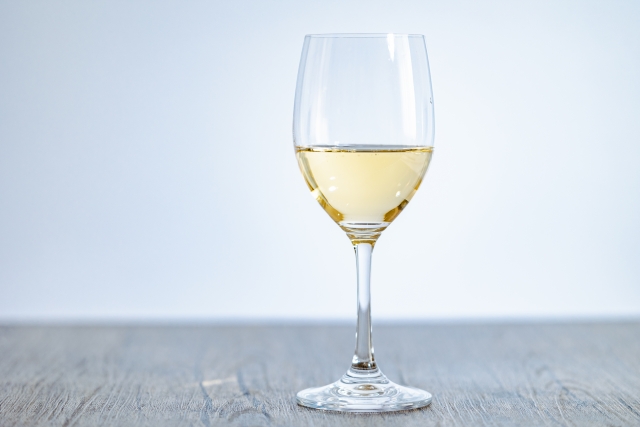
Calling mirin “sweet cooking wine” can be useful at first, but it may also create the wrong image of what mirin actually is.
Mirin is often described in English as “sweet cooking wine.” It is a useful shortcut because it immediately tells the reader that hon mirin is sweet and contains alcohol.
But it can also create the wrong picture.
Mirin is not simply Japanese wine with sugar mixed into it. Its sweetness develops as koji enzymes break down rice, and its flavor includes amino acids, organic acids, aroma compounds, and several kinds of sugars.
Its modern role is also overwhelmingly that of a seasoning rather than a drink.
So “sweet cooking wine” works as an introduction, but not as a complete definition.
Mirin Makes More Sense as “Mirin”
Some Japanese ingredients become easier to understand once you learn their original names.
Miso is more than “fermented soybean paste.” Dashi is more than “Japanese stock.” Sake is not fully explained by calling it “rice wine.”
Mirin is similar.
Once you understand how it is made and what it does in cooking, it makes more sense to think of it simply as mirin.
How Should You Choose Mirin Outside Japan?
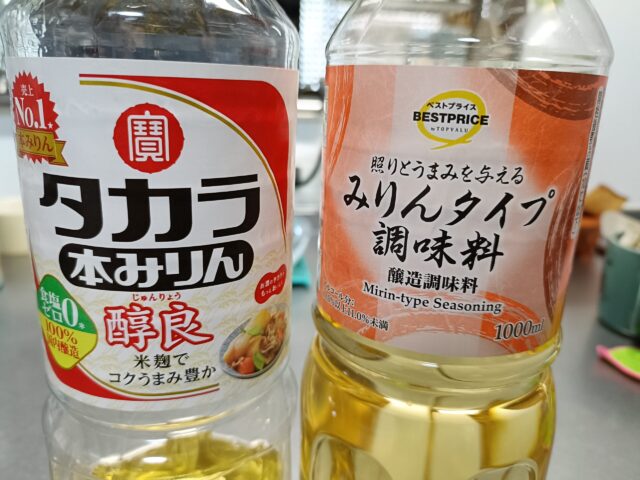
Similar-looking bottles can contain very different products. When choosing mirin, check the label for alcohol content and added salt.
If you find mirin in a Japanese or Asian supermarket, do not rely only on the name on the front of the bottle. Check the ingredient list, alcohol content, and whether salt has been added.
Hon mirin typically contains a substantial amount of alcohol, often around 14%, and no added salt. Mirin-style seasoning usually contains less than 1% alcohol, while mirin-type fermented seasoning may contain around 10% alcohol together with added salt.
Product names can vary by manufacturer and market, which makes the label especially important.
For cold or unheated dishes, a low-alcohol mirin-style seasoning can be convenient. For ordinary simmered foods, several types may work perfectly well, while hon mirin becomes worth considering when the flavor of the sauce itself is especially important.
If your goal is to understand what traditional mirin contributes to Japanese cooking, hon mirin is the best reference point.
What Mirin Reveals About Japanese Home Cooking
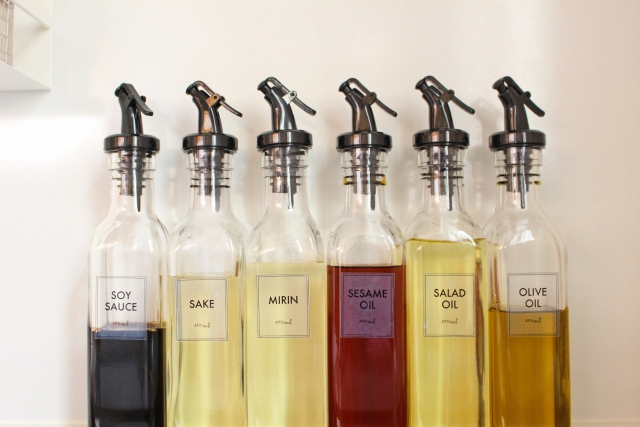
Mirin is one of several everyday seasonings that work together to shape Japanese home cooking.
Mirin is interesting because it rarely dominates a dish. Its role is quieter: it adds several small effects at once, helping other flavors and ingredients work together.
Ask what salt does, and the answer is easy. Ask what vinegar does, and the answer is also fairly easy.
Ask what mirin does, and the answer becomes longer.
It sweetens, adds gloss and aroma, softens strong flavors, helps reduce unwanted smells, and changes the way the whole dish comes together.
Mirin is difficult to explain because it does several small things at once. And that is exactly why it is difficult to replace.
Author’s Note
I use mirin regularly, but while writing this article I realized I had never thought very deeply about what it actually was.
Like many Japanese people, I mostly used it because recipes called for it. If someone had asked me what mirin does, I probably would have answered, “It adds sweetness and makes food glossy.”
That would not have been wrong. It just would not have been the whole answer.
I also thought the bottle in my own kitchen was mirin-style seasoning. When I checked the label more carefully, I found that it was actually mirin-type fermented seasoning, with around 10% alcohol and added salt.
I had been using it without thinking much about the distinction.
That probably says something about how mirin is used in many Japanese homes. We know where the bottle is kept and what kinds of dishes call for it, but the details can remain surprisingly vague until we actually stop and read the label.
In my own cooking, I still tend to choose hon mirin for dishes such as buri teriyaki, where the sauce itself is important. For ordinary simmered dishes, I am much less strict.
Mirin becomes more interesting when you stop asking only, “What does it taste like?”
The better question is: “What is it doing to the whole dish?”
FAQ
Is mirin alcoholic?
Hon mirin usually contains around 14% alcohol, while mirin-type fermented seasoning commonly contains around 10%. Mirin-style seasoning generally contains less than 1%.
Are there really three kinds of mirin?
Japanese supermarket mirin sections commonly contain three main types: hon mirin, mirin-style seasoning, and mirin-type fermented seasoning.
They overlap in use, but they differ considerably in production, alcohol content, and salt content.
Why is mirin sweet?
Koji enzymes break down starch in glutinous rice into sugars. Glucose is a major component, but hon mirin also contains other sugars, including oligosaccharides.
Can I replace mirin with sugar?
Not exactly. Sugar can provide sweetness, but it cannot reproduce the alcohol, aroma, mixture of sugars, amino acids, organic acids, and other components found in hon mirin.
Can I replace mirin with sake and sugar?
Yes, as a practical substitute. Sake and sugar reproduce alcohol and sweetness, but they do not create exactly the same flavor structure or cooking effects as hon mirin.
Does mirin need to be heated before use?
Not always. Hon mirin and mirin-type fermented seasoning contain significant amounts of alcohol, so heating may be useful in cold or lightly cooked dishes.
Mirin-style seasoning generally contains very little alcohol and can usually be used without this extra step.
Does mirin-type fermented seasoning contain salt?
Yes. Mirin-type fermented seasoning contains added salt, unlike hon mirin and mirin-style seasoning.
Because the exact amount varies by product, you may need to adjust soy sauce, salt, or other salty seasonings in the recipe.
Which type of mirin is best?
There is no single best type for every dish.
Hon mirin is useful when its aroma, sweetness, gloss, and depth are important. Mirin-style seasoning is convenient for unheated dishes and inexpensive everyday cooking, while mirin-type fermented seasoning offers some alcohol-related cooking effects but requires attention to its added salt.
Related Reading
What Is Japanese Soy Sauce? How Shoyu Shapes Japanese Food — Soy sauce and mirin are one of the most familiar seasoning combinations in Japanese home cooking.
Japanese Dashi Guide: Types, Ingredients, and How to Use Them — Dashi often works with soy sauce and mirin to form the flavor base of soups, noodle dishes, and simmered foods.

