Anko is one of the most familiar sweet flavors in Japan.
It is usually made by cooking azuki beans with sugar until they become soft and thick. The result can be smooth or slightly chunky, depending on how the beans are prepared.
For someone who grew up thinking of beans mainly as a savory food, the idea of sweet bean paste may sound unusual at first.
In Japan, however, it feels completely ordinary.
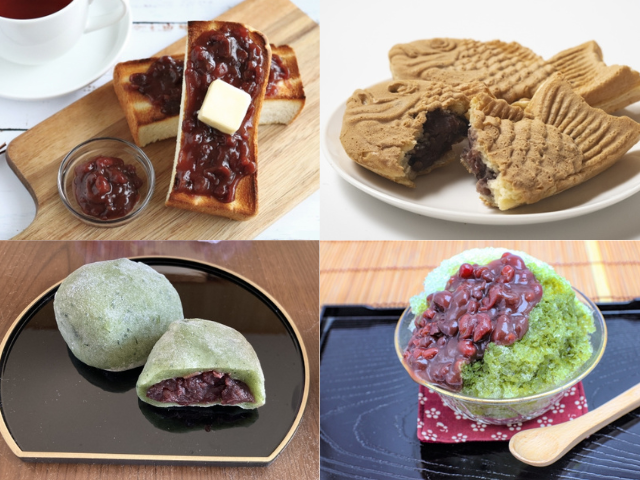
Anko appears in daifuku, dorayaki, taiyaki, manju, ohagi, anpan, and many other familiar foods. It can be wrapped in mochi, sandwiched between cakes, baked inside bread, spread on toast, or paired with ice cream.
Rather than belonging to one particular sweet, anko works almost like a basic building block of Japanese sweets.
Once you recognize it, many foods that may have seemed unrelated begin to connect.
Quick Summary
- Anko usually refers to sweet paste made from azuki beans and sugar.
- The two best-known styles are tsubuan, which keeps more of the bean texture, and koshian, which is smooth.
- Anko is used in many Japanese sweets, including daifuku, dorayaki, taiyaki, ohagi, manju, and anpan.
- Other sweet fillings commonly treated as types of anko include shiroan, kuri-an, imo-an, and zunda.
- Anko is easy to find in supermarkets, convenience stores, bakeries, and wagashi shops throughout Japan.
What Is Anko?
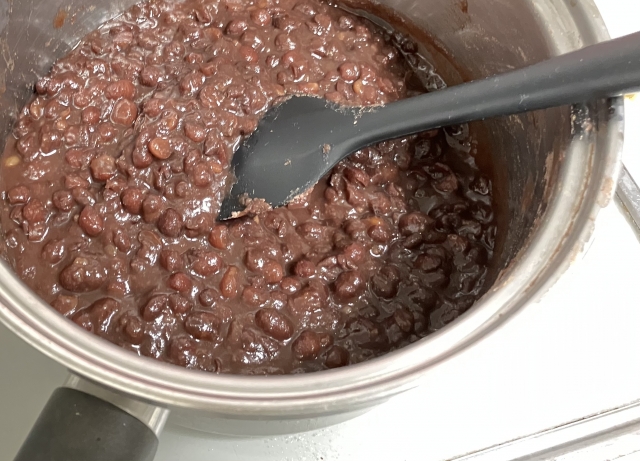
Anko is made by cooking azuki beans with sugar until they become soft and thick.
Anko is a sweetened bean paste widely used in Japanese sweets.
Classic anko is made from azuki beans, small reddish beans that have long been used in Japanese cooking and confectionery. The beans are cooked until soft and then combined with sugar to create a thick, sweet paste.
A small amount of salt may also be added to sharpen the sweetness.
The ingredients themselves are remarkably simple.
What changes is how the beans are handled, how much sugar is used, and how smooth or textured the finished paste becomes.
Anko has a long history in Japan, but it does not feel distant or ceremonial.
You may find it in an elegant wagashi shop, but you are just as likely to encounter it inside a supermarket daifuku or a convenience-store dorayaki.
It is traditional, but very ordinary.
What Does Anko Taste Like?
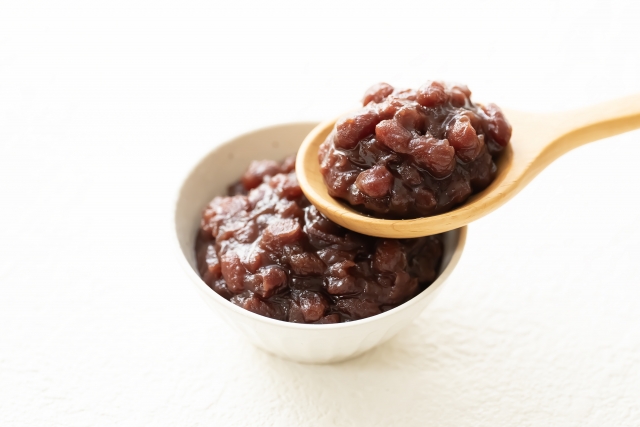
Anko is sweet, but it does not taste only of sugar.
Azuki beans have a mild, earthy flavor of their own, and some of that character remains after they are sweetened.
The exact taste varies considerably.
Some anko is quite sweet, while other versions use less sugar and allow more of the bean flavor to come through. The texture can also change the experience, from a smooth, dense paste to something softer with visible pieces of bean and skin.
That combination of sweetness, bean flavor, and texture gives anko a character quite different from jam, chocolate, or cream-based fillings.
What Is Anko Made From?
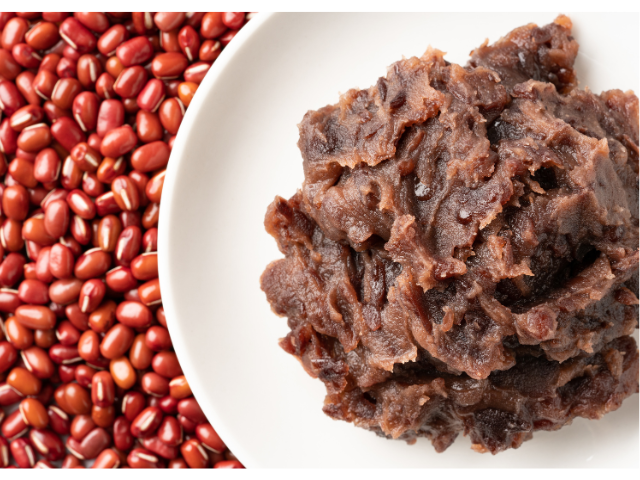
Basic azuki anko needs very little:
- azuki beans
- sugar
- water
- sometimes a small amount of salt
The beans are cooked until soft, sweetened, and reduced until the mixture reaches the desired consistency.
The most important difference comes from how much of the original bean remains in the finished paste.
That leads to the two forms most people in Japan immediately recognize: tsubuan and koshian.
Tsubuan vs. Koshian: What's the Difference?
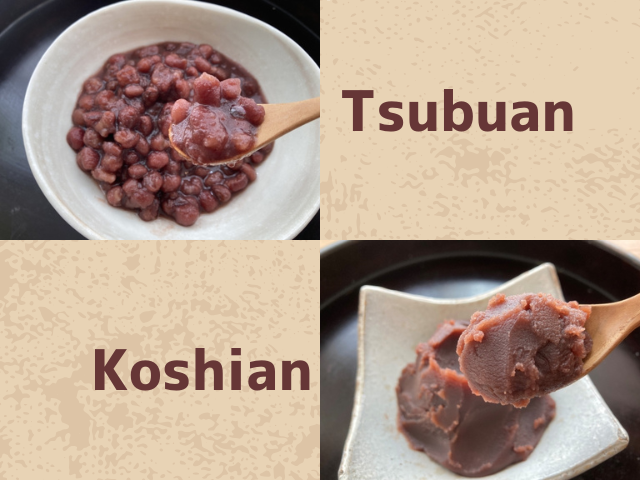
Tsubuan keeps more of the bean texture, while koshian is strained until smooth.
The two most familiar styles of azuki anko are tsubuan and koshian.
Tsubuan keeps more of the cooked beans intact. The skins remain, and the paste has a soft but noticeably textured consistency. You can still feel that it was made from beans.
Koshian is much smoother. The cooked beans are strained so that the skins are removed, producing a fine, uniform paste.
The difference is not merely visual.
Tsubuan and koshian feel quite different in the mouth, and many people in Japan have a definite preference for one or the other.
Neither is inherently better.
Some people enjoy the fuller bean texture of tsubuan, while others prefer the smoothness of koshian. Different sweets may also use one style rather than the other.
The fact that people can have such strong preferences shows how much texture matters, even in something as simple as sweet bean paste.
What Kinds of Anko Are There?
When people simply say anko, sweet azuki bean paste is usually the first thing that comes to mind.
But Japanese sweets also include several other fillings that are commonly treated as varieties of anko.
Shiroan
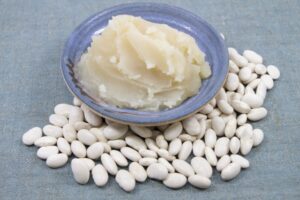
Shiroan is a pale, smooth filling usually made from white beans. Its mild flavor and light color make it useful in many wagashi.
Kuri-an
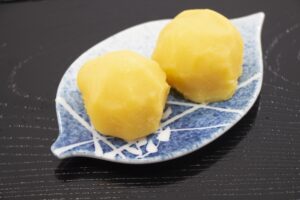
Kuri-an is made with chestnuts and has a richer flavor often associated with autumn sweets.
Imo-an
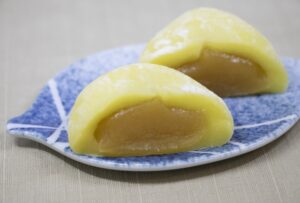
Imo-an uses sweet potato and also appears frequently in seasonal confectionery.
Zunda
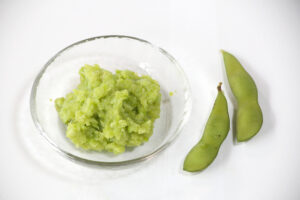
Zunda is made from crushed edamame mixed with sugar.
Many people outside Japan already know edamame as a lightly salted savory food, so seeing the same familiar green soybeans transformed into a sweet filling can be surprising.
Its bright green color and fresh soybean flavor make it look and taste quite different from classic azuki anko.
There are many more varieties, including seasonal and regional fillings, but these examples show how broad the world of sweet anko can be.
How Is Anko Used in Japan?
Anko appears in an unusually wide range of Japanese sweets.
This variety is one reason anko is best understood as an ingredient rather than as one particular sweet.
It is one of the basic building blocks of Japanese confectionery.
Wrapped, Filled, and Sandwiched
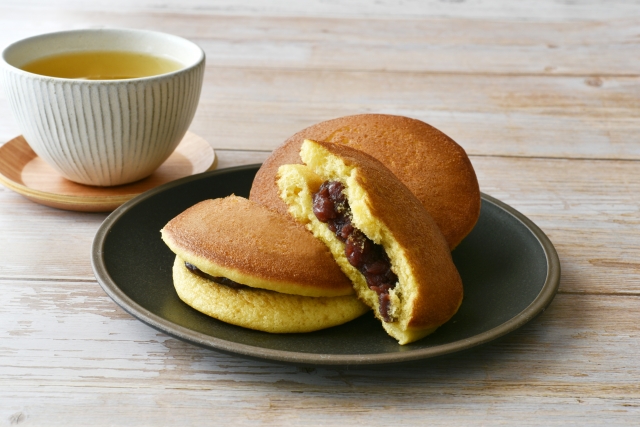
Anko is often sandwiched between soft cakes, as in dorayaki.
Anko is often used as a filling inside other foods.
- wrapped inside mochi, as in daifuku
- sandwiched between soft cakes, as in dorayaki
- baked inside shaped batter, as in taiyaki
- enclosed in steamed dough, as in manju
- placed between crisp wafers, as in monaka
- baked inside bread, as in anpan
The surrounding texture changes how the same basic filling feels. Chewy mochi, soft cake, crisp wafers, and bread all create very different experiences.
Served with Rice, Mochi, and Desserts
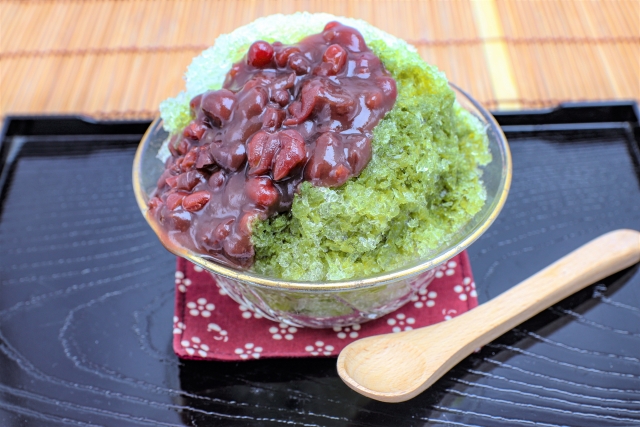
Anko is also used in desserts such as shaved ice.
Anko does not always need to be hidden inside something.
It may be combined with partially pounded rice, as in ohagi, served with dango, or added to agar jelly, shaved ice, and other desserts.
These combinations show how easily anko can move between different textures while remaining recognizable.
Paired with Modern Flavors

Anko pairs well with toast and butter, combining sweetness with richness and a touch of saltiness.
Anko also works well outside traditional wagashi.
It may be spread on toast, paired with butter or cream, or served with ice cream.
Vanilla ice cream, for example, adds a cold, creamy contrast to the dense sweetness and bean texture of anko, while butter adds saltiness and richness.
The anko may be similar, but the experience changes with what surrounds it.
That flexibility helps explain why the same basic ingredient can appear in so many different foods without making them all feel alike.
Is Anko Easy to Find in Japan?
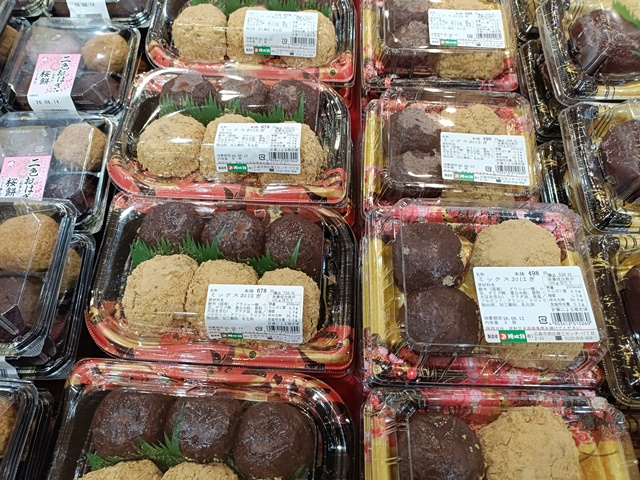
Ohagi and other anko sweets are commonly sold in Japanese supermarkets.
Very.
Anko is not something travelers need to seek out at a specialist restaurant.
Wagashi shops naturally sell many sweets containing it, but supermarkets and convenience stores also commonly carry daifuku, dorayaki, manju, ohagi, and other anko-filled sweets.
Bakeries may sell anpan or an-butter bread, while taiyaki shops and other casual sweet shops provide still more ways to try it.
Ready-made anko itself is also sold in supermarkets for home use.
Some people cook azuki beans and make anko from scratch, especially when preparing traditional or seasonal foods, but doing so is not necessary to enjoy it.
For travelers, this makes anko one of the easiest traditional Japanese flavors to experience.
You may even encounter it without deliberately looking for it.
What Anko Reveals About Japanese Food Culture
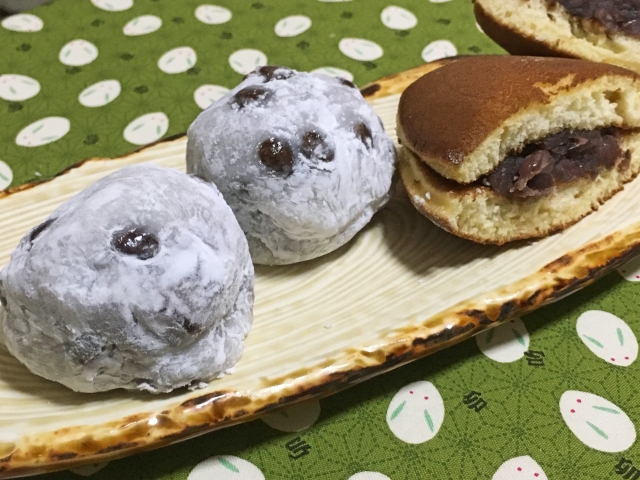
Anko appears in many different sweets, helping connect Japanese desserts that may seem unrelated at first.
Anko shows how a very simple ingredient can become part of many different foods.
The difference between tsubuan and koshian also shows how much texture matters. The basic ingredients may be almost identical, yet the experience can change considerably depending on how the beans are prepared.
Anko is not remarkable because it is rare or luxurious.
Its importance comes from how easily it fits into everyday sweets — appearing again and again in different forms while still remaining recognizable.
Once you begin noticing anko, Japanese sweets become easier to understand as a connected food culture rather than a collection of unrelated desserts.
FAQ
Is anko the same as red bean paste?
Usually, yes. In English, anko is commonly described as Japanese sweet red bean paste. It is most often made from azuki beans and sugar.
Is anko always sweet?
Anko generally refers to a sweetened filling used in Japanese sweets.
The broader Japanese word an can also appear in savory foods, including thickened sauces and fillings, so an and anko are not always identical in meaning.
What is the difference between tsubuan and koshian?
Tsubuan retains more of the azuki beans and their skins, giving it a textured consistency. Koshian is strained into a much smoother paste with the skins removed.
Is anko vegan?
Basic anko made from azuki beans, sugar, water, and salt contains no animal ingredients.
However, the sweet it is used in may contain eggs, dairy, or other animal-derived ingredients.
Where can I try anko in Japan?
You can find sweets containing anko in wagashi shops, supermarkets, convenience stores, bakeries, and specialty shops.
Daifuku, dorayaki, taiyaki, anpan, and ohagi are all easy places to start.
Is anko eaten only in traditional Japanese sweets?
No.
Although anko is strongly associated with wagashi, it also appears in bread, toast, ice cream, shaved ice, and other everyday desserts.
Related Reading on YUNOMI
- What Is Ohagi? — Learn how anko is paired with partially pounded rice in one of Japan's most familiar traditional sweets.
- What Is Mochi? — Explore the chewy rice food that gives daifuku and other anko sweets their distinctive texture.

