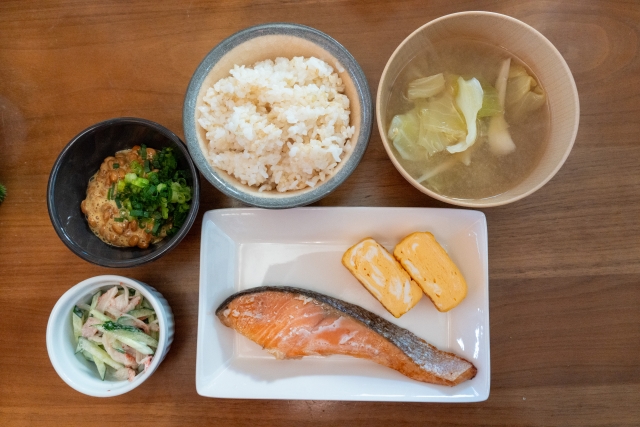
That image is real, but it does not represent every breakfast eaten in Japan.
At a ryokan or traditional hotel, breakfast may be generous and beautifully presented. At home, it may be much simpler: rice with natto, instant miso soup, seasoned nori, an egg, or leftovers from the night before. Some people eat toast, yogurt, cereal, or coffee instead.
There is no single breakfast that every Japanese household eats.
Still, the traditional Japanese breakfast reveals an important pattern in Japanese food culture. The meal is not built around one dominant dish. Rice, soup, protein, pickles, seaweed, and small side dishes work together, each contributing a different flavor, temperature, or texture.
Understanding Japanese breakfast means looking beyond a list of foods.
It means seeing how the meal is structured.
Quick Summary
A traditional Japanese breakfast is usually built around rice and soup, with several small accompanying foods.
Common items include:
- steamed rice
- miso soup
- grilled fish
- eggs
- natto
- nori
- pickles
- tofu
- vegetables
- leftovers from another meal
Not every breakfast includes all of these foods.
Home breakfasts are often simple and practical, while ryokan breakfasts may be more elaborate. Western-style breakfasts with bread, coffee, eggs, yogurt, or cereal are also common in modern Japan.
The most important feature is not one fixed menu. It is the way several modest foods work together around rice and soup.
What Is a Traditional Japanese Breakfast?
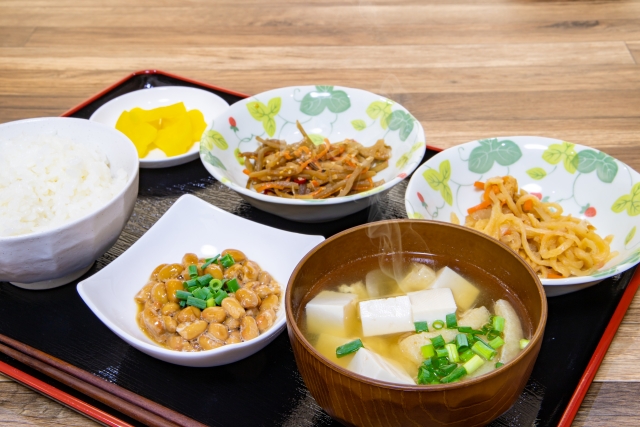
A traditional Japanese breakfast follows the same general structure as many other Japanese meals.
Rice forms the center. Soup provides warmth and moisture. A main item — such as grilled fish or egg — adds protein and a stronger flavor. Pickles, nori, natto, tofu, or small vegetable dishes provide contrast.
A full breakfast tray might include:
- a bowl of steamed rice
- a bowl of miso soup
- grilled salmon or another fish
- tamagoyaki or a raw egg
- natto
- seasoned nori
- pickles
- a small vegetable dish
But this should not be treated as a strict formula.
One household may serve only rice, miso soup, and a single side dish. Another may include leftovers from dinner. Some people prepare almost nothing in the morning and rely on packaged natto, instant soup, or ready-to-eat foods.
The traditional structure is recognizable, but the actual meal is flexible.
Rice and Miso Soup as the Foundation
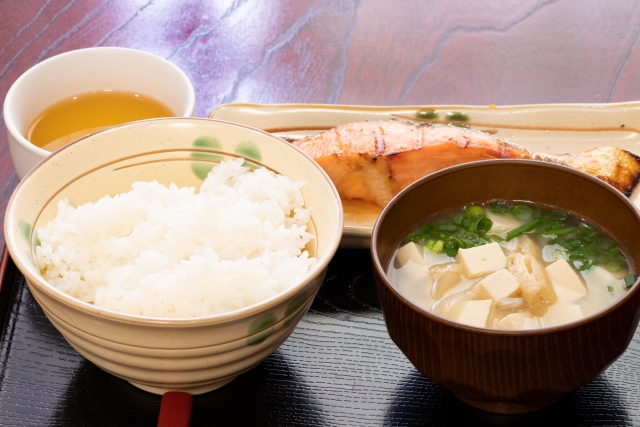
Rice and miso soup often form the foundation of a Japanese-style breakfast.
Rice provides a mild, filling center. Miso soup adds warmth, saltiness, aroma, and moisture. Together, they create a base that allows small side dishes to feel like part of a complete meal.
This combination also helps explain why many Japanese breakfast foods are strongly flavored but served in small portions.
Natto, pickles, grilled fish, seasoned nori, and salty egg dishes can be too intense to eat in large amounts on their own. With rice, however, they become balanced.
Miso soup plays a different but equally important role.
It gives the meal something warm and fluid. A sip of soup can soften the saltiness of fish or pickles, offer a pause between bites, and make a simple breakfast feel more complete.
Neither rice nor miso soup needs to dominate the table.
Their importance comes from how they hold everything else together.
Common Foods in a Japanese Breakfast
There is no required menu, but several foods appear frequently in traditional Japanese breakfasts.
Grilled Fish
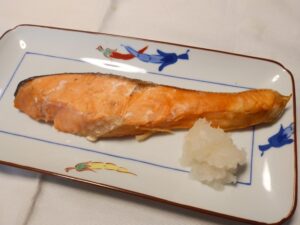
Grilled fish is one of the most recognizable breakfast foods in Japan.
Salmon, mackerel, horse mackerel, and other fish are often served as salted fish or dried fish that is grilled before breakfast. Because some of the moisture has already been removed, they cook relatively quickly and are practical for busy mornings. The portion is usually modest rather than large.
Their saltiness and richness pair naturally with plain rice. Grated daikon, soy sauce, or lemon may be served alongside.
To visitors, fish at breakfast can seem unusual. In Japan, however, there is no strong rule that fish belongs only to lunch or dinner.
That said, grilled fish is not prepared in every home every morning. It can still leave a lingering smell in the kitchen and may be replaced by simpler foods on busy days.
Eggs
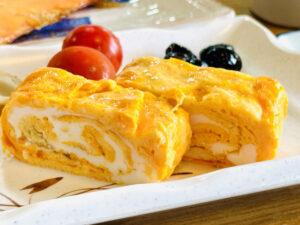
Eggs appear in many forms.
A Japanese breakfast may include tamagoyaki, a fried egg, a soft-boiled egg, or a raw egg served over rice.
Tamagoyaki is a rolled omelet that may be slightly sweet or savory, depending on household and regional preference.
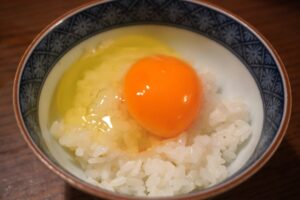
Tamago kake gohan is even simpler. A raw egg is mixed into hot rice and usually seasoned with soy sauce. It is quick, filling, and closely associated with home cooking.
Eggs fit breakfast particularly well because they are easy to prepare and work in both Japanese- and Western-style meals.
Natto

Natto is fermented soybeans with a sticky, stringy texture and a strong aroma.
It is commonly eaten over rice, often with soy sauce, mustard, green onion, or egg.
Natto is especially practical in the morning because it requires almost no cooking. A small package can be opened, mixed, and served right away.
Not everyone likes natto, and not every household eats it regularly. But for many people, it is one of the most familiar Japanese breakfast foods.
Its strong flavor also illustrates how the meal works: a small amount of something intense is balanced by a larger bowl of plain rice.
Nori
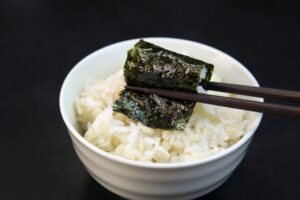
Nori can change plain rice with almost no preparation.
Small rectangles of seasoned nori are often served in individual packets. A diner picks up a piece with chopsticks, folds it around a bite of rice, and eats them together.
Nori adds roasted aroma, saltiness, umami, and texture.
Rice, miso soup, and nori can already feel like a recognizable Japanese breakfast without requiring any freshly cooked dishes.
Pickles
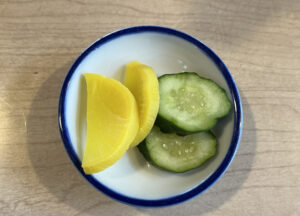
Japanese pickles, or tsukemono, often appear in small portions.
They may be made from daikon, cucumber, eggplant, cabbage, plum, or other ingredients. Their saltiness, acidity, and crisp texture provide contrast to soft rice and warm soup.
Pickles are not usually the main part of the meal. A few bites are often enough to sharpen and refresh it.
Tofu, Vegetables, and Small Side Dishes
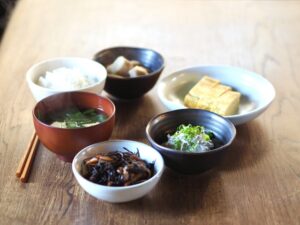
Cold tofu, simmered vegetables, greens dressed with sesame, hijiki, or small portions of leftovers may also appear.
These foods are often prepared in advance rather than cooked from scratch in the morning.
This matters because a beautifully arranged Japanese breakfast can give the impression that every small dish is freshly made before the meal.
In reality, many side dishes are leftovers, preserved foods, packaged items, or foods that need almost no preparation.
The variety may look elaborate, but the work behind it can be quite practical.
Why Are There So Many Small Dishes?
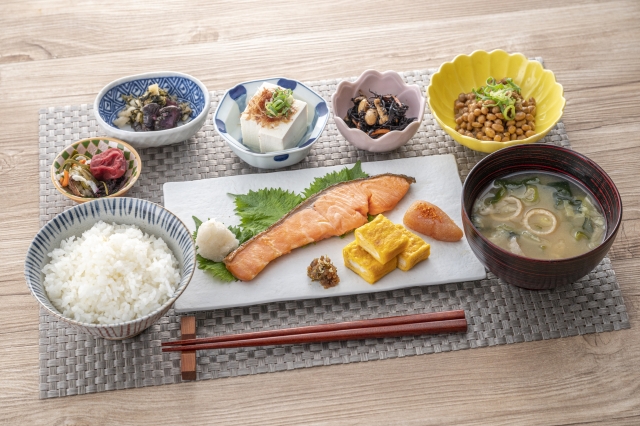
A Japanese breakfast can look complicated because several small bowls and plates appear at once.
But the meal is not necessarily designed to display abundance.
Each item often serves a different purpose.
Rice provides the center. Miso soup adds warmth. Fish or egg contributes protein. Pickles bring saltiness and acidity. Nori adds aroma and texture. Natto contributes fermentation and richness.
No single item needs to do everything.
This is different from a breakfast built around one large plate, sandwich, or bowl.
The diner moves between foods — a bite of rice, then fish, then a sip of soup, then pickles, then rice again.
The experience comes from combination and sequence.
This structure also creates flexibility. One item can be removed, replaced, or added without changing the identity of the whole meal.
A breakfast does not stop being Japanese simply because grilled fish or pickles are missing.
Breakfast at Home and at a Ryokan
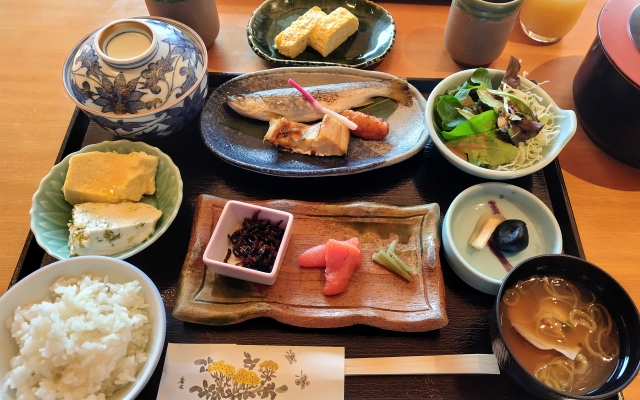
The difference between an everyday home breakfast and a ryokan breakfast is worth understanding.
At home, breakfast is often simple.
It may be rice with natto, rice with a raw egg, instant miso soup, seasoned nori, leftovers from dinner, or a convenience-store onigiri.
Many households use pre-cooked rice, small packs of natto, ready-made pickles, packaged side dishes, or freeze-dried soup. These foods make it possible to put together a Japanese-style breakfast quickly.
Leftovers are also a normal part of breakfast. Rice, soup, vegetables, fish, or simmered dishes from dinner may reappear the next morning — practical, reduces waste, and connects one meal to the next.
A ryokan breakfast is usually far more elaborate.
It may include rice, miso soup, grilled fish, egg, tofu, pickles, nori, vegetables, and regional dishes, all carefully arranged. Some items may be warmed or cooked at the table.
This is a genuine form of Japanese breakfast, but it is also a hospitality meal.
A ryokan breakfast is designed to communicate care, seasonality, local identity, and the experience of staying somewhere special. It presents a polished version of the traditional meal structure.
It should not be mistaken for what most people put together before work each morning.
Both versions belong to Japanese food culture — they simply serve different purposes.
Japanese Breakfast Is Not One Fixed Menu
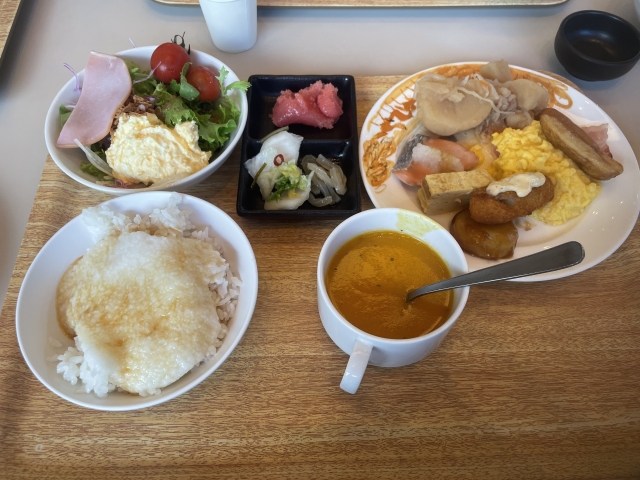
The traditional Japanese breakfast remains culturally recognizable, but modern breakfast habits are diverse.
Bread has become entirely ordinary in Japan. Toast with butter or jam, coffee, eggs, yogurt, fruit, and cereal are all common. Convenience stores and bakeries sell sandwiches, sweet breads, pastries, and ready-made breakfast foods.
Some households eat bread more often than rice in the morning.
Hotels often reflect this variety through breakfast buffets that include both Japanese and Western foods. Rice, miso soup, grilled fish, natto, and pickles may appear beside bread, bacon, scrambled eggs, yogurt, salad, and coffee. Some diners combine both styles on the same tray.
A person may have rice and miso soup one morning and toast and coffee the next. There is no contradiction in that.
The traditional Japanese breakfast is best understood as a recognizable meal structure rather than a universal daily rule.
Rice and soup form one possible foundation. Small foods add contrast. Preserved, fermented, packaged, or leftover items make the meal practical. The exact combination changes according to household, schedule, age, region, and personal preference.
Is Japanese Breakfast Healthy?
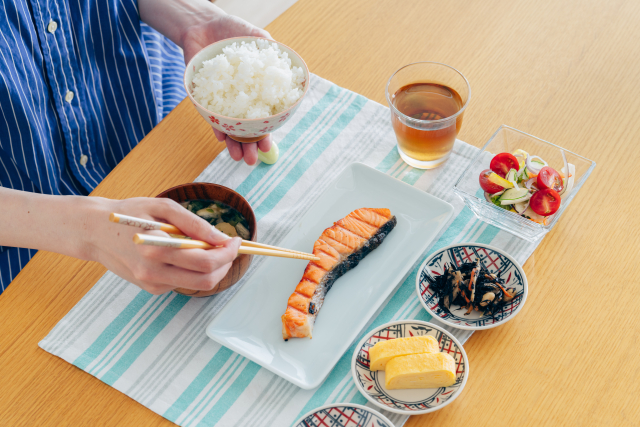
A traditional Japanese breakfast can include rice, protein, soup, vegetables, fermented foods, and a variety of different ingredients.
But it should not automatically be described as perfectly healthy.
Some common foods can be high in salt — miso soup, pickles, salted fish, seasoned nori, and soy sauce among them. White rice may also make up a large portion of the meal.
The overall balance depends on portion size, ingredients, and the rest of the diet.
In Japan, breakfast is generally not understood as a special health program. It is simply a meal made from familiar foods.
Its strength usually comes from variety and balance rather than from any single standout ingredient.
What Japanese Breakfast Reveals About Food Culture
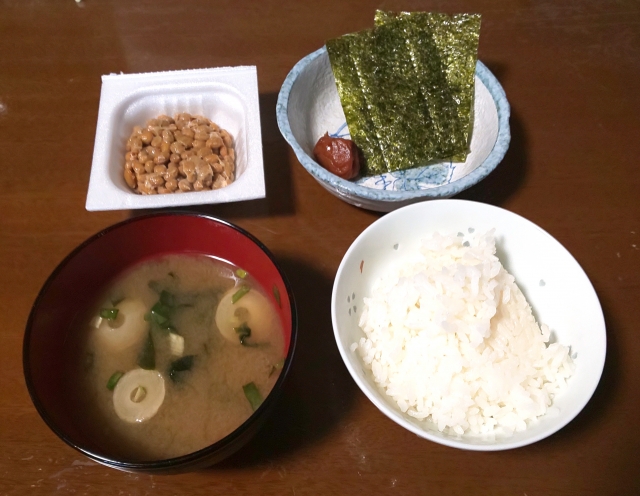
Japanese breakfast reveals how a meal can be built through relationships rather than around one central dish.
Rice may be plain, but it is supported by soup, fish, egg, pickles, natto, or nori. Each item may be small, but together they create variety.
The meal also shows how practicality and tradition can exist side by side.
Instant miso soup can sit beside homemade rice. Packaged natto can accompany leftover vegetables. A traditional structure can survive even when preparation becomes faster and simpler.
Japanese breakfast also reflects the value of ordinary repetition.
These foods are not always eaten out of a conscious sense of cultural heritage. They are eaten because they are familiar, available, and well suited to the morning.
The meal is flexible enough to change with time, household, and lifestyle.
Yet its underlying structure remains easy to recognize.
Author's Note
When people imagine a Japanese breakfast, they often picture the kind served at a ryokan: grilled fish, rice, miso soup, egg, tofu, pickles, and many small dishes arranged beautifully on a tray.
That kind of breakfast is wonderful, but it is not what most people put together every morning.
At home, breakfast can be far less impressive.
Rice with natto may be enough. Sometimes it is rice, instant miso soup, and seasoned nori. Leftovers from the night before may appear without any attempt to make the meal look special.
Personally, I think that ordinary version explains Japanese breakfast better.
The important thing is not the number of dishes. It is the way simple foods fit together.
Rice gives the meal a center. Miso soup makes it warm. Natto, nori, pickles, egg, or leftovers give the rice something to work with.
A Japanese breakfast does not always need to be carefully arranged.
Sometimes it is simply a practical way to start the day with familiar food.
FAQ
What is included in a traditional Japanese breakfast?
A traditional Japanese breakfast often includes steamed rice, miso soup, grilled fish, eggs, natto, nori, pickles, tofu, or small vegetable dishes. Not every breakfast includes all of these items.
Do Japanese people eat fish for breakfast?
Some do. Grilled fish is common in traditional breakfasts, ryokan, hotels, and set meals, but many people opt for simpler foods at home — eggs, natto, bread, or leftovers.
Is Japanese breakfast always based on rice?
No. Rice is central to the traditional Japanese breakfast, but bread, toast, cereal, yogurt, and other Western-style foods are also common in modern Japan.
Do Japanese people eat miso soup every morning?
Many people eat miso soup regularly, but not everyone has it every morning. Some use instant miso soup, while others have it only with certain meals.
Is natto usually eaten for breakfast?
Natto is commonly eaten at breakfast because it requires almost no preparation and pairs well with rice. That said, not everyone likes it or eats it regularly.
Why are there so many small dishes in a Japanese breakfast?
Each dish contributes something different — flavor, texture, temperature, or function. Together, rice, soup, protein, pickles, seaweed, and vegetables create balance without needing one large main dish.
What is the difference between a home breakfast and a ryokan breakfast?
A home breakfast is often simple and practical, making use of packaged foods, instant soup, or leftovers. A ryokan breakfast is usually more elaborate and carefully presented as part of the hospitality experience.
Are Western-style breakfasts common in Japan?
Yes. Toast, coffee, eggs, yogurt, cereal, fruit, and bakery items are all common. Many people move between Japanese and Western-style breakfasts depending on the day.
Is a Japanese breakfast healthy?
It can be balanced and varied, but it is not automatically healthy. Some common items are high in salt, and the overall nutritional balance depends on ingredients, portions, and the rest of the diet.
Do Japanese people eat the same breakfast every day?
No. Breakfast habits vary widely by household, age, schedule, region, and personal preference.
Related Reading on YUNOMI
- What Is Japanese Rice? Why Short-Grain Rice Matters in Japanese Food Culture
- What Is Miso Soup? Why It Is So Common in Japan
- What Is Nori? The Seaweed That Shapes Everyday Japanese Food
- Tamago Kake Gohan: Why Japanese People Eat Raw Egg on Rice
- Japanese Soybean Foods: Why Soybeans Are Everywhere in Japanese Food Culture
- What Is Tofu in Japan? Why It Is More Than a Meat Substitute
- Japanese Food Culture: How Everyday Ingredients Shape the Japanese Table

