To many visitors, tamago kake gohan can be surprising.
It is a bowl of hot rice topped with raw egg, usually seasoned with soy sauce and mixed together before eating. The ingredients are simple, but the idea of eating raw egg over rice can feel unfamiliar — especially for readers from countries where raw eggs are typically avoided.
In Japan, however, tamago kake gohan is a familiar comfort food. It is quick, warm, inexpensive, and deeply tied to the everyday role of rice in Japanese meals.
The dish works because several parts of Japanese food culture come together in one bowl: freshly cooked short-grain rice, eggs produced for safe raw consumption, soy sauce, and a taste for simple foods that rely on texture, warmth, and balance.
This article explains what tamago kake gohan is, why Japanese people eat raw egg on rice, and what this simple dish reveals about Japanese food culture.
Quick Summary
- Tamago kake gohan is a Japanese dish made by mixing raw egg with hot rice and soy sauce.
- It is common in Japan because Japanese eggs are produced and distributed under hygiene standards that allow many eggs to be eaten raw within their recommended period.
- The dish depends on Japanese short-grain rice, whose warmth, softness, and slight stickiness help the egg coat the grains.
- Hot rice gently warms the egg, making it thicker, silkier, and closer to a sauce for the rice.
- Soy sauce adds aroma, saltiness, and umami, turning the egg and rice into a simple but satisfying meal.
- Tamago kake gohan is not an elaborate dish. Its appeal comes from freshness, trust, speed, comfort, and the Japanese habit of building meals around rice.
What Is Tamago Kake Gohan?

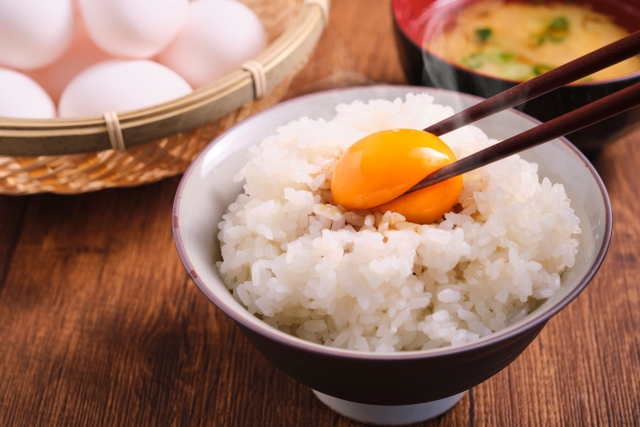
Tamago kake gohan is made with just a few basic ingredients: hot rice, a raw egg, and soy sauce.
Tamago kake gohan is a Japanese rice dish made by cracking a raw egg over hot cooked rice and seasoning it with soy sauce.
The name is straightforward. Tamago means egg, kake means poured over or placed on top, and gohan means cooked rice or a meal. The dish is often shortened to TKG in Japan.
The basic form is very plain: hot rice, raw egg, and soy sauce. Some people beat the egg in a separate bowl before pouring it over the rice. Others crack it directly onto the rice and mix everything together. Some use the whole egg; others prefer only the yolk.
There are also many small variations. People may add nori, furikake, green onion, sesame seeds, bonito flakes, butter, or a special soy sauce made for tamago kake gohan. But the heart of the dish stays the same: warm rice and egg becoming one soft, savory bowl.
This simplicity is part of its appeal. Tamago kake gohan can be made in minutes, but it does not feel like a careless meal. When the rice is hot, the egg is fresh, and the seasoning is balanced, it can feel surprisingly complete.
Why Raw Egg Works with Japanese Rice

Japanese rice works well for tamago kake gohan because its soft, slightly sticky grains allow the egg to coat the rice smoothly.
Tamago kake gohan depends heavily on the character of Japanese rice.
Japanese rice is usually short-grain Japonica rice. When cooked, it becomes soft, moist, and slightly sticky. The grains cling together gently, which allows the raw egg to coat them rather than slip away.
This is one reason the dish works so well. The egg does not sit separately from the rice. It becomes a silky layer around each grain, changing the texture of the whole bowl.
The warmth of the rice also matters. Hot rice gently warms the egg, placing it somewhere between raw and softly set — thicker, silkier, and more connected to the rice. This is one reason tamago kake gohan feels very different from simply eating a raw egg.
Japanese rice also has a mild sweetness. That gentle flavor gives the egg and soy sauce a calm base to work with. The soy sauce adds saltiness and umami; the egg adds richness. The rice holds everything together.
This is why tamago kake gohan is not only about raw egg. It is also about the way Japanese rice can receive and transform simple ingredients.
Why Raw Eggs Are Eaten in Japan

In Japan, raw egg dishes depend on hygiene controls and careful processing long before the eggs reach the table.
For many international readers, the biggest question is not about taste. It is about safety.
In Japan, raw eggs are widely consumed because eggs sold for raw consumption are produced, washed, inspected, packaged, and distributed under strict hygiene controls. Freshness, shell cleanliness, temperature management, and expiration dates are all taken seriously — because raw egg dishes are a normal part of Japanese food culture.
This does not mean every egg everywhere is safe to eat raw. It means that Japanese food systems developed around the expectation that many people would eat eggs raw within a specific timeframe.
This trust is essential to tamago kake gohan.
People are not simply ignoring risk. They are relying on a system that makes raw egg consumption more realistic in Japan than in many other countries. Eggs are clearly marked with dates, and consumers understand that raw consumption should happen while the egg is fresh and within the recommended period.
For this reason, tamago kake gohan should not be taken as a universal recommendation to eat raw eggs anywhere. Outside Japan, people should follow local food safety guidance and use eggs specifically considered safe for raw or lightly cooked use.
In Japan, however, the dish reflects a broader pattern: everyday food depends not only on ingredients, but also on the systems of production, distribution, and trust that make those ingredients usable.
A Brief History of Tamago Kake Gohan

Tamago kake gohan became easier to enjoy as eggs became more affordable, available, and trusted in everyday Japanese households.
Tamago kake gohan is often associated with modern home cooking, but the practice of eating raw egg with rice is said to have become known in Japan from the Meiji era onward.
One commonly mentioned figure is Kishida Ginkō, a writer and journalist from the Meiji period who is often linked to the early popularity of raw egg over rice. The full history is difficult to trace to a single person, but the Meiji era was a time of significant change in Japanese eating habits, and eggs gradually became more visible in everyday diets.
Later, as poultry farming expanded and eggs became more widely available, tamago kake gohan became easier for ordinary households to enjoy.
This background matters because the dish depends on access to fresh eggs. It became common not only because people enjoyed the flavor, but because eggs became affordable, available, and trusted.
In that sense, tamago kake gohan is both old-fashioned and modern. It feels simple and nostalgic, yet it relies on contemporary food distribution and hygiene systems.
The Role of Soy Sauce and Simple Seasoning

A small amount of soy sauce and simple toppings like green onion, nori, and bonito flakes can give tamago kake gohan more aroma, texture, and depth.
Soy sauce is essential to tamago kake gohan.
Without it, the dish can feel too plain. With too much, it becomes too salty. The balance is small but important.
Soy sauce adds saltiness, aroma, and umami. It gives depth to the egg and rice without requiring a complicated sauce. A few drops can change the whole bowl.
This is why some people use regular soy sauce, while others reach for a special tamago kake gohan soy sauce. TKG soy sauce is often adjusted to taste softer and rounder alongside egg and rice — some versions include dashi or a touch of sweetness, making the overall flavor more balanced than regular soy sauce alone.
Toppings can also change the character of the dish. Green onion adds freshness and fragrance. Nori adds an ocean aroma. Furikake adds texture and seasoning. Bonito flakes add smoky umami. Sesame seeds add nuttiness.
Still, tamago kake gohan usually stays simple. With very few ingredients, the bowl becomes quick, nourishing, and satisfying — its appeal coming from small adjustments rather than many components.
This reflects a familiar idea in Japanese home cooking: a simple dish can feel complete when rice, seasoning, texture, and aroma are well balanced.
Why Tamago Kake Gohan Feels Like Comfort Food

Tamago kake gohan is often associated with comfort because it is warm, quick, and familiar.
It requires no real cooking skill. If there is hot rice, a fresh egg, and soy sauce, the dish can be ready in a minute. This makes it common as a simple breakfast, a quick meal, or something to reach for when there is little time or energy.
It is also practical. In Japan, eggs have long been one of the more affordable everyday sources of protein — easy to keep at home, quick to prepare, and simple to combine with rice. Tamago kake gohan belongs to this practical side of Japanese home eating as much as to its nostalgic one.
But its comfort is not only about convenience.
The texture is soft and gentle. The rice is warm. The egg adds richness. The soy sauce adds aroma. Everything comes together in one bowl, creating a meal that is easy to eat and emotionally familiar to many people in Japan.
It is also closely tied to the Japanese habit of placing rice at the center of a meal. In tamago kake gohan, rice does not need many side dishes. The egg and soy sauce are enough to turn it into a small but complete meal.
This is why the dish can feel nostalgic — reminding people of home breakfasts, student meals, late-night food, or quiet mornings when a bowl of freshly cooked rice was enough.
Tamago kake gohan is simple, but it is not empty. It carries the comfort of ordinary food.
Tamago Kake Gohan in Modern Japan

Today, tamago kake gohan remains a familiar home dish, but it has also attracted its own small world of specialization.
Some regions promote local eggs, local rice, or soy sauces made specifically for TKG. Some restaurants serve the dish with carefully chosen eggs and seasonings. Specialty soy sauces designed for tamago kake gohan have become a recognizable category of their own.
This may seem surprising for such a plain food. But in Japan, simple dishes often invite quiet refinement.
A bowl of tamago kake gohan can change noticeably depending on the rice variety, the freshness of the egg, the yolk's color and richness, the soy sauce, and the toppings. The yolk's color can also matter visually — some people prefer a deep orange yolk, which makes the bowl look richer and more appealing, though yolk color is largely determined by the chicken's feed.
At the same time, it remains an everyday food. Most people eat it at home, when there is rice in the cooker and eggs in the refrigerator.
Whether eaten quickly at home or carefully prepared with local eggs and special soy sauce, tamago kake gohan stays centered on the same simple relationship: rice, egg, seasoning, and trust.
What Tamago Kake Gohan Reveals About Japanese Food Culture
Tamago kake gohan reveals several important ideas in Japanese food culture.
First, it shows how central rice is. The dish only works because the rice is warm, soft, and able to hold the egg and seasoning. Rice is not a side dish here. It is the foundation.
Second, it shows the importance of trust in food systems. Eating raw egg is not simply a matter of taste. It depends on hygiene standards, freshness, labeling, distribution, and shared expectations between producers and consumers.
Third, it shows how Japanese home cooking values small, balanced combinations. The dish has only a few ingredients, but each one matters: rice for warmth and structure, egg for richness, soy sauce for aroma and umami.
Fourth, it reflects the practical side of Japanese home meals. A simple bowl of rice with egg can provide warmth, satisfaction, and everyday nourishment without requiring an elaborate spread.
Finally, tamago kake gohan is a reminder that comfort food does not need to be elaborate. Sometimes a deeply familiar meal is built from ingredients that are ordinary, affordable, and close at hand.
For many people in Japan, that is the appeal of tamago kake gohan. It is not impressive to look at. It is not difficult to make. But when the rice is hot and the egg is fresh, it feels exactly right.
Author's Note
For people outside Japan, the idea of eating raw egg on rice can sound strange at first. I understand that reaction.
But for many Japanese people, tamago kake gohan does not feel strange. It feels familiar.
The important point is that the dish is not only about raw egg. It is about the trust behind the egg, the warmth of freshly cooked rice, and the small satisfaction of mixing everything together with soy sauce.
Personally, I think tamago kake gohan tastes best when the rice is freshly cooked and still hot. The heat gently warms the egg, making it thicker and silkier — somewhere between raw and softly set. If the rice is cold, the dish loses much of its appeal.
Some people keep it very simple with only egg and soy sauce. Others add nori, furikake, green onion, or a special TKG soy sauce. I also like adding natto when I want the bowl to feel more substantial. It makes the flavor stronger, but the combination of egg, natto, soy sauce, and hot rice has a deep comfort of its own.
When I think of tamago kake gohan, I do not think of a restaurant dish. I think of hot rice, a quick meal, and the feeling that a few ordinary ingredients can be enough.
On YUNOMI, I often write about the quiet structures behind Japanese food culture. Tamago kake gohan is one of them — small, simple, and deeply dependent on everyday trust.
FAQ
What is tamago kake gohan?
Tamago kake gohan is a Japanese dish made by mixing raw egg with hot cooked rice and soy sauce. It is often eaten as a quick breakfast or simple comfort food.
Is tamago kake gohan safe to eat?
In Japan, many eggs are produced and distributed with raw consumption in mind. Outside Japan, safety depends on local food standards. People should follow local food safety guidance and use eggs specifically considered safe for raw or lightly cooked use.
Why do Japanese people eat raw egg on rice?
Because fresh eggs suitable for raw consumption are widely available in Japan, and the egg pairs naturally with hot short-grain rice and soy sauce. The dish is quick, comforting, and familiar.
Does the hot rice cook the egg?
The hot rice warms and slightly thickens the egg, placing it somewhere between raw and softly set — but it does not fully cook it. Tamago kake gohan is still considered a raw egg dish.
What does tamago kake gohan taste like?
Mild, savory, and rich. The egg gives the rice a creamy texture, while soy sauce adds saltiness, aroma, and umami.
What kind of rice is used for tamago kake gohan?
Japanese short-grain rice is standard. Its soft, moist, slightly sticky texture helps the egg coat the grains evenly.
Can I make tamago kake gohan outside Japan?
You can make a similar dish, but raw egg safety depends on local conditions. Use pasteurized eggs or eggs specifically labeled safe for raw consumption, and follow local food safety advice.
What toppings go well with tamago kake gohan?
Common choices include nori, furikake, green onion, sesame seeds, bonito flakes, natto, and special soy sauce made for TKG.
Is tamago kake gohan eaten for breakfast?
Often, yes — it is quick, warm, and easy to prepare. It can also be eaten as a simple meal at any time of day.
Related Reading on YUNOMI
- What Is Japanese Rice? Why Short-Grain Rice Matters in Japanese Food Culture
- Why Is Miso Soup So Common in Japan?
- What Is Miso? The Fermented Paste at the Heart of Japanese Food Culture
- What Is Tamari? The Rich Japanese Soy Sauce Made from Miso Fermentation
- What Is Dashi? The Quiet Broth Behind Japanese Flavor

