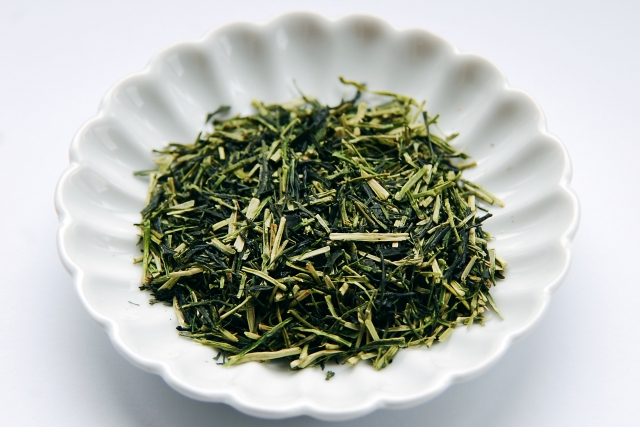
Most Japanese green tea is described by its leaves. Sencha is known for its fresh green character. Gyokuro is famous for its deep umami. Matcha is made by grinding specially processed tea leaves into a fine powder.
Kukicha is a little different. Kukicha (茎茶) means "stem tea," but that does not necessarily mean the tea is made only from stems. It is better understood as a Japanese green tea with a relatively high proportion of stems and leaf stalks.
That difference may sound small, but stems and leaves do not have exactly the same composition. As a result, kukicha often tastes less sharply green and less astringent than leaf-heavy teas such as sencha. Its character tends to be mild, smooth, and easy to drink.
But there is another important point: not all kukicha tastes the same. A kukicha made from ordinary sencha and a karigane made from gyokuro can be quite different. To understand kukicha, it helps to know not only that the tea contains more stems, but also where those stems came from.
Quick Summary
- Kukicha is Japanese green tea with a relatively high proportion of stems and leaf stalks.
- It is not necessarily made entirely from stems; some leaf material usually remains.
- Stems and leaves have different chemical compositions, which changes the balance of flavor.
- Kukicha generally has less bitterness and astringency than sencha and often feels milder and smoother.
- Its umami is usually gentle rather than intensely savory.
- The flavor depends strongly on the tea from which the stems were separated.
- Karigane commonly refers to finer stem tea associated with gyokuro or higher-grade sencha, although terminology varies.
- Kukicha is generally affordable and works well as an everyday Japanese green tea.
- Because the stems are bulky, kukicha can look like a larger amount of tea when measured by eye.
What Is Kukicha?
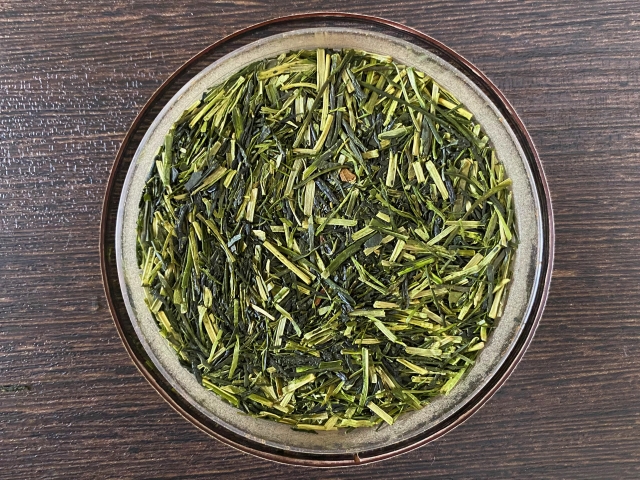
Kukicha literally means "stem tea." During the finishing stage of Japanese green tea processing, the material is sorted according to characteristics such as size and shape. Stems and leaf stalks can be separated from the leaf portions and sold as kukicha.
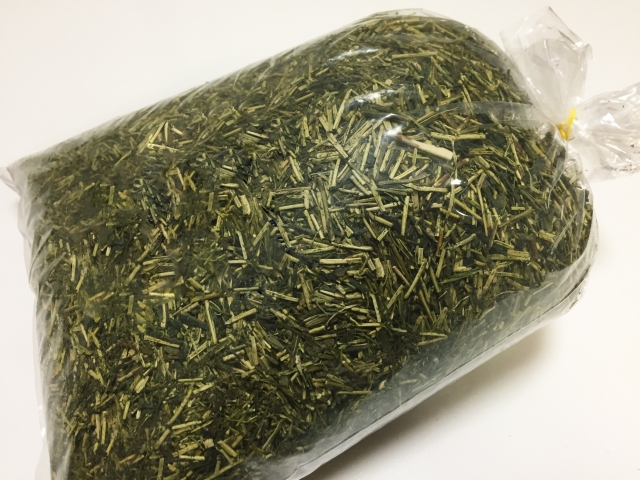
However, open a bag of kukicha and you will usually not find a pile of perfectly clean, identical stems. Pieces of leaf may still be mixed in. For that reason, it can be more useful to think of kukicha as a stem-rich tea rather than a tea made exclusively from stems.
The proportion varies from product to product. This is easy to see when kukicha is placed beside sencha. Sencha is dominated by narrow pieces of processed leaf, while kukicha usually contains many lighter-colored, straighter stems among the leaves.
Both come from the same tea plant. The difference is which parts of the harvested shoots dominate the finished tea.
Why Does Having More Stems Change the Taste?
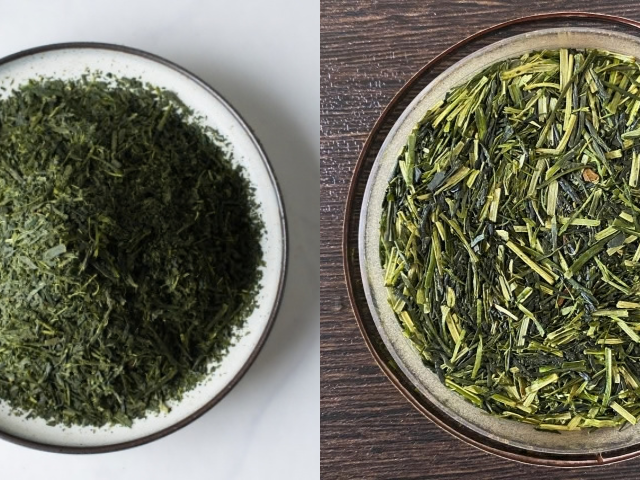
Leaves and stems serve different functions in the tea plant, so their chemical compositions are not identical. Tea leaves tend to contain more catechins, which contribute bitterness and astringency. Young stems can contain relatively high levels of amino acids such as theanine.
That does not mean kukicha is automatically sweeter or richer in umami than every sencha. Taste is more complicated than a single compound. What changes is the balance.
With a higher proportion of stems, kukicha often has less of the sharp bitterness and astringency associated with leaf-heavy tea. The green vegetal character can also feel less dominant. The result is often a softer and rounder cup.
For that reason, words such as mild, smooth, mellow, and easy to drink describe kukicha better than simply calling it "sweet." There can be gentle sweetness and umami, but they are usually subtle.
If you are expecting the intense, savory, almost broth-like umami sometimes found in carefully brewed gyokuro, ordinary kukicha is a very different experience. Its appeal is often its balance rather than its intensity.
How Does Kukicha Taste Compared with Sencha?
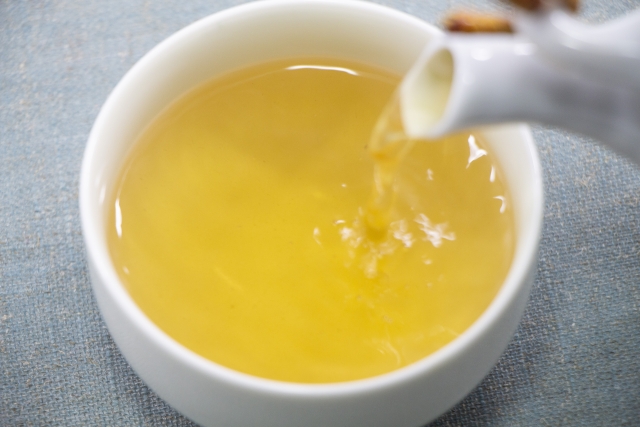
Sencha usually gives a stronger impression of drinking green leaves. Depending on the tea and how it is brewed, you may notice fresh vegetal aromas, astringency, bitterness, sweetness, and umami interacting at the same time.
Kukicha generally feels quieter. The green character is still there, but it usually does not push forward as strongly. Astringency is softer, bitterness tends to be restrained, and the overall impression can feel rounder.
This makes kukicha particularly easy to drink. Someone who finds ordinary sencha slightly too sharp or grassy may enjoy kukicha without moving completely toward a roasted tea such as hojicha.
Kukicha still tastes like Japanese green tea. It simply shows a softer side of it.
Not All Kukicha Tastes the Same
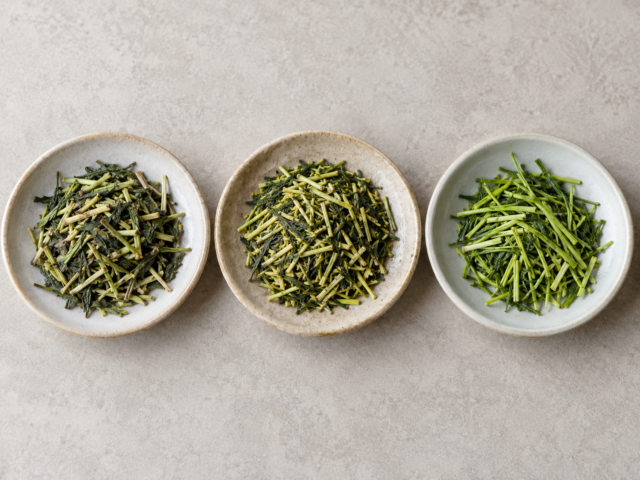
This may be the most important thing to understand before buying kukicha. "Kukicha" tells you something about the parts of the tea plant in the package, but it does not tell you everything about the tea itself.
The stems may have come from sencha, higher-grade sencha, gyokuro, or another green tea. Cultivar, growing conditions, harvest time, processing, firing, storage, and the amount of leaf remaining in the mixture can all affect the final cup.
This means there is no single "kukicha flavor." An inexpensive everyday kukicha made from sencha may be light, fresh, and simple. A stem tea made from higher-quality sencha may have more body, while a karigane made from gyokuro can have a noticeably stronger umami character influenced by the shaded tea from which it came.
So when someone describes kukicha as sweet, light, rich, or strongly umami, the next question should be: What kind of kukicha?
What Is Karigane?
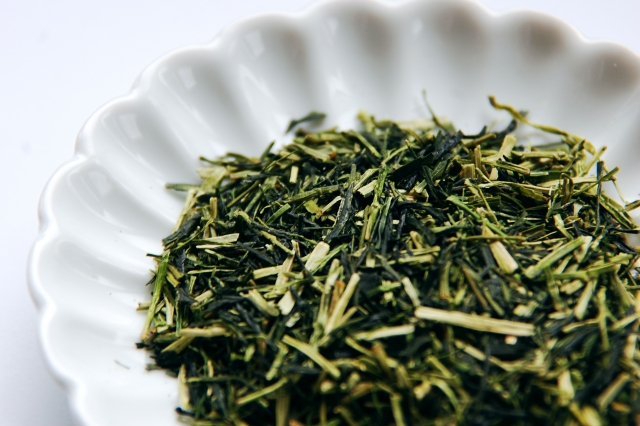
This is where the names on Japanese tea packages become useful. Karigane (かりがね or 雁ヶ音) is a name commonly used for higher-quality stem tea, particularly stem tea associated with gyokuro or higher-grade sencha.
You may also encounter names such as shiraore (白折), depending on the region or tea producer. These names are not always used in exactly the same way by every shop, so it is difficult to treat them as rigid nationwide grades.
But they can give the buyer more information than the word "kukicha" alone. If a package simply says kukicha, you know that stems make up an important part of the tea. If it says karigane and explains that the stems came from gyokuro, you can already expect something quite different from a basic everyday stem tea.
For someone standing in front of a Japanese tea shelf, that information matters.
How Should You Choose Kukicha?
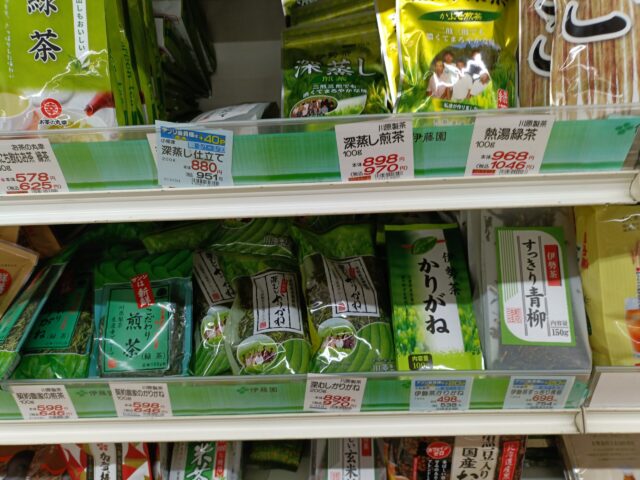
Start by looking beyond the word kukicha. If the package tells you what tea the stems came from, that information is more useful than the category name alone.
For a simple everyday cup, a sencha-based kukicha is a good place to start. It tends to show the mild, easy-drinking character that makes stem tea appealing. If you want more depth or umami, look for a good karigane or a product that clearly states that it uses stems from gyokuro or higher-grade sencha.
Price can also provide some information, but it is not a perfect guide. Very inexpensive kukicha can sometimes taste thin rather than pleasantly mild. Because kukicha is naturally gentle, poor-quality material may leave very little character in the cup.
On the other hand, paying more does not automatically guarantee that you will prefer the tea. The source material, processing, and your own taste matter more than price alone.
Is Kukicha a Cheap Tea?
Kukicha is generally one of the more affordable ways to enjoy loose-leaf Japanese green tea. That does not make it an inferior version of sencha. Kukicha and sencha simply emphasize different parts of the same harvested tea shoots, and the different composition of those parts produces a different cup.
Karigane and other higher-quality stem teas can cost more, particularly when they come from gyokuro or premium sencha. Even then, kukicha usually remains relatively accessible compared with Japan's most expensive teas.
This is one reason it works well as an everyday tea. You do not have to treat it as something precious. You can simply make a pot and drink it.
Does Kukicha Have Less Caffeine?
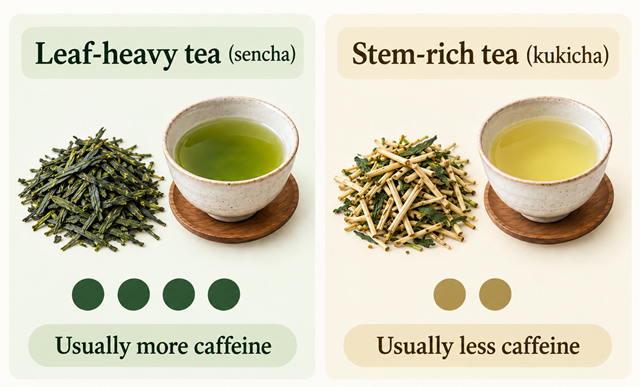
Kukicha is often described as a lower-caffeine green tea. There is some basis for this because tea stems generally contain less caffeine than young tea leaves.
However, the useful word here is lower, not caffeine-free. The amount of caffeine in your cup still depends on the source tea, the proportion of stems and leaves, how much tea you use, water temperature, and brewing time.
This becomes especially important with something such as gyokuro karigane. If the original tea was grown and processed differently from ordinary sencha, it is not sensible to assume that every product labeled kukicha will contain the same amount of caffeine.
If you need to strictly limit caffeine, the name "kukicha" alone is not enough information.
How Should You Brew Kukicha?
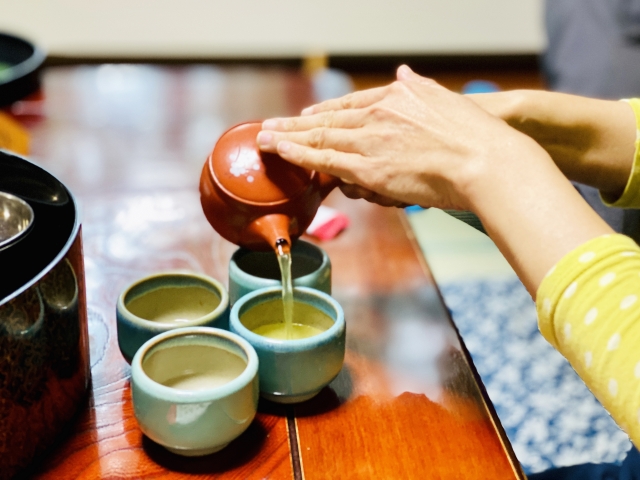
You can brew ordinary kukicha much like sencha. A useful starting point is water around 80°C / 176°F and an infusion of roughly 30–60 seconds.
But kukicha has an interesting practical difference when you measure it by eye: stems take up space. A spoonful of kukicha can look much larger than the same weight of compact sencha leaves. Because of this, I tend to put what looks like slightly more kukicha into the teapot than I would with sencha.
If you measure everything with a scale, the difference may be much smaller. If you measure tea the way many people do at home—by spoon and experience—you may naturally end up using what looks like a little more.
There is no need to be overly precise. If the tea tastes too weak, use a little more next time. If it feels stronger than you want, reduce the amount or adjust the temperature.
Kukicha also varies considerably between products, so the brewing instructions on the package are worth checking. If you buy a good gyokuro-based karigane, do not assume that the same brewing method used for inexpensive everyday kukicha will give the best result. A lower water temperature may bring out more of its particular character.
Can You Brew Kukicha a Second Time?
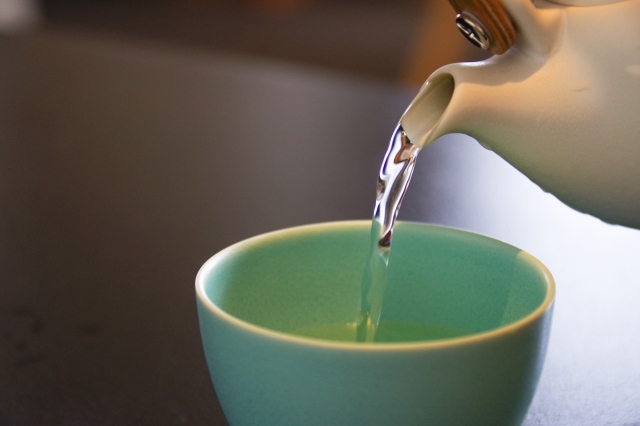
Yes. Kukicha can be brewed more than once. But whether you want the second infusion is another question.
With sencha, the second infusion can still be very satisfying. It often changes character, becoming quicker, brighter, or slightly sharper, but there is still enough flavor to make an interesting cup.
With kukicha, I often find that the first infusion is where most of its appeal is concentrated. A second infusion still produces color and flavor, but the mellow character I enjoyed in the first cup can fade quite quickly.
This is not a rule for every kukicha. The source tea, quality, stem-to-leaf ratio, and brewing method all make a difference. But I do not expect as much from the second infusion of an everyday kukicha as I do from a good sencha.
Is Kukicha Common in Japan?
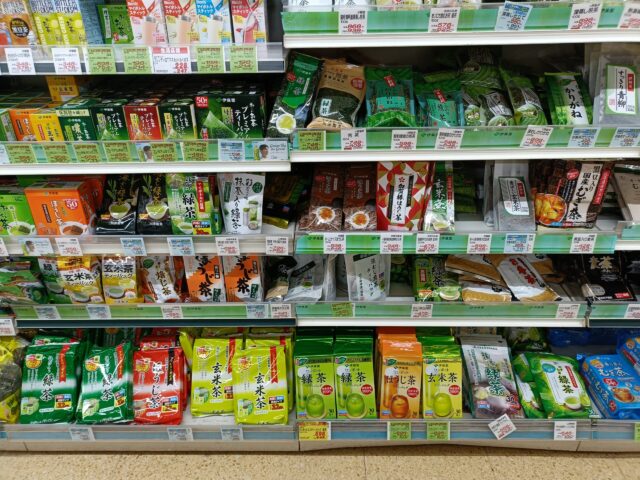
Kukicha is not a mysterious tea in Japan. Tea shops sell it, and names such as kukicha, karigane, and shiraore can be found on ordinary tea shelves.
At the same time, it is not the tea most people would use to represent Japanese green tea. Sencha fills that role much more naturally. Many Japanese households today also rely on bottled tea or tea bags rather than keeping several different types of loose-leaf tea at home.
So kukicha sits somewhere in between. It is a normal Japanese tea rather than an obscure specialty, but it is also the kind of tea you may not think much about until you start looking more closely at Japanese tea.
Should Travelers Try Kukicha in Japan?
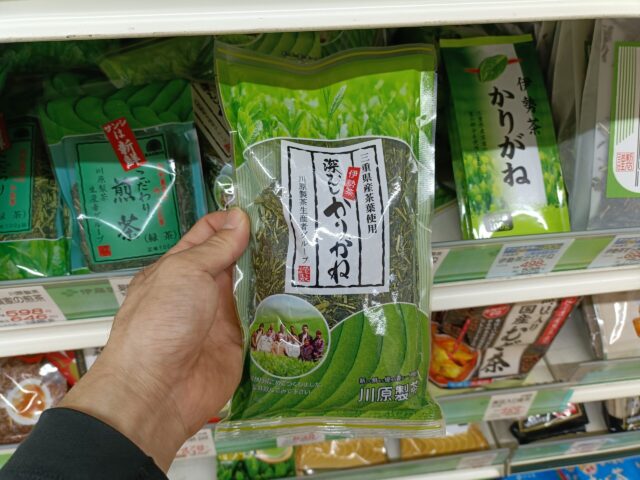
Yes, if you are curious about Japanese tea. But I would not tell a first-time visitor that kukicha must be the one tea to take home.
If you only plan to buy one special package of Japanese tea as a souvenir, you may prefer a good sencha, gyokuro, hojicha, or another tea that particularly interests you. Kukicha is generally more of an everyday tea than a special souvenir. Its appeal is subtler.
If you visit a Japanese tea shop and already know sencha, however, kukicha is worth trying because it gives you an easy way to experience how using different parts of the same tea shoot changes the cup.
If you see several choices, do not automatically buy the cheapest package simply because you are experimenting. A slightly better kukicha or karigane often does not require a huge jump in price, and knowing what tea the stems came from makes the comparison much more interesting.
Author's Note
When I drink kukicha, the first thing I notice is not sweetness or powerful umami. It is how easy it is to drink.
Compared with sencha, the green, leafy character feels quieter, and the bitterness and astringency do not stand out as much. The whole cup feels softer and more mellow.
I also tend to use what looks like slightly more tea than I would with sencha. I do not weigh tea every time I make it at home. After making tea repeatedly, you naturally learn roughly how much looks right in the teapot.
Because kukicha is bulky, that amount simply looks larger.
And for me, kukicha is very much a first-infusion tea. Of course I can make a second cup from the same tea, but with many everyday kukicha, I feel that the best part has already come out in the first infusion.
Sencha often gives me a second cup that is different but still enjoyable. Kukicha does not always do that. That is only my experience, not a rule for every stem tea, but it is one of the differences I notice when drinking the two at home.
FAQ
Is kukicha made only from tea stems?
Not necessarily. Kukicha contains a high proportion of stems and leaf stalks, but pieces of leaf may also remain in the finished tea.
Is kukicha the same as sencha?
No. Kukicha may come from the same harvested tea material used to make sencha, but the higher proportion of stems changes its composition and flavor. It is generally milder and less astringent.
Is kukicha sweet?
Kukicha can have gentle sweetness, but describing it simply as a sweet tea can be misleading. Its main characteristic is often a softer balance with less bitterness and astringency.
Does kukicha have strong umami?
That depends on the source tea. Ordinary kukicha usually has mild umami rather than the intense savory character associated with gyokuro. Gyokuro-based karigane can be more umami-forward.
What is the difference between kukicha and karigane?
Kukicha is the general category of stem-rich Japanese tea. Karigane is commonly used for higher-quality stem tea associated with gyokuro or higher-grade sencha, although terminology varies between regions and tea sellers.
Why is karigane called "karigane"?
"Karigane" means a wild goose.
One traditional explanation says that migrating geese were believed to carry small twigs that they could rest on while crossing the sea. The pale tea stems were compared with those twigs.
The exact historical origin of the name is not completely certain, so this is better understood as a traditional explanation rather than a proven fact.
Is kukicha low in caffeine?
Tea stems generally contain less caffeine than young leaves, so kukicha can be lower in caffeine than comparable leaf tea. However, it still contains caffeine, and the actual amount depends on the product and brewing method.
Can I brew kukicha twice?
Yes. However, some kukicha loses much of its character after the first infusion, while higher-quality products may hold up better.
Is kukicha a good tea for beginners?
It can be. Kukicha is generally mild, smooth, and less astringent than many leaf-heavy Japanese green teas, which can make it approachable for people who find sencha too sharp or grassy.
What Kukicha Reveals About Japanese Green Tea
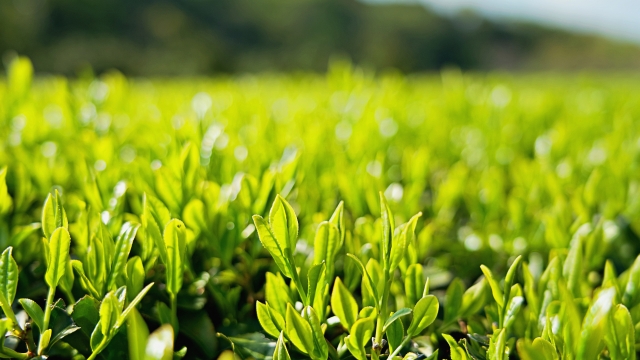
Kukicha demonstrates something simple but important about tea. A tea plant is not one uniform ingredient.
The bud, leaf, leaf stalk, and stem do not contain exactly the same balance of compounds. Separating them therefore changes what ends up in the cup.
That is why kukicha does not taste like a weaker version of sencha. It has a different balance.
And once you go one step further and compare an everyday sencha-based kukicha with a gyokuro karigane, another point becomes clear: even the words "stem tea" describe a surprisingly wide range of flavors.
Kukicha may not be Japan's most famous green tea, but it is an excellent example of how much variety can come from a single tea plant.
Related Reading on YUNOMI
Sencha: Japanese Green Tea and How to Enjoy It is the best comparison for understanding how a leaf-centered Japanese green tea differs from kukicha.
Gyokuro: Japanese Green Tea Beyond the "Highest Grade" Image helps explain why gyokuro-based karigane can have a different character from ordinary kukicha.
What Is Bancha? Japanese Tea Beyond Sencha looks at another everyday Japanese tea whose character depends heavily on the raw material and processing.
Japanese Green Tea Culture gives a broader view of how kukicha fits among the many types of green tea drunk in Japan.

