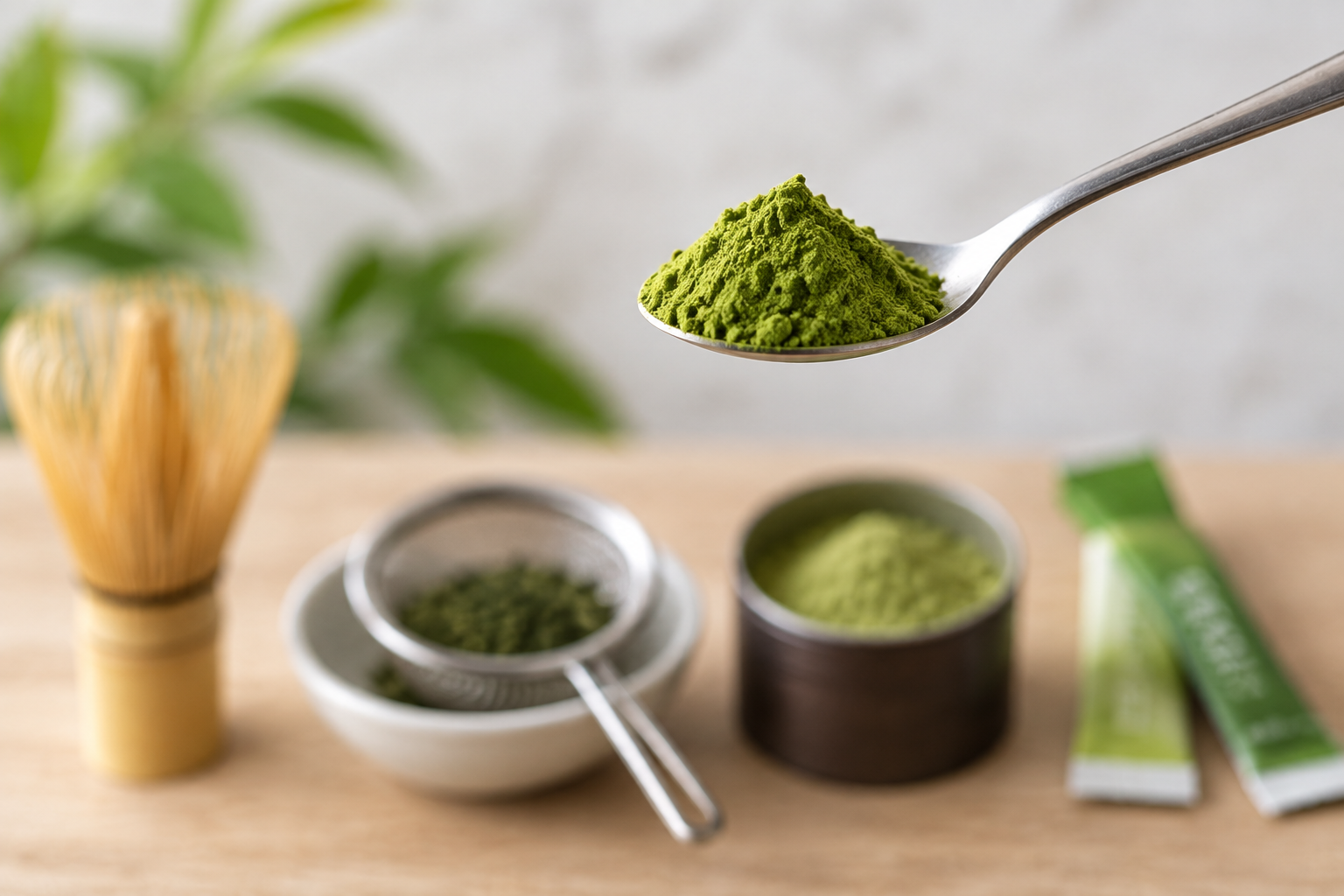
Green tea powder sounds simple.
But in Japan, there are several very different kinds of tea that can all look like green powder.
Four of the main ones are matcha, konacha, powdered green tea (funmatsucha), and instant green tea.
To the eye, they can look surprisingly similar.
But they are not the same tea.
Matcha and powdered green tea are made by grinding tea leaves. Konacha consists of fine particles separated during tea processing. Instant green tea is made from brewed tea extract that has been dried into a soluble form.
This is where English becomes confusing. Words such as “powder tea,” “powdered green tea,” and “green tea powder” can sound almost interchangeable, even though the products behind them may be completely different.
The easiest way to understand them is to ask a few simple questions:
What is it made from?
How is it made?
How do you drink it?
And what does that process do to the flavor and texture?
Once you look at those differences, the confusing world of Japanese “tea powder” becomes much clearer.
Quick Summary
- Not every green tea powder in Japan is matcha.
- Matcha is made by finely grinding tencha.
- Konacha is not intentionally ground. It consists of fine tea particles separated during the finishing of sencha, gyokuro, and other teas.
- Powdered green tea, or funmatsucha, is made by mechanically grinding tea leaves such as sencha.
- Instant green tea is made from brewed tea extract that is dried into a soluble powder or granules.
- Matcha and powdered green tea are consumed along with the leaf itself.
- Konacha is brewed and normally strained.
- Instant green tea dissolves in water much like instant coffee.
- The different production methods also affect aroma, flavor, texture, and convenience.
Why Is “Green Tea Powder” So Confusing?
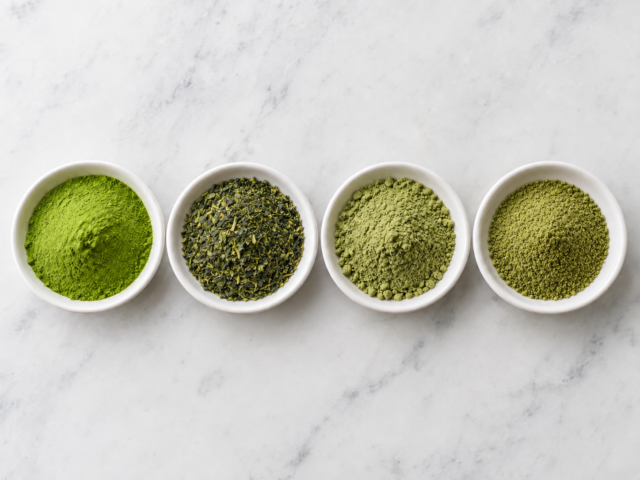
The main problem is that appearance tells you very little about how the tea was made.
Matcha looks like green powder. Powdered sencha also looks like green powder. Instant green tea may be sold as a fine powder or granules, while konacha can be so fine that it may also appear powder-like at first glance.
But those similar appearances come from very different processes.
Matcha is deliberately ground from tencha. Powdered green tea is made by grinding finished tea leaves such as sencha. Konacha becomes fine through sorting rather than grinding. Instant green tea is not ground leaf at all, but dried tea extract.
From an English-speaking reader’s perspective, all of these can easily fall under the vague idea of “green tea powder.”
In Japanese, however, the names distinguish them much more clearly: matcha (抹茶), konacha (粉茶), funmatsucha (粉末茶), and instant tea.
Looking like powder does not tell you what the tea actually is.
The difference only becomes clear when you look at the raw material, production method, and how each tea is meant to be prepared.
What Is Matcha?
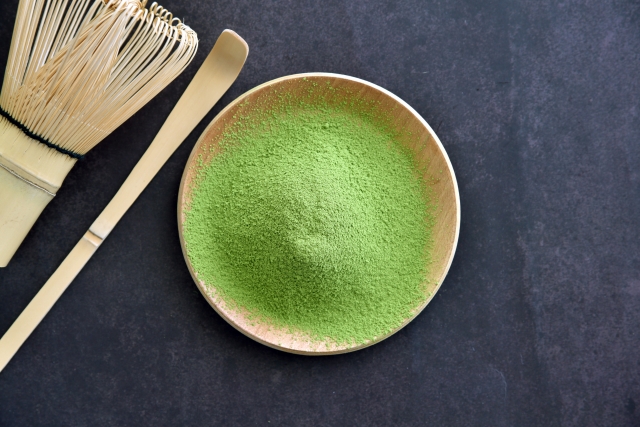
Matcha is the best-known Japanese green tea powder outside Japan.
It is made from tencha, a tea produced specifically as the raw material for matcha. The tea plants are shaded before harvest, and after the leaves are steamed, they are dried without the rolling process used for sencha. During later refinement, stems and veins are removed to produce tencha.
The tencha is then finely ground into powder. Traditionally, stone mills are used, although modern production can also use other fine-grinding methods.
The key point is that matcha is intentionally turned into powder.
When you prepare matcha, you place the powder directly into water and whisk or mix it. The powder does not truly dissolve.
Instead, extremely fine tea particles are dispersed throughout the water, and you drink the tea leaf itself.
What Does Matcha Taste Like?
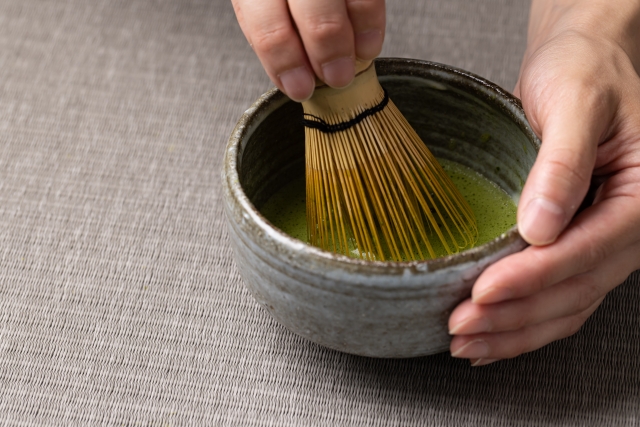
Matcha has a concentrated flavor because the whole leaf is consumed.
Depending on quality and preparation, it can combine sweetness, umami, bitterness, vegetal notes, and a rich aroma. Its texture is usually much smoother than coarser powdered teas because the particles are extremely fine, although some powder-like mouthfeel can still be noticeable.
Matcha is therefore not simply “green tea made more convenient.” It belongs to its own production tradition.
What Is Konacha?
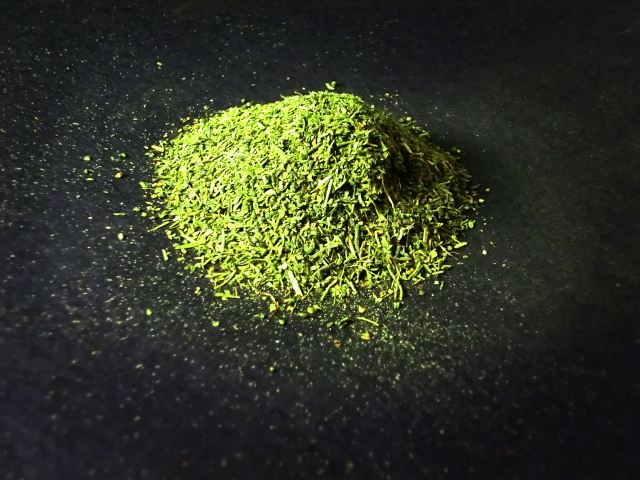
Konacha is perhaps the most misleading of these teas when translated into English.
The Japanese characters 粉茶 can easily suggest “powder tea.” But konacha is not normally made by grinding finished tea leaves into powder.
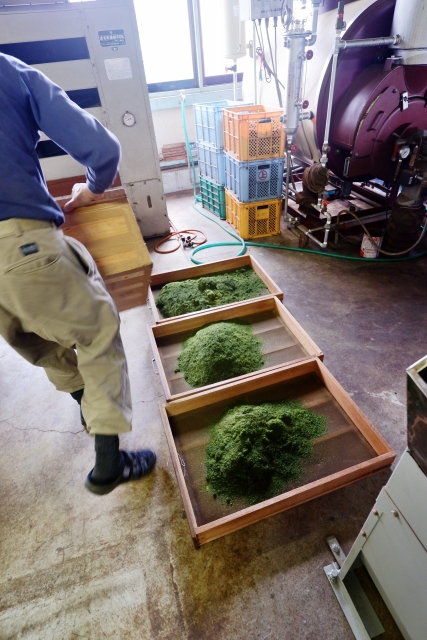
Instead, it consists of fine pieces and small particles separated during the finishing and sorting of teas such as sencha and gyokuro.
Tea leaves do not all come out of processing in identical shapes and sizes. During finishing, larger leaves, stems, and finer fragments can be separated, and the smaller portions may then be sold as konacha.
So the difference from matcha is fundamental:
Matcha is intentionally ground into fine powder.
Konacha is fine because it consists of the smaller portions separated from processed tea.
Konacha is still fundamentally a brewed tea. You place it in hot water, let it extract, and normally use a teapot filter or strainer.
What Does Konacha Taste Like?
Konacha usually brews quickly and strongly.
Because the particles are small, flavor compounds are extracted rapidly, so the tea can develop noticeable bitterness, astringency, sweetness, and umami in a short time.
Its character still depends heavily on the original tea. Sencha konacha may taste fresh and brisk, while konacha separated from gyokuro can show much stronger sweetness and umami.
Fine particles may pass through the filter and settle at the bottom of the cup. As a result, the final few sips can sometimes feel slightly grainy or stronger than the first sips.
Is Konacha Low-Quality Tea?
Not necessarily.
Konacha is often less expensive because its particles are small and irregular and are separated from the larger, more visually uniform leaves sold as the main finished tea.
Appearance and consistency have commercial value in Japanese tea. Larger, more uniform leaves are generally easier to present and sell as a premium-looking finished product, while konacha does not have the same visual appeal.
That does not mean the original tea was poor quality.
Konacha separated from high-quality gyokuro begins with very different material from inexpensive everyday sencha konacha.
So “konacha” tells you more about the form and sorting of the tea than about its quality.
What Is Powdered Green Tea?
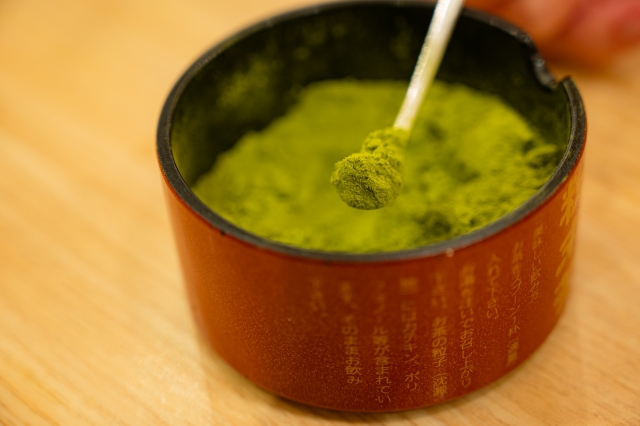
Powdered green tea, called funmatsucha (粉末茶) in Japanese, is made by deliberately grinding tea leaves into very fine particles.
Sencha is commonly used, although other teas can also be powdered.
Unlike konacha, the small particle size is intentional.
You place the powder directly into a cup, add hot or cold water, mix it, and drink it. There is no need to strain out the leaves because the ground leaf itself is part of the drink.
However, that does not mean the powder has truly dissolved.
The particles are simply very small and dispersed throughout the water. If the tea sits for some time, some of them may settle at the bottom.
What Does Powdered Green Tea Taste Like?
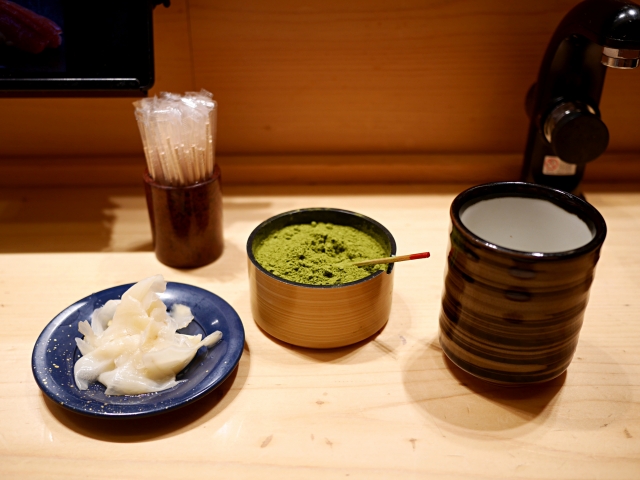
Powdered green tea often has a direct, strong tea flavor because the whole leaf is consumed.
Compared with brewed sencha, however, it can feel less delicate. Depending on the product, you may notice vegetal notes, bitterness, or a slightly rougher texture.
The particles can also be coarser than those of fine matcha, so sediment and powderiness may become more noticeable toward the bottom of the cup.
This is especially noticeable at some conveyor-belt sushi restaurants, where the final sip can contain more settled tea particles than the first.
Powdered green tea trades some delicacy for convenience. It is quick, requires no teapot, and allows the drinker to consume the entire leaf.
What Is Instant Green Tea?
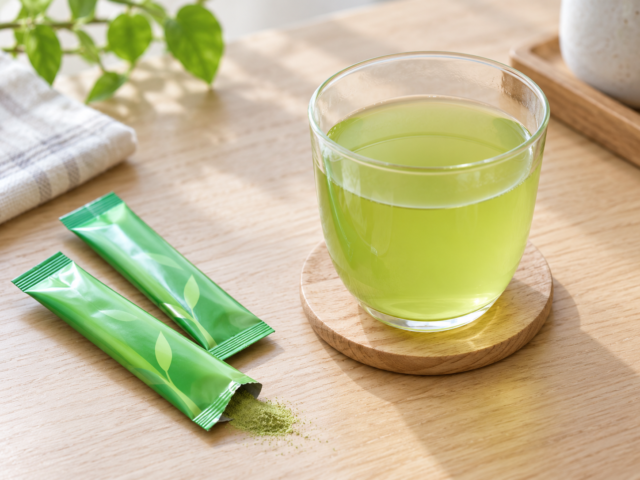
Instant green tea works on a completely different principle.
The easiest comparison is instant coffee.
Tea is first brewed or extracted. The liquid is then dried, producing a soluble powder or granules that can later be mixed back into water.
In other words, instant green tea is not simply ground tea leaf.
It is made from tea that has already been extracted.
Tea leaves → tea extract → drying → instant tea
When the powder or granules are added to water, they are designed to dissolve.
There is no teapot and no tea leaf to strain. Unlike matcha or powdered sencha, you are not consuming microscopic pieces of the original leaf.
Instant green tea is fast, easy to measure, and produces a relatively consistent cup. Its texture is usually smooth because there are no suspended tea-leaf particles, although some of the delicate aroma and flavor complexity found in freshly brewed leaf tea can be reduced during extraction and drying.
This makes instant green tea the easiest of the four to prepare, but usually the least similar to freshly brewed leaf tea.
What Is the Real Difference Between These Four Teas?
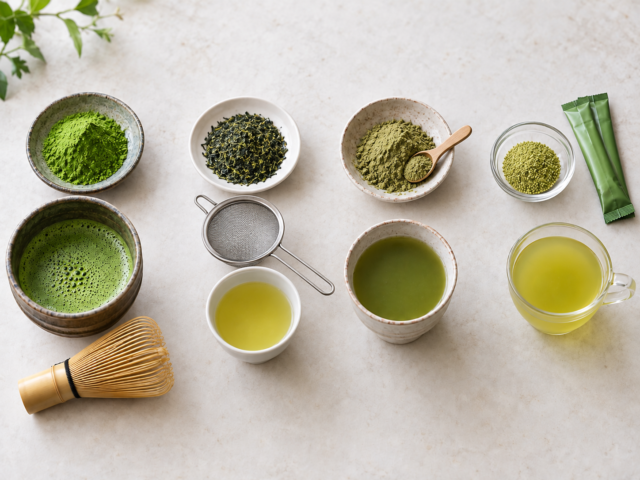
The easiest way to remember them is by looking at what happens before they reach your cup.
Matcha
Tencha is intentionally ground very finely. You mix or whisk it into water and consume the leaf itself.
Konacha
Fine particles are separated during tea finishing. You brew them like loose-leaf tea and normally strain them.
Powdered Green Tea
Tea leaves such as sencha are intentionally ground. You mix the powder directly into water and consume the leaf.
Instant Green Tea
Tea is brewed first, and the extracted liquid is dried. You dissolve the resulting powder or granules in water.
These are four different tea products, but physically they fall into three basic forms.
Matcha and powdered green tea are both ground tea leaves, although their raw materials and production methods are different. Konacha consists of fine leaf fragments, while instant green tea is dried tea extract.
So behind the single English word “powder” are three very different things: ground tea leaves, fine leaf fragments, and dried tea extract.
Why Does Konacha Brew So Quickly?
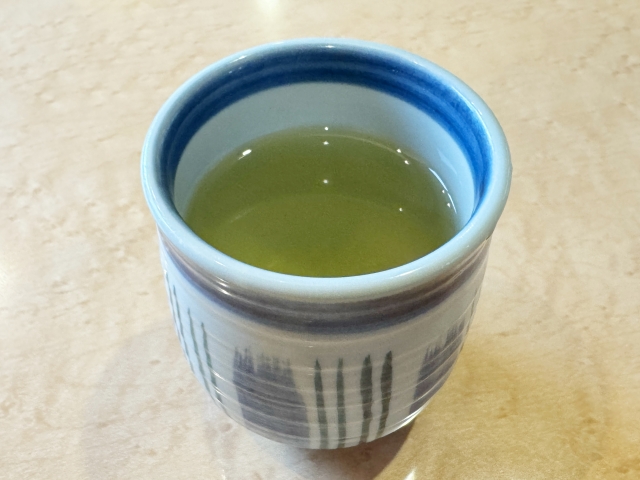
Konacha’s small particle size changes how it extracts.
Compared with larger intact tea leaves, the fine particles expose more surface area to the water relative to their size. Water can therefore interact with the tea quickly.
This is why konacha can produce strong color and flavor after a relatively short infusion.
It can also become bitter or astringent quickly if left for too long. That does not make it inferior; it simply means the tea needs to be brewed differently from larger-leaf sencha.
A short infusion is usually a better starting point.
Why Is Sushi Restaurant Tea So Confusing?
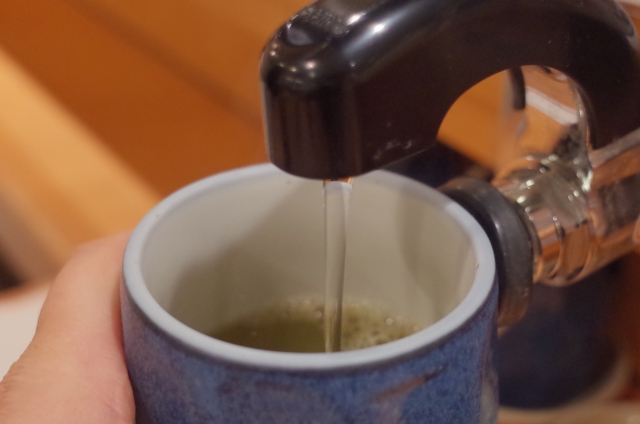
Sushi restaurants make the difference between konacha and powdered green tea especially interesting.
Konacha has long been associated with sushi restaurants because it brews quickly and produces a strong cup. That made it practical for restaurants where tea needed to be prepared repeatedly throughout the day.
But the green powder found at many modern conveyor-belt sushi restaurants is often something different.
If you take powder from a container, put it directly into your cup, add hot water, stir, and drink without using a strainer, you are probably drinking powdered green tea rather than traditional konacha.
This is why simply saying “sushi restaurant tea is konacha” does not always describe the reality of modern Japan.
Why Do Conveyor-Belt Sushi Restaurants Use Powdered Tea?
The reason is largely practical.
Serving tea to hundreds of customers with individual teapots requires tea to be measured, brewed, emptied, and the equipment washed again and again.
Powdered tea simplifies that operation.
Customers can make their own tea whenever they want it and adjust the strength themselves. The restaurant needs fewer utensils, produces little wet tea-leaf waste at the table, and does not need to prepare each cup individually.
The tea is also ready in seconds.
That makes powdered green tea especially well suited to the self-service system of conveyor-belt sushi.
Traditional sushi restaurants may still serve brewed green tea, including konacha or other teas. Modern restaurant design simply favors a tea that can be mixed directly in the cup.
How Should You Brew Konacha?
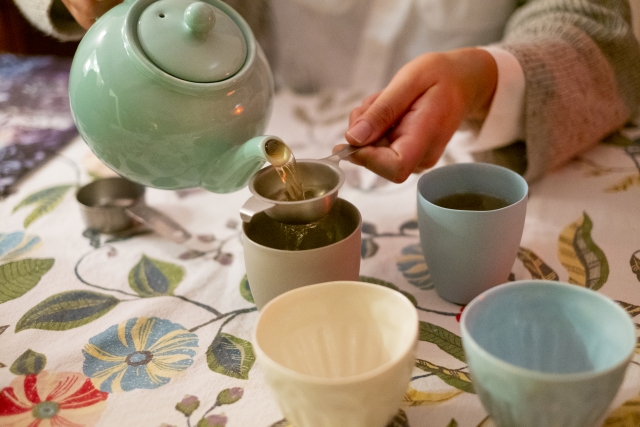
Of the four teas in this article, konacha is the one that still behaves most like ordinary loose-leaf tea.
Because its particles are small, a fine-mesh filter or strainer is useful. A teapot with relatively large filter openings may allow many fine particles into the cup.
That is not necessarily a problem. A small amount of fine leaf material in the cup is normal with konacha.
The more important point is brewing time.
Konacha extracts quickly, so a short infusion is usually better than leaving it for a long time. If the tea tastes too bitter or astringent, shortening the infusion is often the first adjustment to try.
Water temperature can also be adapted to the type of konacha. A gyokuro-based konacha may benefit from a gentler approach than a robust everyday sencha konacha.
Package instructions are therefore a useful starting point.
Does More Convenience Mean Less Flavor?
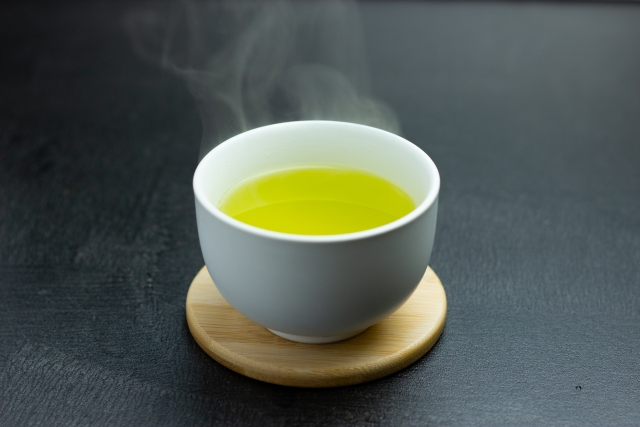
Not always, but there is often a trade-off.
Traditional brewed tea allows aroma and flavor to develop directly from the leaves in the teapot or cup.
Powdered green tea removes the need for brewing equipment, but its whole-leaf flavor can feel stronger and less delicate.
Instant green tea goes even further toward convenience by removing the tea leaf entirely and turning the extracted tea into a soluble product. That makes preparation extremely easy, but some aroma and complexity can be lost along the way.
Konacha still behaves like brewed leaf tea, so it can retain much of the character of the original sencha or gyokuro.
Powdered green tea offers speed and the ability to consume the whole leaf, while instant tea prioritizes convenience and consistency.
Matcha does not fit neatly into this convenience scale because it was not created as a shortcut. It is a separate type of tea with its own raw material, processing, preparation, and flavor.
So rather than asking which one is simply “best,” it is more useful to ask what each form is designed to do.
Which Green Tea Powder Should You Choose?
If you want traditional matcha flavor and the experience of preparing matcha, choose actual matcha.
If you want a simple way to consume ground green tea leaf without using a teapot, powdered green tea may be useful.
If you want a fast-brewing loose tea with strong flavor, konacha is a different option entirely.
If convenience and complete solubility matter most, instant green tea is the closest equivalent to instant coffee.
The important thing is not to judge them by appearance alone.
A fine green powder does not tell you what the product actually is. The production method matters much more.
What Green Tea Powder Reveals About Japanese Tea Cultur
These four teas show how many different products can emerge from what appears to be the same basic ingredient.
Tea leaves can be processed specifically for matcha. Finished tea can be ground into powdered green tea. Fine fragments can be separated during tea finishing and sold as konacha. Or tea can be brewed first and transformed into an instant product.
The result may look similar in a spoon.
But the route to that spoon can be completely different.
This is also a useful reminder that Japanese tea culture is not one fixed tradition.
Some teas reflect older production methods. Others reflect the practical needs of modern life.
A bowl of matcha and a cup of powdered tea at a conveyor-belt sushi restaurant may both begin with the same plant, but they exist for very different reasons.
Understanding that difference makes the simple phrase “green tea powder” much more interesting.
Author’s Note
For me, the easiest example is the tea at a conveyor-belt sushi restaurant.
You take a spoonful of green powder, put it directly into the cup, add hot water, and drink it. There is no teapot and no strainer.
I had never really needed to think about what category that tea belonged to. It was simply “the tea at the sushi restaurant.”
But once you compare it with konacha, the difference becomes obvious.
Konacha is made from fine particles separated during tea finishing and is still basically brewed tea. The powder at many conveyor-belt sushi restaurants is ground tea designed to be mixed directly into the cup.
And instant tea is something different again.
They can all look like powder.
That does not mean they are the same thing.
Sometimes the confusing part is not Japanese tea itself. It is trying to fit several different Japanese products into one English word: “powder.”
FAQ
Is all green tea powder matcha?
No. Matcha is only one type of green tea powder. Powdered sencha, konacha, and instant green tea are produced in different ways.
What is the difference between konacha and matcha?
Matcha is made by intentionally grinding tencha into fine powder. Konacha consists of fine pieces separated during the finishing of teas such as sencha and gyokuro and is normally brewed and strained.
What is the difference between konacha and powdered green tea?
Konacha becomes fine through processing and sorting. Powdered green tea is deliberately ground into very small particles. Konacha is normally brewed and strained, while powdered green tea is mixed directly into water.
Does powdered green tea dissolve in water?
Not completely. Powdered green tea contains finely ground tea leaf, so the particles remain suspended in the water and may eventually settle.
Does matcha dissolve in water?
No. Matcha consists of extremely fine tea particles dispersed in water. Whisking helps suspend them, but they do not truly dissolve.
Why does powder settle at the bottom of the cup?
Matcha and powdered green tea contain actual tea-leaf particles. Konacha can also allow very fine fragments through the strainer. As the tea sits, some particles may settle, making the final sips slightly stronger or more grainy.
What is instant green tea made from?
Instant green tea is made by extracting tea into liquid and then drying that extract into a soluble powder or granules.
Is instant green tea like instant coffee?
The basic idea is similar. Both begin with an extracted beverage that is dried so it can later be dissolved again in water.
Is sushi restaurant tea always konacha?
No. Konacha has traditionally been associated with sushi restaurants, but many modern conveyor-belt and chain sushi restaurants use powdered green tea that can be mixed directly into the cup.
Related Reading on YUNOMI
Japanese Green Tea Culture
A broader guide to the many ways Japanese green tea is produced, prepared, and enjoyed.
Sencha: Japan’s Everyday Green Tea
Learn about the tea that can produce konacha during sorting and can also be deliberately ground into powdered green tea.
Gyokuro: Japan’s Famous Shade-Grown Green Tea
Gyokuro can also produce fine konacha during the finishing process.
Why Is Matcha Ground with a Stone Mill?
A deeper look at how grinding affects matcha and why its powder is fundamentally different from konacha.

