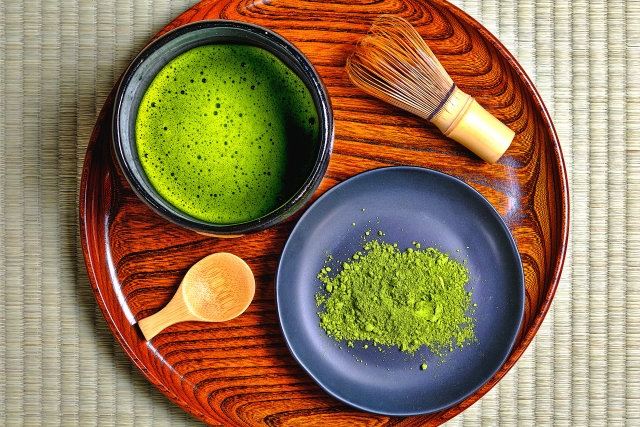
Matcha is often described simply as “powdered green tea.” That is not wrong, but it leaves out the most important part.
Matcha is not made by taking ordinary green tea leaves and grinding them into powder. It is made from a specific tea material called tencha, which is grown and processed differently from teas such as sencha and gyokuro.
The powder is only the final form. To really understand matcha, it helps to start from a different question:
Why is matcha prepared as a powder in the first place — and what kind of tea leaf can become matcha?
Quick Summary
- Matcha is made from tencha, not ordinary sencha leaves.
- Matcha is powdered because the fine tea particles are whisked into water and consumed as part of the drink.
- Tencha is produced from shaded tea plants and is processed without the rolling used for sencha and gyokuro.
- Stems and larger veins are removed during refinement before the tea is ground.
- Grinding sencha produces powdered sencha, not matcha.
- Grinding gyokuro does not make matcha either.
- Sencha, gyokuro, and matcha all come from the same tea plant, but they follow different growing and processing paths.
Why Is Matcha Powdered?
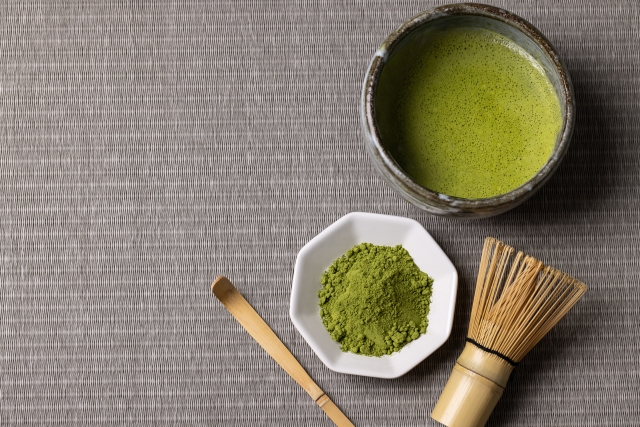
Matcha is ground into a fine powder and whisked directly into water, so the tea particles themselves become part of the drink.
Most Japanese green teas are prepared by extraction. You steep the leaves in water, flavor and soluble compounds move into the water, and the leaves remain behind in the teapot or strainer.
Matcha works differently. The tea is ground extremely finely, whisked into water, and consumed together with the liquid. In other words, the tea particles themselves become part of the drink. This is the main reason matcha needs to be powdered.
Grinding also increases the surface area of the tea and allows it to mix readily with water, but matcha is not powdered simply to make extraction faster. The important difference is that the finely ground tea is not removed after brewing.
This gives matcha its characteristic body, texture, concentration, and intensity.
But that raises another question. If matcha is simply tea that has been ground into powder, could you grind any Japanese green tea and make matcha?
The answer is no. The difference begins with the tea used for grinding.
What Is Tencha?
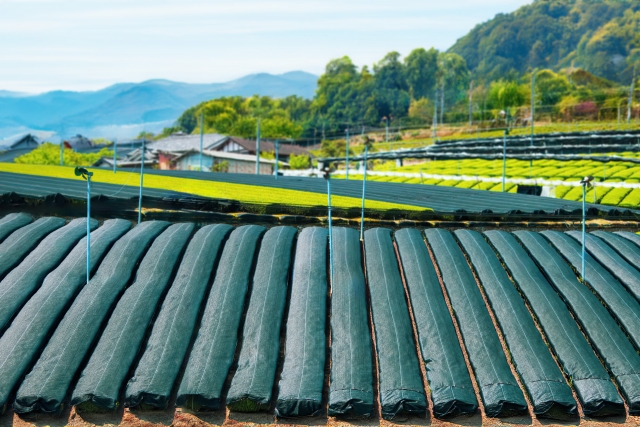
Tencha is the tea material used to make matcha. This is one of the most important things to understand about matcha.
Tencha and sencha may begin with the same species of tea plant, Camellia sinensis, but they are prepared for very different purposes.
Before harvest, tea plants intended for tencha are shaded. After harvesting, the leaves are steamed to stop oxidation. Unlike sencha, however, they are not rolled into narrow, needle-like leaves.
Instead, they are dried in a relatively flat form and later refined. Stems, larger veins, and other coarse material are removed, leaving the leaf material suitable for fine grinding. The refined tencha can then be ground into matcha.
So the simple relationship is:
Tencha → grinding → Matcha
That is much more accurate than:
Green tea → grinding → Matcha
Why Is Tencha Not Rolled Like Sencha?
Sencha, by contrast, is made as a leaf tea. After steaming, the leaves are rolled and shaped, giving sencha its familiar appearance and preparing it to release flavor when steeped in water.
Tencha, however, is made for a different purpose. It does not need to become an attractive rolled leaf for steeping. Instead, it needs to become a suitable material for refinement and eventually for very fine grinding.
This is one point where the two teas begin to follow different paths.
Why Are Stems and Larger Veins Removed?
Matcha is expected to become an extremely fine powder. Coarse stems and larger veins are less suitable for producing the smooth, fine texture associated with matcha.
Removing them during refinement helps create a more uniform material for grinding and a smoother finished tea. This is another reason matcha is not simply ordinary tea leaves put into a grinder.
The material itself has already been prepared specifically to become powder.
Why Are Tea Plants for Matcha Shaded?
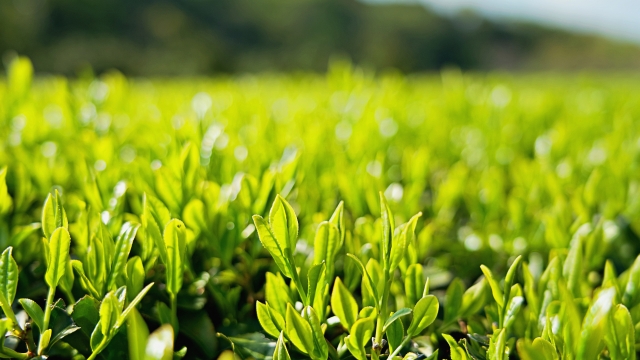
Shading changes how young tea leaves develop before harvest, helping create the pronounced umami and sweetness associated with matcha.
Tea plants used for tencha are shaded before harvest. Shading changes how the tea plant develops.
With less direct sunlight, the balance of compounds in the leaves changes, helping create the pronounced umami, sweetness, and rich character associated with matcha.
Shading is not simply a way to reduce bitterness. Its main role is to shape the character of the leaf before harvest and create the flavor profile desired in the finished tea.
This distinction is useful because another famous Japanese tea is also shaded. That tea is gyokuro.
If Gyokuro Is Also Shaded, Why Isn’t It Matcha?
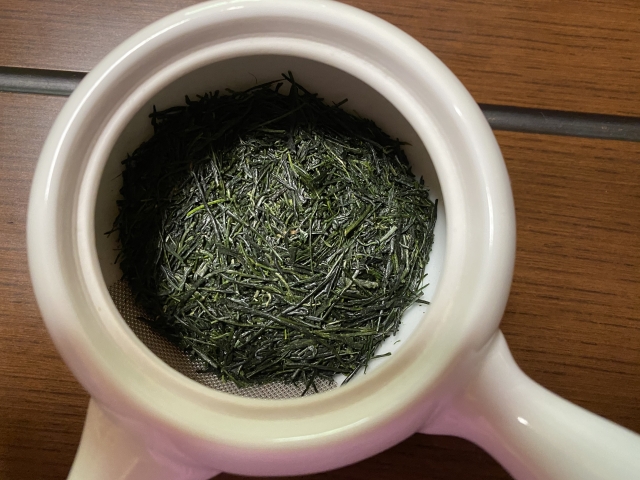
Gyokuro is also shade-grown, but it is rolled and finished as a leaf tea rather than processed into tencha for grinding.
At first glance, gyokuro and matcha seem very close. Both are associated with shaded cultivation, and both can have pronounced sweetness and umami.
So it is natural to wonder: Could you simply grind gyokuro and make matcha?
No. The difference is what happens after harvest.
Gyokuro is processed as a leaf tea. After steaming, it is rolled and shaped. The finished leaves are designed to be steeped in water and then removed.
Tea for matcha follows the tencha route instead. It is steamed, dried without sencha-style rolling, refined to remove coarse material, and then ground.
The two paths can be simplified like this:
Gyokuro
Shading
→ Harvest
→ Steaming
→ Rolling and shaping
→ Finished leaf tea
→ Steeping
Matcha
Shading
→ Harvest
→ Steaming
→ Drying without sencha-style rolling
→ Refining
→ Tencha
→ Fine grinding
→ Matcha
→ Whisking
So shading alone does not make tea matcha. If finished gyokuro is ground into powder, it becomes powdered gyokuro — not matcha.
Why Can’t You Make Matcha by Grinding Sencha?
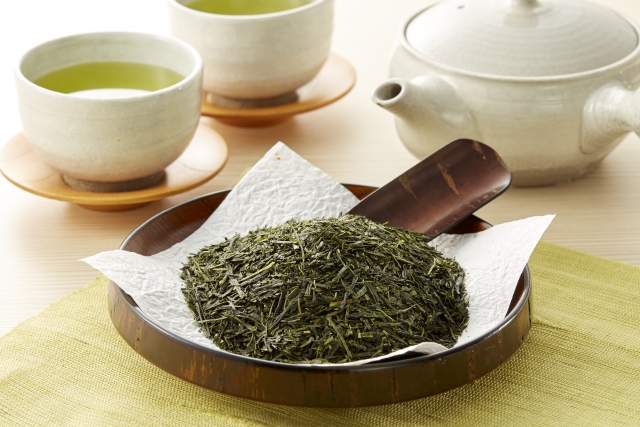
Sencha is rolled and finished as a leaf tea for steeping, so grinding it later produces powdered sencha rather than matcha.
The same principle applies to sencha. Sencha is already a finished leaf tea. It has been steamed, rolled, shaped, and dried with steeping in mind.
Grinding it afterward does not reverse that processing or turn it into tencha. You simply get powdered sencha.
This is why particle size alone does not define matcha. What matters is what has been ground and how that tea was produced before grinding.
A useful way to remember it is:
Sencha + grinder = powdered sencha
Gyokuro + grinder = powdered gyokuro
Tencha + grinder = matcha
All three can begin with the same tea plant, but they do not arrive at the grinder by the same route.
Why Powdery Tea Is Not Always Matcha
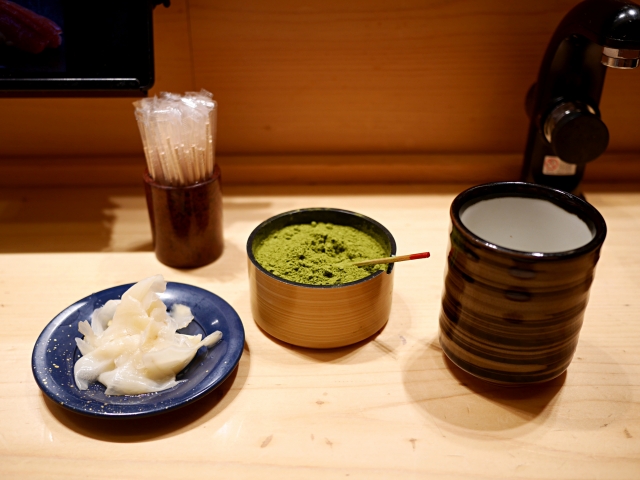
Some Japanese teas can look powdery or finely ground, but appearance alone does not make them matcha. Teas such as konacha are used differently and follow a different production path.
Japanese tea includes other products that may look fine or powdery. One example is konacha.
Konacha consists largely of small leaf particles and fine fragments separated during the processing of other teas. It often brews quickly and strongly and is commonly associated with sushi restaurants.
But konacha is still used like leaf tea. It is steeped in water and then separated from the drink.
Matcha is different. The finely ground tea remains in the bowl and is consumed as part of the drink.
So appearance alone is not enough to identify matcha. A tea can look powdery without being matcha at all.
What Changes When Matcha Is Whisked Instead of Steeped?
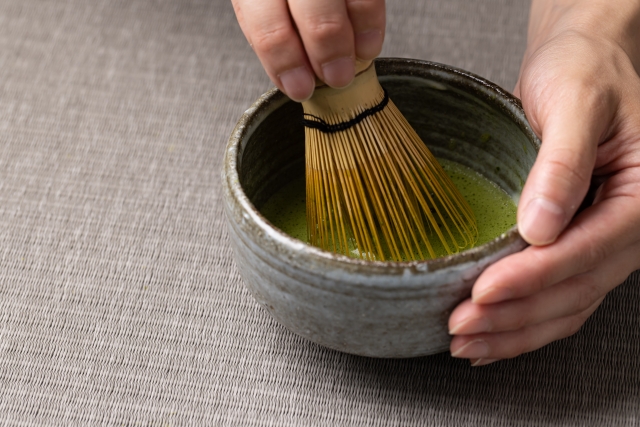
Unlike leaf tea, matcha is whisked directly into water so the fine tea particles remain in the drink.
The difference between matcha and leaf tea continues all the way to the cup.
With sencha or gyokuro, water extracts part of the flavor from the leaves, while the leaves themselves remain behind.
With matcha, the fine particles are dispersed through the water and consumed. This gives matcha a different physical presence.
It can feel thicker, fuller, and more concentrated than steeped green tea. Its bitterness, sweetness, umami, aroma, and texture are experienced together.
That is also why someone who regularly drinks sencha may still find a bowl of matcha surprisingly intense. The two drinks come from the same tea plant, but they are designed to be experienced differently.
One Tea Plant, Different Paths
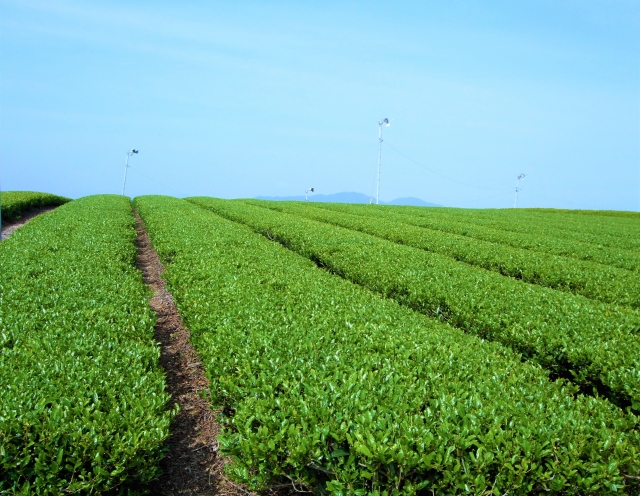
Sencha, gyokuro, and matcha can all begin with the same tea plant. What changes is the growing and processing path that follows.
Japanese green tea becomes much easier to understand once you stop thinking of sencha, gyokuro, and matcha as completely separate plants. They all begin with Camellia sinensis.
What changes is the path taken afterward. The growing method may change. The leaves may be shaded or left in full sun. They may be rolled or left unrolled. They may be refined differently. They may eventually be steeped, roasted, blended, or ground.
Each decision moves the tea in a different direction.
Matcha is a particularly clear example. Its identity does not begin at the grinder. By the time tencha reaches the grinding stage, many of the decisions that make it matcha have already been made.
That is why “powdered green tea” is technically understandable but culturally and practically incomplete.
Matcha is not simply green tea made smaller. It is the end of a specific growing and processing path.
Author’s Note
I was genuinely happy to see matcha becoming more popular overseas. It felt like good news for Japanese tea.
Then I went to buy sencha.
I drink green tea every day, so sencha is not an occasional specialty for me. It is part of ordinary life. Recently, though, I have found myself looking at tea prices and thinking, “That has become expensive.”
One reason is the rapid growth in demand for matcha. As tencha has become more valuable, some producers have shifted more attention and production toward tea for matcha. That does not explain every change in sencha prices, but it is one factor affecting the balance of Japanese tea production.
I had not expected the global matcha boom to come back around and affect the tea I actually drink at home.
So I have mixed feelings about it. I am glad Japanese matcha is being appreciated around the world.
At the same time, as someone who drinks green tea every day, I cannot help feeling a little sad when the ordinary sencha I have always taken for granted becomes more expensive.
In a strange way, it makes the idea of “one tea plant, different paths” feel very real.
Those paths are not only about flavor or processing. They can also influence what farmers choose to produce — and eventually, what appears on the shelves in front of us.
FAQ
Is matcha just powdered green tea?
That description is incomplete. Matcha is made by finely grinding tencha, a tea material produced specifically for matcha.
What is tencha?
Tencha is the processed tea material used to make matcha. It comes from shaded tea plants and is steamed and dried without being rolled like sencha before being refined for grinding.
Can I grind sencha into matcha?
No. Grinding sencha produces powdered sencha. It does not become matcha because sencha follows a different processing route.
Can I grind gyokuro into matcha?
No. Although gyokuro is also shade-grown, it is rolled and finished as a leaf tea. Grinding it produces powdered gyokuro, not matcha.
Why are stems and larger veins removed from tencha?
Removing coarser material helps prepare tencha for fine, uniform grinding and contributes to the smooth texture expected from matcha.
Is konacha the same as matcha?
No. Konacha consists largely of small tea particles and fragments and is steeped like leaf tea. Matcha is finely ground tencha that is whisked directly into water.
Why is matcha whisked instead of steeped?
Because the finely ground tea is intended to remain dispersed in the water and be consumed as part of the drink.

