San-nen bancha sounds simple.
San-nen means "three years," and bancha broadly refers to tea made from more mature leaves than the tender shoots typically used for sencha.
So is san-nen bancha simply bancha aged for three years?
Not necessarily.
Some san-nen bancha is aged for around three years after harvest. Other versions are made from tea plants left to grow for three years or longer before harvest. Some producers combine both approaches.
In other words, even the "three years" in san-nen bancha does not always refer to the same three years.
And once the production method changes, the raw material, flavor, and even the best way to brew the tea can change too.
That is what makes san-nen bancha confusing—and interesting.
Quick Summary
- San-nen bancha does not have one single production method.
- Type 1: Post-harvest aged — harvested tea is stored and aged for several years before roasting.
- Type 2: Long-grown on the plant — the tea plant itself is allowed to grow for three years or longer before harvest.
- Type 3: Combined — long-grown leaves and stems are also aged after harvest.
- These methods do not necessarily produce the same flavor.
- Mature leaves and stems generally contain less caffeine than tender young shoots.
- Post-harvest aging gradually reduces fresh green aromas and changes polyphenols, lipids, pigments, and aroma compounds.
- Long-grown tea starts with unusually mature leaves, thick stems, and sometimes woody branches.
- Roasting is important in all three types, but san-nen bancha is not simply another name for hojicha.
- To understand what you are buying, the producer's description is often more useful than the name on the package.
What Is San-nen Bancha?
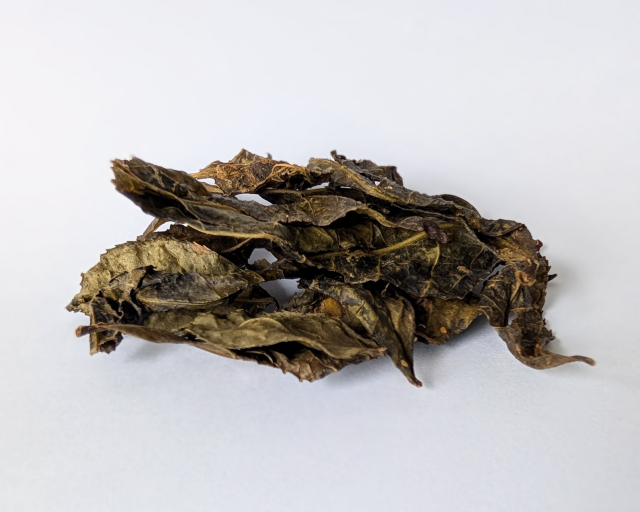
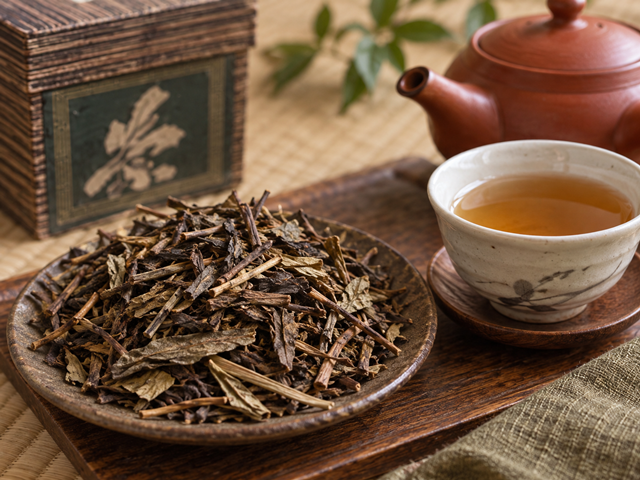
San-nen bancha is generally made from mature tea leaves, stems, and sometimes relatively woody branches rather than the soft young shoots prized for sencha.
The finished tea is usually roasted, giving it a warm aroma and a brownish infusion.
But there is no single production method behind the name.
That creates an unusual problem.
Before asking, "What does san-nen bancha taste like?" it helps to ask a more basic question:
What exactly happened for three years?
There are three useful ways to think about the san-nen bancha sold today.
Type 1: Tea Aged After Harvest
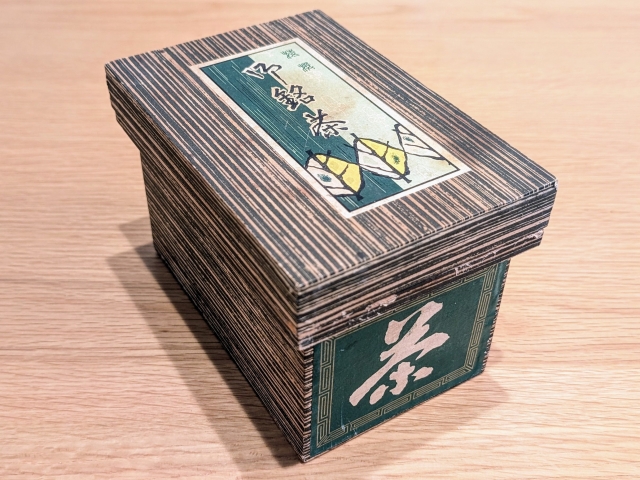
This is probably what most people imagine when they first hear the name.
Mature autumn leaves and stems are harvested, steamed, dried, and stored as unfinished tea. They remain in storage for an extended period—sometimes around three years—before being roasted.
Here, the "three years" really do mean years of aging after harvest.
What Changes During Those Three Years?
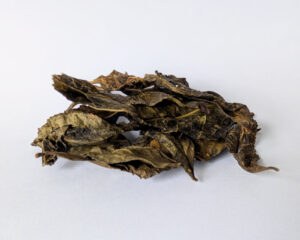
The tea is dry, so chemical reactions happen far more slowly than in fresh leaves.
But the tea is not completely frozen in time.
Fresh green tea contains volatile compounds associated with grass, young leaves, and greenery. During long storage, these fresh aromas gradually decline.
Aging is therefore partly a process of losing the aroma of youth.
At the same time, catechins can slowly undergo oxidation, degradation, epimerization, and polymerization. Lipids, pigments, and aroma precursors also change.
Carotenoids are particularly interesting because their breakdown can contribute to floral, sweet, fruity, dried-leaf, and woody aroma notes.
If the tea was steamed before drying, its own oxidation enzymes have largely been deactivated. So the tea is not slowly turning into black tea.
Instead, much slower non-enzymatic reactions continue during storage.
The overall aromatic direction can be imagined as:
fresh / grassy / leafy
gradually shifting toward:
dry / woody / sweet / aged
There is no single mysterious "aged tea molecule."
Some compounds disappear, some change, and others become more noticeable.
Poor storage can also create stale aromas, so aging itself does not automatically make tea better. Moisture, temperature, oxygen, and storage conditions still matter.
What Does This Type Taste Like?
Compared with freshly processed green tea, an aged type generally has less obvious grassy or vegetal character.
The final roasting adds toasted and nutty aromas, while the aged material underneath may contribute a quieter, drier, more settled character.
The effect of aging is not necessarily a dramatic new flavor.
Sometimes the biggest difference is simply what is no longer there.
How Is This Type Brewed?
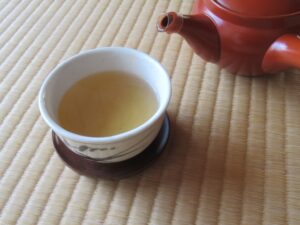
Both teapot brewing and simmering are used for aged san-nen bancha.
Because the leaves and stems are mature and the finished tea is roasted, boiling water is generally more suitable than the lower temperatures often used for delicate sencha.
Some products can simply be steeped for a few minutes in a teapot. Others develop more body when gently simmered.
The producer's instructions remain the best starting point.
Type 2: Tea Plants Grown for Three Years Before Harvest
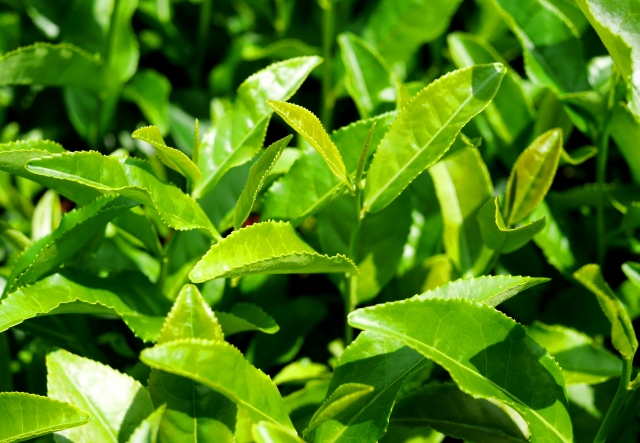
The second type takes a completely different route.
The harvested tea does not necessarily spend three years in storage.
Instead, the tea plant itself is allowed to keep growing for several years before the leaves and stems are harvested.
In documented examples, tea plants are left to grow for at least three years before mature leaves and stems are harvested, dried, and roasted.
So in this case:
the three years happened on the plant.
What Changes While the Tea Is Still Growing?
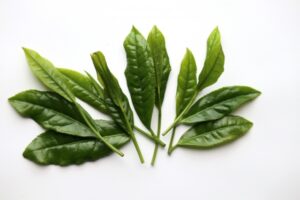
This is not "aging" in the same sense as storing dried tea.
The plant is alive and continuing to develop.
Instead of harvesting soft spring shoots, the producer eventually collects large mature leaves, thick stems, and sometimes more woody material.
That means this type starts with fundamentally different raw material from sencha.
The changes are therefore biological growth and maturation rather than slow storage chemistry.
Leaves become older and tougher. Stems become thicker. The balance of compounds in the harvested material also differs from tender young shoots.
Some producers harvest this type in late autumn or winter, adding another layer of difference from spring-picked sencha.
What Does This Type Taste Like?
There is no single flavor that defines every long-grown san-nen bancha because the finishing method also varies.
Some producers describe this style as clean, mild, or gently sweet.
Its character tends to be less about preserving the fresh, vivid greenness of young leaves and more about the character that mature leaves and stems take on when combined with roasting.
A pan-roasted long-grown tea, for example, can also differ noticeably from a steamed tea that is later roasted.
So even within Type 2, the production method after harvest still matters.
How Is This Type Brewed?
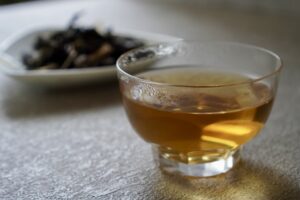
There is no universal brewing rule unique to long-grown san-nen bancha.
Its mature leaves and stems, together with roasting, generally make hot-water brewing suitable, and some products can also be simmered.
However, because processing varies considerably, the producer's instructions matter more than the name san-nen bancha itself.
Type 3: Long-Grown Tea That Is Also Aged
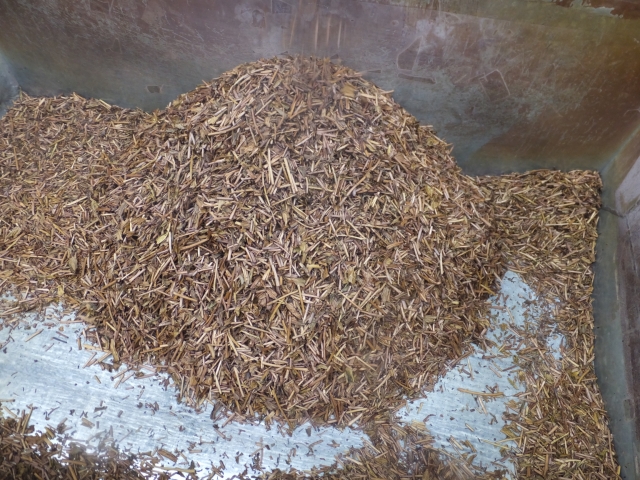
Then there are teas that combine both ideas.
The producer first uses leaves and stems that have been allowed to grow for several years.
After harvest, that mature material is dried, stored for an additional aging period, and eventually roasted.
The journey is roughly:
long growth → harvest → drying → aging → roasting
Importantly, this does not necessarily mean "three years on the plant plus another three years in storage."
The exact periods vary by producer.
What matters is that this type goes through two different kinds of time.
What Changes in This Type?
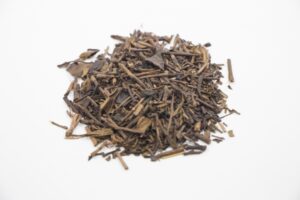
First, time changes the material while the tea plant is still alive.
The producer begins with mature leaves and thick stems rather than young shoots.
Then storage changes the harvested tea through the slower chemical processes associated with aging.
Finally, roasting creates another layer of aroma.
So this type combines:
mature plant material
post-harvest aging
roasting
rather than relying on only one of these processes.
What Does This Type Taste Like?
Combined types can bring together the character of mature leaves and stems with the softer, less green profile produced by aging.
Roasting then adds toasted, nutty, and gently sweet aromas.
Some producers describe their combined-type teas as mellow, aromatic, and low in harsh bitterness or astringency.
That is useful as an example, but it should not be treated as a strict flavor definition for every san-nen bancha.
The result still depends on the raw material, storage conditions, and roasting style.
How Is This Type Brewed?
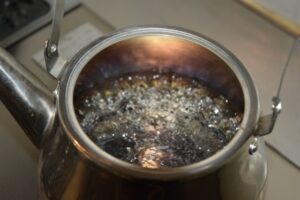
Combined types may work well with both teapot brewing and simmering.
Some producers specifically recommend both methods, with simmering used when a fuller body is preferred.
Again, this is not a universal rule.
The important point is that the tea's processing history matters when deciding how to brew it.
So Do the Three Types Really Taste Different?
They can.
The name san-nen bancha tells you surprisingly little about the exact journey of the tea.
A post-harvest-aged version spent years changing slowly in storage.
A long-grown version spent those years developing as part of a living tea plant.
A combined version experienced both.
Then each producer can change the final result again through steaming, drying, pan-roasting, storage conditions, roast level, and the proportion of leaves to stems.
So san-nen bancha is better understood as a family of related teas rather than one standardized flavor.
Why Is San-nen Bancha Lower in Caffeine?
Despite their differences, the three types usually share one important characteristic:
mature plant material.
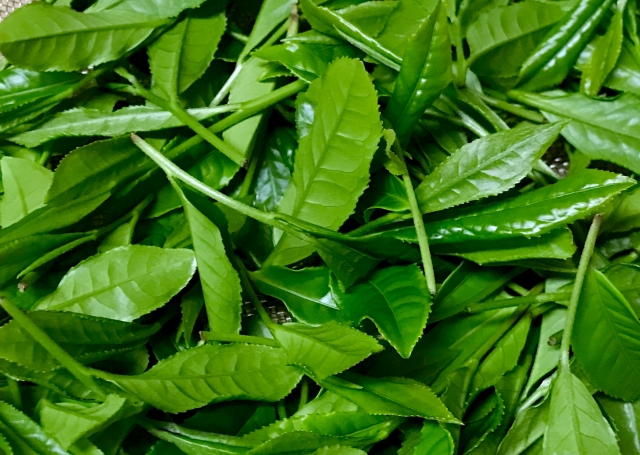
Young tea shoots generally contain more caffeine than older leaves.
San-nen bancha commonly uses mature leaves, thick stems, and sometimes woody branches, so its lower-caffeine character begins largely with the raw material itself.
It is therefore misleading to say that three years of aging simply removes the caffeine.
Caffeine does not gradually evaporate from dry tea during storage.
Actual caffeine levels still vary between products, but the basic idea is simple:
older plant material generally starts with less caffeine than tender young shoots.
Then Roasting Changes All Three Types Again
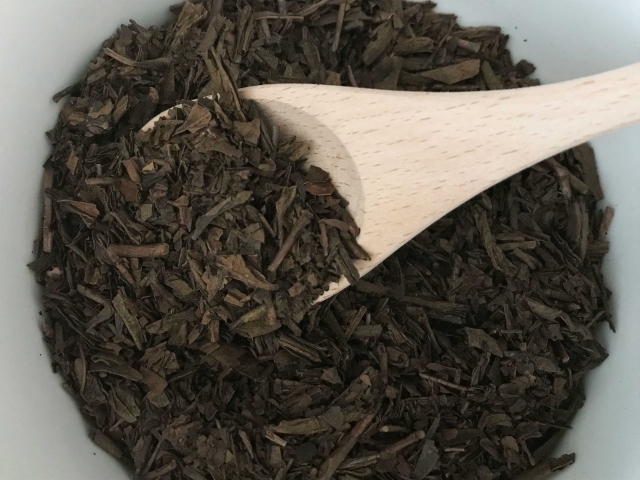
Whatever "three years" means, roasting is another major part of the finished tea.
High-temperature roasting creates toasted, nutty, and caramel-like aromas.
That is why the aroma you notice first when opening a package of san-nen bancha may come largely from roasting.
But what lies beneath that aroma depends on the material that entered the roaster.
Was it:
tea aged for years after harvest?
tea allowed to mature on the plant for years?
or
material that experienced both?
Roasting may be the final transformation, but it does not erase what happened before it.
Is San-nen Bancha a Fermented Tea?
Usually, no.
Traditional Japanese fermented teas such as Awa bancha involve microbial fermentation.
A typical steamed san-nen bancha does not.
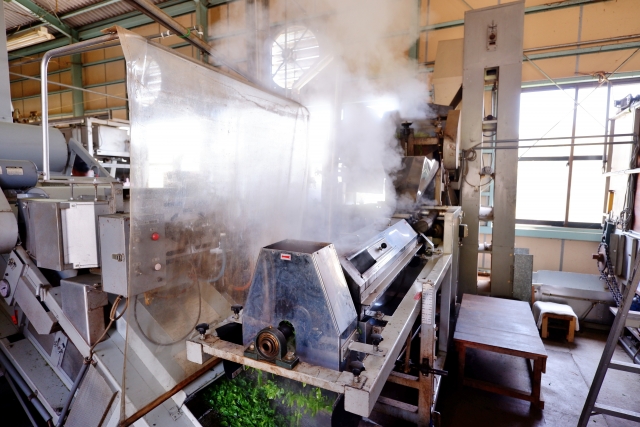
If the tea was steamed before drying, the enzymes responsible for rapid oxidation are largely deactivated. Later changes during storage occur much more slowly.
The long-grown type is even clearer: simply allowing a living tea plant to grow for several years is not fermentation.
So san-nen bancha is generally better understood in terms of maturation, aging, and roasting rather than fermentation.
How Is San-nen Bancha Different from Hojicha?
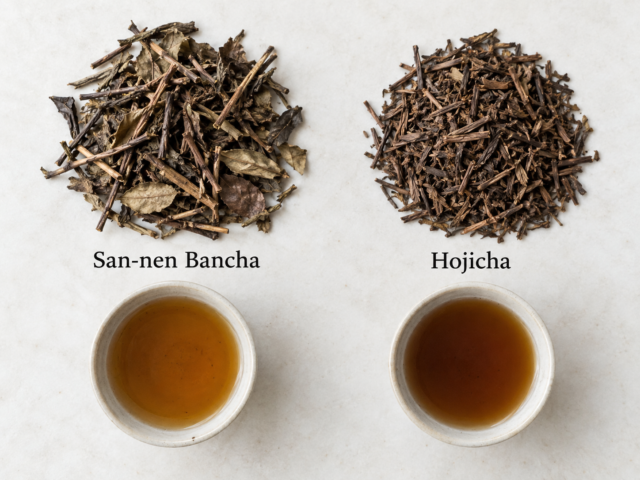
San-nen bancha and hojicha can look surprisingly similar.
Both may use mature leaves and stems. Both are roasted. Both can produce a brown infusion with a warm, toasty aroma.
The main difference lies in what happens before roasting.
Hojicha does not normally require several years of plant growth or post-harvest aging.
Roasting is its defining transformation.
With san-nen bancha, the history of the material before roasting is central to its identity.
That is why simply calling it "aged hojicha" misses much of what makes this tea unusual.
Why Is San-nen Bancha Associated with Macrobiotics?
San-nen bancha has a strong connection with macrobiotic culture in Japan.
Within that tradition, it is often described as a tea that "warms the body."
That idea belongs mainly to the macrobiotic framework rather than to a simple, scientifically established physiological effect.
For understanding the tea itself, the more useful questions are how the plant was grown, whether the harvested tea was aged, and how it was finally roasted.
How Can You Tell Which San-nen Bancha You Are Buying?
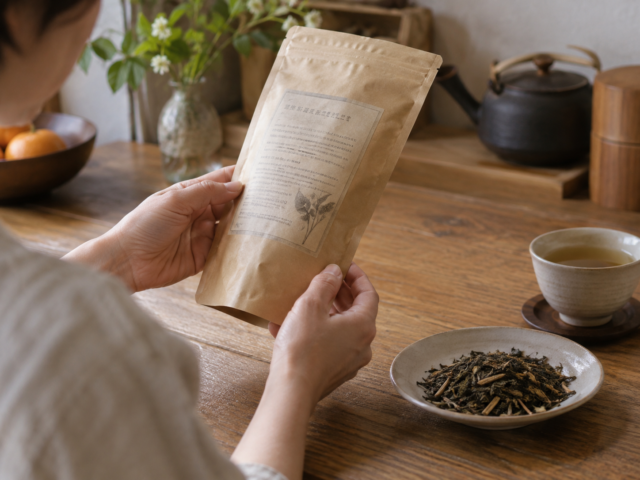
Unfortunately, the words on the front of the package may not be enough.
Look for the producer's detailed description.
Phrases such as:
"aged for three years"
"stored for three years"
suggest post-harvest aging.
Descriptions such as:
"tea plants grown for three years or longer"
"leaves and stems from tea plants left unharvested for three years"
suggest the long-growth method.
If the producer describes both mature long-grown material and later aging, you are probably looking at the combined type.
It is also worth checking how the tea was finished.
- Was it steamed before drying?
- Was it pan-roasted?
- How heavily was it roasted?
- Does it contain mostly leaves, or a large proportion of stems?
Those details help explain why two packages labeled san-nen bancha may taste—and brew—quite differently.
One question, however, solves most of the initial mystery:
What exactly spent three years—the harvested tea, the tea plant, or both?
So What Exactly Is San-nen Bancha?
San-nen bancha is best understood not as one precisely standardized tea, but as a family of Japanese roasted teas in which extended time is deliberately built into the production process.
For one producer, that time belongs to storage.
For another, it belongs to the living tea plant.
For another, it belongs to both.
Once that difference is clear, many of the other differences—in aroma, taste, and even brewing—start to make much more sense.
San-nen bancha is not simply tea that has become three years older.
It is tea in which what happens during those years matters as much as the number itself.
Author's Note
San-nen bancha is one of those Japanese teas that sounds simple until you actually try to understand it.
Even in Japan, it is not an everyday tea that everyone can clearly explain. I only began to understand how complicated the name was after looking closely at the different production methods.
At first, I thought "three years" simply meant three years of aging.
Then I found teas where the plant itself had grown for three years or longer, and others where long-grown material was also aged after harvest.
That changed the question completely.
It was no longer simply:
"What is san-nen bancha?"
It became:
"Which san-nen bancha are we talking about?"
Once I understood that, the tea became much more interesting.
FAQ
Is san-nen bancha always aged for three years?
No. Some versions are aged after harvest, while others are made from tea plants allowed to grow for three years or longer. Some producers combine both approaches.
Do all san-nen bancha teas taste the same?
No. Flavor can differ depending on whether the tea was aged after harvest, grown for several years before harvest, or both. Roasting method, stem content, and other processing choices also matter.
Do the different types need different brewing methods?
They can. Some products are well suited to ordinary teapot brewing, while others develop more body when gently simmered. Because production varies widely, the producer's brewing instructions are the best starting point.
Is san-nen bancha the same as hojicha?
No. Both are roasted and may use mature leaves and stems, but hojicha does not normally require years of growth or post-harvest aging.
Is san-nen bancha a fermented tea?
Usually not. Long growth on the tea plant is not fermentation, and steamed aged versions mainly undergo slow storage reactions rather than microbial fermentation.
Why is san-nen bancha low in caffeine?
It is usually made from mature leaves and stems, which generally contain less caffeine than tender young shoots. Its lower-caffeine character therefore begins mainly with the raw material.
Why is san-nen bancha associated with macrobiotics?
It has long been used in macrobiotic culture and is often described there as a tea that "warms the body." This idea belongs mainly to the macrobiotic way of understanding foods and drinks.
How can I tell which type of san-nen bancha I am buying?
Check the producer's description. Look for whether the "three years" refers to aging after harvest, long growth on the plant, or both.

