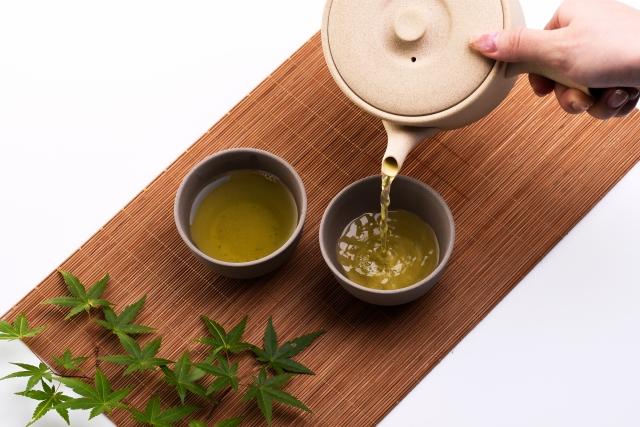
It's easy to make Japanese green tea too bitter if you brew it the same way as black tea.
Freshly boiled water and a long steep can quickly bring out too much bitterness and astringency, especially with teas such as sencha.
The good news is that Japanese green tea does not require perfect equipment or exact technique.
A kyusu is convenient, but not essential. A mug and a roomy tea strainer can work well. You do not need a thermometer, either, once you understand how temperature, steeping time, and tea amount affect the cup.
Think of the numbers in this guide as starting points, not rules.
Quick Summary
- Sencha often works well around 70–80°C (158–176°F).
- Hotter water brings out bitterness and astringency more quickly.
- Longer steeping makes the tea stronger.
- Fukamushi-cha usually needs a shorter steep.
- Gyokuro is normally brewed much cooler than sencha.
- A kyusu is useful, but a large tea strainer also works.
- The same leaves can usually be brewed again.
- If the tea tastes wrong, adjust temperature, time, or tea amount.
The Three Things That Matter Most
Japanese green tea can look complicated because different teas come with different brewing instructions.
In practice, three things matter most.
Water Temperature
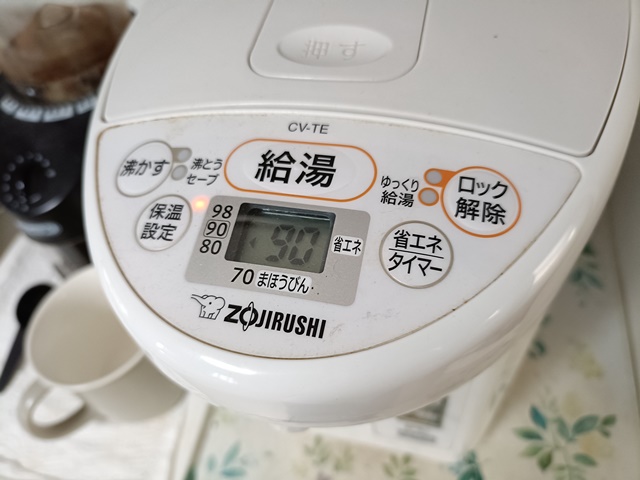
Temperature has a major effect on flavor.
Amino acids associated with sweetness and umami can be extracted even at relatively low temperatures, while catechins and caffeine are extracted more readily as the water gets hotter.
That is why cooler water can make sweetness and umami easier to notice, while hotter water tends to bring out more bitterness and astringency.
You do not need to remember the chemistry.
A simple rule works well:
If your green tea tastes too bitter or sharp, try cooler water.
Steeping Time
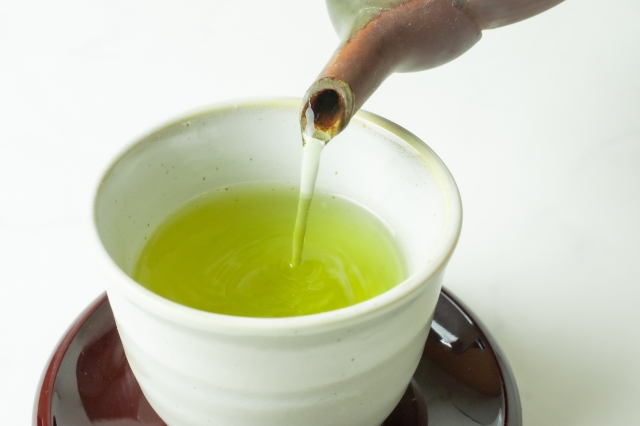
Time controls how much flavor is extracted.
The longer the leaves stay in the water, the stronger the tea becomes. Combined with hot water, a long steep can quickly make Japanese green tea overly bitter or astringent.
For many sencha teas, 30–60 seconds is a good place to begin.
That is much shorter than the three-to-five-minute steep many people associate with black tea.
Amount of Tea
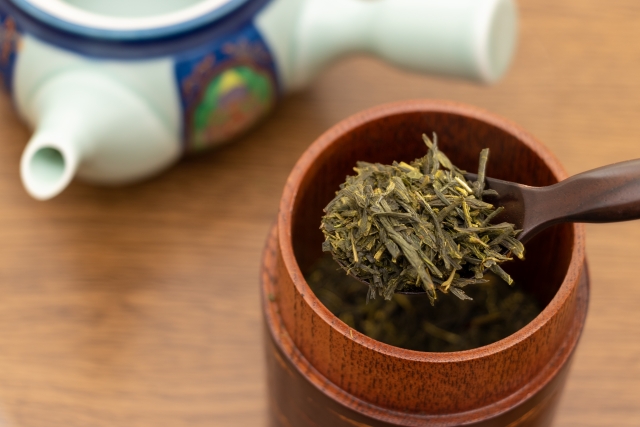
More tea leaves generally produce a stronger cup.
Around 4–5 g of tea for about 200 ml (7 fl oz) of water is a useful starting point for many Japanese green teas.
If you do not own a scale, a rough guide is about 1 teaspoon for 2–3 g, although this varies considerably depending on the shape and density of the leaves.
Fine fukamushi-cha and tightly rolled leaves can occupy very different amounts of space even at the same weight.
So do not worry about perfect measurement.
Start somewhere reasonable and adjust.
And One More Thing: Water Quality
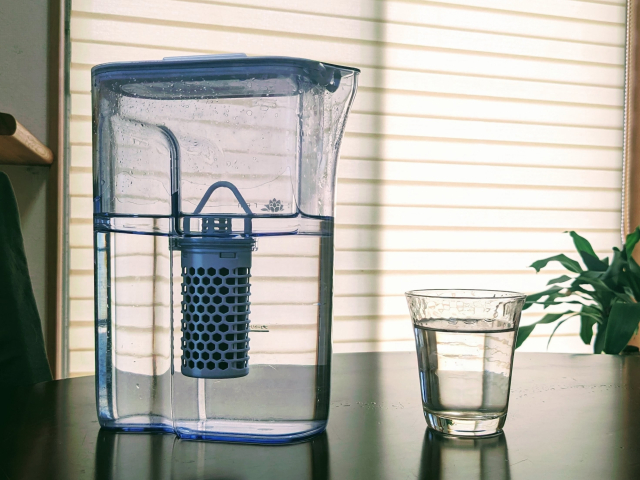
Filtered water can help when tap water affects the taste of green tea.
Water can also affect the flavor of Japanese green tea.
Japanese tea is generally easier to brew with relatively soft water. Very hard, mineral-rich water can make delicate tea taste flatter or heavier and may reduce the clarity of its aroma.
This can matter more outside Japan, especially in places where tap water is noticeably hard.
You do not need special Japanese water.
If your tap water tastes clean on its own, try it first. If it tastes strongly mineral or chlorinated, filtered water or relatively soft bottled water may give a cleaner result.
The goal is simple: use water that does not overpower the tea.
A Simple Way to Brew Japanese Green Tea
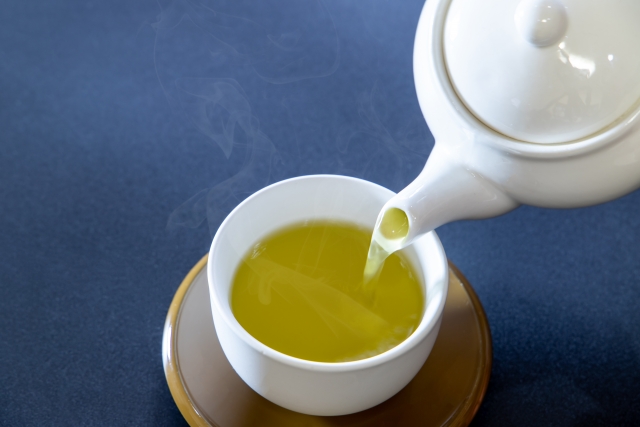
For everyday sencha, this basic method works well.
- Heat the water.
Bring fresh water to a boil, then let it cool to around 70–80°C (158–176°F). - Add the tea leaves.
Start with about 4–5 g for 200 ml (7 fl oz) of water. - Pour in the water.
Give the leaves enough room to open. - Steep for 30–60 seconds.
If you are unsure, start shorter. - Pour the tea completely.
Do not leave a large amount of water sitting with the leaves.
Leaving hot water around the leaves means extraction continues, which can make the tea stronger than expected and affect the next infusion.
How to Brew Different Japanese Green Teas
The same basic principles apply, but the starting point changes depending on the tea.
Sencha
Water: 70–80°C (158–176°F)
Time: 30–60 seconds
Character: Fresh, balanced, lightly astringent
Sencha is a good reference point for Japanese green tea brewing.
If it tastes too sharp, lower the water temperature. If it tastes too light, try slightly more tea or a longer steep.
Fukamushi-cha
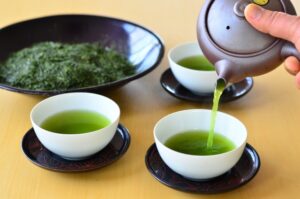
Water: Around 80°C (176°F)
Time: Around 30 seconds
Character: Deeper color, quick extraction
Fukamushi-cha is steamed longer during processing, which leaves the tea more fragile and often much finer than standard sencha.
Because the leaves release flavor quickly, a shorter steep is usually enough.
Its deeper green and cloudy appearance is normal.
Gyokuro
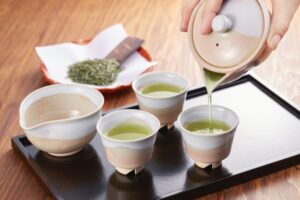
Water: 50–60°C (122–140°F)
Time: 1½–2 minutes
Character: Rich sweetness and umami
Gyokuro is brewed differently from everyday sencha.
Much cooler water and a longer steep help emphasize its concentrated sweetness and umami.
Good gyokuro is also one of the teas where following the producer's brewing instructions can make a noticeable difference.
These are guidelines rather than fixed rules.
Do You Need a Kyusu?
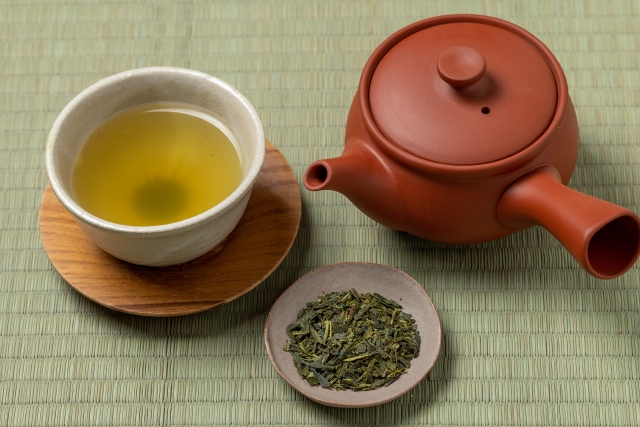
No.
A kyusu is useful because it gives the leaves space to expand and makes it easy to separate the tea from the leaves when pouring.
But the same basic idea works with ordinary kitchen equipment.
A mug and a large basket-style tea strainer can make very good Japanese green tea.
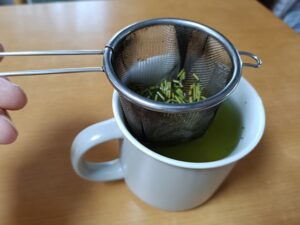
A mug and a roomy tea strainer can work well too.
The important thing is to give the leaves room.
Japanese green tea leaves absorb water and expand as they steep. A small tea ball can pack the leaves too tightly and restrict the movement of water around them.
Tea balls are not common tools for brewing loose-leaf green tea in Japanese homes.
If you have a choice, a roomy strainer is usually better.
What matters is not whether your equipment looks traditional.
What matters is whether the leaves can open and whether you can separate them from the water when the steep is finished.
How Can You Cool Water Without a Thermometer?
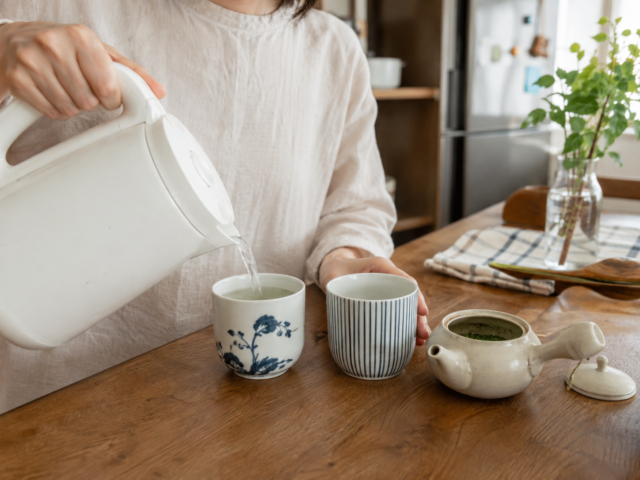
One easy way to cool water is to pour it into another cup before brewing.
You do not need a temperature-controlled kettle.
A simple Japanese method is to transfer hot water into another vessel before brewing.
For example:
kettle → mug → teapot
Each transfer allows some heat to escape.
You do not need to calculate the exact temperature drop. The point is simply to avoid pouring freshly boiled water directly onto delicate green tea.
After making the same tea several times, you will begin to recognize the temperature you prefer.
Brewing Tea for More Than One Person
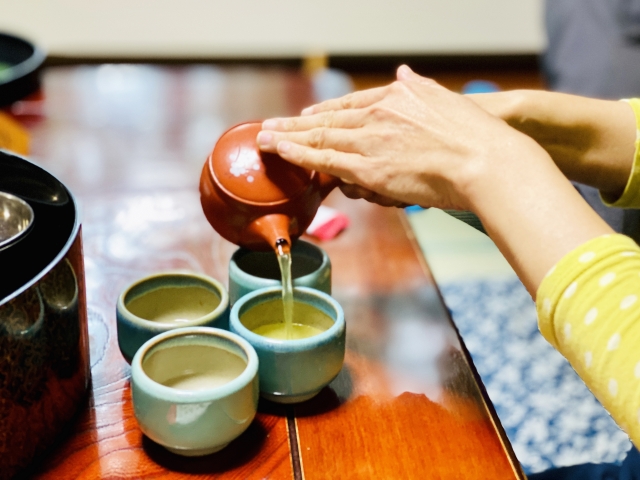
When tea is divided among several cups, the liquid near the end of the pour may be slightly stronger than the liquid poured first.
A traditional Japanese solution is to pour a little into each cup in turn, then repeat until the teapot is empty.
This is called mawashi-tsugi.
It is not something you need to treat as a formal ritual.
It is simply a practical way to give everyone a similar cup.
Can You Brew the Same Leaves Again?
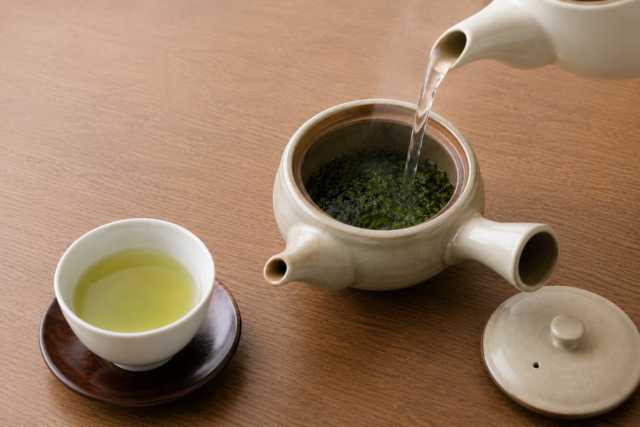
Yes.
Loose-leaf Japanese green tea is commonly brewed more than once.
After the first infusion, the leaves are already wet and open, so the second infusion usually needs much less time.
For a second brew:
- use slightly hotter water
- steep only briefly
- pour immediately
The second infusion may taste brighter or lighter than the first.
Many teas can also produce a third infusion, although the flavor gradually becomes weaker.
There is no need to keep brewing the leaves after the tea stops tasting good to you.
Can You Cold-Brew Japanese Green Tea?
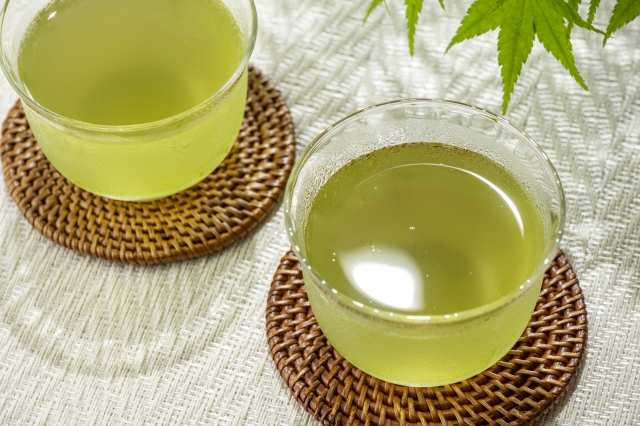
Yes.
Cold brewing is one of the easiest ways to make Japanese green tea with relatively little bitterness or astringency.
Simply put tea leaves and cold water into a bottle or pitcher and leave it in the refrigerator for several hours.
Sencha and fukamushi-cha both work well this way.
Cold extraction is slow and forgiving, so exact timing is less important than with hot tea.
If the result is too weak, use more tea or leave it longer next time.
If Your Tea Tastes Too Bitter, Weak, or Strong
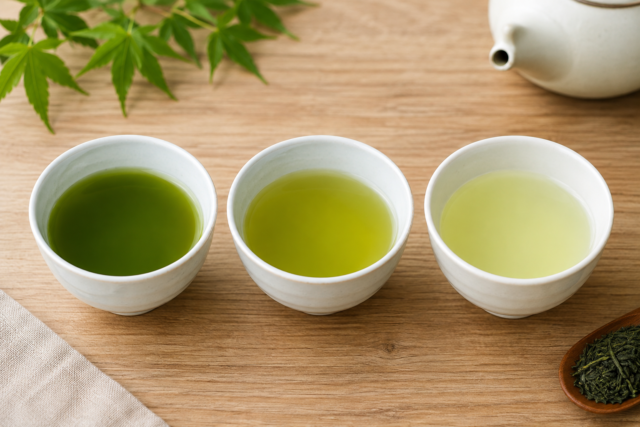
Brewing instructions are useful, but taste is the final test.
Too Bitter or Astringent?
Try:
- cooler water
- a shorter steep
- slightly fewer leaves
Temperature is usually the easiest thing to change first.
Too Weak?
Try:
- slightly more tea
- a longer steep
- slightly hotter water
Change one thing at a time so you can tell what worked.
Too Strong?
Add a little more hot water to the cup.
That is completely fine.
Then shorten the next steep or use slightly fewer leaves.
Brewing guidelines are starting points, not rules.
What Brewing Green Tea Is Really Like in Japan
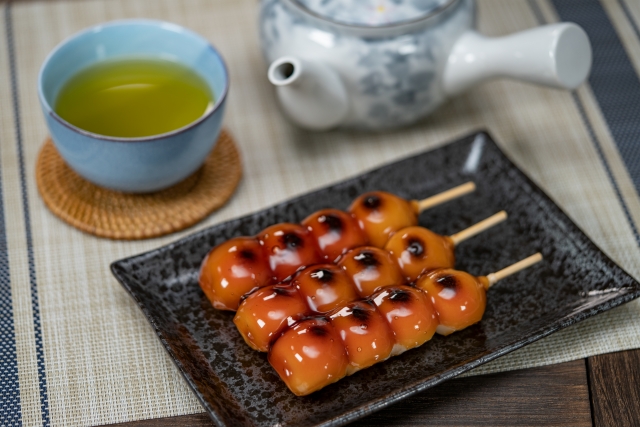
Detailed brewing guides can sometimes make Japanese tea culture look more formal than everyday life really is.
Japanese people do not all measure every gram or check every degree each time they make tea.
Some households use a kyusu. Others use tea bags, bottled tea, or a simple tea strainer. People may pay more attention when brewing good loose-leaf tea and be much more casual with an ordinary everyday cup.
Traditional brewing techniques are useful because they help explain how flavor changes.
They are not requirements for enjoying Japanese green tea.
In everyday life, the process is often much simpler:
Start with a reasonable temperature.
Taste the tea.
Then adjust the next cup.
That is usually enough.
FAQ
Can I use boiling water for Japanese green tea?
You can, but delicate teas such as sencha may become more bitter or astringent. Letting the water cool first usually gives a gentler result.
What temperature is best for sencha?
Around 70–80°C (158–176°F) is a useful starting range.
Do I need a kyusu?
No. A kyusu is convenient, but a mug and a roomy tea strainer can also work well.
Can I use a tea ball?
Yes, but a small tea ball may restrict the leaves. A larger basket-style strainer is usually better.
Why does my green tea taste bitter?
The water may be too hot, the steep may be too long, or you may be using too much tea.
Does hard water affect Japanese green tea?
It can. If your water tastes strongly mineral, filtered or relatively soft water may produce a cleaner cup.
Can I brew Japanese green tea more than once?
Yes. Most loose-leaf Japanese green teas can be brewed at least twice.
Can Japanese green tea be cold-brewed?
Yes. Cold brewing is simple and usually produces a gentle, refreshing cup.
Related Reading on YUNOMI
What Is Japanese Green Tea?
An introduction to the main types of Japanese green tea and how they differ.
What Is Sencha?
Learn more about Japan's most familiar loose-leaf green tea, including its taste, production, and place in everyday life.
What Is Fukamushi-cha?
See how longer steaming changes the leaves, flavor, appearance, and brewing behavior of the tea.
What Is Gyokuro?
Explore why gyokuro is brewed at unusually low temperatures and how that shapes its distinctive flavor.

