Bancha sounds like it should be easy to explain.
It is often described in English as an inexpensive Japanese green tea made from larger, more mature leaves than sencha. That is partly true.
But ask several Japanese people what they picture when they hear the word bancha, and you may not get exactly the same answer. One person may imagine a pale yellow-green tea made from large leaves. Another may think of something darker and roasted. Someone who grew up with a regional style may consider that version completely normal.
That is what makes bancha interesting. It is not one perfectly standardized tea. It is better understood as a broad family of everyday teas shaped by mature leaves, local habits, and regional processing traditions.
Quick Summary
- Bancha is commonly made from larger, more mature leaves than premium sencha.
- It often uses later harvests, coarser leaves, stems, or other mature tea material.
- Bancha is generally affordable and associated with everyday drinking rather than prestige.
- The word bancha does not always describe exactly the same tea throughout Japan.
- Some bancha is green or yellow-green, while regional styles may be roasted, brown, smoky, fermented, or otherwise processed differently.
- Bancha is usually easy to brew and is commonly prepared with relatively hot water.
- It is often lower in caffeine than teas made mainly from young spring leaves, but it is not caffeine-free.
- Bancha may also be used as a base for hojicha or genmaicha, while Sannen Bancha is a distinct specialty style.
What Is Bancha?
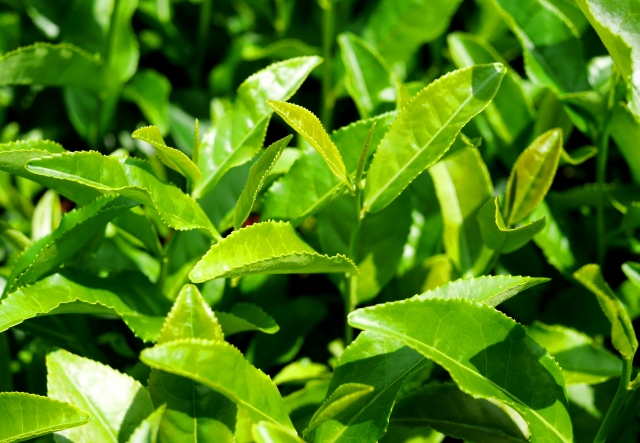
At its simplest, bancha is an everyday Japanese tea commonly made from leaves that are larger and more mature than those typically used for fine sencha.
High-quality sencha often emphasizes younger, tender leaves, especially from earlier harvests. Bancha, by contrast, frequently makes use of later-picked leaves, more mature leaves, stems, or other tea material that is less prized for premium tea.
That does not mean every bancha follows exactly the same formula. Harvest timing, leaf material, processing, and regional tradition can all affect what is called bancha.
Bancha is a category with fuzzy edges.
Why Is Bancha So Hard to Define?
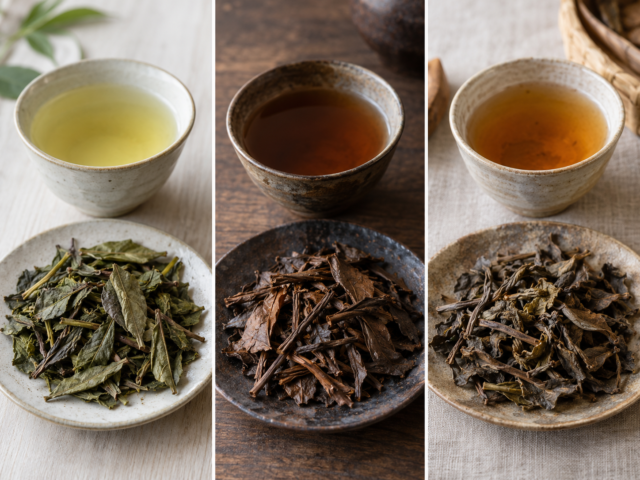
In many cases, bancha refers to an unroasted green tea made from relatively mature or later-harvested leaves. But that is not the only kind of tea carrying the name.
Some regional banchas are roasted. Others use distinctive drying or processing methods. There are even fermented teas within regional bancha traditions.
A few examples make that variety easier to understand.
In many tea-producing areas, bancha may look like a green or yellow-green everyday tea made from larger, more mature leaves. It can still look like familiar Japanese green tea, even though the leaves are often broader and the flavor simpler than sencha.
In some regions, however, the word bancha may also be used for roasted tea, closer to what would normally be called hojicha elsewhere.
Kyobancha from Kyoto is an especially distinctive example. It is made from large leaves and stems and has a much darker, strongly roasted, often smoky character.
In parts of Shikoku, the name belongs to yet another set of traditions entirely. Awa Bancha from Tokushima is fermented with lactic acid bacteria, while Ishizuchi Kurocha from Ehime uses a two-stage fermentation process.
These teas can look, smell, and taste very different from one another. That is why it is difficult to draw clean regional boundaries.
The meaning of bancha can shift from place to place, producer to producer, and even family to family. In practice, the bancha someone grew up drinking may become their personal idea of what “normal bancha” is.
How Is Bancha Different from Sencha?
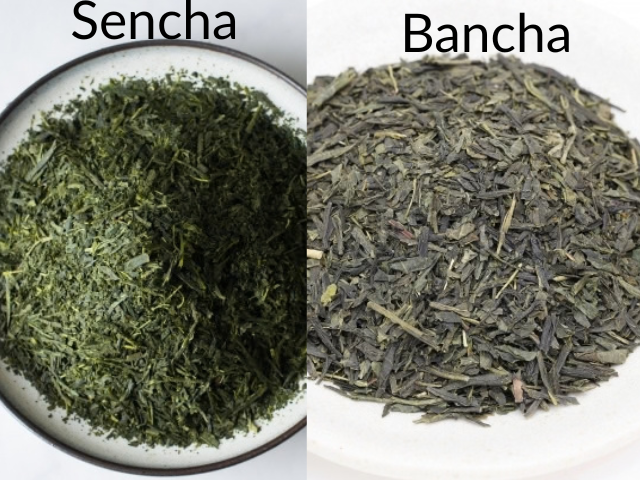
The easiest difference to understand is the leaf material.
Sencha is generally associated with younger leaves and often emphasizes freshness, aroma, sweetness, umami, and a clean balance of bitterness and astringency.
Bancha commonly uses more mature material.
Its dry leaves may therefore look broader, rougher, or less uniform than the fine needle-like leaves often associated with sencha.
The flavor is also usually less concentrated and less delicate. Depending on the tea, bancha may taste mild, grassy, woody, lightly astringent, or gently sweet.
But there is no single “bancha flavor.” A green unroasted bancha and a strongly roasted regional bancha can taste completely different.
This is another reason to think of bancha as a broad, everyday category rather than one tightly defined style of tea.
Is Bancha Just a Cheap or Low-Grade Tea?
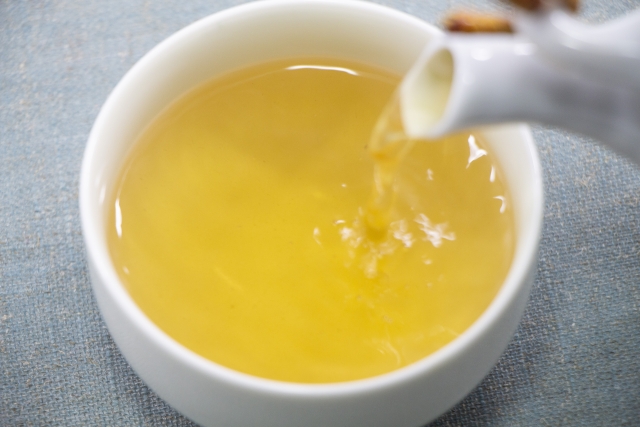
Bancha is often described as a “lower-grade green tea.” There is some logic behind that description. The mature leaves commonly used for bancha are generally less valuable in the tea market than tender early-season leaves used for premium sencha.
That also helps explain why bancha is usually affordable. But “low-grade” can sound as if bancha is simply bad sencha.
That is misleading. Bancha serves a different role.
It is usually not trying to deliver the refined aroma, concentrated umami, or prestige associated with expensive teas. Instead, it is valued as an affordable, uncomplicated tea for ordinary drinking.
Its value becomes easier to understand when you think about where tea is actually served.
At home, many people may choose sencha when they want a more aromatic or refined cup. But in restaurants, cafeterias, inns, workplaces, and other places that serve tea in larger quantities, an affordable and forgiving everyday tea can make practical sense.
Those places may use bancha, commercial sencha blends, konacha, powdered tea, or hojicha, depending on the supplier and serving system.
In other words, bancha is not simply “cheap tea.” It belongs to a part of Japanese tea culture where practicality matters as much as refinement.
How Is Bancha Usually Brewed?
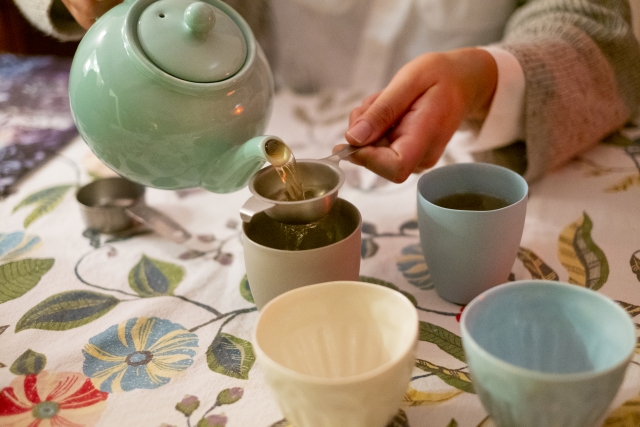
Bancha is generally less demanding than teas such as gyokuro. It is commonly brewed with relatively hot water, and there is usually less need to cool the water carefully or control every second of the steep.
That makes it well suited to casual drinking. You can make a generous pot for several people, drink it with a meal, or simply brew it without turning tea preparation into a special event.
The exact method still depends on the tea, especially because regional styles can vary considerably. But for an ordinary green bancha, the mindset is often closer to “make some tea” than “perform a precise extraction.”
Is Bancha Low in Caffeine?
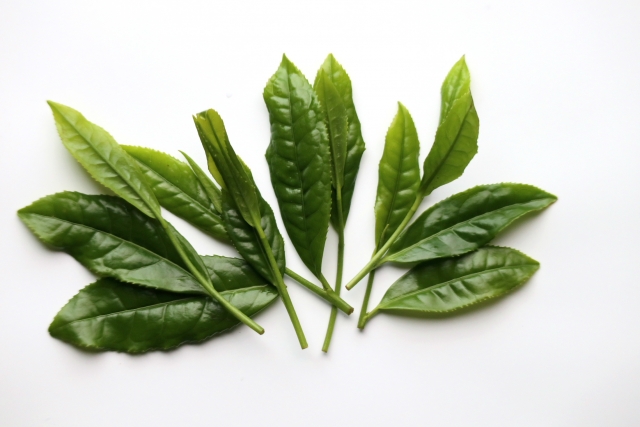
Bancha often uses more mature tea leaves, which generally contain less caffeine than the younger shoots used for many premium teas.
Bancha tends to be lower in caffeine than teas made mainly from young spring leaves.
One reason is that it commonly uses more mature leaves and may contain a greater proportion of stems. Younger shoots generally contain more caffeine than older leaf material.
But bancha is not caffeine-free.
The actual amount depends on the leaves, harvest timing, processing, how much tea is used, water temperature, and steeping time. So it is safer to think of bancha as generally lower in caffeine, rather than as a tea with one fixed low caffeine level.
How Is Bancha Related to Hojicha, Genmaicha, and Sannen Bancha?
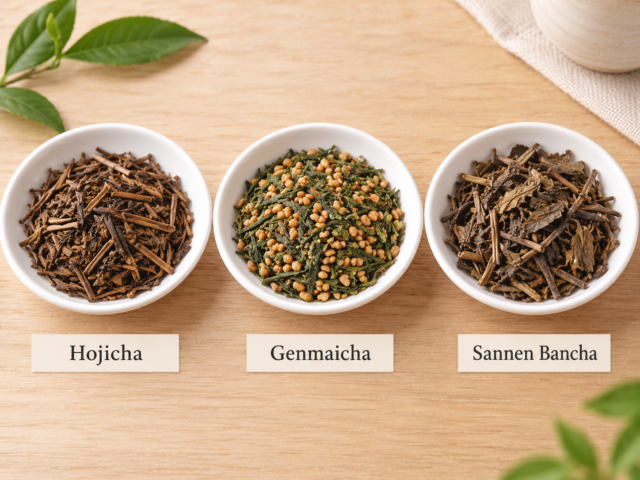
Bancha often appears as a base for other familiar Japanese teas. Because it is relatively affordable and commonly uses mature leaf material, it can be well suited to further processing.
Bancha may be roasted to make hojicha, or blended with roasted rice to make genmaicha. But these relationships are not absolute.
Hojicha can also be made from other tea material, and genmaicha may use sencha or other green teas as its base.
Sannen Bancha is different again. Despite the name, it should not be treated as the standard definition of bancha. It is a distinctive specialty style associated with mature tea material and a production process tied to a period of roughly three years, though the meaning of that period can vary by producer.
Sannen Bancha is often roasted and can taste very different from ordinary green bancha.
This is another good example of why Japanese tea categories do not always form one perfectly neat family tree.
What Bancha Reveals About Everyday Japanese Tea
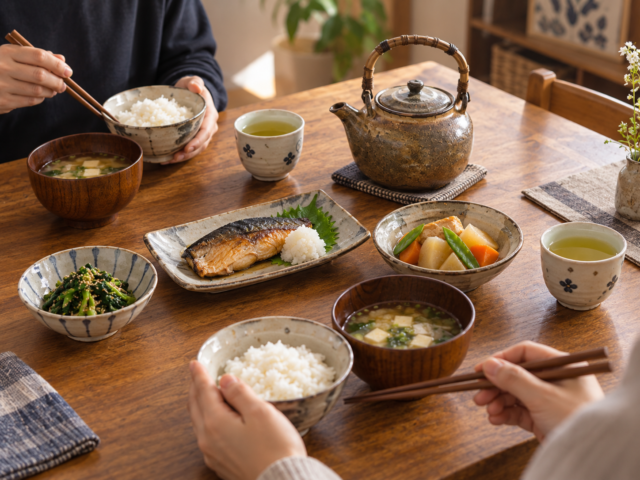
Bancha reveals a side of Japanese tea that can easily disappear behind images of matcha, tea ceremony, gyokuro, and carefully prepared sencha.
Most tea drinking is not ceremonial.
Sometimes tea is simply part of a meal. Sometimes it is made in a large pot. Sometimes nobody carefully measures the temperature.
Bancha fits comfortably into that world.
Its loose definition is part of the story. The word developed through local tea production and everyday habits rather than around one single modern style. That is why different communities ended up attaching the same name to somewhat different teas.
Bancha is difficult to define not because Japanese tea culture lacks order.
It is difficult to define because everyday culture rarely develops in perfectly neat categories.
Author’s Note
I live in Mie Prefecture, one of Japan’s important tea-producing regions, and I drink green tea every day.
Even so, if someone suddenly asked me, “What exactly is bancha?” I would probably hesitate for a moment.
When I picture bancha, I think of leaves that are larger than sencha leaves. I also remember using a fairly generous amount and brewing them with relatively hot water.
But even the color in my memory is not consistent. Sometimes I picture a brownish tea. At other times, something closer to yellow-green or slightly brownish green comes to mind.
For a long time, I never really questioned that. It was simply “bancha.”
Only when trying to explain it to someone outside Japan does the problem become obvious: another Japanese person may have grown up with a different tea carrying exactly the same name.
I think that is one of the most interesting things about bancha. What people consider “normal bancha” often depends on the tea they happened to grow up around.
For such an ordinary tea, it turns out to be surprisingly difficult to put into one box.
FAQ
Is bancha the same as sencha?
No. Bancha commonly uses larger and more mature leaves, often from later harvests, while sencha is generally associated with younger leaves and a more refined leaf style.
Is bancha a low-quality tea?
Bancha is generally less expensive and lower in market grade than premium sencha, but that does not mean it is bad tea. It is better understood as an affordable everyday tea made for a different purpose.
Is bancha always made from second-harvest tea?
No. Later harvests are commonly used, but bancha is broader than simply “second-harvest tea.” Mature leaves, coarse leaves, stems, and different regional practices can all be involved.
Is bancha always brown?
No. Unroasted bancha may produce a green, yellow-green, or slightly brownish-green cup. Roasted regional styles can be much darker.
Is bancha low in caffeine?
Bancha is often lower in caffeine than teas made mainly from young spring leaves, but it still contains caffeine and the exact amount varies.
Is Kyobancha the same as ordinary bancha?
Not exactly. Kyobancha is a distinctive regional style from Kyoto, known for its large leaves and strongly roasted or smoky character.
What is Sannen Bancha?
Sannen Bancha is a special style associated with mature tea material and a production process tied to roughly three years. It is different from ordinary bancha.
Can bancha be used to make hojicha or genmaicha?
Yes. Bancha is commonly used as a base for both, although other green teas can also be used.

