
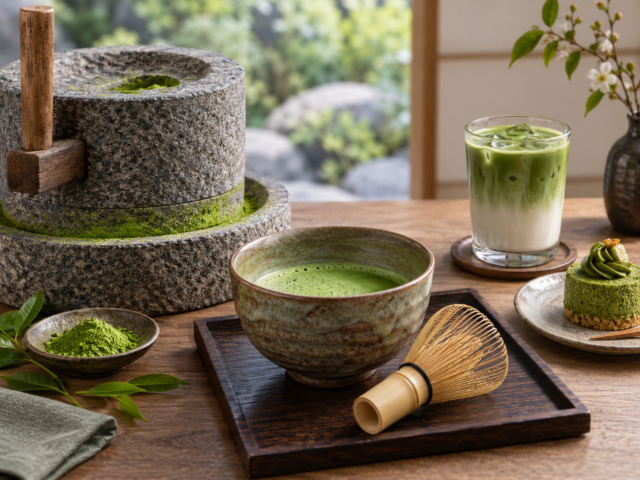
If modern machines can grind tea faster and even produce smaller particles, why is matcha still so closely associated with traditional stone mills?
The obvious answer is tradition. Matcha developed long before modern grinding machines existed, and stone mills became part of the way tencha was transformed into the fine powder used for tea.
But tradition alone does not explain why stone milling still matters today.
Modern equipment can grind tea faster, produce extremely small particles, and offer advantages for large-scale production. Stone mills remain useful not because they are automatically the “best” way to grind matcha, but because they create powder characteristics that have long suited matcha prepared and drunk on its own.
Today, matcha is also used in lattes, chocolate, ice cream, cakes, and many other foods. That means the best grinding method may depend on what the finished matcha is meant to do.
Quick Summary
- Matcha is made by grinding tencha into a very fine powder.
- Matcha does not fully dissolve in water; tiny tea particles remain dispersed in the drink.
- Traditional stone mills grind tencha slowly and produce a characteristic range of particle sizes.
- Modern mills can create even smaller particles, so stone milling is not simply about making the finest powder possible.
- Particle size and particle-size distribution affect mouthfeel and other physical properties.
- Stone milling is especially associated with matcha intended to be whisked and drunk on its own.
- Modern milling can be useful for lattes, confectionery, and food processing.
- Stone-ground does not automatically mean higher quality. The tencha and the intended use also matter.
Why Does Matcha Need to Be Ground So Fine?
Most Japanese green teas are steeped in water and then removed before drinking.
Matcha is different.
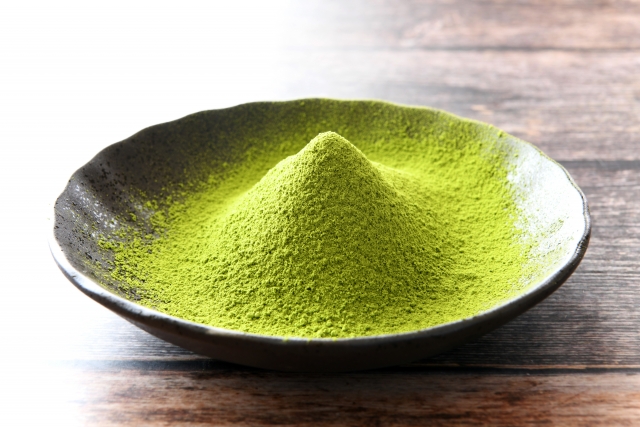
The tea leaf itself is ground into powder, whisked into water, and consumed. The particles do not truly dissolve like sugar or salt. Instead, they remain dispersed throughout the drink.
That makes particle size especially important.
If tencha were simply crushed into a coarse powder, the drink would feel rough or sandy. Grinding it much more finely creates the smooth texture people expect from matcha.
This is also why ordinary green tea put through a household blender does not suddenly become matcha. Matcha requires both the correct starting material — tencha — and a much finer grind.
But one distinction matters:
The finest possible powder is not automatically the best powder for every use.
What Does a Traditional Matcha Stone Mill Do?
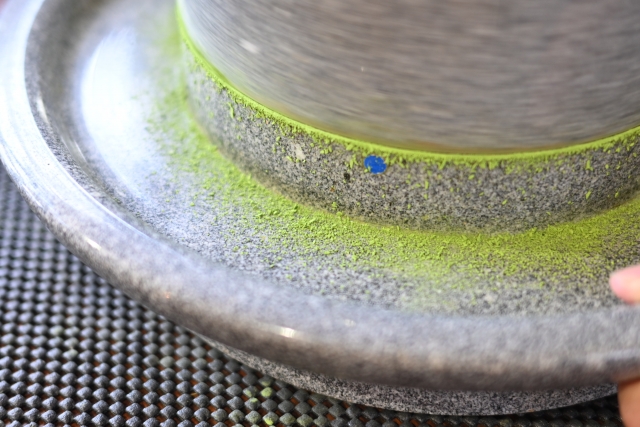
The traditional Japanese stone mill used for matcha is called a chausu.
It consists of two heavy stone surfaces. Tencha enters near the center, and as the upper stone rotates, the leaf gradually moves outward between the stones.
Grooves in the grinding surfaces help break down the leaf as it travels toward the edge. Rather than pulverizing the tencha in a single impact, the mill gradually reduces it into a very fine powder.
The process is slow.
Traditional matcha mills typically operate at only a few dozen rotations per minute, and a single mill may produce around 30 to 40 grams of matcha per hour.
That sounds inefficient by modern standards — because it is.
But matcha and the stone mill developed together long before industrial grinding existed. Over generations, tea producers learned how to work with the mill and the powder characteristics it produced.
Is Stone-Ground Matcha the Finest Matcha?
Not necessarily.
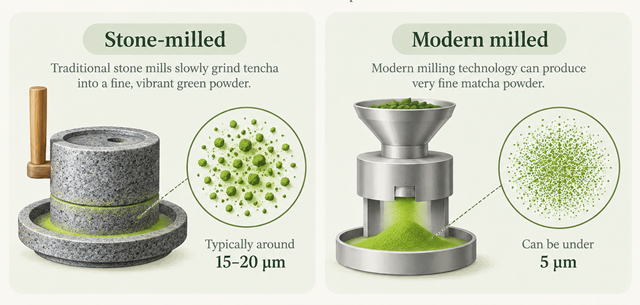
A stone mill can produce extremely fine tea powder, but modern milling equipment can produce particles that are even smaller.
Research comparing stone mills, ball mills, and jet mills found that stone-milled and ball-milled matcha had median particle diameters of around 15 to 20 micrometers, while jet-milled matcha could have median particles smaller than 5 micrometers.
So if the only goal were to create the smallest particles possible, the stone mill would not necessarily win.
This changes the question.
Instead of asking which method produces the finest powder, it is more useful to ask:
What kind of powder does each method produce, and what is that powder being used for?
Why Does Particle Size Distribution Matter?
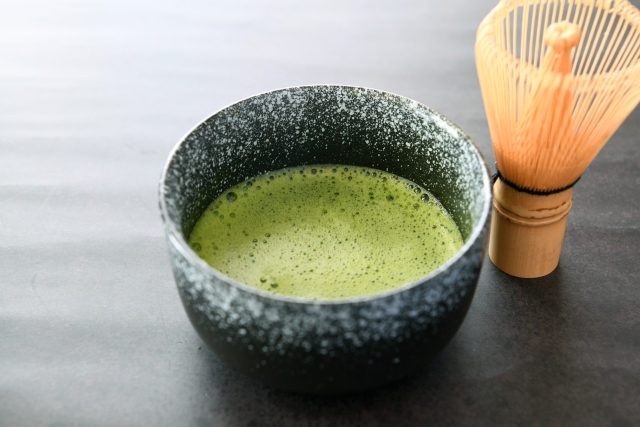
Average particle size tells only part of the story.
Two powders can have similar average particle sizes but still behave differently because the range and distribution of those particles are not the same.
That can affect how matcha flows, disperses, foams, and feels in the mouth.
For matcha whisked with water and tasted on its own, mouthfeel becomes especially noticeable. A powder that feels slightly sandy or unusually thin may create a different drinking experience even if its average particle size seems small enough.
This is one reason traditional stone milling should not be understood simply as an old method for making “the smallest powder.”
What matters is the overall character of the powder it creates.
Does Particle Shape Matter Too?
Particle shape also varies depending on how tea is milled.
However, a common explanation — that stone mills create uniquely round particles while modern mills produce sharp ones — is too simple.
Some research has found greater particle circularity in jet-milled matcha than in stone-milled samples.
So the smoothness of stone-ground matcha cannot be reduced to one rule such as:
round particles = stone mill = better matcha.
Particle size, distribution, shape, and how the powder behaves in water all contribute to the final experience.
Why Is Matcha Ground So Slowly?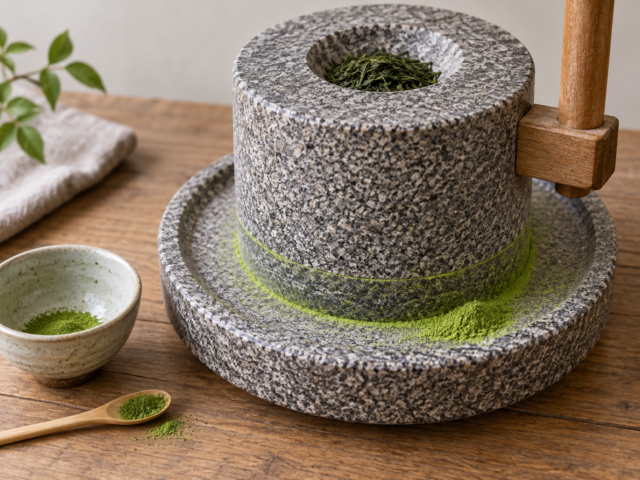
Grinding creates friction, and friction creates heat.
Traditional stone mills rotate slowly, which helps keep the grinding process controlled rather than simply maximizing output.
In that sense, there is a loose similarity to cold processing in foods such as olive oil: speed is not the only goal, and unnecessary heat is something producers try to avoid.
But the comparison only goes so far.
With matcha, the leaf must also be reduced to an extremely fine powder because the powder itself will be consumed.
It would also be misleading to say that modern grinding machines inevitably overheat and damage matcha. Modern equipment can be designed to manage temperature.
Stone milling is better understood as one proven method of controlled grinding, not the only way to make good matcha.
Can Modern Machines Make Matcha?
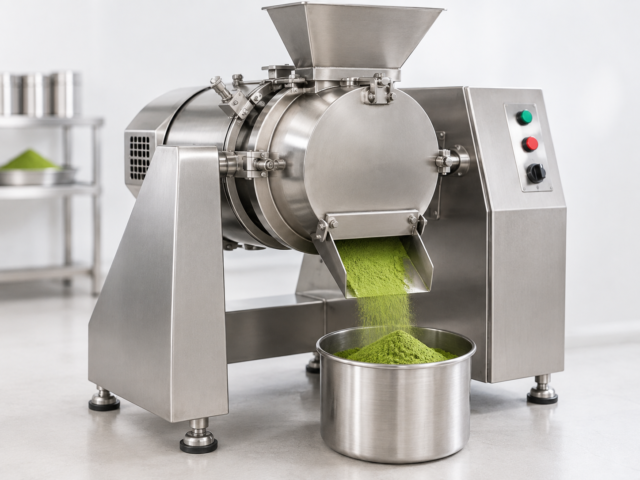
Yes.
Ball mills, jet mills, and other modern grinding systems can produce extremely fine tea powder. They can also process much larger quantities and control certain powder characteristics in ways that traditional stone mills cannot.
That matters because matcha is no longer used for only one purpose.
Some matcha is whisked with water and enjoyed on its own. Other matcha is mixed into milk, chocolate, ice cream, cakes, confectionery, and other foods.
Those uses do not necessarily require the same kind of powder.
Does the Best Milling Method Depend on How Matcha Is Used?
Yes.
This is perhaps the most important point.
When matcha is whisked with water and drunk on its own, the drinker can directly notice its texture, body, aroma, bitterness, sweetness, and umami.
In that context, the powder characteristics created by traditional stone milling can be especially valuable.
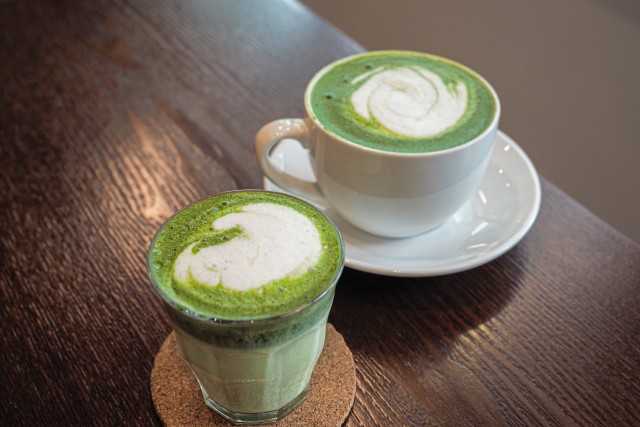
But in a matcha latte, the tea is combined with milk or plant milk and sometimes sugar or syrup. Dispersion, color, consistency, and a flavor that remains noticeable alongside other ingredients may become more important.
The same is true in confectionery. Matcha mixed into cake batter, chocolate, ice cream, or other foods has to work as an ingredient. Mixing characteristics, color, consistency, and production efficiency may matter more than the subtle mouthfeel you would notice when drinking it with water.
Modern milling methods can therefore be particularly useful for those purposes.
That does not make food-use matcha “bad matcha.”
It simply means it has been produced for a different purpose.
Likewise, there is nothing wrong with using an expensive stone-milled matcha in a latte if you enjoy it.
The point is not that one use is correct and another is wasteful.
The point is that different uses place value on different characteristics.
Is Stone Milling the Highest Grade of Grinding?
No.
Stone milling is often associated with premium matcha, but the grinding method itself is not a universal quality ranking.
It is better understood as one tool suited to a particular job.
A stone mill may be especially well suited to producing matcha for traditional drinking, while a modern mill may be better suited to creating powder with the characteristics needed for another application.
The better question is not:
Which milling method is more prestigious?
It is:
What kind of matcha is the producer trying to make?
Does Stone-Ground Always Mean Better Matcha?
No.
“Stone-ground” tells you how the tea was milled.
It does not tell you everything about the quality of the tea.
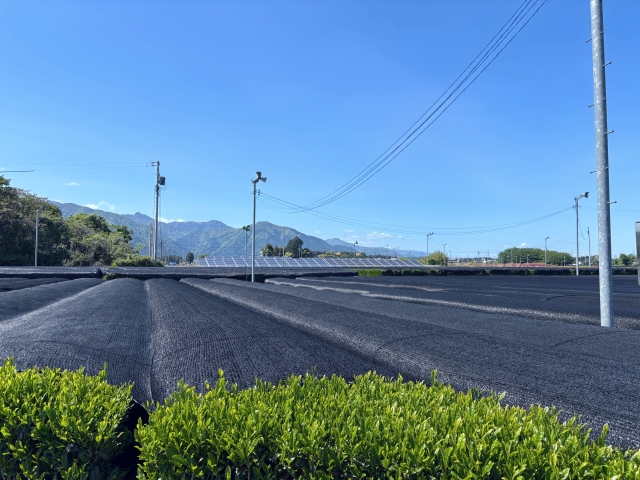
Good matcha begins long before grinding.
The cultivar, growing conditions, shading, harvest timing, processing of the tencha, freshness, storage, and grinding all influence what ultimately reaches the tea bowl.
A stone mill cannot turn poor tencha into excellent matcha.
Likewise, matcha produced using modern milling equipment is not automatically low quality.
Stone-ground can be meaningful information, but it should not be treated as a complete quality guarantee.
Why Are Stone Mills Still Used Today?
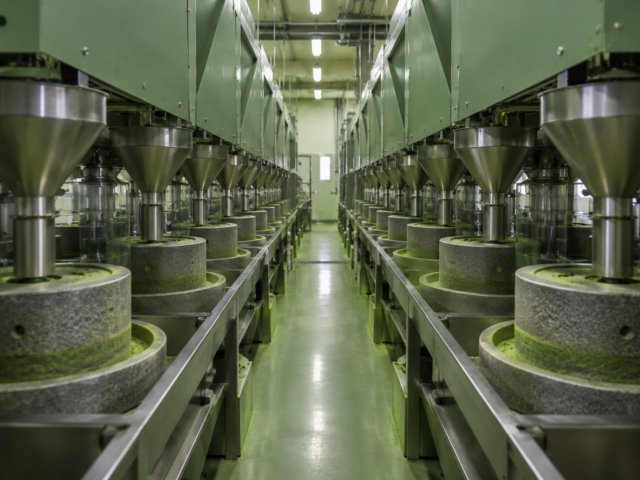
If modern mills can grind faster, produce smaller particles, and handle larger quantities, why have stone mills not disappeared?
Because stone milling still does a particular job very well.
Matcha developed alongside stone milling, and generations of producers accumulated knowledge about how tencha behaves in the mill and what kind of powder it produces.
For matcha intended to be whisked and enjoyed on its own, those characteristics still have value.
Stone mills have therefore survived not simply because people refuse to abandon old technology, but because there are still uses for which the old technology works remarkably well.
What About Grinding Matcha Yourself?
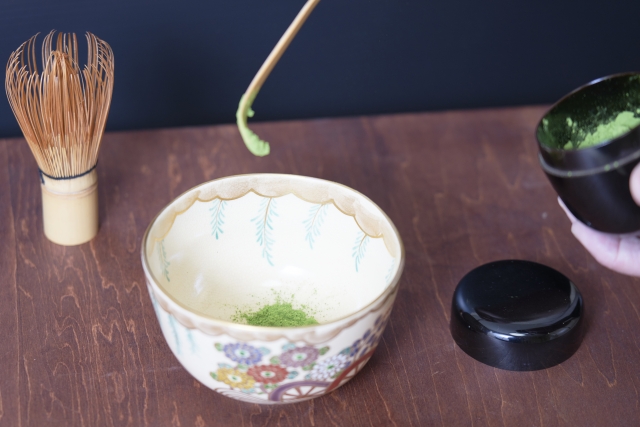
Turning a stone mill yourself can be a memorable way to understand how matcha is made.
Seeing tencha disappear between the stones and emerge as bright green powder makes one thing immediately clear: matcha does not begin as powder.
But grinding matcha yourself should be understood differently from professional production.
A stone mill does not automatically produce excellent matcha simply because you turn it slowly. The mill's adjustment, condition, rotation, feed rate, and the quality of the tencha all influence the finished powder.
Freshly grinding tencha can therefore be a fascinating tea experience, but it does not automatically produce better matcha than professionally milled tea.
In everyday life, using well-produced matcha that has already been ground and properly stored is far more practical.
Why Does Freshness Matter After Grinding?
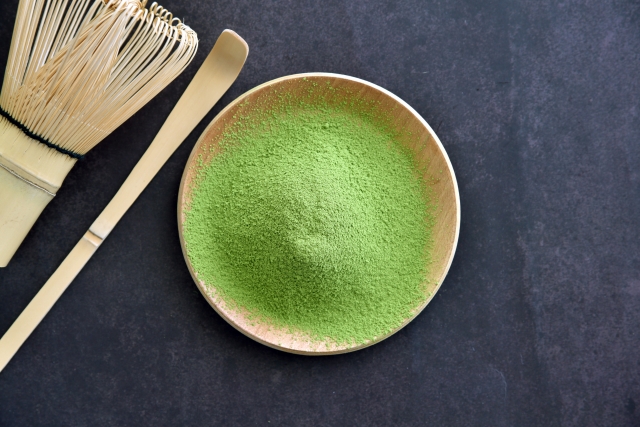
Once tencha becomes a very fine powder, much more of its surface is exposed to the surrounding air.
That makes matcha more vulnerable to moisture, light, odors, and gradual changes in aroma and color.
In this sense, there is a useful comparison with grinding coffee beans.
Grinding is not simply a change in shape. It also changes how quickly the product interacts with its environment.
Matcha is not coffee, of course, but the comparison helps explain why grinding is treated as an important finishing stage.
The work of producing good matcha begins in the field and continues through tencha processing.
Grinding is the final transformation that makes the tea ready to whisk and drink.
What Stone Milling Reveals About Modern Matcha
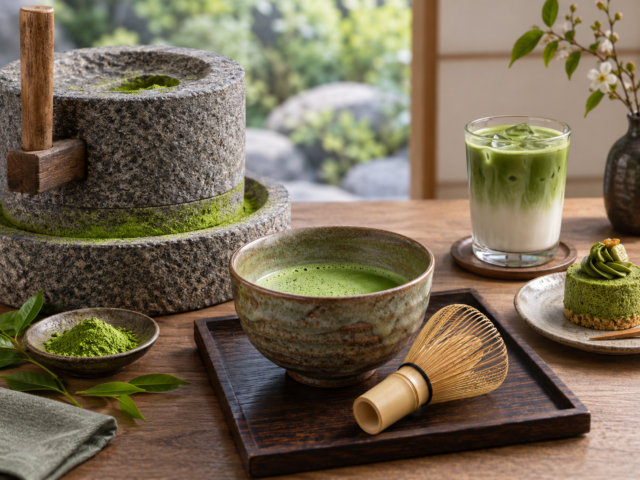
Stone milling is often presented as evidence that matcha belongs to an ancient tradition.
That is true, but it is only part of the story.
When matcha developed, stone milling was the available technology. Over centuries, the tea and the grinding method developed together, and the powder characteristics produced by the mill became part of what people expected from matcha.
Modern technology has now given producers other choices.
Some machines can grind finer. Some can process far more tea. Some create powder properties that are useful for lattes, confectionery, or food production.
That does not make the stone mill obsolete.
Nor does it make the stone mill the highest form of grinding.
It means modern matcha now has more than one purpose — and more than one appropriate way to be made.
The real value of stone milling is not simply that it is old.
It is that, for certain kinds of matcha and certain ways of drinking it, the old method still does exactly what producers need it to do.
Author's Note
There is something undeniably appealing about watching a matcha stone mill turn.
The process is slow, the equipment looks almost unchanged from another era, and bright green powder gradually appears around the stones.
It is easy to look at that scene and assume that the traditional method must simply be superior.
But the reality is more interesting.
Modern machines can grind faster. Some can produce smaller particles than a stone mill. And when matcha is going into a latte, cake, chocolate, or ice cream, the characteristics needed from the powder may be different from those valued in a bowl of matcha whisked with water.
Stone milling is not the final level that all matcha should aspire to.
It is one remarkably durable solution to a particular problem.
Sometimes an old method survives not because it is sacred, but because even after new technologies appear, it still remains very good at the job it was developed to do.
FAQ
Why is matcha traditionally ground with stone mills?
Matcha developed long before modern grinding machines existed, and stone mills proved capable of producing the extremely fine tea powder required for drinking. Over generations, stone milling became closely connected with the texture and physical characteristics expected from traditional matcha.
Is stone-ground matcha finer than machine-ground matcha?
Not necessarily. Modern jet mills can produce particles smaller than those typically produced by traditional stone mills.
Does matcha dissolve in water?
No. Matcha particles remain dispersed or suspended in the water rather than completely dissolving.
Is all matcha stone-ground?
No. Modern milling methods such as ball mills and jet mills are also used. Different methods can be chosen depending on the characteristics required from the finished powder.
Is stone-ground matcha always better for lattes?
Not necessarily. Stone-ground matcha can make an excellent latte, but matcha intended for milk-based drinks may benefit from different characteristics such as dispersion, color, consistency, and flavor intensity.
Is culinary matcha lower quality?
Not automatically. Matcha intended for food or confectionery may simply be designed for a different purpose.
Does stone-ground mean high-quality matcha?
Not by itself. The quality of the tencha, cultivation, processing, freshness, storage, and grinding all influence the finished matcha.
How much matcha can a traditional stone mill produce?
Production varies, but traditional matcha stone mills often produce only around 30 to 40 grams per hour, far slower than modern industrial grinding systems.
Related Reading on YUNOMI
Why Is Matcha Powdered?
Learn how tencha becomes matcha and why matcha is ground into powder instead of brewed like ordinary leaf tea.
Why Does Matcha Taste Bitter but Also Sweet?
Explore how bitterness, sweetness, and umami come together in a bowl of matcha.
Why Is Matcha Used in Sweets?
See why matcha’s bitterness and umami work so well in desserts and confectionery.
What Is Japanese Green Tea?
See where matcha fits within the wider family of Japanese green teas.

