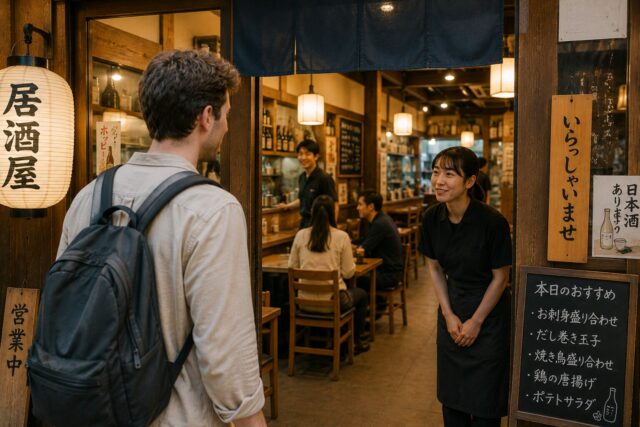
"Irasshaimase" is more than a simple greeting. It is part of a broader hospitality system in which customers are acknowledged immediately upon entering, helping create an atmosphere of attentiveness and welcome before any direct interaction even begins.
Quick Summary
"Irasshaimase" is a ritualized Japanese service greeting used in restaurants and shops to acknowledge customers the moment they enter.
Rather than functioning as a personal conversation starter, it helps create atmosphere, establish attentiveness, and maintain the consistent rhythm of Japanese hospitality culture through sound and routine.
Customers are generally not expected to respond verbally. A small nod or smile is perfectly fine, but simply entering the restaurant or shop without replying is also completely normal.
Related Hub: Japanese Restaurant & Hospitality Culture
What Does "Irasshaimase" Mean?

"Irasshaimase" is often translated as "Welcome," but in Japan it functions more as a formal service greeting than a personal conversation starter.
"Irasshaimase" is a polite Japanese expression used to welcome customers into a business. It translates loosely as "Welcome" or "Please come in," though its tone is more formal and service-oriented than a casual English greeting.
The phrase comes from the honorific verb irassharu, a respectful form relating to someone's presence, arrival, coming, or going. In restaurants, shops, cafés, and many other businesses, staff use it to acknowledge customers the moment they enter.
A Standard Service Greeting
In Japan, saying "Irasshaimase" is considered a standard part of customer service rather than a personal exchange. This is why it is delivered automatically and consistently, regardless of who walks through the door.
It acts less like a conversation starter and more like a signal that the space is ready to receive and serve the customer.
Why Do Staff Say It So Loudly?
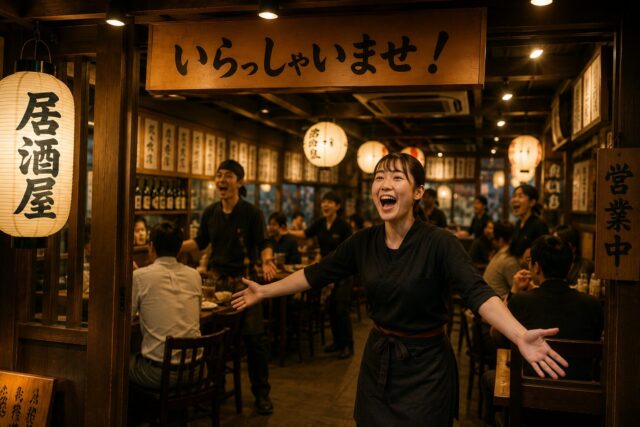
In busy izakaya and ramen shops, multiple staff members may loudly repeat "Irasshaimase" together to create energy and acknowledge new customers.
In many restaurants and shops, staff say "Irasshaimase" loudly enough for the entire space to hear. This serves a practical purpose — letting other staff know that a customer has entered — but it also creates an atmosphere of attentiveness and energy that sets the tone for the visit.
One Call, Many Echoes
In lively environments such as ramen shops or izakaya, one staff member may call out "Irasshaimase!" and others immediately repeat it throughout the space. The result is a kind of coordinated rhythm that combines hospitality, internal communication, and a sense of welcome all at once.
Pro Tip: Don't Panic if Everyone Shouts at Once
In busy restaurants such as ramen shops or izakaya, multiple staff members may call out "Irasshaimase!" at nearly the same time.
This is not directed at you personally, and you do not need to respond to each staff member individually. It functions more like a shared workplace signal announcing that a customer has entered the space.
Different Places, Different Styles
The tone of "Irasshaimase" shifts depending on the setting. In ramen shops and izakaya, it tends to be loud and energetic, contributing to the lively atmosphere. In department stores, it is often softer and more measured, reflecting a more formal environment. Convenience stores have developed their own automatic, rhythmic version that has become a familiar part of everyday life in Japan.
In quieter cafés, traditional restaurants, or high-end establishments, the greeting may be much softer — sometimes almost a murmur. In many ways, the style of "Irasshaimase" gives customers an early clue about the atmosphere of the place they have entered.
Are Customers Supposed to Respond?
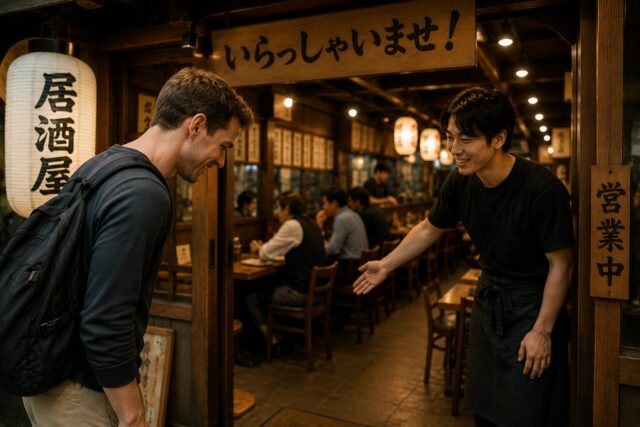
A small nod or light bow is often the most natural response to "Irasshaimase" in Japan.
One of the most confusing aspects for visitors is that customers are generally not expected to reply. In many countries, greetings involve a direct exchange — "Hello" met with "Hi." In Japan, however, "Irasshaimase" functions more as part of the service environment itself than as the opening of a personal interaction.
It is a formal acknowledgment that the customer has arrived, not an invitation to conversation. Because of this, most Japanese customers simply continue walking, browsing, or taking their seat without responding verbally — and this is entirely normal.
The "Silent" Reply
While a verbal response is not expected, many people in Japan offer a small nod or slight smile when entering. This subtle acknowledgment — called eshaku — is often considered more natural than replying with a greeting of your own.
For visitors who feel uncomfortable staying completely silent, a small nod is the easiest and most culturally fitting response.
Not Ignoring — Just Different
To visitors, staying silent after a greeting can feel impolite. But in Japan, it is completely natural in this context. The greeting is understood as a service expression rather than the start of a conversation, so no reply is needed or expected.
In a busy restaurant, stopping to respond to every greeting can even feel slightly awkward, because customers are usually expected to move smoothly into the space.
What Happens After "Irasshaimase"?
In restaurants where staff guide customers to seats, "Irasshaimase" may be followed by a practical question such as "Nan-mei-sama desu ka?" This means "How many people?"
If you do not understand the phrase, do not worry. Holding up the appropriate number of fingers is usually enough. For example, if you are dining with one other person, showing two fingers will normally communicate the answer clearly.
This small exchange shows how Japanese restaurant service often combines set phrases with practical, low-pressure communication. The greeting welcomes the customer, while the follow-up question helps staff guide the visit smoothly.
How "Irasshaimase" Reflects Japanese Service Culture
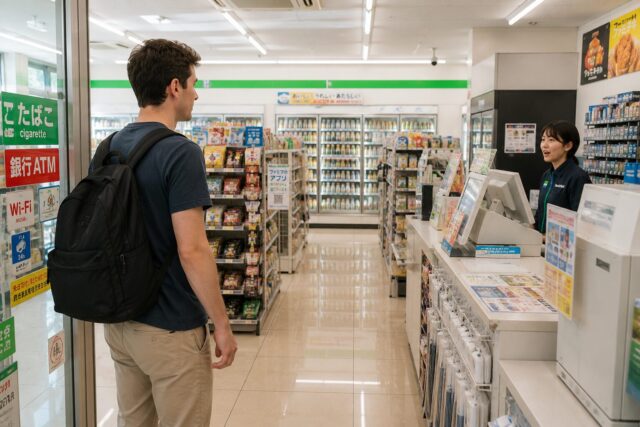
Even convenience stores in Japan commonly greet customers with "Irasshaimase" as part of everyday service culture.
"Irasshaimase" reflects a broader cultural idea: customers should feel acknowledged and welcomed the moment they enter, before they have said or done anything. Like oshibori, free water, and attentive table service, it is part of a hospitality system designed to anticipate comfort rather than wait for requests.
At the same time, the greeting does not demand further interaction. It opens the door, so to speak, without pushing customers into conversation.
Omotenashi Through Routine
Although "Irasshaimase" may sound repetitive or scripted, its purpose is consistency rather than individual expression. In Japanese service culture, delivering small rituals reliably is often considered more important than performing them with unique personal enthusiasm each time.
The value lies in the predictability itself — the customer always feels seen.
Attentive, But Not Intrusive
This balance is important. Japanese service often tries to be attentive without becoming overly personal or intrusive. Staff acknowledge the customer, but they do not necessarily begin casual conversation. They signal readiness, but they also allow the customer to settle in at their own pace.
In this sense, "Irasshaimase" is not only a greeting. It is a small ritual that helps organize the relationship between customer, staff, and space.
Why Does It Sometimes Sound So Fast?
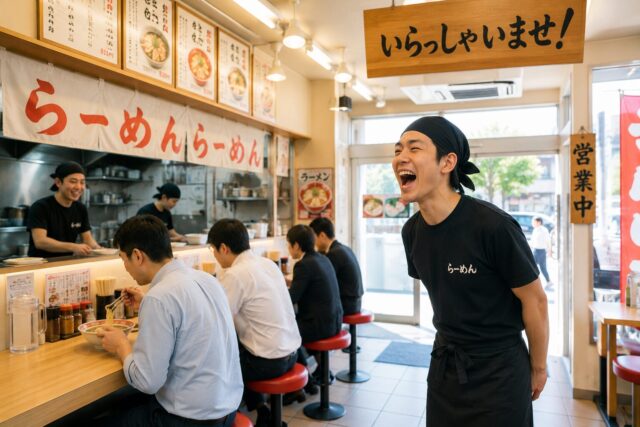
In ramen shops, "Irasshaimase" is often delivered quickly and loudly, becoming part of the rhythm and atmosphere of the restaurant.
Visitors are sometimes surprised that "Irasshaimase" does not always sound clearly pronounced. In busy restaurants — especially ramen shops and izakaya — staff often say it very quickly or in a compressed, rhythmic pattern.
The focus is usually on maintaining the energy and flow of the space rather than enunciating every syllable. Over time, this creates the distinctive fast-paced sound that many visitors notice in Japanese restaurants.
A Familiar Sound of Everyday Japan
For many Japanese people, this rapid delivery has become part of the soundscape of everyday life — something instantly recognizable even when the individual words blur together.
Still, even Japanese customers may occasionally notice how intense the greeting can feel in certain restaurants. Some ramen shops and izakaya intentionally use very loud, spirited calls as part of their atmosphere, while other places keep the same greeting quiet and understated.
More Than a Greeting
For many visitors, "Irasshaimase" initially feels like a direct social interaction requiring some kind of response. In practice, however, the phrase functions more as a ritualized part of the restaurant or shop environment.
It establishes rhythm, signals readiness, and transitions customers smoothly into the experience, rather than starting a personal exchange.
Understanding this distinction often makes Japanese restaurant culture feel far less intimidating for first-time visitors. The greeting is not a demand — it is simply the sound of a restaurant coming to life.
FAQ
What does "Irasshaimase" mean?
It is a polite Japanese expression used to welcome customers into stores and restaurants. It translates roughly as "Welcome" or "Please come in," delivered as part of the standard service greeting.
Do you need to respond to "Irasshaimase"?
No. Customers in Japan are generally not expected to reply verbally. A small nod or smile is entirely sufficient if you want to acknowledge the greeting.
Can I say "Konnichiwa" back?
You can, and it would not be considered rude. In practice, though, a small nod or smile tends to feel more natural in this context — and is what most people in Japan would do.
Why do staff say it so loudly?
A loud greeting helps create an atmosphere of energy and attentiveness, and also signals to other staff that a customer has entered — serving both a hospitality and a practical communication function.
Why do multiple staff members say it at the same time?
In many restaurants, the greeting functions as a shared signal among staff. One person notices a customer entering, and others repeat the greeting to acknowledge the arrival together.
Why does it sometimes sound shortened or unclear?
In busy restaurants, staff often say "Irasshaimase" very quickly or rhythmically. The goal is usually to maintain the energy and flow of the space rather than pronounce every syllable carefully.
What does "Nan-mei-sama desu ka?" mean?
It means "How many people?" Staff often ask this after greeting customers at the entrance. If you do not speak Japanese, holding up the appropriate number of fingers is usually enough.
Is "Irasshaimase" used only in restaurants?
No. It is common across many types of businesses, including retail shops, department stores, cafés, hotels, and convenience stores. Anywhere customer service is involved, you are likely to hear it.
What do staff say when you leave?
Staff often say "Arigatō gozaimashita," meaning "Thank you very much." Unlike "Irasshaimase," which opens the interaction, this phrase closes it — expressing gratitude for the visit.
Is "Irasshaimase" part of omotenashi?
Yes. It reflects the Japanese approach to hospitality by ensuring that every customer is acknowledged immediately and consistently upon arrival, regardless of how busy the space is.

