
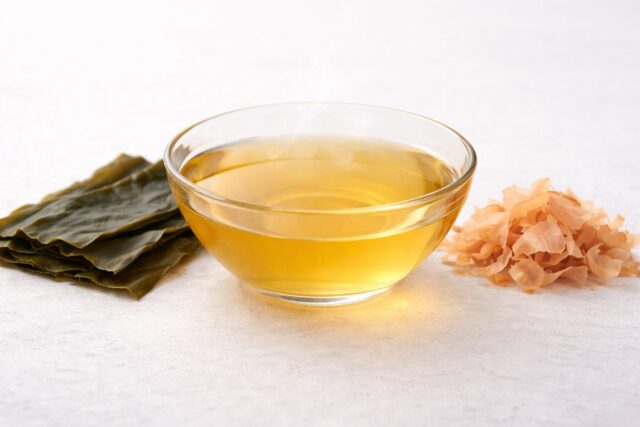
Dashi does not always come from a single ingredient.
One of the most familiar forms of Japanese dashi combines kombu with katsuobushi, or dried bonito flakes. This is commonly called awase dashi.
The word awase comes from the idea of combining things, so awase dashi simply means dashi made by bringing two or more ingredients together.
The classic combination of kombu and katsuobushi works especially well because the two ingredients provide different kinds of umami, creating a fuller and more balanced broth.
Professional kitchens and home kitchens may use very different ingredients and techniques, but the basic idea is the same: combine ingredients whose flavors support one another.
Quick Summary
- Awase dashi means “combined dashi.”
- The classic version combines kombu and katsuobushi.
- Different umami compounds can strengthen one another through umami synergy.
- Other combinations include kombu with dried shiitake or niboshi.
- The same basic technique can be used in both professional and everyday home cooking, even when the ingredients and preparation differ.
What Is Awase Dashi?
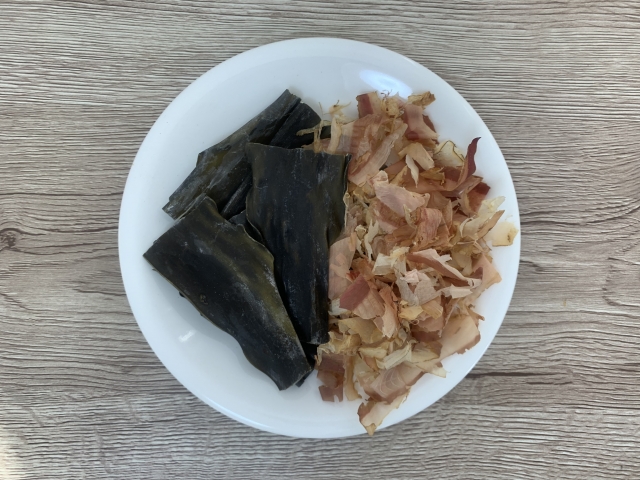
Kombu and katsuobushi are the classic pairing used to make awase dashi.
Awase dashi (合わせだし) is dashi made by combining more than one dashi ingredient.
The best-known example is:
kombu + katsuobushi
Kombu provides a gentle savory foundation, while katsuobushi adds aroma and another layer of umami.
However, awase dashi is not one fixed recipe.
Different ingredients can be combined depending on the dish, region, household, or cooking style.
It is better understood as an approach to making dashi rather than a single formula.
Why Combine Dashi Ingredients?
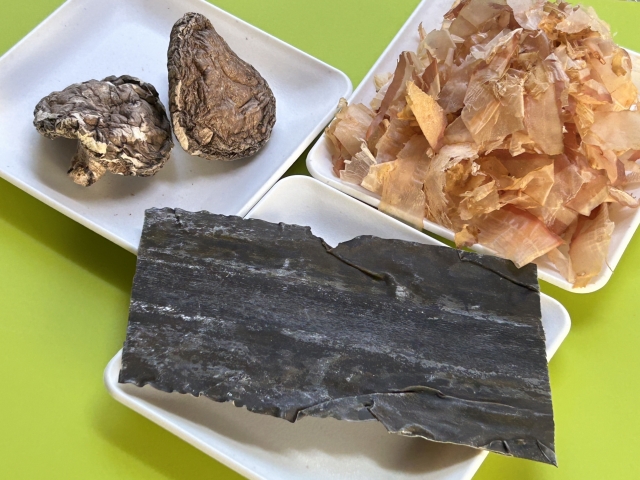
Kombu, katsuobushi, and dried shiitake provide different umami compounds, which can strengthen one another when combined.
Different dashi ingredients contain different compounds associated with umami.
Kombu is rich in glutamate.
Katsuobushi contains inosinate.
Dried shiitake mushrooms contain guanylate.
When certain umami compounds are combined, the savory sensation can become stronger than when either ingredient is used alone. This is known as umami synergy.
Importantly, stronger umami does not necessarily mean a heavier broth.
Awase dashi can remain clear, light, and delicately seasoned while still tasting surprisingly full.
This is one reason dashi can feel different from stocks that build depth mainly through long cooking, roasted ingredients, meat, or fat.
Kombu and Katsuobushi: The Classic Awase Dashi
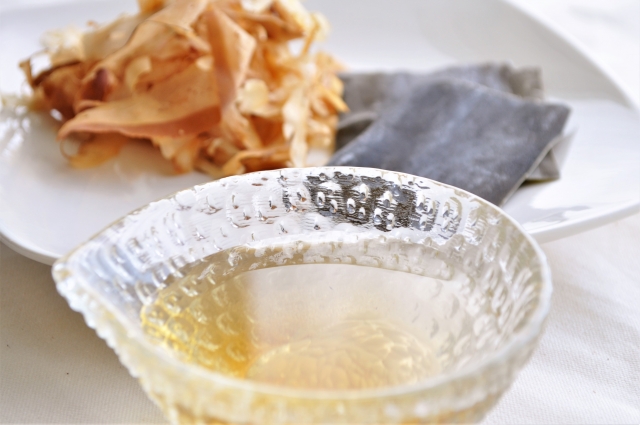
Awase dashi made from kombu and katsuobushi is known for its clear appearance and layered umami.
The most familiar awase dashi combines kombu and katsuobushi.
Kombu provides a quiet base. Katsuobushi adds aroma, gentle smokiness, and fish-derived umami.
Together, they create a more layered broth than either ingredient alone.
This combination is also closely associated with ichiban dashi, or first dashi.
However, the terms are not identical.
Awase dashi describes dashi made by combining ingredients, while ichiban dashi refers to a first extraction traditionally valued for its clean aroma and delicate flavor.
Other Awase Dashi Combinations
Kombu and katsuobushi are not the only option.
Kombu and Dried Shiitake
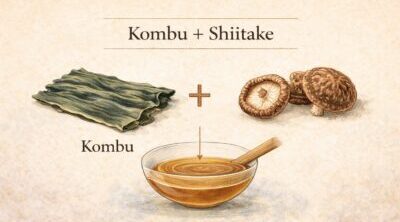
Kombu and dried shiitake make a plant-based combination.
Kombu provides glutamate, while dried shiitake provides guanylate.
This pairing is particularly useful when fish-based dashi is not desired and is also associated with some forms of Buddhist cuisine.
Kombu and Niboshi
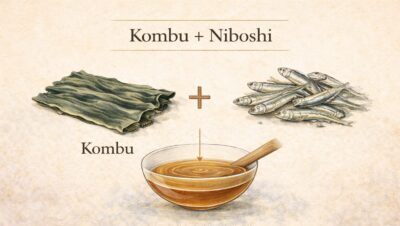
Niboshi are small dried fish used to make dashi.
They tend to give a more assertive fish aroma than katsuobushi, while kombu can add roundness and another source of umami.
Niboshi are also inexpensive, easy to store, and practical for everyday cooking.
Other regional and household combinations also exist.
The important point is that awase dashi is about combining ingredients whose flavors work well together.
Is Awase Dashi Better Than Single-Ingredient Dashi?
Not necessarily.
Different types of dashi serve different purposes.
| Type | General Character |
|---|---|
| Kombu dashi | Gentle and clean |
| Katsuobushi dashi | Aromatic and savory |
| Niboshi dashi | Stronger and more fish-forward |
| Awase dashi | Layered and fuller |
A simple kombu dashi may be exactly what a dish needs.
A niboshi dashi may work better when a stronger character is desirable.
More umami does not automatically mean better dashi.
The goal is balance.
How Is Awase Dashi Used?
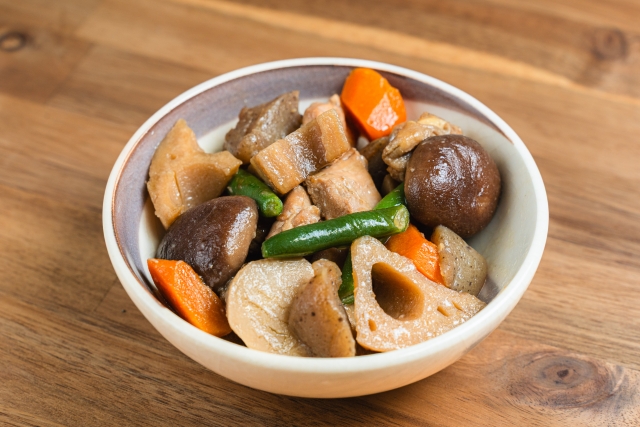
Awase dashi is often used in nimono, where the broth helps season vegetables and other ingredients as they simmer.
Awase dashi can be used in many kinds of Japanese cooking, including:
- miso soup
- clear soups
- noodle broths
- simmered dishes
- chawanmushi
- sauces and dipping bases
The exact dashi can be adjusted to suit the dish.
A delicate soup may use a carefully prepared dashi, while an everyday simmered dish may use something much simpler.
In miso soup, dashi provides savory depth beneath the flavor of the miso. In simmered dishes, it helps soy sauce, mirin, vegetables, and other ingredients come together into a more unified flavor.
You may eat awase dashi many times in Japan without ever seeing kombu or katsuobushi on the plate.
The ingredients often disappear from the finished dish.
Their role is to support everything around them.
Awase Dashi at Home and in Professional Kitchens
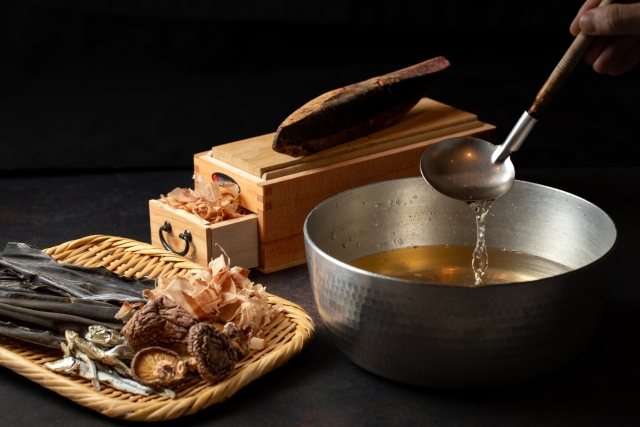
Professional dashi and home dashi can be quite different.
Specialist kitchens may carefully select kombu and katsuobushi and control temperature, timing, shaving thickness, and extraction.
Home cooking is usually simpler.
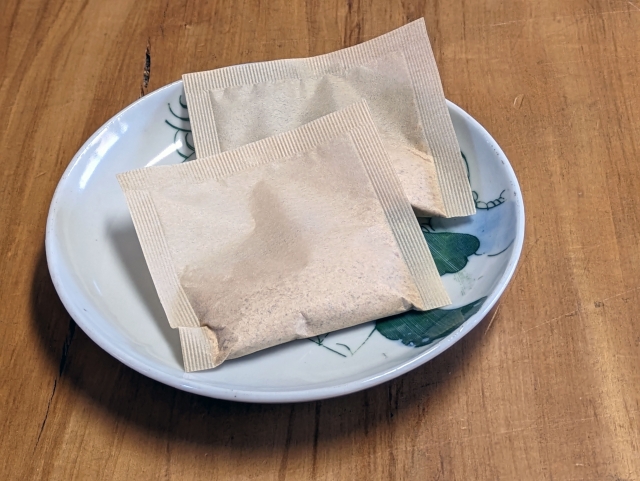
A home cook may use packaged shaved bonito flakes, a dashi bag, instant dashi granules, or another convenient product.
The ingredients and precision may differ, but the basic principle remains the same: different sources of umami can support one another.
Awase dashi is a technique, not a luxury ingredient.
What Awase Dashi Reveals About Japanese Food Culture
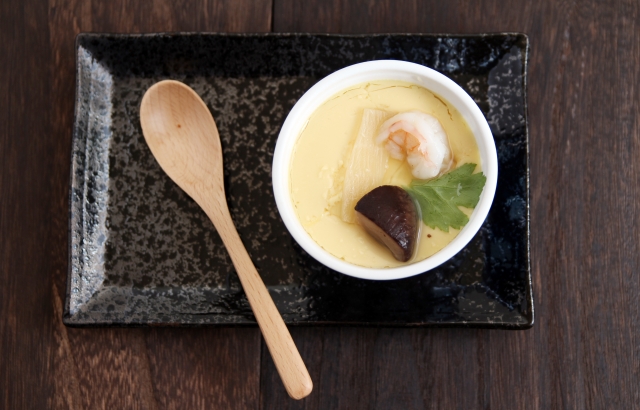
Chawanmushi shows how dashi often works quietly in the background, giving depth to a dish without appearing as the main ingredient.
Awase dashi shows that depth does not always come from adding more seasoning.
Sometimes it comes from combining ingredients that strengthen one another.
Kombu and katsuobushi are a clear example. Neither needs to dominate, yet together they can create a fuller broth.
This does not mean Japanese food is always light or delicate.
Japan also has rich ramen broths, strongly seasoned dishes, fried foods, spicy foods, and many other bold flavors.
Awase dashi simply shows one important approach within Japanese cooking: building depth through combination rather than sheer intensity.
Author’s Note
Growing up in Japan, dashi was part of everyday food long before I thought about why it worked.
Later, learning that kombu and katsuobushi contain different umami compounds made the familiar combination much more interesting.
I also think it is important not to romanticize Japanese home cooking.
Most households are not shaving premium blocks of katsuobushi every morning. Packaged bonito flakes, dashi bags, and instant products are part of ordinary life.
Professional dashi and home dashi may be very different, but the basic lesson of awase dashi is the same: sometimes two simple ingredients can do more together than either one can do alone.
FAQ
What does awase dashi mean?
Awase dashi means combined dashi. It refers to dashi made with two or more ingredients.
What is the most common awase dashi?
The classic combination is kombu and katsuobushi.
Is awase dashi always made with fish?
No. Kombu and dried shiitake, for example, can be combined to make a plant-based awase dashi.
Is awase dashi stronger than kombu dashi?
It usually has a fuller umami character, but that does not necessarily mean it is heavier, saltier, or more strongly seasoned.
Is awase dashi the same as ichiban dashi?
Not exactly.
Awase dashi refers broadly to combined dashi, while ichiban dashi refers to a first extraction, often made from kombu and katsuobushi.
Related Reading
Start with the Basics
- Japanese Dashi Guide: Types, Ingredients, and How to Use Them
- Dashi vs Broth: Why Japanese Dashi Is So Different from Western Stock
Explore the Main Ingredients
- What Is Kombu? The Seaweed That Shapes Japanese Dashi and Cooking
- How Katsuobushi Is Made (And Why It’s Compared to Cheese)
- What Is Niboshi Dashi? Bold Sardine Broth in Japanese Cooking
- What Are Dried Shiitake? The Mushroom That Brings Deep Umami to Japanese Dashi
Understand the Flavor
- What Is Umami? The Savory Taste That Defines Japanese Cooking
- What Is Umami Synergy? Why Kombu and Katsuobushi Taste Better Together

