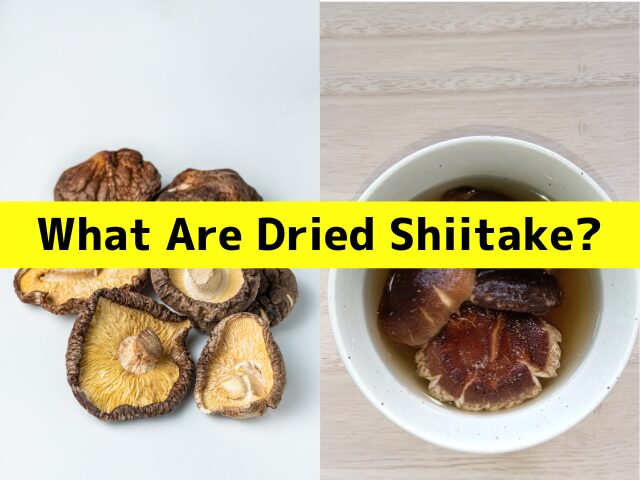
When rehydrated slowly in cold water, dried shiitake produce a rich broth that can be used for soups, simmered dishes, and vegetarian cooking. Both the soaking liquid and the mushrooms themselves become valuable ingredients in Japanese cuisine.
Although drying originally began as a simple method of preservation, cooks eventually discovered that dried shiitake develop deeper flavor and even greater nutritional value than fresh mushrooms.
Start here:
Japanese Dashi Guide
Why Drying Shiitake Creates Deeper Flavor
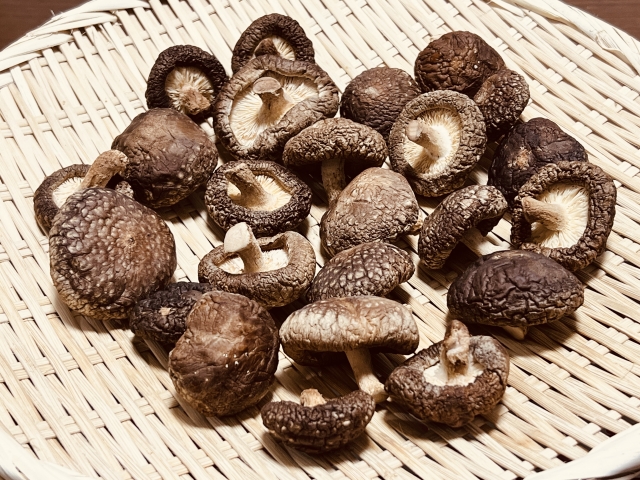
Drying shiitake mushrooms concentrates flavor and triggers chemical changes that produce guanylate, a key umami compound.
Drying shiitake mushrooms does more than simply remove moisture. During the drying process, natural enzymes transform compounds inside the mushroom and produce guanylate, one of the three major umami compounds in Japanese cooking.
Because of this transformation, dried shiitake develop a deeper savory taste than fresh mushrooms. The mushrooms themselves become more flavorful, and when they are soaked in water, the liquid absorbs these savory compounds and becomes shiitake broth.
Drying also provides another unexpected benefit. When shiitake mushrooms are exposed to sunlight during the drying process, their natural compounds convert into vitamin D, increasing their nutritional value.
Some cooks even place dried shiitake in sunlight for a short time before cooking, which can further increase their vitamin D content.
In other words, a technique originally developed simply to preserve mushrooms also enhances both their flavor and their nutrition.
Shiitake as a Source of Broth
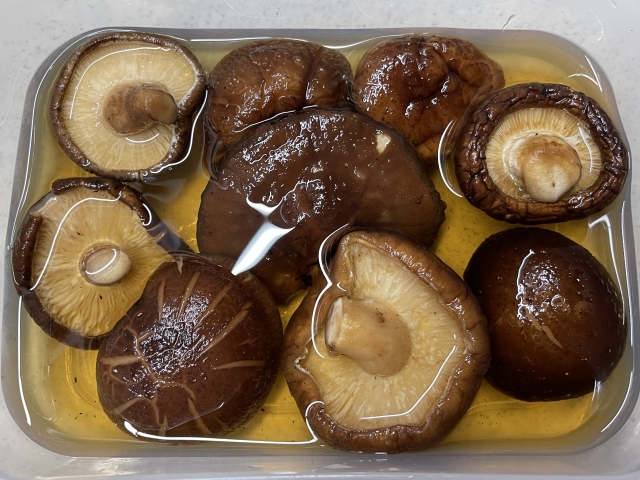
Alongside kombu and katsuobushi, dried shiitake are one of the key ingredients used to make dashi in Japanese cooking。
When soaked in water, dried shiitake release their savory compounds into the liquid, creating a rich broth often called shiitake dashi. This broth has a deep umami flavor and is widely used in soups, simmered dishes, and vegetarian cooking.
In Japanese cuisine, the mushrooms themselves are rarely wasted. After soaking, the shiitake are commonly sliced and used as ingredients in the dish alongside the broth。
Umami Synergy
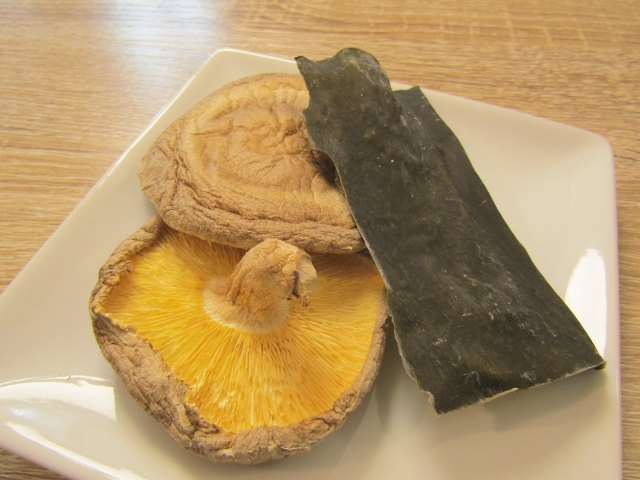
Dried shiitake and kombu are often combined to create deeper umami through the interaction of glutamate and guanylate.
Shiitake broth is often combined with kombu because their flavors strengthen one another。
Kombu contains glutamate while shiitake provide guanylate。
When these compounds are combined, the savory taste becomes much stronger than either ingredient alone。This phenomenon is known as umami synergy and forms the foundation of many Japanese broths。
To see how this pairing is used in practice, see
How to Make Ichiban Dashi Step by Step (And Why It Works)。
How to Rehydrate Dried Shiitake
Over generations, Japanese cooks refined practical methods for drawing the best flavor from dried shiitake. Modern food science helps explain why these techniques work. Each step—cold soaking, low-temperature extraction, and controlled heating—plays a specific role in developing the mushroom’s deep umami.
Soaking dried shiitake begins the extraction of compounds from the mushroom, but the broth is not yet complete at this stage. Heating the soaking liquid later allows natural enzymes to transform these compounds into guanylate, the substance responsible for shiitake’s rich savory flavor.
Lightly Rinse the Mushrooms

Before soaking, lightly rinse the dried shiitake to remove dust or small particles from the surface. A quick rinse is enough and does not affect the flavor of the mushrooms or the broth.
Soak in Cold Water
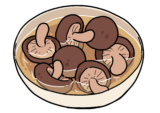
Place the mushrooms in a bowl and cover them with cold water. Cold soaking allows compounds inside the mushroom to dissolve gradually into the liquid.
At this stage, the liquid mainly contains precursors of shiitake’s umami rather than the finished flavor itself. These compounds will later develop into the mushroom’s characteristic savory taste during heating.
Rehydrate in the Refrigerator

Many cooks place the soaking bowl in the refrigerator while the mushrooms rehydrate. Keeping the water cold helps maintain the ideal temperature for slow extraction and prevents unwanted bitterness from developing.
Thin kōshin mushrooms usually soften within about 5–8 hours, while thicker donko mushrooms may require up to 24 hours to fully rehydrate.
Heat the Broth to Develop Umami

After soaking, the liquid already contains extracted compounds from the mushrooms, but heating completes the development of shiitake’s umami. As the temperature rises, natural enzymes transform these substances into guanylate, one of the key savory compounds found in dried shiitake.
One detail is especially important at this stage. The soaking liquid also contains enzymes that can break down umami compounds. Because these enzymes become active within certain temperature ranges, it is best to raise the temperature of the broth fairly quickly so that this range is passed through without lingering too long.
At the same time, the broth should not be allowed to boil vigorously. Strong boiling can weaken the delicate aroma of dried shiitake and may produce harsher notes.
For the best result, heat the soaking liquid until it becomes very hot and just below boiling. At this point the shiitake broth is ready to use.
Use Both the Mushrooms and the Broth
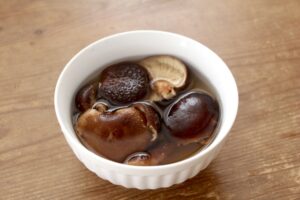
In Japanese cooking, both the soaking liquid and the rehydrated mushrooms are valued. The tough base of the stem is usually trimmed away, but the remaining stem can be sliced and added to dishes rather than discarded.
The mushrooms themselves provide texture and flavor, while the broth contributes deep umami to soups and simmered dishes.
Donko vs Kōshin
Donko and kōshin are not different species of shiitake mushrooms. They are the same mushroom harvested at different stages of growth.
Donko refers to mushrooms picked while the caps are still mostly closed. They are thicker and denser and therefore take longer to rehydrate.
Kōshin mushrooms are harvested after the caps have opened more fully. They are thinner and soften more quickly, making them common in everyday cooking.
Log-grown vs Sawdust-grown Shiitake
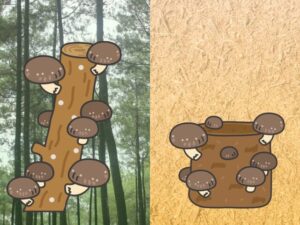
Traditional shiitake were grown on hardwood logs, while modern cultivation often uses sawdust blocks.
Shiitake mushrooms are grown in two main ways. Traditional log-grown shiitake develop on hardwood logs and often have stronger aroma and texture.
Today, many shiitake are cultivated using sawdust blocks, which allow for stable production and are commonly used in everyday cooking.
Shiitake in Buddhist Vegetarian Cooking
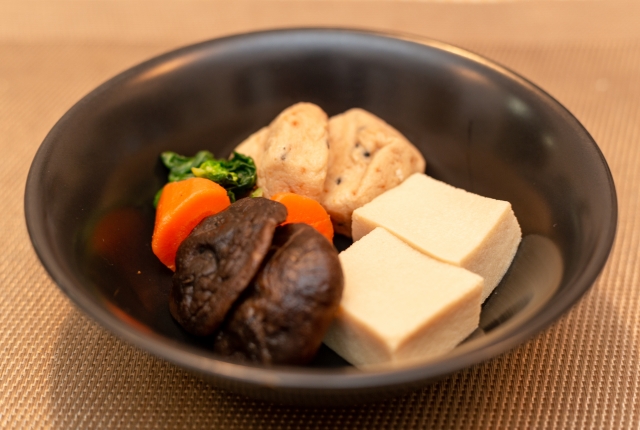
In vegetarian Buddhist cuisine, shiitake dashi provides deep umami without using fish-based ingredients.
Dried shiitake play an especially important role in shōjin ryōri, the traditional Buddhist vegetarian cuisine of Japan.
Because this style of cooking avoids meat and fish, cooks rely on ingredients rich in umami. Kombu and dried shiitake are often combined to create a flavorful vegetarian dashi.
This broth is frequently used to simmer ingredients that easily absorb flavor. Foods such as tofu, koya-dofu (freeze-dried tofu), and root vegetables soak up the broth like a sponge.
Through this technique, simple ingredients become deeply flavorful even without meat or fish.
Cooking Uses
Rehydrated shiitake mushrooms are commonly used in simmered dishes, soups, rice dishes, and noodle broths.
Because both the broth and the mushrooms themselves carry strong umami flavor, they are often used together in the same dish.
Author's Note
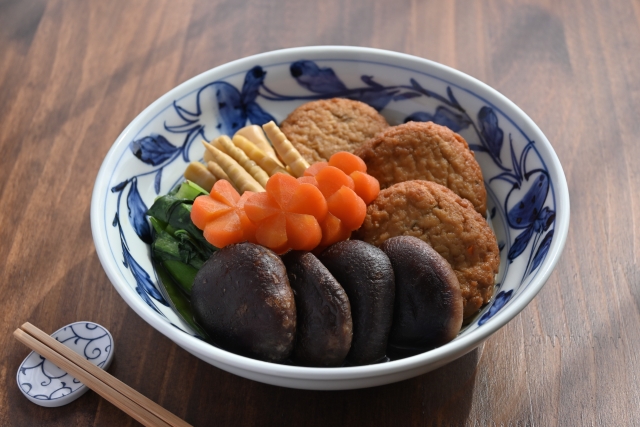
Even in modern Japanese cooking, dried shiitake remain a familiar ingredient. Many households keep them in the pantry because they can be stored for long periods and easily turned into a flavorful broth.
It is always surprising how a simple dried mushroom can transform water into such a rich base for cooking.
Frequently Asked Questions

Can dried shiitake be used without soaking?
Soaking is recommended because it softens the mushrooms and creates shiitake broth that can be used in cooking.
Should the soaking liquid be discarded?
No. The soaking liquid contains much of the mushroom's umami and is commonly used as shiitake dashi.
Are dried shiitake stronger in flavor than fresh mushrooms?
Yes. During drying, natural processes create guanylate, which increases the mushroom's savory taste.
Are dried shiitake used in vegetarian cooking?
Yes. They are widely used in Buddhist vegetarian cuisine to provide deep umami flavor without meat or fish.

