
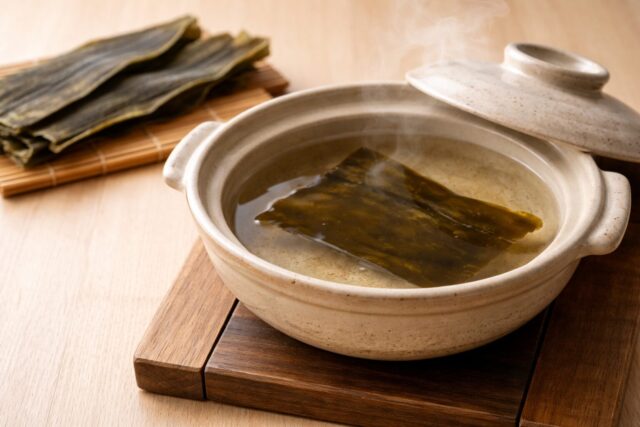
By gently extracting natural glutamate from kombu, this broth creates deep umami without heaviness. Its simplicity reflects a core idea of Japanese cuisine: flavor can be built through careful technique rather than strong seasoning.
Among the different kinds of dashi, kombu dashi is one of the most fundamental. Made from dried kelp and water, it may look simple, but it carries a deep savory flavor that shapes countless Japanese dishes.
To understand kombu dashi is to understand something essential about Japanese cooking itself: how flavor can be built gently, clearly, and with remarkable restraint.
Start here:
Japanese Dashi Guide
What Is Kombu Dashi?
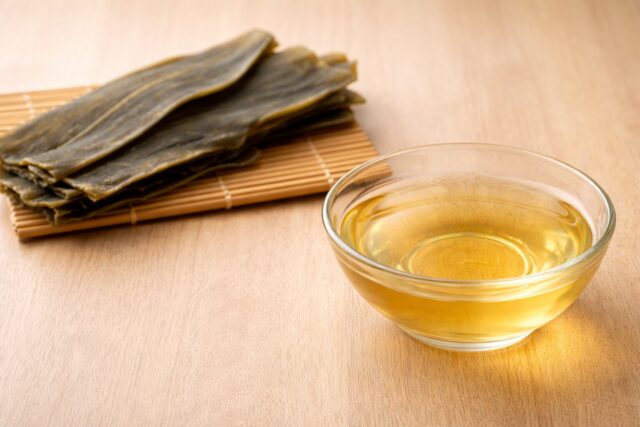
clear kombu dashi broth in a glass bowl with dried kombu behind it
Kombu dashi is a clear broth made by extracting flavor from dried kombu, a type of kelp harvested mainly in the cold waters around Hokkaido.
This kombu broth is valued for its clean taste and natural umami. Its main flavor comes from glutamate, an amino acid found in especially high concentrations in kombu.
Unlike many Western broths that rely on bones, fat, or long simmering, kombu dashi is made through a much gentler process. The goal is not to produce a heavy stock, but a refined base that quietly supports the dish.
Why Kombu Is Dried
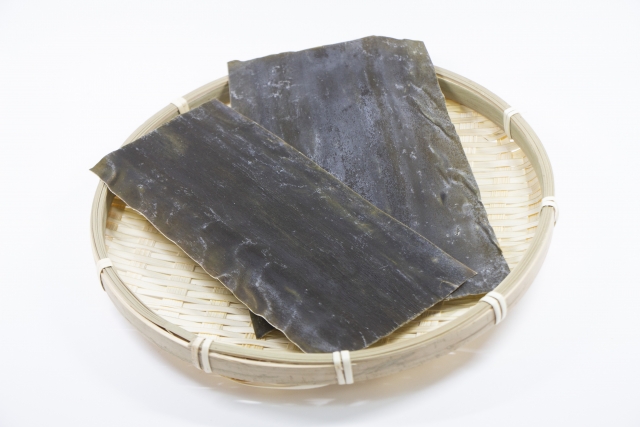
One detail that may seem obvious in Japan but surprising elsewhere is that kombu is almost always used in dried form rather than fresh.
At the most practical level, drying preserves the kelp. Fresh kombu spoils quickly, while dried kombu can be stored for long periods and transported over great distances.
This mattered historically, because kombu harvested in Hokkaido had to travel south to places such as Osaka and Kyoto, where dashi-based cuisine flourished.
Drying also improves its culinary potential. As moisture evaporates, certain compounds become more concentrated, including the glutamate responsible for umami. In other words, drying does not only preserve kombu—it also helps prepare it to become dashi.
Why Soft Water Matters

Water is not just a neutral background in dashi-making. It shapes the final flavor.
Japanese cooking developed in regions with naturally soft water, which allows kombu’s flavor to extract smoothly and cleanly. In harder water, minerals such as calcium and magnesium can interact with compounds in the kelp, sometimes weakening the broth’s clarity or bringing out a slightly harsher taste.
This is one reason dashi developed so naturally in Japan. The water itself suited the cuisine.
How Kombu Dashi Is Made

Although kombu dashi looks simple, the process follows a careful sequence designed to extract flavor gently while keeping the broth clean and clear.
Lightly Clean the Kombu
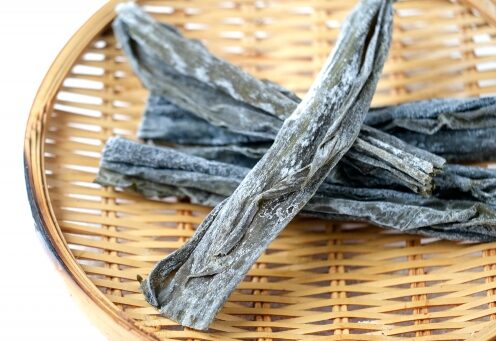
The white powder on kombu is not mold but natural mannitol.
Dried kombu often carries a thin white powder on its surface. This is not mold but natural compounds—often described as mannitol crystals—that appear during the drying process.
Rather than washing the kombu, cooks usually wipe it very lightly with a damp cloth. The goal is simply to remove dust or debris while leaving most of the natural surface intact, since some flavor compounds remain on the surface.
Soak the Kombu in Water
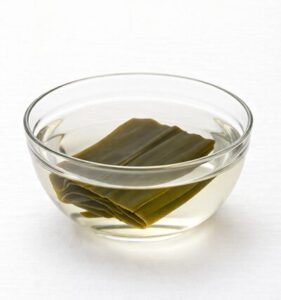
Next, the kombu is placed in cold water and left to soak. During this time, the dried kelp slowly rehydrates, and glutamate begins dissolving into the liquid.
Heat the Water Gently
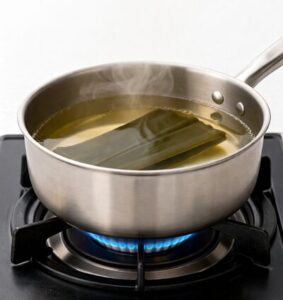
The pot is then heated slowly. As the temperature rises, additional flavor compounds are released from the kombu.
Many cooks aim to keep the temperature below boiling, often around 60–70°C, where kombu releases its flavor most cleanly.
Remove the Kombu Before Boiling
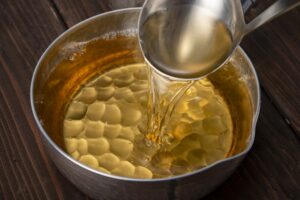
The kombu is usually removed just before the water reaches a full boil. Unlike many Western broths that benefit from long simmering, kombu gives its best flavor at lower temperatures.
Boiling the kelp can release excess compounds that make the broth cloudy or slightly bitter. Careful heating is therefore not a minor detail but a key part of what makes kombu dashi taste clean and refined.
Why Kombu Creates Umami
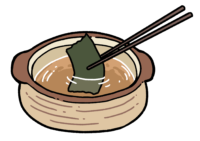
The key to kombu dashi is glutamate, one of the compounds responsible for umami.
Many foods contain some glutamate, but kombu contains it in unusually high concentrations. That is why even a single piece of kelp can transform plain water into a savory broth.
Kombu, Umami, and MSG

MSG was developed after scientists identified glutamate in kombu.
The discovery of umami is closely connected to kombu. In 1908, Japanese chemist Kikunae Ikeda identified glutamate as the compound responsible for the savory taste of kombu dashi.
His research later led to the development of monosodium glutamate (MSG), known commercially as Ajinomoto.
Kombu and Umami Synergy
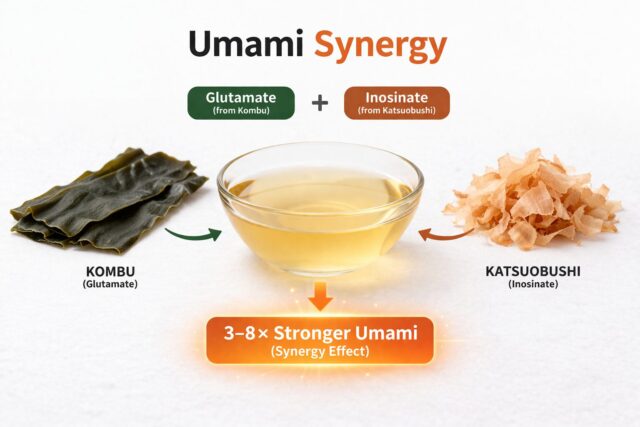
Glutamate from kombu and inosinate from katsuobushi create stronger umami together.
Kombu dashi becomes even more powerful when combined with other ingredients.
A famous example is awase dashi, in which kombu is paired with katsuobushi. Kombu provides glutamate while bonito flakes provide inosinate, creating a powerful umami synergy.
This combination is also what gives ichiban dashi its especially clear and refined flavor.
Why Kombu Appears in Hot Pots
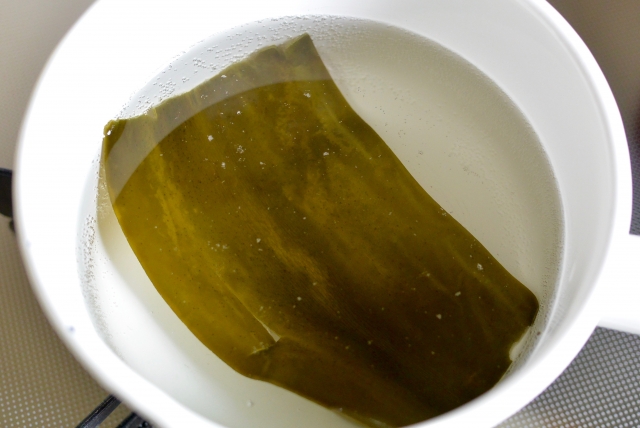
In many Japanese hot pot dishes, a sheet of kombu is placed quietly at the bottom of the pot before cooking begins.
At first glance, it may look like an ingredient, but its role is different. It prepares the broth.
As the water heats, kombu releases glutamate. When meat or fish are added, they release inosinate, creating deeper umami as the meal cooks.
What Happens to the Used Kombu?
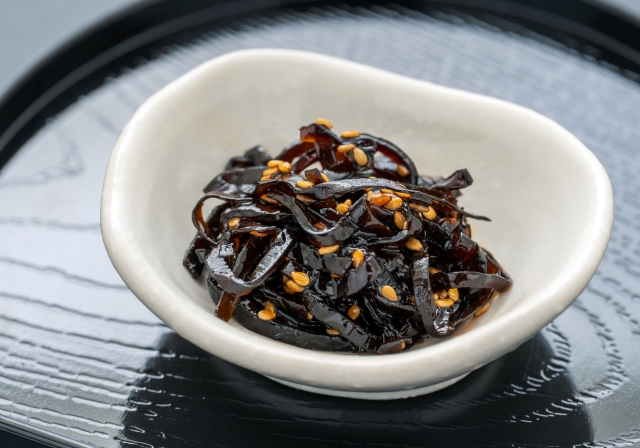
Used kombu from dashi is often reused in dishes like tsukudani.
After making dashi, the kombu is usually removed from the broth. Most of its flavor has already been extracted.
It may still be reused for lighter broths such as niban dashi or simmered into dishes like tsukudani.
Frequently Asked Questions

What is kombu dashi?
Kombu dashi is a Japanese broth made by extracting flavor from dried kombu. It is known for its clear appearance and natural umami.
Is kombu dashi vegetarian?
Yes. Kombu dashi is naturally vegetarian because it is made only from kombu and water.
Why should kombu not be boiled?
Boiling kombu can release compounds that make the broth cloudy or bitter, so it is usually removed just before the water reaches a full boil.
Can kombu be reused after making dashi?
Yes. Used kombu can be reused for lighter broths such as niban dashi or cooked into dishes like tsukudani.
Why is kombu often used in hot pots?
Kombu provides glutamate, which combines with inosinate released from meat or fish to create stronger umami through synergy.
Related Reading on YUNOMI
Start Here
Core Concept
What Is Dashi?
What Is Umami?
What Is Umami Synergy?
Ingredients
What Is Kombu?
What Is Katsuobushi?
What Are Dried Shiitake?
Related Dashi Types
What Is Ichiban Dashi?
What Is Niban Dashi?
What Is Awase Dashi?
Understanding & Comparison
Why Is Japanese Dashi So Clear?
Why Does Dashi Taste So Strong Even Though It Looks Light?
Dashi vs Broth

