
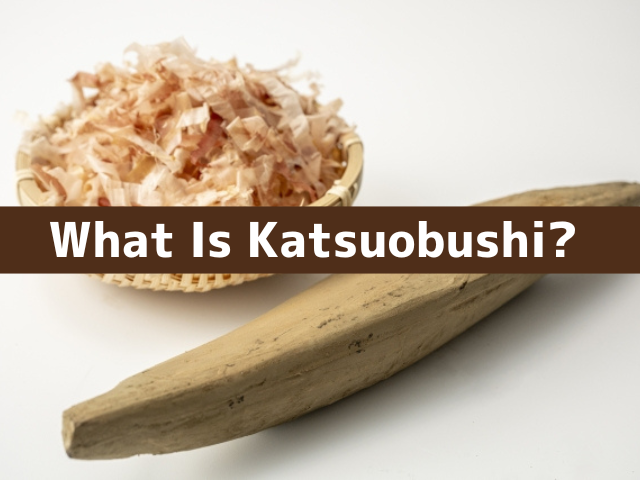
Understanding katsuobushi helps explain why Japanese cooking often depends not on heavy seasoning, but on carefully prepared ingredients that build aroma and umami beneath the surface.
Quick Summary
- Katsuobushi is made from bonito, usually skipjack tuna, that is cooked, smoked, dried, and sometimes aged with mold.
- It may be sold as a hard dried block or as thin shaved flakes.
- Katsuobushi is one of the main ingredients used to make Japanese dashi.
- It provides aroma, savory depth, and inosinate, an important umami compound.
- The flakes are also used as toppings for tofu, okonomiyaki, takoyaki, vegetables, and other dishes.
- Not all katsuobushi is fermented: everyday arabushi is smoked and dried, while honkarebushi undergoes additional aging with mold.
What Is Katsuobushi?
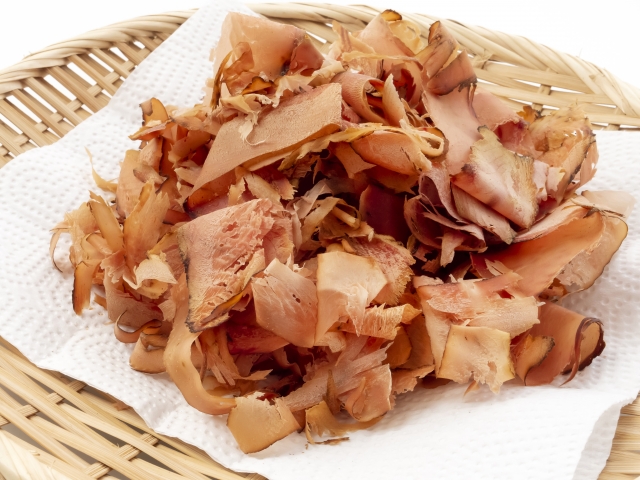
Katsuobushi is a preserved food made from bonito, a tuna-like fish known in Japanese as katsuo. It is created through repeated simmering, smoking, drying, and sometimes fermentation, producing one of the most concentrated sources of umami in Japanese cuisine.
The finished ingredient may be shaved into thin flakes or sold as a hard block. In either form, it adds aroma, savory depth, and complexity to Japanese cooking, especially when used in dashi.
Although the flakes may seem light and delicate, the original block of katsuobushi is extremely hard. That contrast between fragile appearance and intense concentration is part of what makes it so distinctive.
How Katsuobushi Is Made
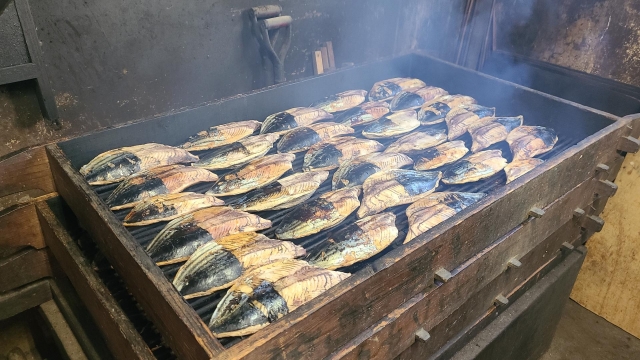
Bonito is repeatedly smoked to remove moisture and concentrate flavor during katsuobushi production.
Making katsuobushi is a long and highly specialized process. Bonito is first filleted and simmered to cook the flesh. The bones are then removed, and the fish is smoked repeatedly over wood fires.
After smoking, the fish is dried. In more refined versions, it may also go through a further aging process involving mold and repeated drying. Over time, moisture is removed, the texture becomes extremely dense, and the flavor grows more concentrated.
This process preserves the fish, reduces excess fat, and creates the clean aroma and strong umami that make katsuobushi so important in Japanese food. Even before you taste it, katsuobushi already reflects a great deal of patience and craftsmanship.
For a full look at the production process, see How Katsuobushi Is Made (And Why It’s Compared to Cheese).
Why Is Katsuobushi So Hard?
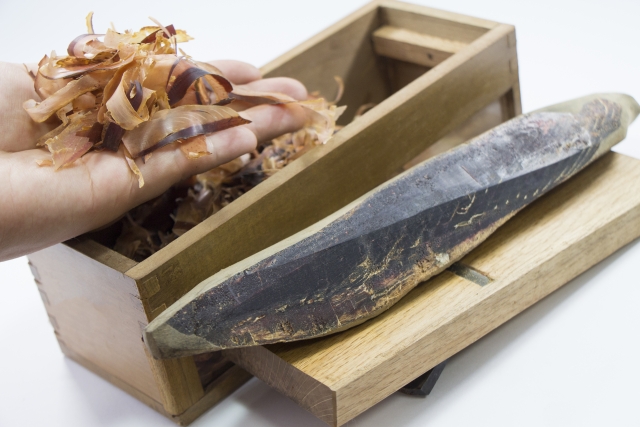
Before packaged flakes became common, katsuobushi was shaved by hand using a wooden tool called a kezuriki.
Katsuobushi becomes extremely hard because so much water is removed during smoking, drying, and aging. What remains is a dense block of concentrated protein, aroma, and flavor.
This hardness is not simply a curiosity. It is part of what makes katsuobushi practical and effective. It keeps well, stores flavor in a compact form, and releases its taste quickly when shaved into thin flakes and added to hot liquid.
Traditionally, households and restaurants shaved katsuobushi from a solid block using a special tool called a kezuriki. Today, most people buy pre-shaved flakes, but the image of shaving katsuobushi by hand still represents an older Japanese kitchen culture in which flavor was built from raw ingredients rather than ready-made packets.
Why Katsuobushi Matters in Dashi
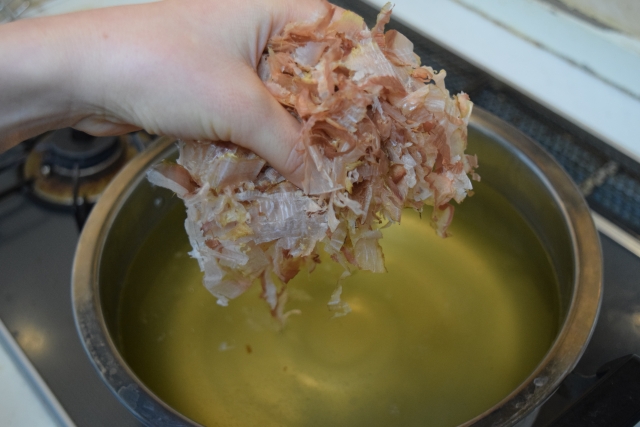
When steeped briefly in hot liquid, katsuobushi releases aroma and inosinate, a key umami compound.
Katsuobushi is one of the most important ingredients in Japanese dashi. When steeped in hot liquid, it releases inosinate, one of the major compounds associated with umami.
On its own, katsuobushi already creates rich flavor and a distinctive smoky aroma. But when combined with kombu, which contains glutamate, the result becomes much stronger. This pairing is one of the clearest examples of umami synergy in Japanese cuisine.
Because of this, katsuobushi plays a central role in dishes such as miso soup, noodle broths, dipping sauces, and many simmered foods. It does not usually dominate the dish by itself. Instead, it helps build the hidden structure of flavor underneath everything else.
To see this pairing in a classic broth, read What Is Awase Dashi?.
For a practical example of how katsuobushi is used in broth-making, see How to Make Ichiban Dashi Step by Step (And Why It Works).
Katsuobushi as a Topping
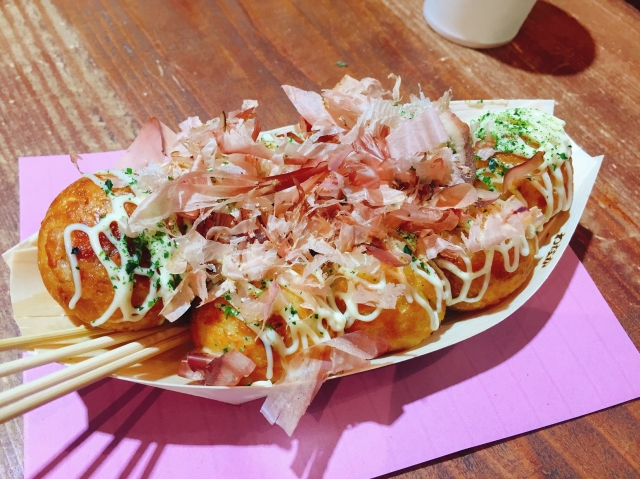
Katsuobushi flakes appear to move on hot dishes like takoyaki because steam lifts the extremely thin flakes.
Outside soup stock, katsuobushi is also widely used as a topping. Thin flakes are often sprinkled over tofu, takoyaki, okonomiyaki, vegetables, and many simple home dishes.
When placed on hot food, the flakes often appear to move. For people seeing it for the first time, this can be surprising or even strange. In reality, the movement is simply caused by heat and air currents acting on the extremely thin flakes.
As a topping, katsuobushi adds aroma, savory depth, and extra umami even in small amounts. It can make a very plain dish feel more complete without covering up the original ingredients.
Different Forms of Katsuobushi
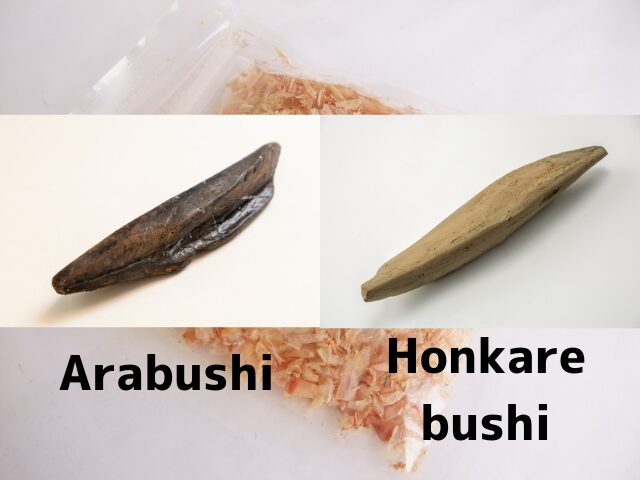
Arabushi is the smoked form of katsuobushi, while honkarebushi is further aged with mold to refine the flavor.
Not all katsuobushi is exactly the same. Some versions are more strongly smoked and more robust in flavor, while others are further aged and refined for a cleaner aroma.
One of the highest-quality forms is honkarebushi, which goes through repeated drying and aging with mold. This produces a more polished flavor with less excess fat and a clearer finish. By contrast, more everyday products are made for convenience and strong flavor rather than maximum refinement.
In ordinary cooking, most people encounter katsuobushi as pre-shaved flakes. But behind those flakes is a wide range of techniques, grades, and culinary purposes.
Other Types of Japanese Bushi
Katsuobushi is the most famous type of Japanese dried fish block, but it is not the only one. Japan also uses other kinds of bushi made from fish such as mackerel, sardines, and related species.
These ingredients are often used in noodle broths, dashi blends, and regional cooking to create stronger or more complex flavors. In that sense, katsuobushi is best understood not as an isolated ingredient, but as the most famous member of a broader Japanese tradition of concentrated fish-based seasonings.
Katsuobushi and Japanese Food Culture
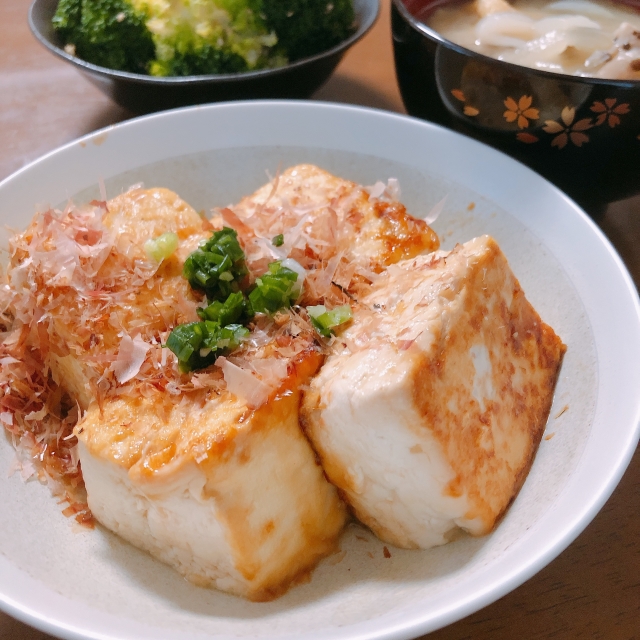
Katsuobushi reflects several important qualities of Japanese food culture: preservation, concentration of flavor, and respect for technique. It transforms an ordinary fish into a long-lasting ingredient with remarkable culinary value.
It also shows how Japanese cooking often builds flavor not by adding many strong seasonings, but by refining a few essential ones with great care. A small amount of katsuobushi can shape the entire character of a dish.
In that sense, katsuobushi is not just a seasoning or garnish. It is one of the core building blocks of Japanese taste.
FAQ
What is katsuobushi made from?
Katsuobushi is made from bonito, usually skipjack tuna. The fish is prepared, heated, smoked, and dried. Some varieties are also aged with mold before being shaved into thin flakes.
Is katsuobushi the same as bonito flakes?
Katsuobushi is commonly translated as bonito flakes, but the Japanese term can also refer to the dried fish block before it is shaved. The thin packaged flakes used for dashi and toppings are forms of shaved katsuobushi.
Why is katsuobushi important in Japanese cooking?
Katsuobushi provides aroma, savory depth, and umami. It is one of the main ingredients used to make dashi, the stock that supports the flavor of miso soup, noodle broth, simmered dishes, and many other Japanese foods.
What is the difference between katsuobushi and kombu?
Katsuobushi is made from dried and smoked fish, while kombu is a type of kelp. They produce different kinds of umami and are often combined in awase dashi to create a fuller flavor.
Why do katsuobushi flakes move on hot food?
The flakes are extremely thin and light. Heat, steam, and moving air cause them to curl and shift, making them appear to dance on dishes such as okonomiyaki and takoyaki.

