
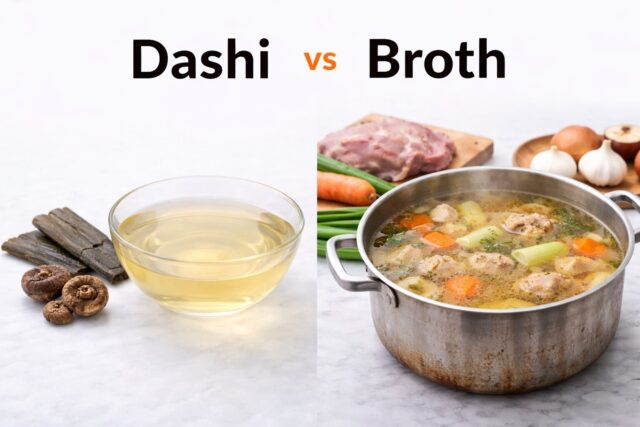
Dashi is often translated into English as “broth” or “stock.”
That translation is useful, but it can also create confusion.
Dashi performs a similar role in cooking. It forms the flavor foundation of soups, noodles, simmered dishes, sauces, and many other foods. However, it is usually made from different ingredients and creates a different kind of depth.
Typical Japanese dashi is made from kombu, katsuobushi, niboshi, dried shiitake, or a combination of these. Many familiar Western broths and stocks are made by simmering meat, bones, vegetables, and aromatics.
This does not mean Japanese cooking is always light or Western cooking is always rich. Both traditions contain delicate broths and hearty soups.
Still, comparing typical dashi with meat- or bone-based broth helps explain an important difference:
Dashi can make food taste deeply savory without adding much fat, thickness, or heaviness.
Quick Summary
- Dashi is often translated as “broth” or “stock,” but neither word describes it perfectly.
- Dashi is usually made from kombu, dried fish, or dried shiitake and is valued mainly for umami.
- Broth and stock are commonly made from meat, vegetables, or bones and may add more fat, gelatin, or body.
- Dashi and Western broth can sometimes replace each other, but the flavor and texture of the finished dish will change.
Dashi, Broth, and Stock at a Glance
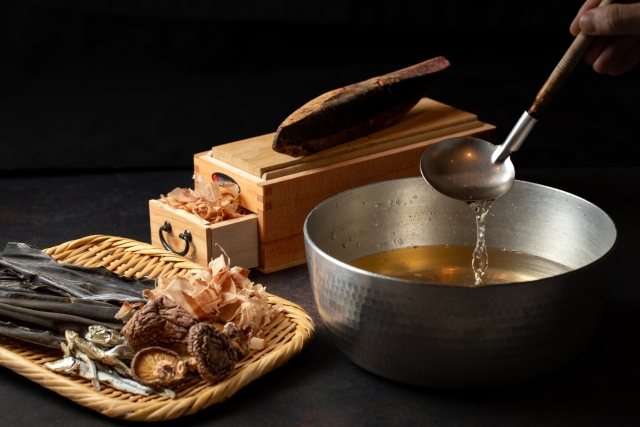
Typical dashi is made from dried ingredients such as kombu, katsuobushi, niboshi, and dried shiitake rather than meat or bones
Dashi, broth, and stock all provide a flavorful liquid foundation, but they do not always perform that role in the same way.
Dashi is usually made from dried or preserved ingredients such as kombu, katsuobushi, niboshi, and dried shiitake. It is light in texture and mainly valued for its umami.
Broth is commonly made from meat, vegetables, herbs, or aromatics. It may be used as a cooking liquid or served as part of a soup.
Stock is often made with bones and simmered for longer. Collagen released from the bones may become gelatin, giving the liquid more body.
The difference between broth and stock is not always strict. In everyday English, the two words are frequently used interchangeably.
Dashi overlaps with both categories, but neither word fully describes it.
How Is Dashi Made Differently?
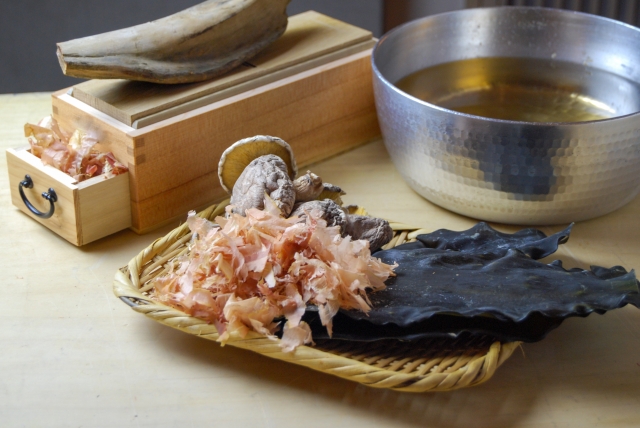
Dashi is often made from concentrated ingredients such as kombu, katsuobushi, and dried shiitake rather than meat or bones.
Many stocks gain flavor through long simmering.
Meat, bones, vegetables, and aromatics gradually release flavor into the water. Bones may also release collagen, which becomes gelatin and gives the liquid a fuller texture.
Dashi usually relies on ingredients that have already been concentrated before they enter the pot.
Kombu is dried kelp. Katsuobushi is bonito that has been cooked, smoked, and dried. Niboshi are dried small fish. Dried shiitake develop a stronger aroma and savory character through dehydration.
Because these ingredients are already concentrated, dashi does not always require hours of cooking.
Kombu may be soaked and then heated gently. Katsuobushi is often added briefly before the liquid is strained. Dried shiitake can release much of their flavor through soaking.
The goal is not necessarily to extract everything possible.
Too much heat or excessive cooking can introduce bitterness, strong odors, or unwanted cloudiness. In dashi making, knowing when to stop can be as important as knowing when to begin.
How Does Dashi Taste Different?
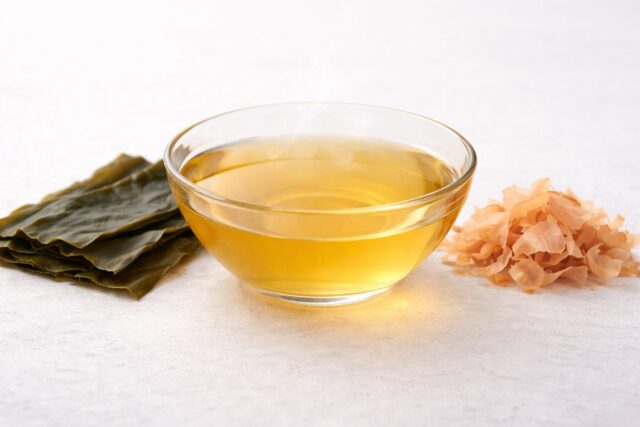
Kombu and katsuobushi are often combined in awase dashi, creating a stronger savory effect through umami synergy.
Dashi often tastes lighter than meat broth, but light does not mean weak.
Its depth comes mainly from umami.
Kombu contains glutamate. Katsuobushi and niboshi contain inosinate. Dried shiitake contain guanylate. When different sources of umami are combined, their savory effect can become stronger.
This is why awase dashi, commonly made with kombu and katsuobushi, can taste remarkably full despite containing almost no fat.
Meat or bone stock develops depth in another way. It may carry roasted flavors, vegetable sweetness, fat, and gelatin created through longer cooking.
This reveals an important distinction:
Umami and richness are not the same thing.
A liquid can feel rich because it contains fat or gelatin. It can also taste deeply savory while remaining thin and light.
Dashi is especially good at creating the second experience.
Is Dashi Always Clear?
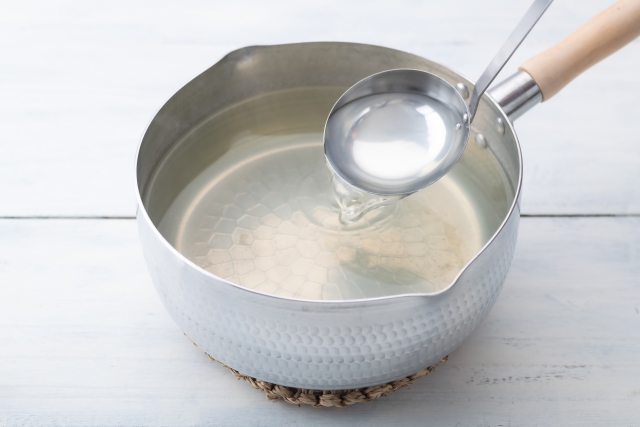
Clear dashi can look almost transparent, although its color and clarity vary depending on the ingredients and preparation method.
Dashi is often described as clear, but its appearance depends on the ingredients and method.
Kombu and katsuobushi dashi may be pale and transparent. Niboshi dashi can have a stronger color or slight cloudiness. Dried shiitake dashi is often amber or brown.
A clear appearance is especially valued in dishes such as osuimono, a traditional clear soup.
The dashi does not hide the ingredients in the bowl. Their color, shape, and arrangement remain visible and become part of the experience.
Clarity is therefore not simply decorative. It allows the liquid to contribute flavor without visually overwhelming the food.
Can Dashi Replace Broth or Stock?
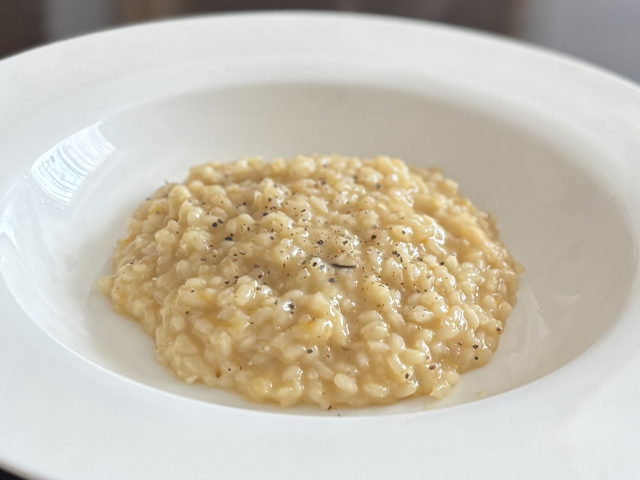
Dashi can be used in place of broth in dishes such as risotto, creating a lighter result with a stronger emphasis on umami.
Dashi can replace broth in some recipes, but the result will not be identical.
It can work well in:
- soups
- rice dishes
- risotto
- vegetable dishes
- seafood dishes
- light sauces
- braised foods
Using dashi will usually make the dish lighter and more focused on umami. It may lose some of the roasted flavor, sweetness, fat, or body provided by meat broth.
Dashi is less suitable when the original recipe depends on gelatin or substantial richness.
For example, a sauce built around reduced meat stock needs more than savory flavor. It also depends on the body and texture created by bones and long cooking. Ordinary dashi cannot provide the same result by itself.
Can Broth Replace Dashi?
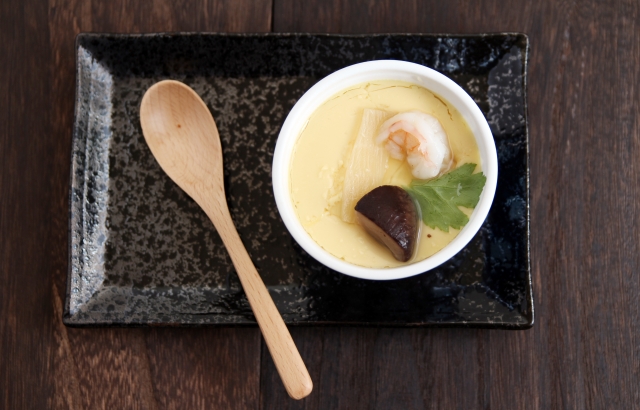
Chawanmushi depends on the gentle flavor of dashi, so replacing it with chicken or vegetable broth can noticeably change the dish.
Chicken or vegetable broth can add liquid and savory flavor to a Japanese recipe, but it changes the overall taste.
Chicken broth naturally introduces the taste of chicken. Commercial vegetable broth may contain onion, celery, carrot, herbs, or spices that are not normally prominent in traditional dashi-based dishes.
That difference may not matter in casual home cooking. It becomes more noticeable when dashi is meant to be the main flavor.
Examples include:
- osuimono
- chawanmushi
- clear noodle broths
- lightly seasoned nimono
- simple dipping sauces
Miso soup may seem more forgiving because miso already has a strong flavor. However, dashi still gives it an important savory foundation.
Miso and water alone can taste flat. A strongly flavored Western broth may taste too busy. Dashi gives the soup depth while leaving room for the miso.
Why Dashi Matters in Japanese Cooking
Japanese cuisine does not depend on only one type of cooking liquid.
Japan also has rich chicken, pork, fish, and vegetable broths. Ramen alone includes soups ranging from light and clear to thick and intensely flavored.
Still, dashi became especially important because it works naturally with many ingredients central to traditional Japanese meals.
How Dashi Supports Other Ingredients
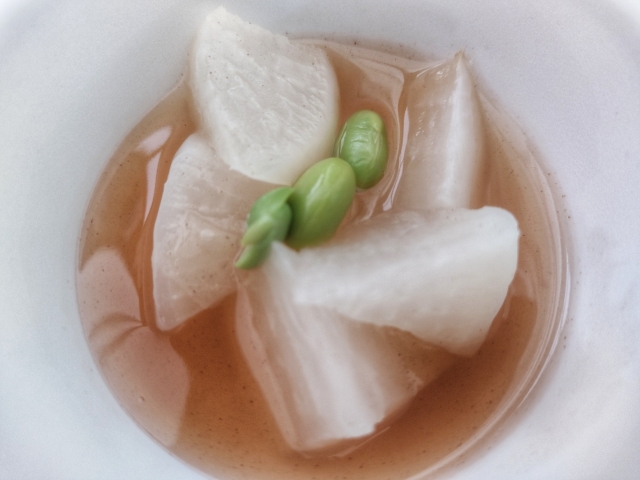
Dashi adds gentle savory depth to simmered vegetables while allowing each ingredient to keep its own character.
Vegetables, tofu, fish, miso, and soy sauce can all benefit from added savory depth. At the same time, they do not always need a heavy broth to hold them together.
Dashi strengthens these foods while allowing them to remain recognizable.
A vegetable can still taste like itself. Tofu can retain its gentle character. The aroma of miso can remain clear. Fish does not have to compete with a strongly flavored meat base.
The diner may not immediately identify kombu or katsuobushi. Instead, dashi works in the background, making miso soup more satisfying, giving simmered vegetables greater depth, and helping soy sauce and mirin feel more balanced.
What Dashi Reveals About Japanese Cooking
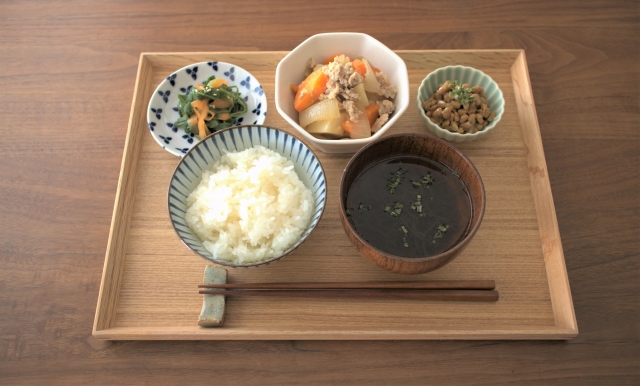
Dashi often works quietly across a Japanese meal, connecting soups, simmered dishes, and side dishes without becoming the dominant flavor.
This is part of what makes dashi culturally interesting.
In Japanese cooking, an ingredient does not always need to dominate the dish to be important. Its role may be to connect flavors, create balance, or leave room for something else.
Dashi is therefore more than a Japanese version of stock.
It shows a way of building flavor in which depth does not always require heaviness, and importance does not always require dominance.
Author’s Note
Growing up in Japan, I never thought of dashi as unusual.
It was simply part of everyday food — present in miso soup, noodle dishes, and simmered vegetables without demanding attention.
Only when I began explaining Japanese cooking in English did I realize how difficult the word was to translate. “Broth” and “stock” are close enough to be useful, but they can suggest flavors and textures that dashi does not necessarily have.
What interests me most now is how much dashi can change a dish while remaining in the background.
A good dashi does not need to taste forceful. It gives the other ingredients room to remain visible, recognizable, and balanced.
That quiet role may be one of the reasons it became so important in Japanese cooking.
FAQ
What is the difference between broth and stock?
The distinction is not always strict. Broth is generally associated with meat, vegetables, or both and may be served as part of a soup.
Stock is often made with bones and may contain more gelatin and body. In everyday English, however, the two words are frequently used interchangeably.
Can I use dashi instead of chicken broth?
Yes, dashi can work in soups, rice dishes, vegetable dishes, seafood dishes, and light sauces.
The result will usually be lighter and more focused on umami, without the chicken flavor, fat, or body of chicken broth.
Can I use chicken or vegetable broth instead of dashi?
You can use them in casual home cooking, but the finished dish will taste different.
Chicken broth adds chicken flavor, while commercial vegetable broth may contain herbs and aromatic vegetables that compete with Japanese seasonings.
What can I use if I do not have dashi?
Kombu dashi or dried shiitake dashi are simple alternatives if those ingredients are available.
Instant dashi is also widely used in Japanese homes.
Plain water may work in strongly seasoned dishes, but the result will usually have less depth.
Is dashi vegetarian or vegan?
Some types are. Kombu dashi and dried shiitake dashi can be vegan.
Dashi made with katsuobushi, niboshi, or other fish products is not vegetarian or vegan.
Related Reading on YUNOMI
Start Here
Understanding Dashi
- What Is Umami?
- What Is Umami Synergy?
- Why Is Japanese Dashi So Clear?
- Why Does Dashi Taste So Strong Even Though It Looks Light?

