
For a complete guide to Japanese dashi, see:
How to Make Dashi at Home.
Why Japanese Dashi Stays Clear
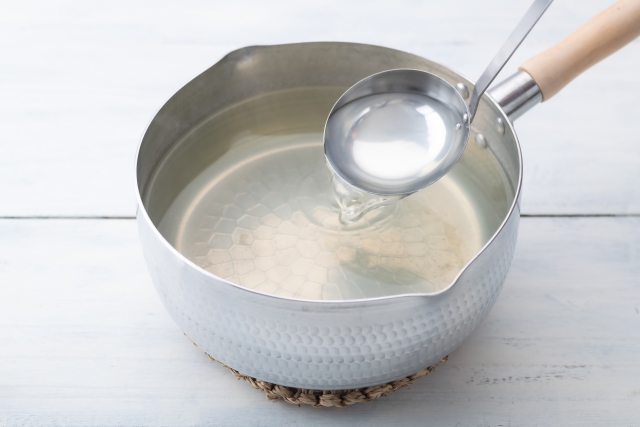
Well-prepared dashi is known for its clear, golden appearance.
The clarity of dashi begins with the logic of extraction. Ingredients such as kombu (dried kelp), katsuobushi (smoked bonito flakes), and dried shiitake mushrooms release their umami compounds relatively quickly when placed in water. There is no need for hours of simmering to get what the cook is after.What takes hours in long-cooked Western stocks is the breakdown of proteins, fats, and structural compounds from meat and bones. That process creates body and richness, but it also increases cloudiness. dashi avoids that process almost entirely.
Its extraction is short, targeted, and gentle. The goal is to draw out umami while leaving behind anything that would cloud, bitter, or weigh down the liquid.
In practice, this usually means that kombu is soaked in cold water or heated slowly to around 60°C (140°F) before being removed. Katsuobushi is then steeped briefly in hot water, often for less than a minute, before the liquid is strained.
The result is a broth that remains clear because the conditions that normally create cloudiness were never allowed to develop in the first place.
The Details That Protect Clarity
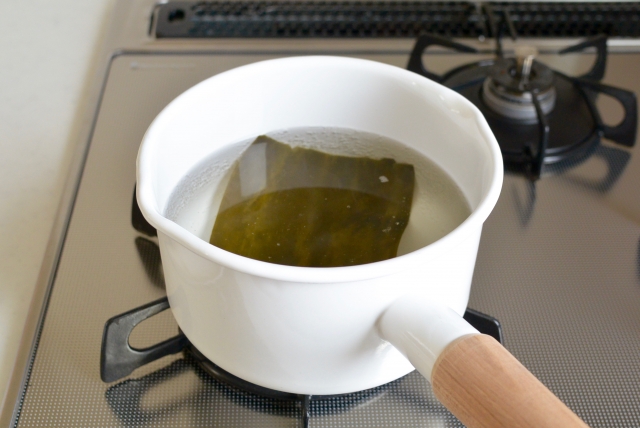
Clarity in dashi is not automatic. It depends on several details that are easy to overlook.
Temperature is especially important. If kombu is left in boiling water, it begins releasing excess mucilage and tannins, which cloud the liquid and dull the clean aroma that good kombu dashi should have. This is why many recipes remove kombu just before the water reaches a full boil.
Katsuobushi is similarly sensitive. If it steeps for too long, or at too high a temperature, it can add a slightly fishy, astringent quality that works against the clean finish dashi is meant to deliver. The timing is not a suggestion. It is part of the method.
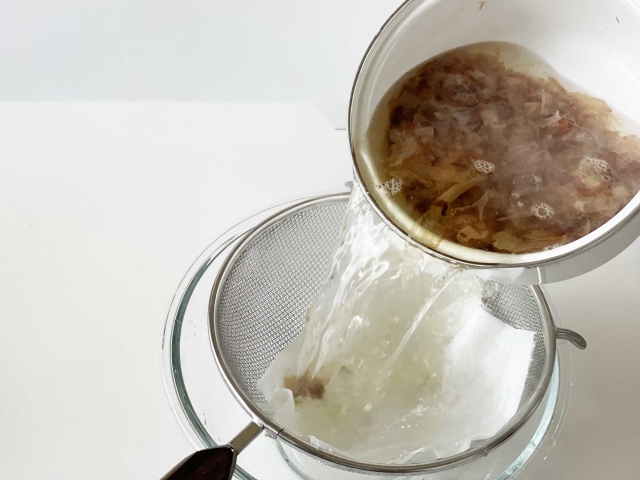
Careful straining helps keep dashi clear and free of cloudiness.
Straining also matters. After the ingredients have released their flavor, the broth is passed through a fine strainer or cloth to remove any remaining particles. Done properly, the liquid can be clear enough to see through.
Water quality plays a quieter but real role as well. Much of Japan has naturally soft water, with relatively low levels of calcium and magnesium. This allows delicate compounds to extract smoothly without the mineral interference that harder water can introduce. It is one reason dashi developed the way it did in Japan.
For the classic method that best shows this precision, see What Is Ichiban Dashi? and How to Make Ichiban Dashi Step by Step.
What Clarity Means in Japanese Cuisine
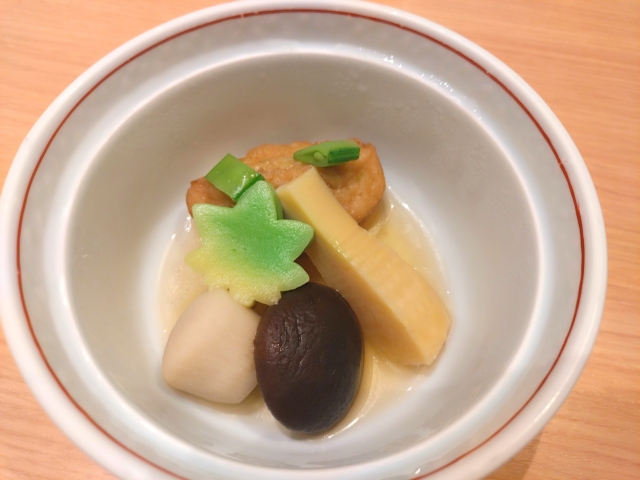
Many traditional Japanese dishes rely on the clarity and balance of dashi rather than heavy sauces.
Keeping dashi clear is not only a technical choice. It is also connected to how Japanese cuisine understands the experience of eating.
In Japan, food is often appreciated visually before it is tasted. The color, arrangement, and overall appearance of a dish prepare the diner for what is to come. In traditional settings such as kaiseki, presentation is considered with as much care as flavor.
A clear broth supports that sensibility directly. It allows the ingredients inside the bowl to remain visible: the white edge of tofu, a curl of yuzu peel, the bright green of a seasonal herb. Nothing is hidden behind opacity.
In that sense, a transparent broth is not merely a neutral background. It acts like a stage for the ingredients, allowing their color, shape, and seasonal character to remain fully present.
There is also a magnifying effect. When the broth is truly clear, small details become more noticeable. The surface of a leaf, the angle of a cut vegetable, or the light passing through the bowl all contribute to the experience. Cloudiness softens those details.
For this reason, a murky broth can suggest more than a visual difference. In traditional Japanese cooking, it often implies that something in the extraction went wrong: the temperature rose too high, the ingredients stayed in too long, or the process became too aggressive. Cloudiness can read as imprecision.
The Role Dashi Plays in Japanese Cooking
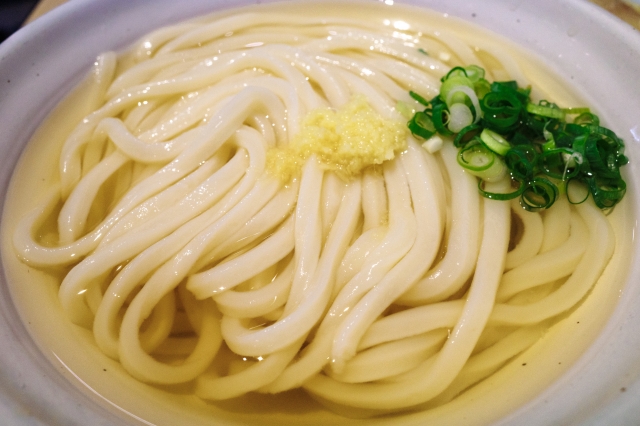
Udon soup is one of the most familiar examples of clear dashi used in everyday Japanese cooking.
Clarity also makes sense when we consider what dashi is actually for. Unlike many Western broths, which are often served as soups in their own right, dashi rarely takes center stage.
It forms the base of miso soup, simmered dishes, chawanmushi, noodle broths, and delicate clear soups such as suimono. Its role is to support the dish by adding savory depth without pulling attention away from the ingredients it carries.
A cloudy or heavy base would work against that purpose. It would compete with the ingredients instead of supporting them. The visual lightness of dashi reinforces its culinary role: it does its work quietly.
Clarity Through Restraint, Not Filtration
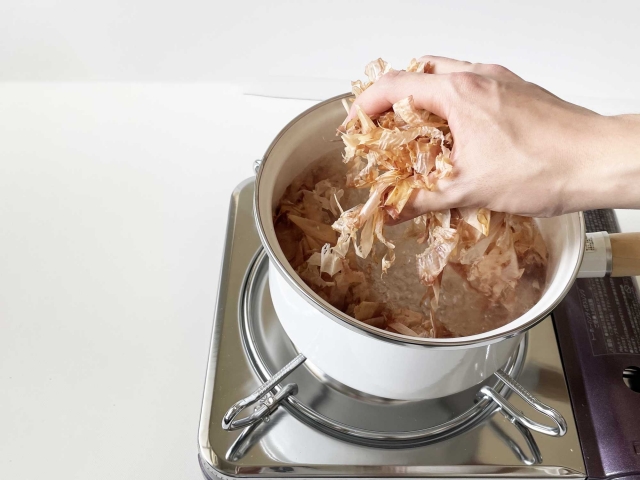
One useful way to understand dashi is this: it is not filtered to become clear. It is born clear.
In many Western stocks, cooks expect impurities to rise during long simmering and skim them away as the broth develops. Dashi works according to a different logic. By controlling temperature and timing from the beginning, the cook prevents cloudiness from developing in the first place.
Its clarity is therefore a consequence of restraint. The extraction stops at the point where the broth has what it needs and no more. That idea is deeply embedded in Japanese cooking. What the cook chooses not to extract can be just as important as what is extracted.
A good dashi does not impress through force. It creates space for the ingredient, the season, and the appearance of the dish to remain clear and present.
For a broader comparison with Western stock, see Dashi vs Broth: Why Japanese Dashi Is Different from Western Stock.
Author’s Note
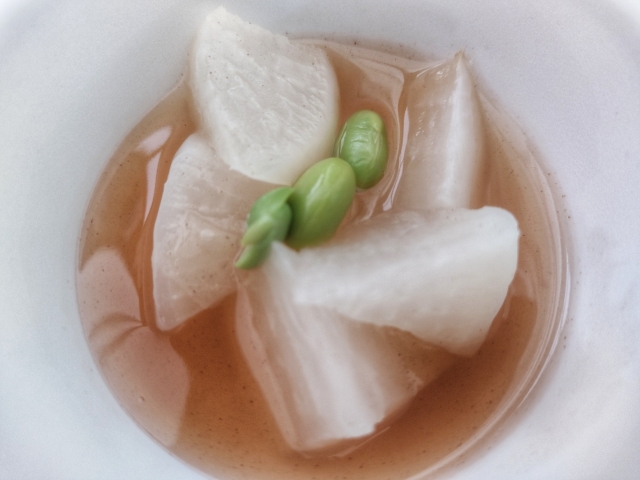
Delicate simmered dishes highlight the clarity and subtle flavor of dashi.
Even for Japanese people, a well-made bowl of clear soup can still feel a little surprising. The broth looks almost empty, and then the umami arrives, and you realize there was nothing missing at all.
What I find most distinctive about dashi is that its restraint is the technique, not the limitation of it. Japanese cooking often values what is left out as much as what is added, and dashi may be one of the clearest expressions of that idea.
Frequently Asked Questions

Why is Japanese dashi so clear?
Because it is extracted quickly and gently, without the long simmering that causes cloudiness. By controlling temperature and timing carefully, the cook prevents fats, proteins, and particles from dissolving into the liquid in the first place.
Why do Japanese cooks avoid boiling dashi?
Boiling kombu draws out excess mucilage and tannins that cloud the liquid and dull its clean flavor. Boiling katsuobushi too long can introduce astringency and a fishy quality that works against the clear finish dashi is supposed to have.
Does a clear broth mean weak flavor?
Not at all. Dashi contains concentrated umami compounds such as glutamate, inosinate, and guanylate, which create real savory depth without any visual heaviness.
Why does Japanese cuisine value clear broth so highly?
Because visual presentation is an important part of the eating experience in Japanese food culture. A clear broth keeps the colors and textures of ingredients fully visible, and its transparency signals precision and care in the cooking process.
Is dashi ever served on its own?
Sometimes, especially in delicate clear soups such as suimono served in traditional or kaiseki settings. More often, however, dashi is used as the foundation of other dishes rather than consumed alone.
Does water type affect dashi clarity?
Yes. Japan’s naturally soft water helps extract umami compounds cleanly without the mineral interference that harder water can introduce. In places with harder water, cooks sometimes adjust technique or use filtered water.
Related Reading on YUNOMI
Start here:
How to Make Dashi at Home
Foundations
- What Is Dashi? The Japanese Cooking Foundation Built on Umami
- What Is Umami? The Savory Taste That Defines Japanese Cooking
- What Is Umami Synergy?
Ingredients
Types of Dashi
- What Is Kombu Dashi?
- What Is Awase Dashi?
- What Is Ichiban Dashi?
- What Is Niban Dashi?
- What Is Niboshi Dashi?
How to Make
Understanding & Comparison
- Why Is Japanese Dashi So Clear?
- Why Does Dashi Taste So Strong Even Though It Looks Light?
- Dashi vs Broth

