
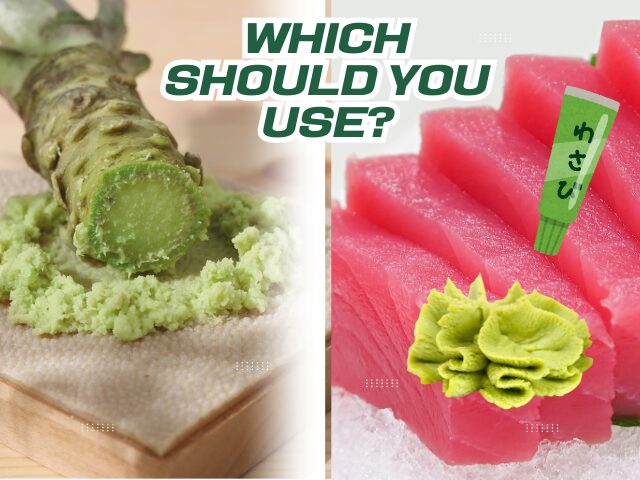
Most “wasabi” served around the world (and often even in Japan) is not real wasabi.
What many people recognize as wasabi is usually a horseradish-based substitute made to imitate the heat and color of Japan’s native plant.
Real wasabi (hon-wasabi) is rare, expensive, and highly perishable—so rare that many visitors to Japan never taste it freshly grated.
This guide explains what real wasabi is, why substitutes dominate, how the flavors differ, and how to experience authentic hon-wasabi for yourself.
What Is Real Wasabi?

Real wasabi requires cool temperatures and constant flowing water to grow.
Real wasabi, called hon-wasabi (Wasabia japonica), is a perennial plant native to Japan. It thrives in cool, pristine mountain streams where water runs constantly and cleanly.
Because it requires stable temperatures (roughly 13–16°C year-round), steady flow, shade from trees, and mineral-rich water, cultivation is difficult and site-limited.
The edible part is the rhizome, which is grated right before serving.
The flavor is delicate and complex: a bright, nasal heat that rises quickly and fades, leaving subtle sweetness and fresh green notes.
Unlike chili heat that lingers, wasabi’s pungency is quick and clean.
What Most People Eat: The Common Substitute
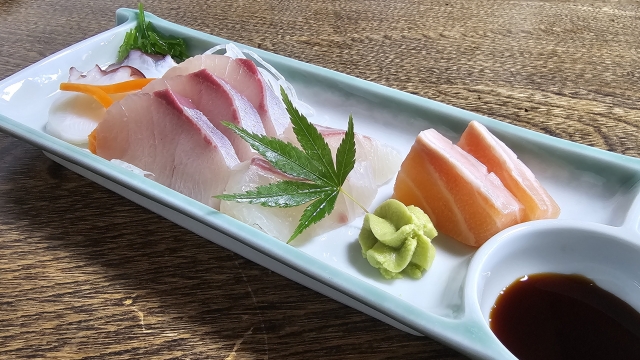
Outside of high-end sushi restaurants, the “wasabi” you meet is usually a substitute made from horseradish, mustard, starch, oil, and green coloring.
It’s affordable, shelf-stable, and easy to mass-produce, which explains its global spread in supermarkets, casual restaurants, and takeaway packs.
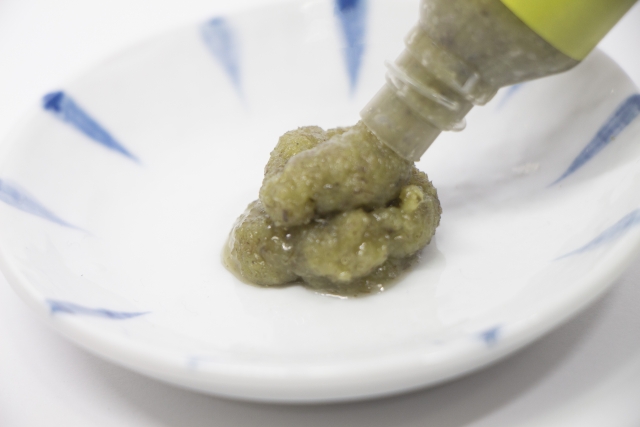
Convenient tube wasabi is also a household staple in Japan.
Many tubes are primarily horseradish-based; some premium products include a portion of real wasabi for aroma, along with stabilizers to maintain texture and color.
Why Real Wasabi Is Rare and Expensive
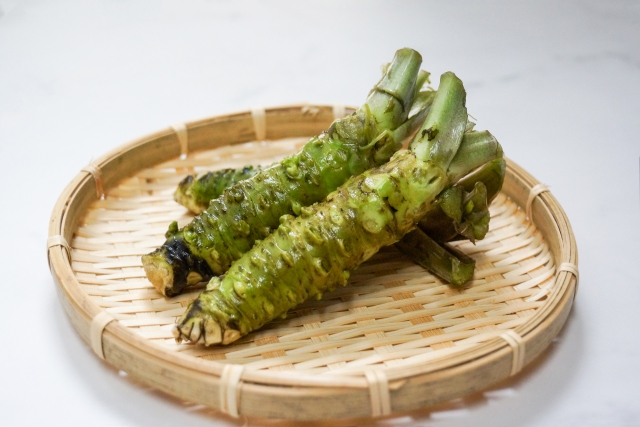
The rhizome is the edible part of the wasabi plant.
Real wasabi is rare for practical reasons—not hype.
- Strict growing conditions: cool, clean running water; narrow temperature range; partial shade; stable climate.
- Slow growth: the rhizome typically takes over two years to mature.
- Limited regions: only certain valleys and spring-fed farms can sustain it.
- Gentle handling: freshness and aroma drop if the rhizome is damaged or stored poorly.
These constraints drive costs up, so authentic wasabi appears mainly in specialty grocers and high-end sushi or kaiseki restaurants.
Real vs. Fake: How Do They Taste Different?
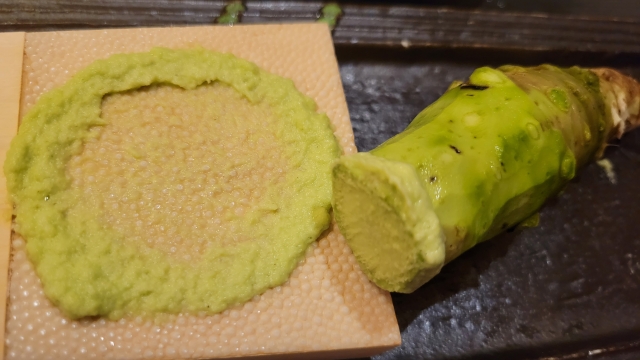
Freshly grated wasabi releases aroma and heat that fade within minutes.
Aroma & heat
Freshly grated real wasabi releases volatile compounds that create a clean, quick heat and a fresh green aroma. The intensity rises and then subsides within minutes, allowing the fish or dish to shine. Horseradish-based substitutes often taste harsher and can linger longer, with a simpler profile.
Mouthfeel
Properly grated real wasabi forms a smooth, slightly viscous cream. Substitutes tend to be pastier or grainier depending on thickeners.
Aftertaste:
Real wasabi leaves a brief, sweet echo; substitutes can feel more blunt or one-note.
Wasabi and Food Safety: Why It Became Essential to Sushi
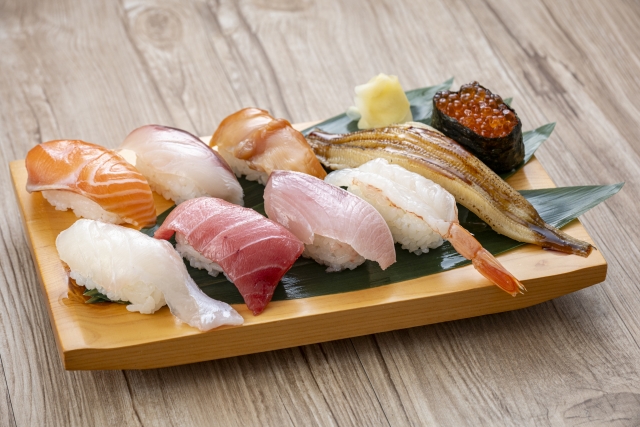
Wasabi’s punch comes largely from allyl isothiocyanate, formed when enzymes act on broken plant cells. This compound contributes to the familiar nose-tingling sensation and is associated with antimicrobial properties.
Historically, sushi chefs valued wasabi for helping counter fishy odors and supporting freshness—one reason it became inseparable from sushi culture.
Wasabi in Everyday Japanese Life
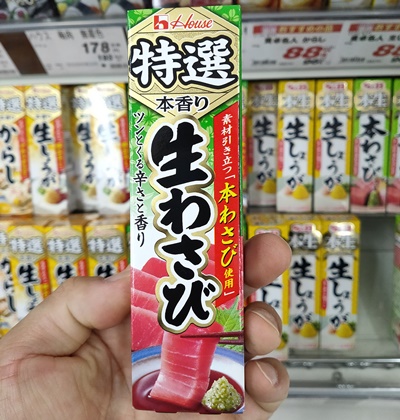
In daily home cooking, convenience wins.
Tube wasabi—usually horseradish-based—is inexpensive, easy to store, and perfectly suitable for sushi, sashimi, soba dipping sauces, and quick sauces.
Premium tubes that include real wasabi exist, but they cost more and still contain stabilizers to keep texture consistent.
How to Experience Real Wasabi
Where to find it

High-end sushi restaurants often grate real wasabi to order.
Look for high-end sushi bars, kaiseki restaurants, traditional inns near wasabi-growing regions, or specialty grocers. If you purchase a fresh rhizome, plan to use it quickly.
How to grate
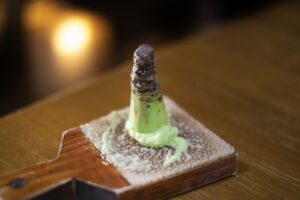
Sharkskin graters produce a finer paste and better aroma than metal graters.
Gently wash the surface, trim petioles, and grate from the fresher stem end in small circles. Traditional oroshi graters include sharkskin boards prized for ultra-fine paste; high-quality ceramic or fine-tooth plastic also works well.
Timing matters
The best flavor peaks within minutes of grating.
Prepare only what you’ll eat and refresh as needed.
Pairing tip
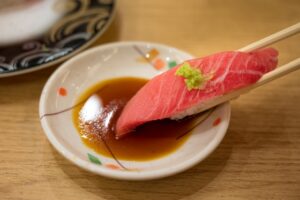
In traditional sushi culture, real wasabi is placed directly on the fish to preserve its aroma.
For the clearest aroma, place wasabi directly on the fish rather than mixing it into soy sauce.
It also complements soba, chilled tofu, roast beef, fatty pork, and even creamy cheeses where the clean heat cuts richness.
Creative Ways to Use Wasabi
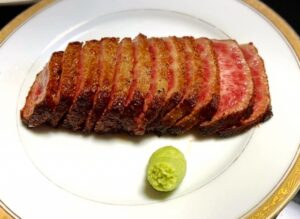
Wasabi is also used with meat dishes to refresh the palate and reduce heaviness.
- Wasabi soy dip: Stir a small amount into soy sauce; keep it light to avoid drowning the aroma.
- Wasabi mayo: Blend with mayonnaise for sandwiches, karaage, or fries.
- Dressings: Whisk into vinaigrettes for salads or cold noodle bowls.
- Meat & seafood: Add a touch to steak, pork cutlets, or grilled fish to lift fattiness.
- Surprising pairings: Try with avocado, cream cheese, or cucumber for fresh contrast.
Real Wasabi, Fake Wasabi—Which Should You Use?
For everyday meals, substitutes are perfectly practical—affordable, available, and consistent. But when you want to savor nuance, fresh real wasabi is transformative: a brief, elegant heat that highlights rather than overwhelms.
If you’re curious about wasabi’s broader cultural roots, read our overview here: Wasabi: History, Culture, and the Science Behind Japan’s Iconic Spice.
FAQ About Real and Fake Wasabi

Is most “wasabi” in sushi restaurants fake?
Often, yes—especially at casual restaurants. Many places use a horseradish-based substitute because real wasabi is expensive and loses aroma quickly.
Does fake wasabi taste the same as real wasabi?
Not really. Real wasabi has a fresh green aroma and a quick, clean heat that fades fast, while substitutes can feel harsher and more one-note.
Is real wasabi spicy like chili?
No. Wasabi’s heat is nasal and short-lived, not a lingering burn like chili peppers.
How can I tell if it’s real wasabi?
Look for “hon-wasabi” or “wasabi rhizome” wording, ask whether it is freshly grated, and check whether the restaurant grates it to order.
Is tube wasabi real wasabi?
Most tube wasabi is primarily horseradish-based. Some premium tubes contain a portion of real wasabi for aroma, but they still rely on stabilizers for shelf life.
Why must real wasabi be grated fresh?
The signature aroma peaks within minutes of grating, then fades. Fresh grating is what makes hon-wasabi taste noticeably different.
Final Thoughts
Wasabi is more than a “hot green paste.” Understanding the difference between real and fake wasabi helps you choose the right option for the moment—practical substitutes for everyday use, and authentic hon-wasabi when you want a pure, fleeting burst of flavor.
The next time you enjoy sushi, take a moment to ask: is this the real thing?
Author’s Note
In everyday life in Japan, tube wasabi is what most of us reach for. It’s quick, familiar, and its sharp heat rushes straight through the nose—instant and unmistakable.
But freshly grated hon-wasabi tells a different story. As you bring it closer, a green, almost leafy aroma rises first. The heat follows softly, spreading gently before disappearing, leaving behind a faint sweetness rather than pain.
On YUNOMI, I try to translate that everyday realism—convenience versus craft—into cultural context that makes sense outside Japan.

 is not real wasabi. What many people)