
The technique is built on restraint. Gentle heat, precise timing, careful straining. The goal is not to pull everything out of the ingredients, but to stop at exactly the right moment, while the broth is still clear and the aroma is still intact. That discipline is what makes ichiban dashi both difficult to make well and deeply characteristic of Japanese cooking.
Ichiban dashi works against that instinct. It is made quickly, handled gently, and removed from the heat before the ingredients have given up everything they contain. And yet the flavor can stop you mid-sip, because what remains is so clean and so precisely itself.
In simple terms, ichiban dashi is the first and most refined extraction of Japanese broth, designed to capture delicate aroma and balanced umami while keeping the liquid clear. Understanding it opens the door to one of the most important ideas in Japanese cooking: restraint is not a limitation. It is a technique, and the flavor it produces is something force simply cannot replicate.
Start here:
Japanese Dashi Guide
What Is Ichiban Dashi?
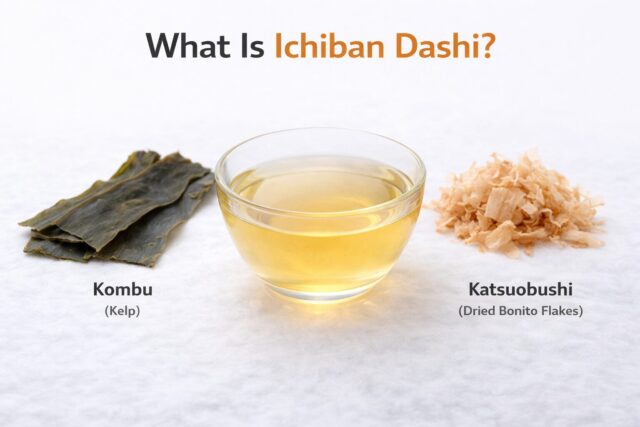
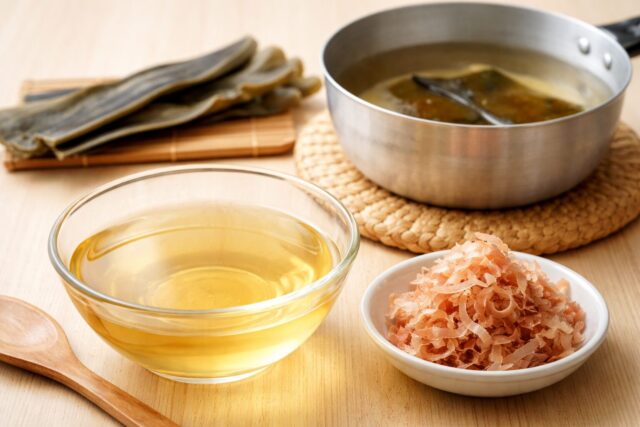
Ichiban means “first,” and ichiban dashi is the first broth drawn from kombu and katsuobushi before the ingredients have been pushed for deeper extraction. Because it is the first extraction, it captures what comes most cleanly and willingly: fragrant compounds, dissolved umami, and a refined savory depth.
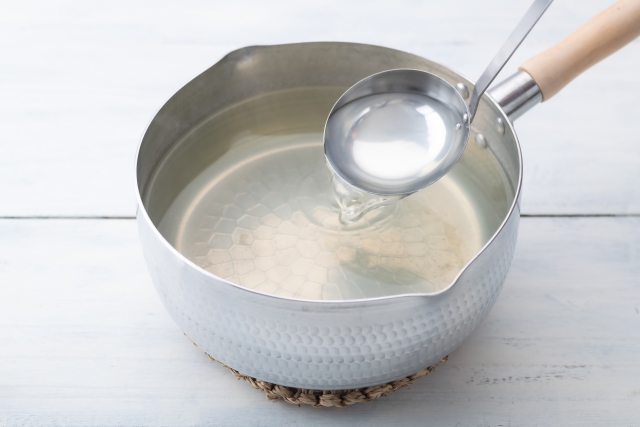
The resulting liquid is almost transparent — pale, light, sometimes with the faintest amber tint. It does not look heavy, yet the flavor is real and unmistakable.
That contrast is one of ichiban dashi’s defining characteristics. Its clarity is not evidence of weakness. It is evidence that nothing unwanted has entered the liquid.
How Ichiban Dashi Is Made
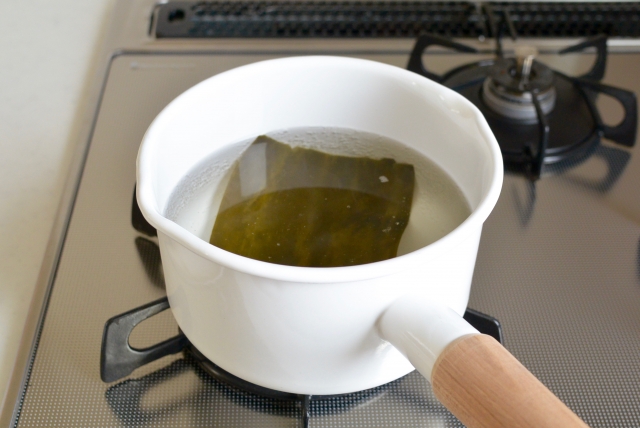
Kombu resting in water to release umami
The process is deliberate at every step, and that deliberateness is the point.
Kombu goes into cold water first, often soaking for anywhere from 30 minutes to several hours before any heat is applied. This allows glutamate — kombu’s primary umami compound — to dissolve slowly and cleanly into the water before stronger extraction begins.
The pot is then heated gently. Many cooks remove the kombu at around 60°C (140°F), before the water reaches a full boil. This is the stage where kombu gives its best flavor without beginning to release the harsher compounds that boiling can draw out.
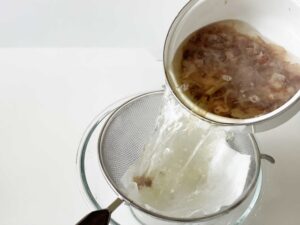
Straining the broth to keep it clear
Katsuobushi goes in next, added to the hot liquid and left to steep only briefly. Then it is strained, usually through cloth or a fine mesh, and crucially, it is not squeezed. Pressing the flakes would extract more liquid, but it would also push out astringency and cloudiness that have no place in ichiban dashi.
The whole process is relatively brief. That brevity is not laziness. It is precision.
The Two Waves of Flavor
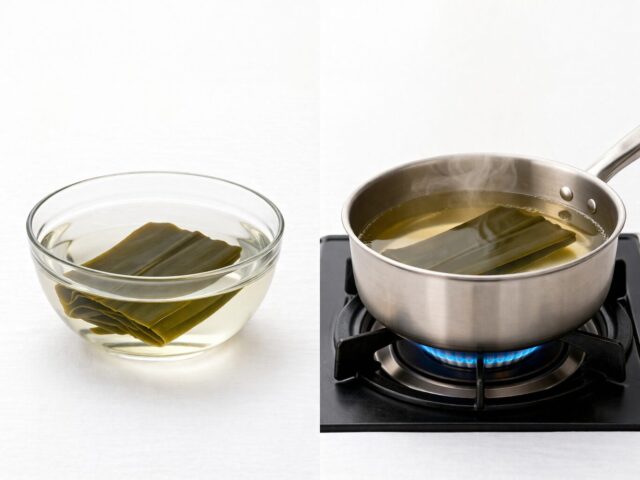
Two stages of flavor extraction: soaking and gentle heating
There is an interesting chemical logic behind the way ichiban dashi develops flavor.
The first wave begins during the soak itself. Glutamate and other readily available compounds dissolve passively into the cold water over time, so the broth is already developing umami before the pot even goes on the stove.
The second wave comes as the temperature rises. Gentle warming encourages additional compounds to release from within the kombu’s structure, including more umami and some of the aromatic molecules that give kombu its clean, oceanic character.
What emerges is a broth that develops flavor twice, gently, in two different ways. That layered process helps explain why ichiban dashi can taste more complex than its short preparation time might suggest.
Why Boiling Is Avoided
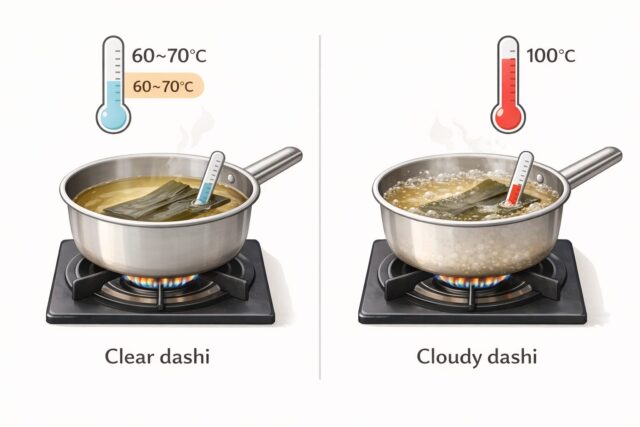
Gentle heating keeps dashi clear, while boiling can cloud the broth
The most important technical point in making ichiban dashi is why boiling is avoided. It is not a minor preference. It changes the nature of the broth itself.
Boiling kombu can release compounds that do not belong in ichiban dashi: excess mucilage that clouds the liquid, bitterness that roughens the taste, and volatile aroma compounds that disappear under too much heat. The clean, almost sweet oceanic quality of kombu is precisely what can be lost.
Katsuobushi is similarly sensitive. Steeped gently, it contributes inosinate and a delicate smoky fragrance. Left in boiling water, it begins giving up fishier and harsher compounds that pull the broth away from the refinement ichiban dashi is trying to preserve.
Japan’s naturally soft water also plays an important supporting role.
Soft water allows delicate flavor compounds to dissolve more cleanly, without the mineral interference that harder water can introduce. That is one reason this style of extraction developed so naturally in Japan.
The Role of Kombu and Katsuobushi
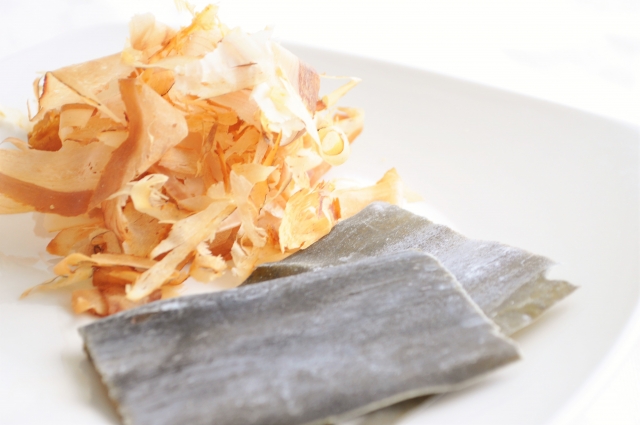
Kombu and katsuobushi combine to create deeper umami
Ichiban dashi is often praised for aroma, but it is not merely fragrant water. It also carries clear and balanced umami.
Kombu contributes glutamate, while katsuobushi contributes inosinate. When these two compounds are present together, they amplify one another significantly, producing a deeper savory taste than either ingredient could create alone. This is one reason the combination became so central to Japanese cooking.
At the same time, ichiban dashi expresses this umami synergy in a refined form. The extraction is gentle enough to preserve clarity and fragrance while still creating real depth.
What Ichiban Dashi Is Used For
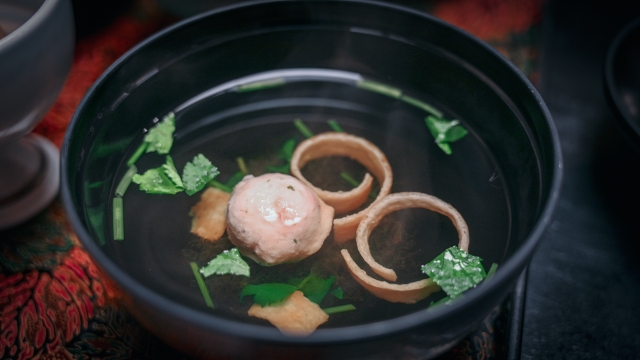
Suimono highlights the clarity of ichiban dashi
Ichiban dashi belongs to the more refined end of Japanese cooking — the register where the broth itself is something to notice, not just a background liquid that carries other flavors.
The clearest example is suimono, clear soup served in traditional and kaiseki contexts. In a bowl of suimono, almost everything is intentional: the transparency of the broth, the fragrance that rises when the lid is lifted, and the arrangement of the garnish. The broth is not only a vehicle for ingredients. It is part of the experience itself.
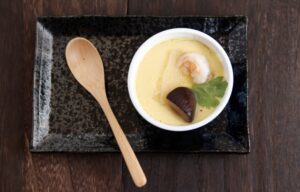
Chawanmushi depends on delicate dashi flavor
Chawanmushi, the silky steamed egg custard, is another dish that depends on ichiban dashi. The broth shapes the custard from within. Use something too assertive, and the delicacy of the dish disappears.
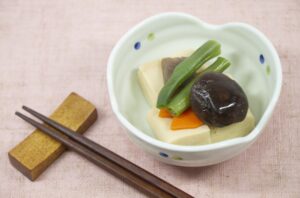
Koya-dofu absorbs the flavor of dashi
Lightly simmered dishes such as kōya-dōfu or pale-colored vegetables also rely on ichiban dashi for the same reason. The broth provides depth without disturbing the appearance or character of what is being cooked.
Ichiban Dashi vs Niban Dashi
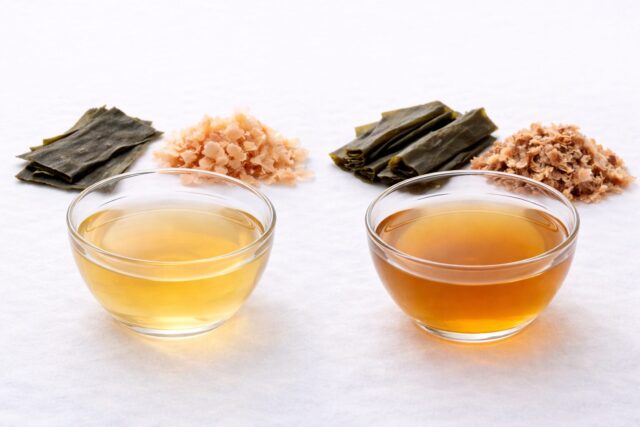
Ichiban dashi is lighter and clearer than niban dashi
Ichiban dashi becomes even clearer when compared with niban dashi, the second extraction made from the same kombu and katsuobushi.
Once ichiban dashi is prepared, those ingredients are often used again. They go back into fresh water and are simmered more aggressively to draw out what the first extraction deliberately left behind. The result is niban dashi: fuller, rougher, and better suited to everyday dishes such as miso soup, simmered foods, and noodle broths.
These are not simply better and worse versions of the same thing. They are different extractions designed for different purposes. Ichiban dashi captures what is most delicate. Niban dashi captures what is most durable.
Together, they express an important idea in Japanese cooking: use ingredients fully, but let each stage offer what it does best.
Author’s Note
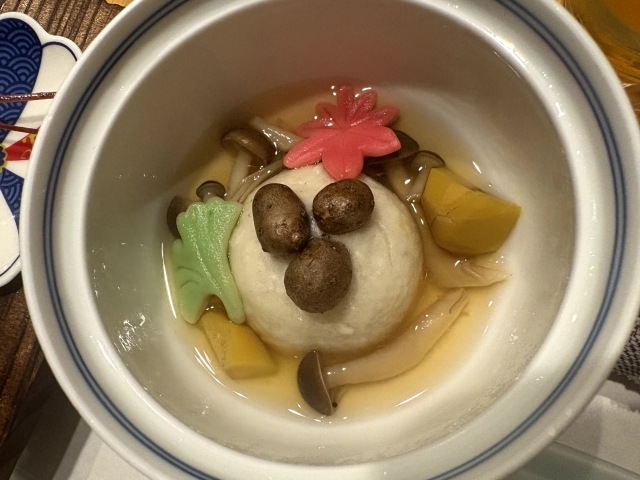
Simmered dishes often use dashi as their foundation
The moment ichiban dashi truly clicked for me was not when I made it myself. It was during a kaiseki-style meal in Kyoto, when a bowl of clear soup arrived and I lifted the lid. The broth was almost colorless, and yet the aroma that rose from it was unforgettable.
That same contrast appears in dishes like clear soup or lightly simmered foods such as kōya-dōfu. The color may look pale, but the umami is remarkably deep. That gap between appearance and flavor is one of the quiet wonders of Japanese cuisine.
Making ichiban dashi is only the beginning. The harder skill is using it in a finished dish without losing what makes it special — preserving that fragrance, not letting heat or strong seasoning erase it. That is the part skilled cooks know how to protect.
Frequently Asked Questions

What does ichiban dashi mean?
Ichiban means “first” in Japanese. Ichiban dashi is the first broth extracted from kombu and katsuobushi — the initial extraction that captures the most delicate flavors before the ingredients are spent.
Why is ichiban dashi so clear?
Boiling is avoided, the katsuobushi is not squeezed, and the broth is strained carefully. Its clarity comes from controlled extraction — keeping unwanted particles, fats, and harsh compounds out of the liquid from the start.
Is ichiban dashi strongly flavored?
It is deep rather than heavy. The umami is clear, but it does not hit with the force of a long-simmered stock. Ichiban dashi is built for balance and refinement.
Why are kombu and katsuobushi used together?
Kombu contains glutamate and katsuobushi contains inosinate. When these two compounds appear together, they amplify one another and create deeper umami than either ingredient could produce alone.
What happens to the kombu and katsuobushi after ichiban dashi is made?
They are often used again to make niban dashi, a second extraction that draws out the deeper flavor remaining in the ingredients.
Related Reading on YUNOMI
Start Here
Core Concept
What Is Dashi?
What Is Umami?
What Is Umami Synergy?
Ingredients
What Is Kombu?
What Is Katsuobushi?
What Are Dried Shiitake?
Related Dashi Types
What Is Awase Dashi?
What Is Niban Dashi?
What Is Kombu Dashi?
Practical Guide
How to Make Ichiban Dashi Step by Step (And Why It Works)
Understanding & Comparison
Why Is Japanese Dashi So Clear?
Why Does Dashi Taste So Strong Even Though It Looks Light?
Dashi vs Broth

