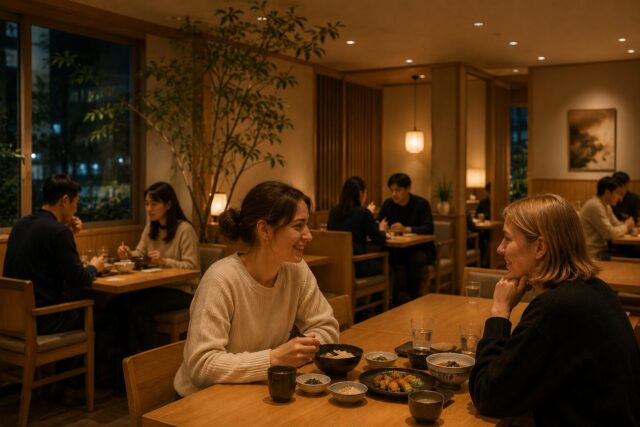
For some foreign visitors, this atmosphere feels immediately relaxing. For others, it can initially feel tense or strangely silent. In reality, however, this quietness is rarely about strict rules or emotional distance. It reflects broader Japanese ideas about shared space, smooth social flow, and low-pressure hospitality.
Quietness in Japan Often Means Comfort, Not Tension
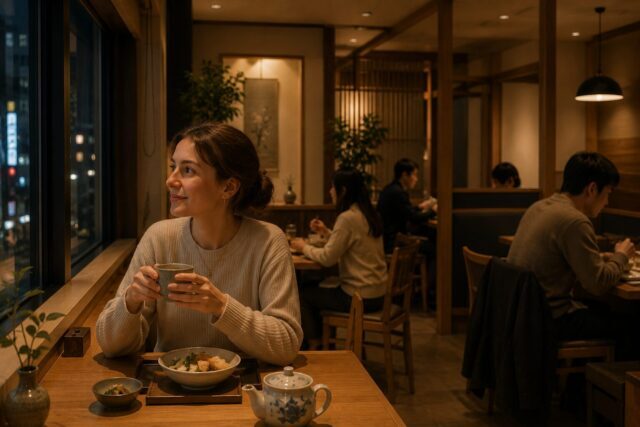
For many people in Japan, a quiet restaurant does not feel awkward or tense. Instead, a calmer atmosphere often allows customers to focus more on their food, conversation, and surroundings.
In some countries, a quiet restaurant can feel uncomfortable — associated with poor atmosphere, lack of energy, or social awkwardness.
In Japan, many people experience quiet dining spaces quite differently. A calm atmosphere is often associated with relaxation, consideration for others, and the ability to focus on food and conversation without distraction.
Rather than filling every moment with noise or activity, many Japanese restaurants simply aim to create an environment where customers can settle in comfortably.
Japanese Restaurants Are Often Treated as Shared Spaces
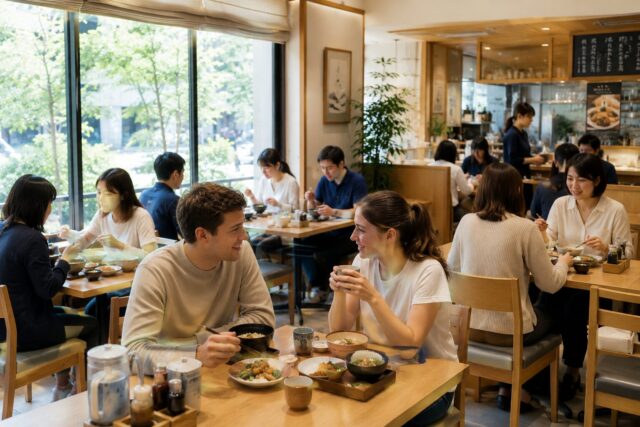
Multiple groups can enjoy conversation at the same time while naturally sharing the space around them. This balance between activity and consideration is one reason many Japanese restaurants feel calm rather than noisy.
One reason many restaurants feel quieter in Japan is that customers tend to remain aware they are sharing the space with others nearby.
This does not mean customers must stay silent — friends, families, and coworkers still laugh, talk, and enjoy themselves. But many people naturally try to avoid becoming excessively loud or disruptive within a shared environment.
The unspoken goal is often simple: enjoy yourself without disturbing the experience of the tables around you.
This awareness of surrounding people is visible throughout Japanese daily life — on trains, in cafés, in waiting rooms, and on public transportation. Restaurant quietness is part of this same broader sensibility.
Pro Tip: A Good Rule Is to Match the Room
If you are unsure how loudly to speak, the simplest approach is to match the atmosphere around you. If nearby tables are speaking softly, lowering your voice slightly will feel natural.
If the restaurant is lively and energetic, you can relax and enjoy yourself more freely.
Most Japanese restaurants are not expecting silence — only a reasonable awareness of the shared space.
Staff Also Help Maintain the Calm Atmosphere
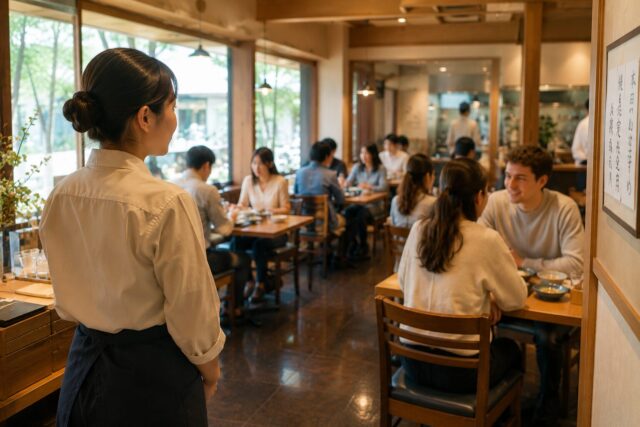
Japanese restaurant staff often remain attentive in the background rather than repeatedly approaching tables. This service style helps create a calmer atmosphere with fewer interruptions while still ensuring customers can receive assistance whenever needed.
Japanese restaurant staff also contribute to the quieter atmosphere through their service style. Rather than repeatedly checking on customers with frequent table visits, many staff members remain attentive in the background and only approach when genuinely needed.
In many restaurants, customers request assistance themselves — by pressing a call button or saying "Sumimasen" — which means staff do not need to constantly move between tables asking questions.
The result is a dining environment with fewer interruptions, less background noise, and a smoother overall flow. In many ways, the quiet atmosphere is not accidental — it is built into how restaurant service itself operates.
Background Music Is Often Softer Than Expected
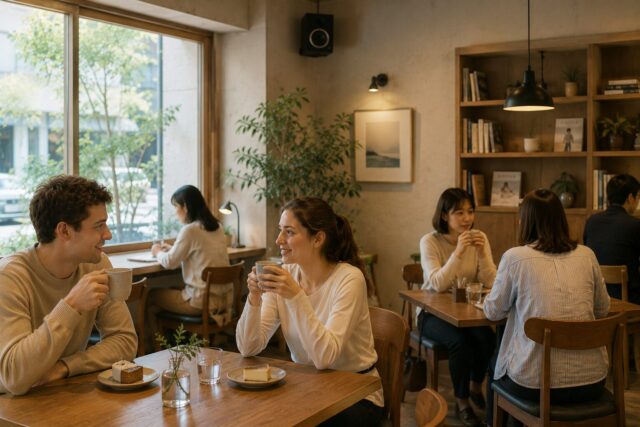
In many Japanese cafés and restaurants, background music is present but rarely takes center stage. The goal is often to support conversation and atmosphere rather than compete with them.
Another detail many visitors notice is that background music in Japanese restaurants tends to be quieter than they might expect.
Rather than dominating the atmosphere, music is usually intended to support the environment without overpowering conversation.
In cafés and traditional restaurants especially, softer music helps preserve a calm and relaxed mood.
This can feel noticeably different for visitors accustomed to places where music, conversation, and staff activity all compete for attention simultaneously.
Not All Japanese Restaurants Are Quiet
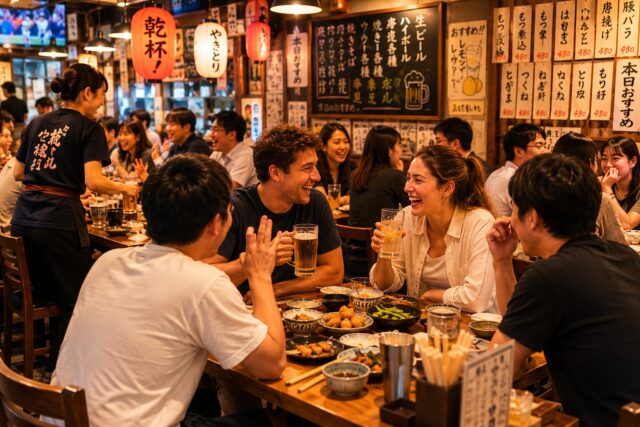
While many Japanese restaurants feel calm and subdued, lively izakaya and drinking establishments can be energetic, noisy, and highly social. Both atmospheres are equally part of Japan’s dining culture.
Not every restaurant in Japan is quiet. Busy izakaya, ramen shops, festival food stalls, and some casual chain restaurants can be extremely lively and loud.
Groups drinking together after work may speak freely, laugh enthusiastically, and generate plenty of noise — and this energy is very much part of the experience in those settings.
Loud greetings of "Irasshaimase!" also contribute to the sense of movement and excitement in these spaces.
Japanese dining culture includes both quiet spaces focused on calm enjoyment and lively spaces designed for energetic social gatherings.
Traditional restaurants and cafés may emphasize unhurried conversation and careful attention to food, while izakaya often encourage relaxed drinking, laughter, and group interaction well into the evening.
The atmosphere shifts depending on the kind of experience the restaurant is trying to create. Quietness is one style among many — not a universal expectation.
The Quietness Is Usually Not Directed at You Personally
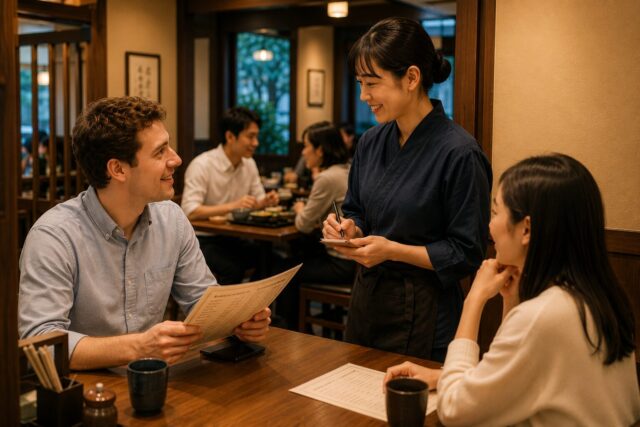
Many first-time visitors worry that a quiet restaurant atmosphere means they are being judged or expected to follow strict rules. In reality, most Japanese restaurants are welcoming and relaxed, and staff are usually happy to help whenever needed.
Some foreign visitors initially worry that a quiet restaurant atmosphere means they are being watched, judged, or expected to follow strict unspoken rules. In reality, most Japanese restaurants are far more relaxed than they may first appear.
Customers are generally free to enjoy themselves as long as they remain reasonably considerate of the shared environment around them.
The quieter atmosphere is usually not about pressure or formality — for many Japanese people, it simply feels more comfortable and less tiring than dining spaces filled with constant noise.
Quietness Reflects Broader Japanese Social Preferences
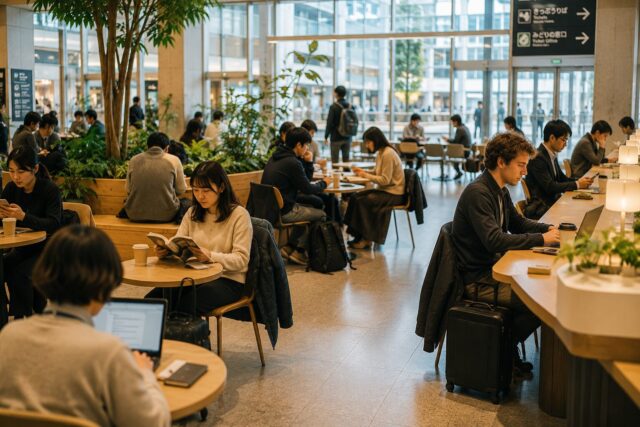
The calm atmosphere found in many Japanese restaurants reflects a broader habit of sharing public spaces considerately. People are generally free to relax as they wish while remaining aware of those around them.
The atmosphere found in many Japanese restaurants reflects broader cultural ideas about coexistence and social balance.
In densely populated cities where people constantly share public space, many Japanese people develop a natural awareness of how their own noise affects others nearby.
Many instinctively lower their voice when taking a phone call in a restaurant or on public transportation — stepping outside or calling back later rather than speaking loudly in a shared space.
The goal is usually not strict rule-following, but maintaining a comfortable atmosphere for everyone present.
This does not mean suppressing personality or emotion — rather, many people try to contribute to a shared environment where everyone can relax comfortably together.
Japanese restaurant quietness grows naturally from these expectations rather than from any written code of conduct.
FAQ
Why do Japanese restaurants feel quieter?
Many Japanese restaurants aim to maintain a calm atmosphere by minimizing unnecessary noise and staff interruption, and customers tend to naturally match the quieter environment around them.
Are customers expected to stay silent in Japanese restaurants?
No. Customers talk and enjoy themselves normally — but many people naturally avoid becoming excessively loud in shared spaces out of consideration for others nearby.
Why don't Japanese waiters interrupt customers often?
Many restaurants rely on customers to request assistance themselves using call buttons or by saying "Sumimasen." This reduces unnecessary interruption and keeps the atmosphere calmer overall.
Is quietness considered polite in Japan?
Often yes. A calmer atmosphere is frequently associated with consideration for others and comfortable coexistence in shared environments.
Are all Japanese restaurants quiet?
No. Izakaya, ramen shops, and festival-style restaurants can be very lively and energetic — and that liveliness is equally part of Japanese dining culture.
Why is the background music often quieter in Japan?
In many restaurants, music is intended to support the atmosphere gently rather than dominate it or compete with conversation.
Does quietness mean the atmosphere is unfriendly?
Usually not. In Japan, quieter spaces are typically considered relaxing and considerate rather than cold or unwelcoming.
Why do Japanese restaurants feel calmer than some Western restaurants?
Many Japanese restaurants emphasize smooth atmosphere, shared-space awareness, and low-interruption service rather than constant activity and interaction throughout the meal.
Related Reading on YUNOMI
- Japanese Restaurant & Hospitality Culture: Why Dining in Japan Feels So Different
- Why Don’t Japanese Waiters Interrupt Your Meal?
- Why Do Japanese Restaurants Call Out “Sumimasen” Instead of Waiting Quietly?
- Why Do Japanese Restaurants Often Have Small Tables?
- Why Do Japanese Restaurants Have So Many Counter Seats?

