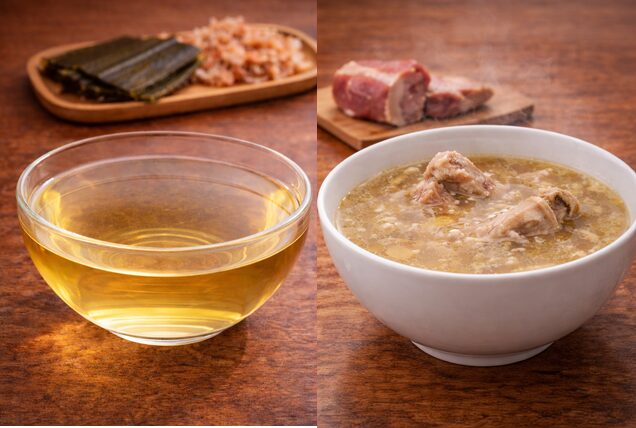
Understanding this contrast reveals something deeper about how different food cultures approach the very idea of flavor.
Start here:
Japanese Dashi Guide
Japanese dashi is clear because it is made through gentle extraction techniques that draw out umami while preventing particles from clouding the broth.
What Is the Difference Between Clear and Cloudy Broth?
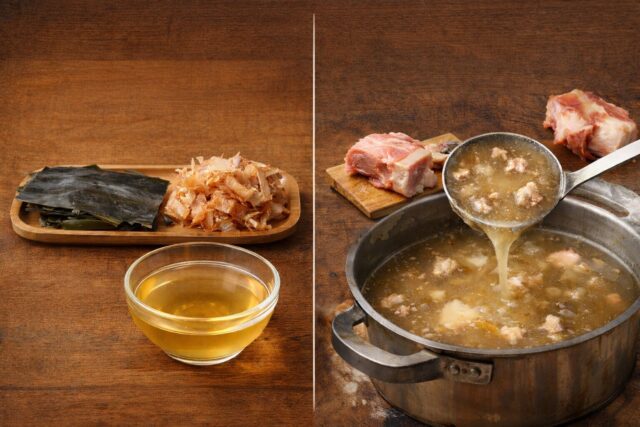
Japanese dashi made from kombu and katsuobushi compared with a heavily simmered Western meat broth.
The clarity of a broth depends largely on how ingredients are extracted and which components dissolve into the liquid.
Japanese dashi is made by briefly extracting umami from ingredients such as kombu (kelp) and katsuobushi (dried bonito flakes). These ingredients release flavor quickly without adding fat, collagen, or heavy proteins to the liquid.
Western broths, on the other hand, typically use bones, connective tissue, and long simmering times. These elements enrich the broth but also introduce particles and emulsified fats that give it a cloudy appearance.
Why Japanese Dashi Stays Clear
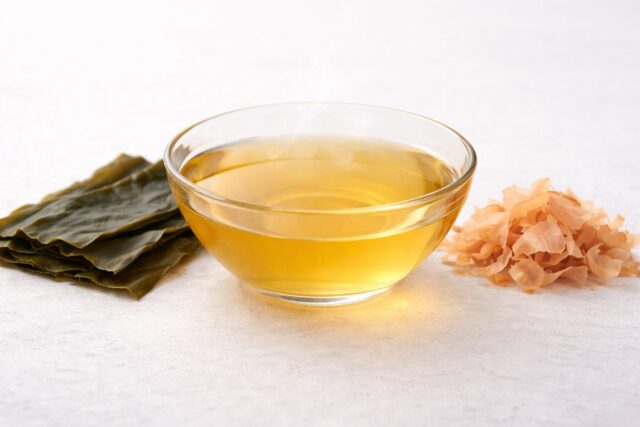
Gentle Extraction
Dashi is typically extracted over a short period of time. Kombu may be steeped in warm water, and katsuobushi is briefly added and then strained out. The goal is to dissolve umami compounds without breaking down the structure of the ingredients.
Boiling is generally avoided, as vigorous heat can release unwanted compounds that affect both flavor and clarity.
Ingredients That Release Clean Umami
The key ingredients in dashi release flavor molecules efficiently without introducing heavy particles.
- Kombu contains glutamate, one of the primary umami compounds.
- Katsuobushi contains inosinate, another important umami compound.
These compounds dissolve cleanly in water, allowing the broth to remain clear.
Techniques That Preserve Clarity
Traditional dashi preparation also emphasizes restraint and careful handling.
- Kombu is removed before the water reaches a full boil.
- Katsuobushi is steeped briefly and then gently strained.
- Agitation and excessive stirring are avoided throughout.
These techniques prevent fine particles from dispersing into the liquid.
Why Western Broth Becomes Cloudy
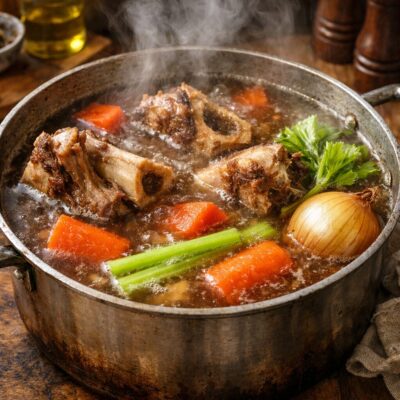
Western broths are often simmered with bones, vegetables, and fat to extract deep flavor.
Bones and Collagen
Western stocks often rely on bones and connective tissue. During long cooking, collagen breaks down into gelatin, giving the broth body and richness.
While this creates a satisfying mouthfeel, it also contributes to cloudiness.
Long Simmering
Western broths are typically simmered for hours. Over time, proteins, fats, and small particles disperse throughout the liquid.
These suspended particles scatter light, which is what makes the broth appear cloudy.
Flavor Built Through Accumulation
Western cooking often builds flavor through the gradual accumulation of ingredients. Bones, vegetables, herbs, and sometimes roasted elements slowly release their flavor into the liquid.
This approach prioritizes richness and depth over visual clarity.
Why Over-Extraction Makes Broth Cloudy
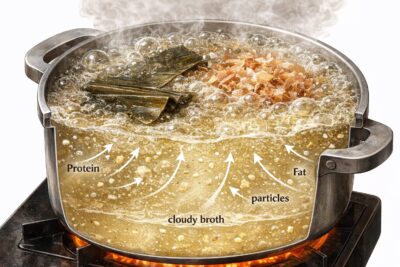
Cloudiness occurs when proteins, fats, and particles are released during intense boiling.
Cloudiness in broth often results from ingredients being extracted too aggressively.
When ingredients are boiled vigorously, proteins, fats, and microscopic particles break apart and spread throughout the liquid. These particles scatter light and create a cloudy appearance.
This process can also emulsify fats into the liquid, which further contributes to cloudiness.
For this reason, Japanese dashi preparation places great emphasis on gentle heat and minimal disturbance.
Why Clear Dashi Is Considered a Sign of Skill
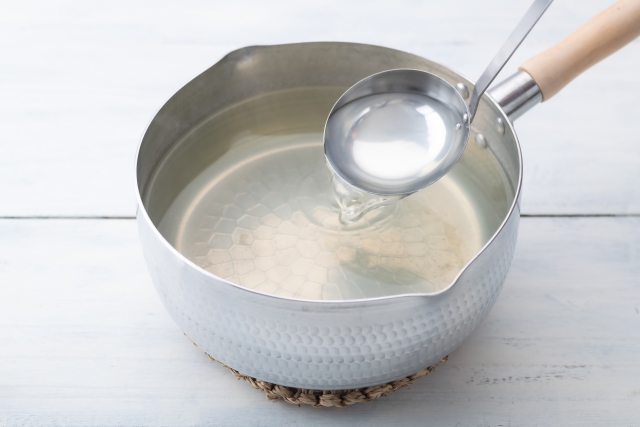
In traditional Japanese cooking, a clear broth is often regarded as a mark of technical skill.
Although making dashi may appear simple, achieving a perfectly clear broth requires careful control of temperature, timing, and ingredient handling.
If kombu is boiled for too long or katsuobushi is stirred too vigorously, fine particles can disperse into the liquid and cloud the broth.
Clarity, then, is a reflection of precision and restraint in cooking.
The Aesthetic Value of Clear Broth in Japanese Cuisine
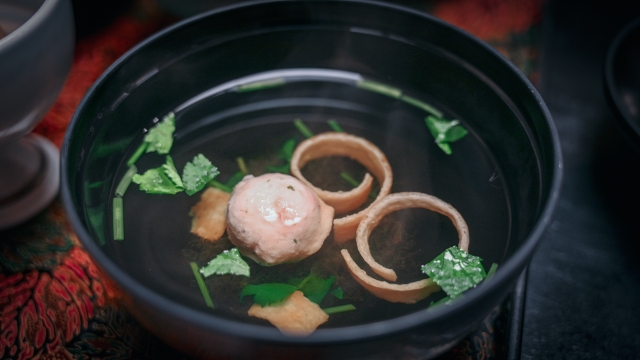
Suimono highlights the clarity and refined flavor of Japanese dashi.
In Japanese cuisine, clarity is not only a technical achievement but also an aesthetic choice.
A clear broth allows the colors and shapes of the ingredients inside the bowl to remain fully visible. In dishes such as suimono, the broth functions almost like a transparent stage, with the ingredients themselves becoming the visual focus.
This visual harmony is especially important in refined traditions such as kaiseki cuisine, where the appearance of a dish is considered just as important as its taste.
Clarity and the Idea of "Clean Flavor"
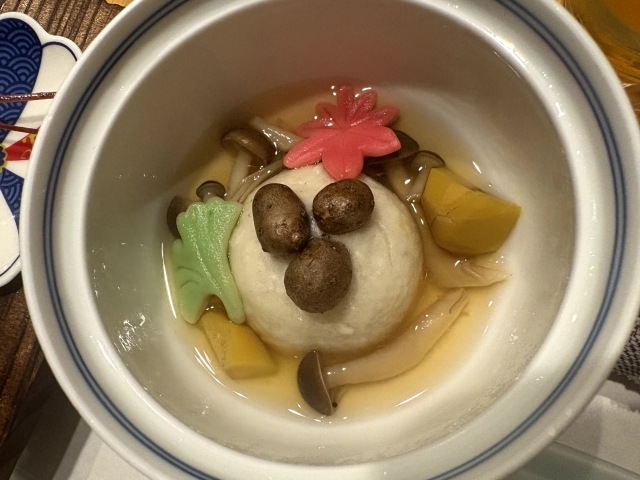
Takiawase dishes use clear dashi to enhance ingredients without overpowering them.
In Japanese cooking, clarity often suggests purity of flavor. A clear broth signals that the ingredients were extracted gently, without introducing bitterness or unwanted particles.
Rather than building heavy richness, the aim is to reveal the natural taste of the ingredients as faithfully as possible.
Western Cuisine Also Has Clear Broths
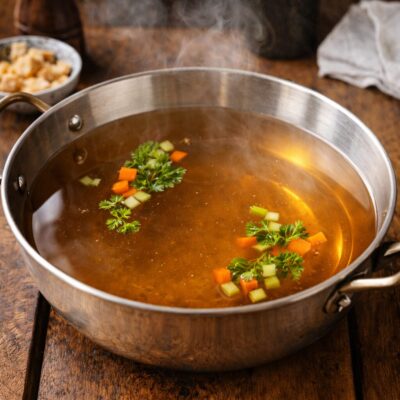
It is worth noting that Western cooking also has techniques for producing clear broths.
Consommé, for example, is a clarified broth in which impurities are removed through a special filtering process. However, this requires a deliberate clarification step, whereas dashi achieves its clarity naturally through gentle extraction.
Two Different Philosophies of Flavor
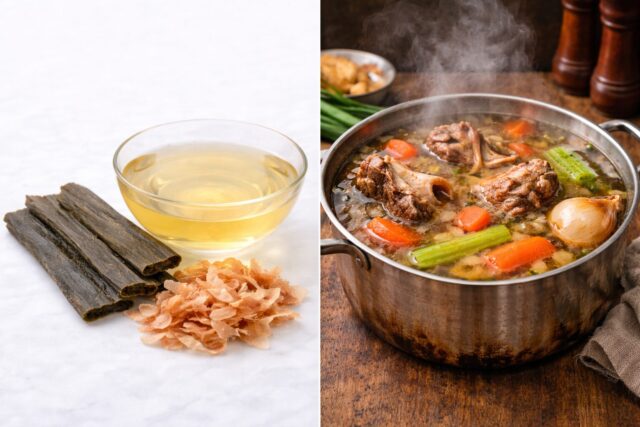
Japanese dashi and Western bone broth reflect two different philosophies of flavor extraction.
The contrast between clear dashi and cloudy broth ultimately reflects two different approaches to flavor.
Western cooking often aims to build flavor through long cooking and the accumulation of ingredients.
Japanese cooking often aims to reveal flavor by carefully drawing out the essence of a small number of ingredients.
This contrast helps explain why Japanese broths emphasize clarity and subtlety, while many Western broths prioritize richness and body.
Neither Is Better — They Serve Different Dishes
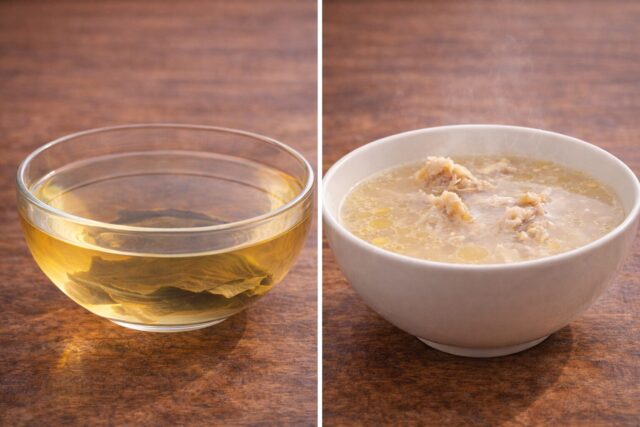
A visual comparison of transparent dashi and cloudy meat broth.
Clear dashi and cloudy broth are not competing techniques. They simply serve different culinary purposes.
Japanese dashi provides a light, precise foundation that allows delicate ingredients such as tofu, seafood, and vegetables to shine.
Western stocks create a fuller, richer base well suited to stews, sauces, and hearty soups.
Frequently Asked Questions

Is cloudy broth considered a mistake in Japanese cooking?
In many traditional dishes, cloudiness may indicate over-extraction or excessive boiling. That said, some Japanese soups — such as miso soup — are naturally cloudy due to the nature of their ingredients.
Why does boiling kombu make dashi cloudy?
Boiling kombu can release additional compounds and particles that affect both flavor and clarity. For this reason, kombu is typically removed from the pot before the water reaches a full boil.
Do all Western broths have to be cloudy?
No. Western cuisine also has clear broths, such as consommé, which are clarified using specific techniques.
Does clarity affect the taste of broth?
Clarity itself does not determine flavor, but the techniques used to achieve it often result in a lighter and more delicate taste.
Why is dashi extracted so quickly?
The ingredients used in dashi release their umami compounds very efficiently. Prolonged simmering is not only unnecessary but can actually harm both the flavor and the clarity of the broth.
Author's Note
Growing up in Japan, clear soups such as suimono were often associated with refined meals and special occasions. The clarity of the broth was never just about appearance — it quietly reflected the care and restraint that had gone into the cooking.
Related Reading on YUNOMI
Start Here
Core Comparison
Dashi vs Broth
Why Does Dashi Taste So Strong Even Though It Looks Light?
Why Is Japanese Dashi So Clear?
Foundations
What Is Dashi?
What Is Umami?
What Is Umami Synergy?
Ingredients
What Is Kombu?
What Is Katsuobushi?
What Are Dried Shiitake?
Types of Dashi
What Is Kombu Dashi?
What Is Awase Dashi?
What Is Niboshi Dashi?

