Green Tea Culture

Kukicha Japanese Green Tea: What Makes Stem Tea Different?

2026/9/29

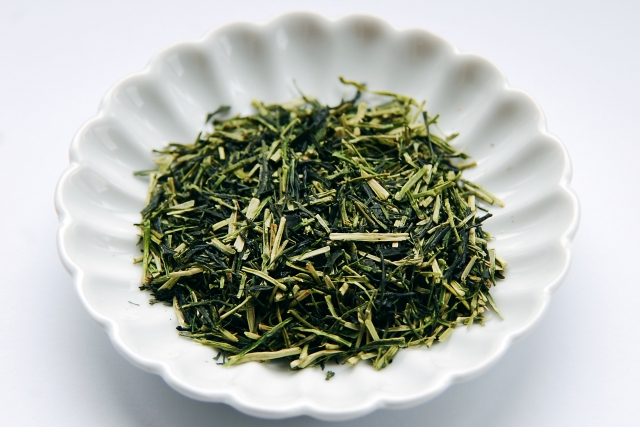
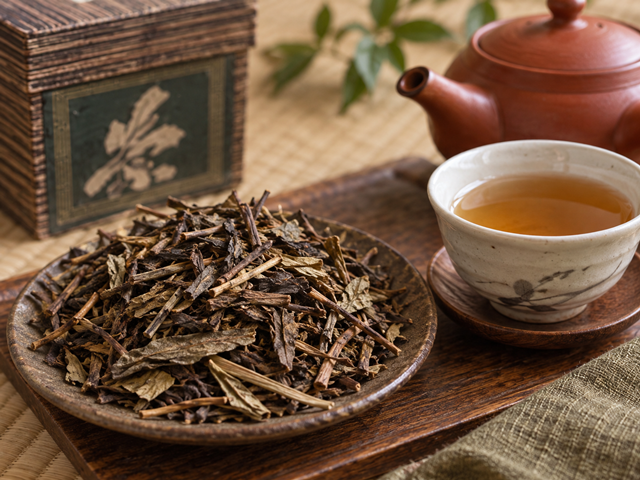
Most Japanese green tea is described by its leaves. Sencha is known for its fresh green character. Gyokuro is famous for its deep umami. Matcha is made by grinding specially processed tea leaves into a fine powder. Kukicha is a little different. Kukicha (茎茶) means "stem tea," but that does not necessarily mean the tea is made only from stems. It is better understood as a Japanese green tea with a relatively high proportion of stems and leaf stalks. That difference may sound small, but stems and leaves do not have exactly the same composition. As a result, kukicha often tastes less sharply green and less astringent than leaf-heavy teas such as sencha. Its character tends to be mild, smooth, and easy to drink. But there is another important point: not all kukicha tastes the same. A kukicha made from ordinary sencha and a karigane made from gyokuro can be quite different. To understand kukicha, it helps to know not only that the tea contains more stems, but also where those stems came from. Quick Summary Kukicha is Japanese green tea with a relatively high proportion of stems and leaf stalks. It is not necessarily made entirely from stems; some leaf material usually remains. Stems and leaves have different chemical compositions, which changes the balance of flavor. Kukicha generally has less bitterness and astringency than sencha and often feels milder and smoother. Its umami is usually gentle rather than intensely savory. The flavor depends strongly on the tea from which the stems were separated. Karigane ...
ReadMore

Four forms of Japanese green tea: matcha, konacha, powdered green tea, and instant green tea

Green Tea Culture

Japanese Green Tea Powder Explained: Matcha, Konacha, Powdered Tea, and Instant Tea

2026/9/23

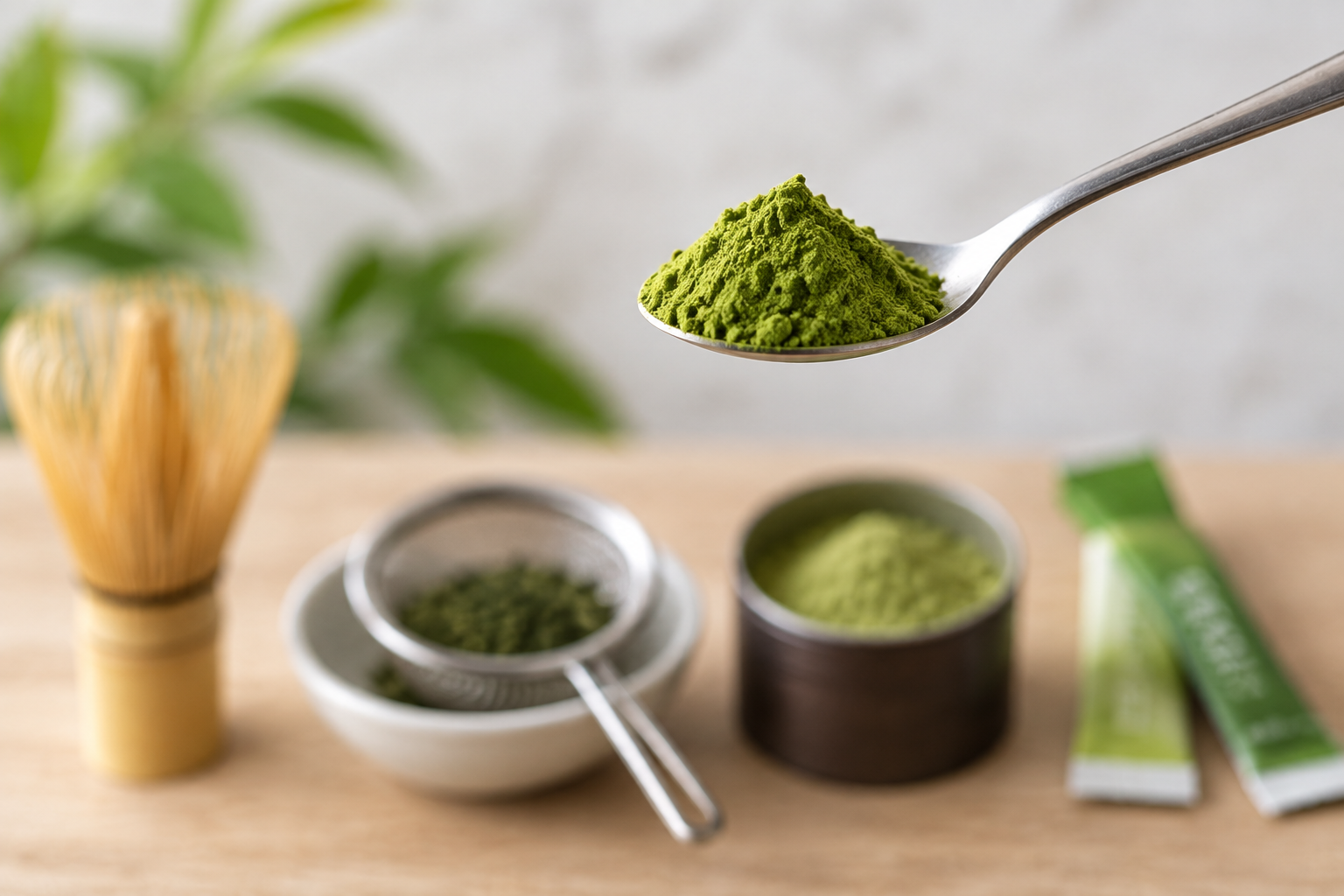
Green tea powder sounds simple. But in Japan, there are several very different kinds of tea that can all look like green powder. Four of the main ones are matcha, konacha, powdered green tea (funmatsucha), and instant green tea. To the eye, they can look surprisingly similar. But they are not the same tea. Matcha and powdered green tea are made by grinding tea leaves. Konacha consists of fine particles separated during tea processing. Instant green tea is made from brewed tea extract that has been dried into a soluble form. This is where English becomes confusing. Words such as “powder tea,” “powdered green tea,” and “green tea powder” can sound almost interchangeable, even though the products behind them may be completely different. The easiest way to understand them is to ask a few simple questions: What is it made from? How is it made? How do you drink it? And what does that process do to the flavor and texture? Once you look at those differences, the confusing world of Japanese “tea powder” becomes much clearer.   Quick Summary Not every green tea powder in Japan is matcha. Matcha is made by finely grinding tencha. Konacha is not intentionally ground. It consists of fine tea particles separated during the finishing of sencha, gyokuro, and other teas. Powdered green tea, or funmatsucha, is made by mechanically grinding tea leaves such as sencha. Instant green tea is made from brewed tea extract that is dried into a soluble powder or granules. Matcha and powdered green tea ...
ReadMore

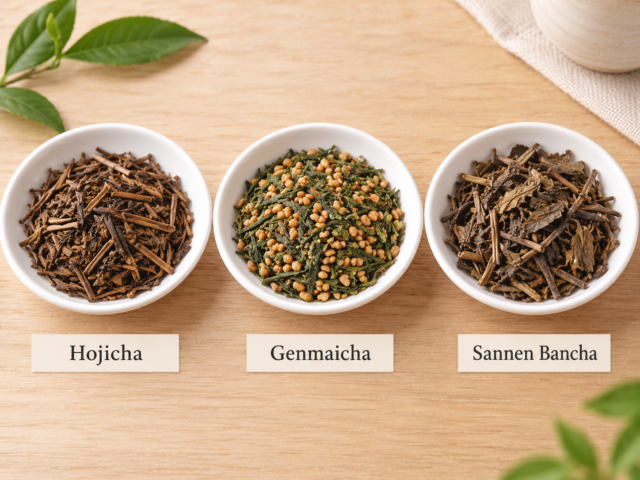
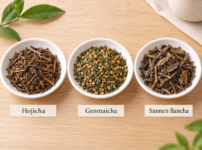
Three different styles of bancha showing the variety of Japan’s everyday tea.

Green Tea Culture

What Is Bancha? Why Japan’s Everyday Tea Is Surprisingly Hard to Define

2026/9/20

Bancha sounds like it should be easy to explain. It is often described in English as an inexpensive Japanese green tea made from larger, more mature leaves than sencha. That is partly true. But ask several Japanese people what they picture when they hear the word bancha, and you may not get exactly the same answer. One person may imagine a pale yellow-green tea made from large leaves. Another may think of something darker and roasted. Someone who grew up with a regional style may consider that version completely normal. That is what makes bancha interesting. It is not one perfectly standardized tea. It is better understood as a broad family of everyday teas shaped by mature leaves, local habits, and regional processing traditions. Quick Summary Bancha is commonly made from larger, more mature leaves than premium sencha. It often uses later harvests, coarser leaves, stems, or other mature tea material. Bancha is generally affordable and associated with everyday drinking rather than prestige. The word bancha does not always describe exactly the same tea throughout Japan. Some bancha is green or yellow-green, while regional styles may be roasted, brown, smoky, fermented, or otherwise processed differently. Bancha is usually easy to brew and is commonly prepared with relatively hot water. It is often lower in caffeine than teas made mainly from young spring leaves, but it is not caffeine-free. Bancha may also be used as a base for hojicha or genmaicha, while Sannen Bancha is a distinct specialty style. What Is Bancha? At its simplest, bancha ...
ReadMore

Green Tea Culture

San-nen Bancha: What Does “Three Years” Actually Mean?

2026/9/20

San-nen bancha sounds simple. San-nen means "three years," and bancha broadly refers to tea made from more mature leaves than the tender shoots typically used for sencha. So is san-nen bancha simply bancha aged for three years? Not necessarily. Some san-nen bancha is aged for around three years after harvest. Other versions are made from tea plants left to grow for three years or longer before harvest. Some producers combine both approaches. In other words, even the "three years" in san-nen bancha does not always refer to the same three years. And once the production method changes, the raw material, flavor, and even the best way to brew the tea can change too. That is what makes san-nen bancha confusing—and interesting. Quick Summary San-nen bancha does not have one single production method. Type 1: Post-harvest aged — harvested tea is stored and aged for several years before roasting. Type 2: Long-grown on the plant — the tea plant itself is allowed to grow for three years or longer before harvest. Type 3: Combined — long-grown leaves and stems are also aged after harvest. These methods do not necessarily produce the same flavor. Mature leaves and stems generally contain less caffeine than tender young shoots. Post-harvest aging gradually reduces fresh green aromas and changes polyphenols, lipids, pigments, and aroma compounds. Long-grown tea starts with unusually mature leaves, thick stems, and sometimes woody branches. Roasting is important in all three types, but san-nen bancha is not simply another name for hojicha. To understand what you are buying, ...

ReadMore

A cup of genmaicha with roasted rice and green tea leavestea.

Green Tea Culture

What Is Genmaicha? A Guide to Japanese Green Tea with Roasted Rice

2026/9/16

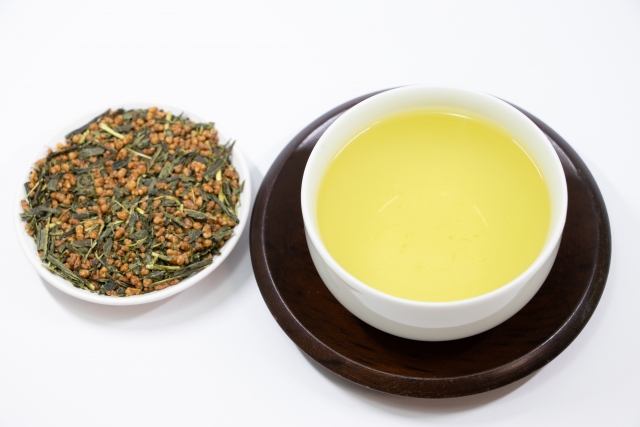
Green tea mixed with roasted rice may sound unusual if you've never tried it before. But in Japan, this combination has its own name: genmaicha. Its most recognizable feature isn't one fixed flavor, but its aroma. The roasted rice gives genmaicha a warm, toasted fragrance that can remind you of browned rice, rice crackers, or roasted grain. The tea underneath can vary. Some genmaicha is made with bancha, others with sencha, deep-steamed tea, or stems, and matcha may also be added. That makes genmaicha more flexible than its simple name suggests. Once you look closely, a few questions naturally come up. Why is rice mixed with tea? Are those white pieces popcorn? And if genmai means brown rice, does genmaicha actually have to use brown rice? The answers reveal that genmaicha is less about one strict recipe and more about the relationship between roasted rice and tea.   Quick Summary Genmaicha is Japanese tea blended with roasted rice. The tea base can vary, including bancha, sencha, deep-steamed tea, or stem tea. Roasted rice may make up a surprisingly large part of the blend. Despite the name genmaicha, the rice used is not always whole-grain brown rice. The white pieces that look like popcorn are grains of rice that expanded during heating. Genmaicha is recognized first by its warm roasted-rice aroma. Matcha-iri genmaicha adds matcha for deeper color, more body, and a stronger tea character. Genmaicha contains caffeine because it contains tea. It is best enjoyed fairly fresh, since the roasted-rice aroma is one of its ...

ReadMore

Traditional stone mill grinding matcha with fine green powder on a wooden table

Green Tea Culture

Why Is Matcha Ground with Stone Mills?

2026/9/8

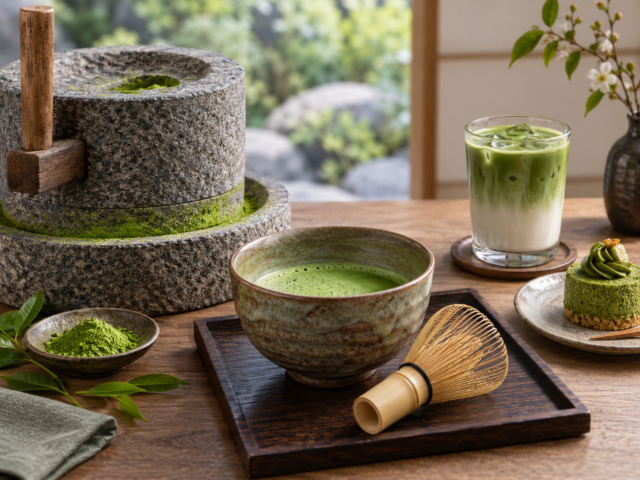
If modern machines can grind tea faster and even produce smaller particles, why is matcha still so closely associated with traditional stone mills? The obvious answer is tradition. Matcha developed long before modern grinding machines existed, and stone mills became part of the way tencha was transformed into the fine powder used for tea. But tradition alone does not explain why stone milling still matters today. Modern equipment can grind tea faster, produce extremely small particles, and offer advantages for large-scale production. Stone mills remain useful not because they are automatically the “best” way to grind matcha, but because they create powder characteristics that have long suited matcha prepared and drunk on its own. Today, matcha is also used in lattes, chocolate, ice cream, cakes, and many other foods. That means the best grinding method may depend on what the finished matcha is meant to do.   Quick Summary Matcha is made by grinding tencha into a very fine powder. Matcha does not fully dissolve in water; tiny tea particles remain dispersed in the drink. Traditional stone mills grind tencha slowly and produce a characteristic range of particle sizes. Modern mills can create even smaller particles, so stone milling is not simply about making the finest powder possible. Particle size and particle-size distribution affect mouthfeel and other physical properties. Stone milling is especially associated with matcha intended to be whisked and drunk on its own. Modern milling can be useful for lattes, confectionery, and food processing. Stone-ground does not automatically mean higher quality. The tencha ...

ReadMore

Matcha powder with a bowl of whisked matcha, bamboo whisk, and tea scoop.

Green Tea Culture

Why Is Matcha Powdered? What Makes It Different from Leaf Green Tea

2026/9/7

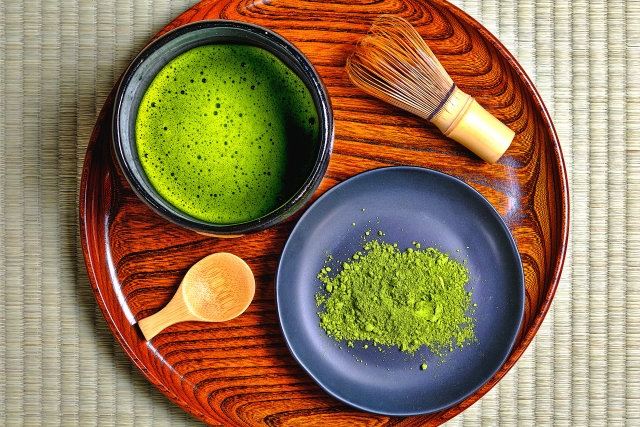
Matcha is often described simply as “powdered green tea.” That is not wrong, but it leaves out the most important part. Matcha is not made by taking ordinary green tea leaves and grinding them into powder. It is made from a specific tea material called tencha, which is grown and processed differently from teas such as sencha and gyokuro. The powder is only the final form. To really understand matcha, it helps to start from a different question: Why is matcha prepared as a powder in the first place — and what kind of tea leaf can become matcha? Quick Summary Matcha is made from tencha, not ordinary sencha leaves. Matcha is powdered because the fine tea particles are whisked into water and consumed as part of the drink. Tencha is produced from shaded tea plants and is processed without the rolling used for sencha and gyokuro. Stems and larger veins are removed during refinement before the tea is ground. Grinding sencha produces powdered sencha, not matcha. Grinding gyokuro does not make matcha either. Sencha, gyokuro, and matcha all come from the same tea plant, but they follow different growing and processing paths. Why Is Matcha Powdered?   Most Japanese green teas are prepared by extraction. You steep the leaves in water, flavor and soluble compounds move into the water, and the leaves remain behind in the teapot or strainer. Matcha works differently. The tea is ground extremely finely, whisked into water, and consumed together with the liquid. In other words, the tea particles themselves ...

ReadMore

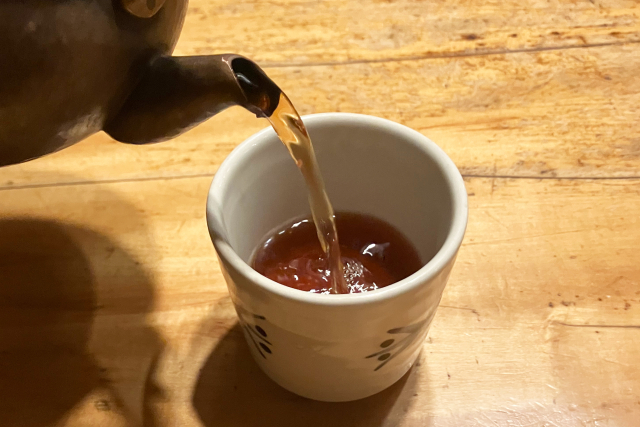
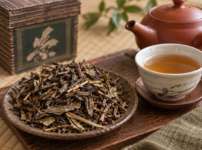
Hojicha being poured into a Japanese teacup, showing its warm amber-brown color

Green Tea Culture

What Is Hojicha? Why Japan’s Roasted Green Tea Tastes So Different

2026/9/3

Hojicha does not look like the green tea many people expect from Japan. Its leaves are brown. The brewed tea can range from amber to reddish-brown. Its aroma is roasted rather than grassy, and its flavor may remind you more of toasted nuts, warm grain, or caramel than fresh green leaves. Yet hojicha is still Japanese green tea. The key is simple: Hojicha is not one specific type of tea leaf. It is roasted tea. Different Japanese green teas and different parts of the tea plant can be roasted to make hojicha. That is why hojicha can vary in flavor, aroma, and even caffeine content more than its name might suggest. Outside Japan, hojicha is increasingly appearing in cafés as a latte or an alternative to matcha. In Japan, however, it has long had a much quieter role. It is familiar, easy to drink, and easy to fit into everyday life.   Quick Summary Hojicha is roasted Japanese green tea. It is not the name of one specific leaf, cultivar, or grade. Bancha, sencha, mature leaves, stems, and other green tea materials can all be used to make hojicha. Its brown color comes from roasting, not from the oxidation process used to make black tea. Hojicha is usually less grassy and less sharply bitter than matcha or sencha. Common flavor descriptions include roasted, nutty, toasty, warm, and sometimes caramel-like. It pairs easily with both sweets and savory food. Hojicha is often assumed to be low in caffeine, but roasting alone does not remove most of ...

ReadMore

Three different types of Japanese green tea leaves displayed side by side.

Green Tea Culture

Types of Japanese Green Tea: How Sencha, Matcha, Gyokuro, Hojicha, and More Differ

2026/8/24

Japanese green tea can seem confusing at first because there are so many names. Sencha, gyokuro, matcha, hojicha, bancha, genmaicha, kukicha, konacha — they are all connected to Japanese tea culture, but they are not simply different grades of the same drink. Some are shaped by how the tea plants are grown. Others differ because of steaming, roasting, blending, or which parts of the plant are used. The easiest way to understand them is not to memorize every name. It is to ask one simple question: What makes this tea different? Once you understand that, the names become much easier to organize. Quick Summary Sencha is a useful reference point for understanding many Japanese green teas. Fukamushi-cha differs mainly through longer steaming. Gyokuro is made from tea plants shaded before harvest. Matcha is made from tencha, a specially grown and processed shaded tea that is ground into powder. Hojicha is roasted, while genmaicha is blended with roasted rice. Kukicha uses a high proportion of stems, while konacha consists of fine tea particles. Bancha is a broad everyday category whose meaning can vary by region. Japanese tea names often describe different things — growing method, processing, plant part, or form — so the categories sometimes overlap.   How Are Japanese Green Teas Different? Most Japanese green teas begin with the same tea plant, Camellia sinensis. The differences come from what happens before and after harvest. A few main factors explain most of the major styles. Growing Method Some teas are grown under shade before harvest. Gyokuro ...

ReadMore

Everyday Dishes

What Is Japanese Curry? Why Curry Rice Became a Japanese Comfort Food

2026/8/21

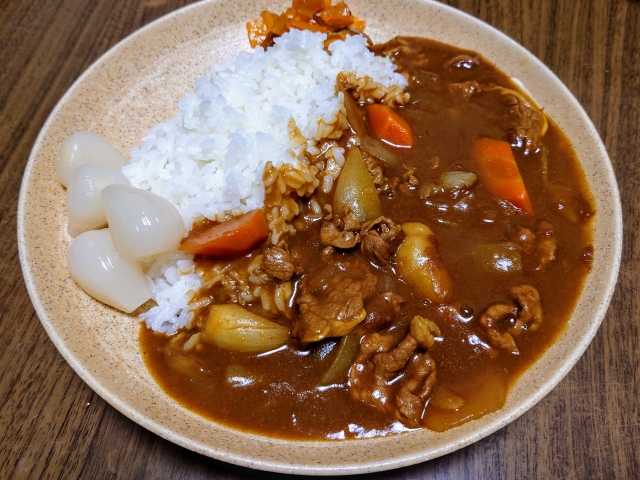
Japanese curry may look simple: white rice, thick brown sauce, vegetables, and usually some kind of meat. But for many visitors, the first bite is surprising. Japanese curry is usually thicker, milder, and more savory than many curries found elsewhere in Asia. It often has a gentle sweetness, a rich texture, and enough spice to be warming without necessarily being very hot. More importantly, curry in Japan does not feel like an exotic foreign dish. It is everyday food. People eat it at home, in school lunches, at casual restaurants, in curry specialty shops, and even at beef-bowl chains. Supermarkets devote entire sections to curry roux and ready-to-heat curry pouches. For many Japanese people, it is simply curry. Quick Summary Japanese curry is usually thick, savory, mildly sweet, and relatively mild in spice. The most familiar form is curry rice, or kare raisu. Packaged curry roux is widely used in Japanese home cooking. Typical ingredients include onions, carrots, potatoes, and beef, pork, or chicken. Curry is easy to make in a large pot and difficult to ruin, which makes it an ideal family food. Households can change the meat, vegetables, and spice level, or even mix different roux products together. Popular variations include katsu curry, curry udon, and curry pan. Japanese curry is easy to find across Japan, but trying a curry specialty restaurant at least once is worthwhile.   What Is Japanese Curry? Japanese curry is a thick curry sauce most commonly served with steamed Japanese white rice. In Japanese, curry rice is called ...

ReadMore

NEW ENTRY

2026/9/29

Kukicha Japanese Green Tea: What Makes Stem Tea Different?

Most Japanese green tea is described by its leaves. Sencha is known for its fresh green character. Gyokuro is famous for its deep umami. Matcha is made by grinding specially processed tea leaves into a fine powder. Kukicha is a little different. Kukicha (茎茶) means "stem tea," but that does not necessarily mean the tea is made only from stems. It is better understood as a Japanese green tea with a relatively high proportion of stems and leaf stalks. That difference may sound small, but stems and leaves do not have exactly the same composition. As a result, kukicha often tastes less sharply green and less astringent than leaf-heavy teas such as sencha. Its character tends to be mild, smooth, and easy to drink. But there is another important point: not all kukicha tastes the same. A kukicha made from ordinary sencha and a karigane made from gyokuro can be quite different. To understand kukicha, it helps to know not only that the tea contains more stems, but also where those stems came from. Quick Summary Kukicha is Japanese green tea with a relatively high proportion of stems and leaf stalks. It is not necessarily made entirely from stems; some leaf material usually remains. Stems and leaves have different chemical compositions, which changes the balance of flavor. Kukicha generally has less bitterness and astringency than sencha and often feels milder and smoother. Its umami is usually gentle rather than intensely savory. The flavor depends strongly on the tea from which the stems were separated. Karigane ...

ReadMore

Four forms of Japanese green tea: matcha, konacha, powdered green tea, and instant green tea

2026/9/23

Japanese Green Tea Powder Explained: Matcha, Konacha, Powdered Tea, and Instant Tea

Green tea powder sounds simple. But in Japan, there are several very different kinds of tea that can all look like green powder. Four of the main ones are matcha, konacha, powdered green tea (funmatsucha), and instant green tea. To the eye, they can look surprisingly similar. But they are not the same tea. Matcha and powdered green tea are made by grinding tea leaves. Konacha consists of fine particles separated during tea processing. Instant green tea is made from brewed tea extract that has been dried into a soluble form. This is where English becomes confusing. Words such as “powder tea,” “powdered green tea,” and “green tea powder” can sound almost interchangeable, even though the products behind them may be completely different. The easiest way to understand them is to ask a few simple questions: What is it made from? How is it made? How do you drink it? And what does that process do to the flavor and texture? Once you look at those differences, the confusing world of Japanese “tea powder” becomes much clearer.   Quick Summary Not every green tea powder in Japan is matcha. Matcha is made by finely grinding tencha. Konacha is not intentionally ground. It consists of fine tea particles separated during the finishing of sencha, gyokuro, and other teas. Powdered green tea, or funmatsucha, is made by mechanically grinding tea leaves such as sencha. Instant green tea is made from brewed tea extract that is dried into a soluble powder or granules. Matcha and powdered green tea ...

ReadMore

Three different styles of bancha showing the variety of Japan’s everyday tea.

2026/9/20

What Is Bancha? Why Japan’s Everyday Tea Is Surprisingly Hard to Define

Bancha sounds like it should be easy to explain. It is often described in English as an inexpensive Japanese green tea made from larger, more mature leaves than sencha. That is partly true. But ask several Japanese people what they picture when they hear the word bancha, and you may not get exactly the same answer. One person may imagine a pale yellow-green tea made from large leaves. Another may think of something darker and roasted. Someone who grew up with a regional style may consider that version completely normal. That is what makes bancha interesting. It is not one perfectly standardized tea. It is better understood as a broad family of everyday teas shaped by mature leaves, local habits, and regional processing traditions. Quick Summary Bancha is commonly made from larger, more mature leaves than premium sencha. It often uses later harvests, coarser leaves, stems, or other mature tea material. Bancha is generally affordable and associated with everyday drinking rather than prestige. The word bancha does not always describe exactly the same tea throughout Japan. Some bancha is green or yellow-green, while regional styles may be roasted, brown, smoky, fermented, or otherwise processed differently. Bancha is usually easy to brew and is commonly prepared with relatively hot water. It is often lower in caffeine than teas made mainly from young spring leaves, but it is not caffeine-free. Bancha may also be used as a base for hojicha or genmaicha, while Sannen Bancha is a distinct specialty style. What Is Bancha? At its simplest, bancha ...

ReadMore

2026/9/20

San-nen Bancha: What Does “Three Years” Actually Mean?

San-nen bancha sounds simple. San-nen means "three years," and bancha broadly refers to tea made from more mature leaves than the tender shoots typically used for sencha. So is san-nen bancha simply bancha aged for three years? Not necessarily. Some san-nen bancha is aged for around three years after harvest. Other versions are made from tea plants left to grow for three years or longer before harvest. Some producers combine both approaches. In other words, even the "three years" in san-nen bancha does not always refer to the same three years. And once the production method changes, the raw material, flavor, and even the best way to brew the tea can change too. That is what makes san-nen bancha confusing—and interesting. Quick Summary San-nen bancha does not have one single production method. Type 1: Post-harvest aged — harvested tea is stored and aged for several years before roasting. Type 2: Long-grown on the plant — the tea plant itself is allowed to grow for three years or longer before harvest. Type 3: Combined — long-grown leaves and stems are also aged after harvest. These methods do not necessarily produce the same flavor. Mature leaves and stems generally contain less caffeine than tender young shoots. Post-harvest aging gradually reduces fresh green aromas and changes polyphenols, lipids, pigments, and aroma compounds. Long-grown tea starts with unusually mature leaves, thick stems, and sometimes woody branches. Roasting is important in all three types, but san-nen bancha is not simply another name for hojicha. To understand what you are buying, ...

ReadMore

A cup of genmaicha with roasted rice and green tea leavestea.

2026/9/16

What Is Genmaicha? A Guide to Japanese Green Tea with Roasted Rice

Green tea mixed with roasted rice may sound unusual if you've never tried it before. But in Japan, this combination has its own name: genmaicha. Its most recognizable feature isn't one fixed flavor, but its aroma. The roasted rice gives genmaicha a warm, toasted fragrance that can remind you of browned rice, rice crackers, or roasted grain. The tea underneath can vary. Some genmaicha is made with bancha, others with sencha, deep-steamed tea, or stems, and matcha may also be added. That makes genmaicha more flexible than its simple name suggests. Once you look closely, a few questions naturally come up. Why is rice mixed with tea? Are those white pieces popcorn? And if genmai means brown rice, does genmaicha actually have to use brown rice? The answers reveal that genmaicha is less about one strict recipe and more about the relationship between roasted rice and tea.   Quick Summary Genmaicha is Japanese tea blended with roasted rice. The tea base can vary, including bancha, sencha, deep-steamed tea, or stem tea. Roasted rice may make up a surprisingly large part of the blend. Despite the name genmaicha, the rice used is not always whole-grain brown rice. The white pieces that look like popcorn are grains of rice that expanded during heating. Genmaicha is recognized first by its warm roasted-rice aroma. Matcha-iri genmaicha adds matcha for deeper color, more body, and a stronger tea character. Genmaicha contains caffeine because it contains tea. It is best enjoyed fairly fresh, since the roasted-rice aroma is one of its ...

ReadMore