
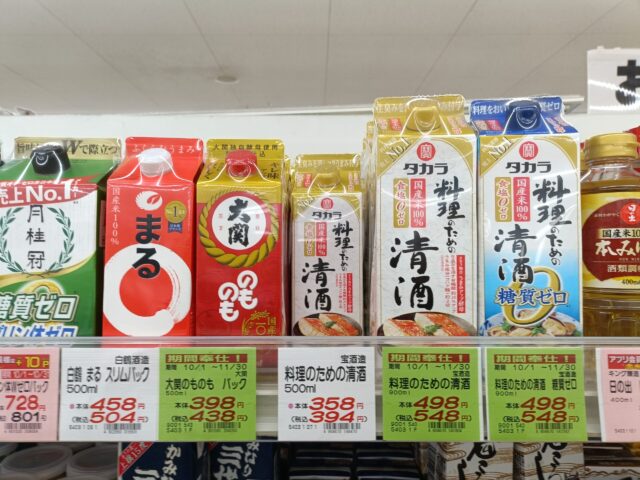
Japanese recipes often call for sake. For someone outside Japan, that raises an obvious question: does this mean ordinary drinking sake, or is there a special product called cooking sake?
At first, the answer seems simple. Regular Japanese sake can usually be used in cooking, but that is only part of the story.
In Japan, some products are brewed specifically for cooking. They are not necessarily cheaper versions of drinking sake; their fermentation and flavor balance may be designed from the beginning for what happens after the sake goes into a pan.
Other products contain salt and are sold as seasonings rather than ordinary alcoholic beverages.
So “cooking sake” is not one single thing. Understanding the differences makes Japanese recipes—and the Japanese supermarket shelf—much easier to navigate.
Quick Summary
- Regular Japanese sake can usually be used for cooking.
- Cooking sake is not one uniform product category.
- Some cooking seishu is brewed specifically to perform well in food rather than in a glass.
- Producers may adjust organic acids and other fermentation-derived compounds to support odor control, depth, and umami.
- Some cooking sake contains salt and is sold as a seasoning rather than ordinary drinking alcohol.
- Sake and mirin often appear together because their functions overlap but their strengths are different.
- If both your cooking sake and your mirin-type fermented seasoning contain salt, the total salt in a dish can add up quickly.
- The best sake to drink is not necessarily the best sake to cook with.
What Is Cooking Sake?
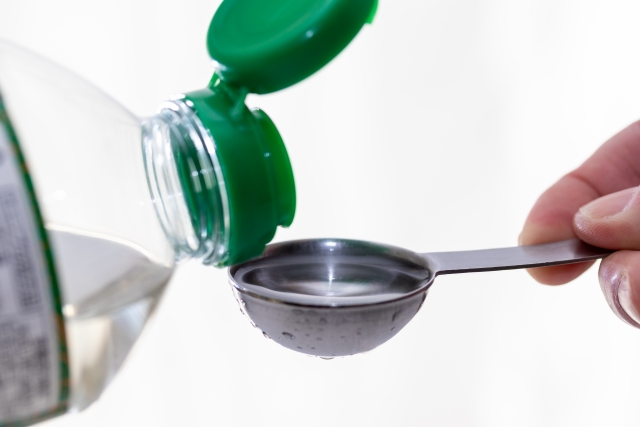
Cooking sake, or ryōrishu, is sake or a sake-based seasoning intended primarily for use in food. It is not a single, uniform product with one fixed composition.
Some products are genuine sake brewed specifically for cooking, some are ordinary drinking sake used in recipes, and others contain salt and additional seasoning ingredients.
This is why two bottles labeled for cooking can be quite different. Regular sake works perfectly well in many Japanese dishes, but that does not mean specially made cooking sake has no purpose.
Three Types of Cooking Sake in Japan
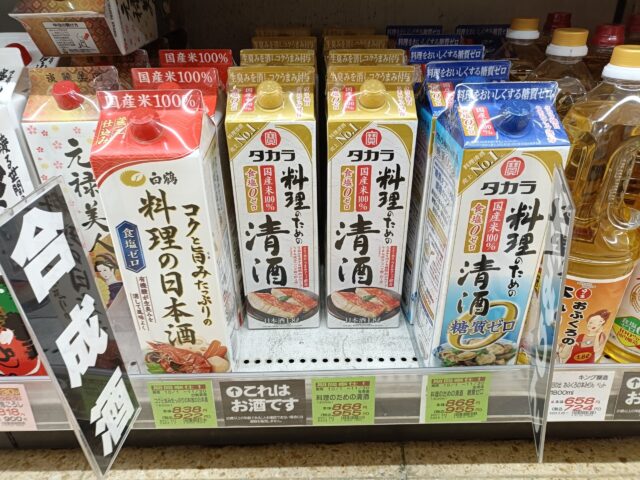
Sake used in Japanese cooking can broadly be understood in three groups.
In a Japanese supermarket, regular sake and cooking seishu may appear in the alcohol section, while salted cooking sake is usually found with seasonings.
Regular Sake Used for Cooking
Ordinary Japanese sake can be used directly in cooking. There is no rule that says sake sold for drinking cannot go into a simmered dish, marinade, sauce, or steamed dish.
It also has one practical advantage: regular sake normally does not contain added salt, which makes the final seasoning easier to control.
If a Japanese recipe simply says “sake,” regular sake is usually a safe choice.
Cooking Seishu
Cooking seishu is genuine sake made specifically for cooking. This is where the difference becomes more interesting than simply “drinking sake versus cheap cooking alcohol.”
Some cooking seishu is designed from the beginning with culinary performance as the goal. The producer may adjust fermentation, aroma, acidity, and other components so that the sake works well with meat, fish, sauces, and simmered foods.
It is still sake, but it is aiming for a different destination.
Salted Cooking Sake
Some cooking sake contains salt and is sold as a seasoning rather than as ordinary drinking alcohol. In Japanese supermarkets, these products are usually stocked with seasonings rather than in the sake section, which reflects the fact that they are treated differently from drinkable sake.
Some products may also contain sugars, fermented seasoning liquids, acids, or other ingredients.
These products can be convenient, but the salt already inside the bottle becomes part of the recipe. That matters when soy sauce, miso, or other salty seasonings are added later.
Why Is Cooking Seishu Different from Drinking Sake?
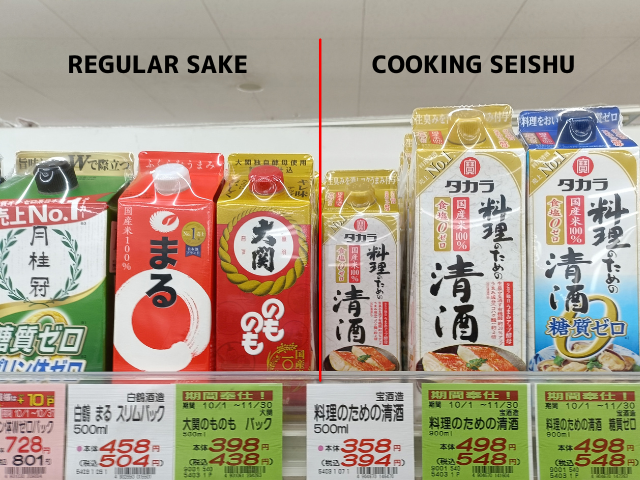
The easiest way to understand the difference is to look at the goal.
Drinking sake is designed to taste good in the glass, so a brewer may value aroma, sweetness, acidity, texture, balance, or a long finish. Cooking seishu is designed to work well after it goes into food, and that means the desirable qualities can be different.
A fragrant sake may be wonderful to drink, but those aromas are not necessarily useful in a pot of simmered fish.
For cooking, a producer may care more about suppressing unwanted smells, adding depth, supporting umami, or blending smoothly with other seasonings.
The best sake to drink is not necessarily the best sake to cook with.
How Is Cooking Seishu Designed for Food?
Sake contains much more than ethanol and water. Fermentation produces amino acids, organic acids, sugars, peptides, and many aroma compounds.
These influence both the flavor of the sake itself and what happens when it is added to food. Some manufacturers adjust these components with cooking in mind.
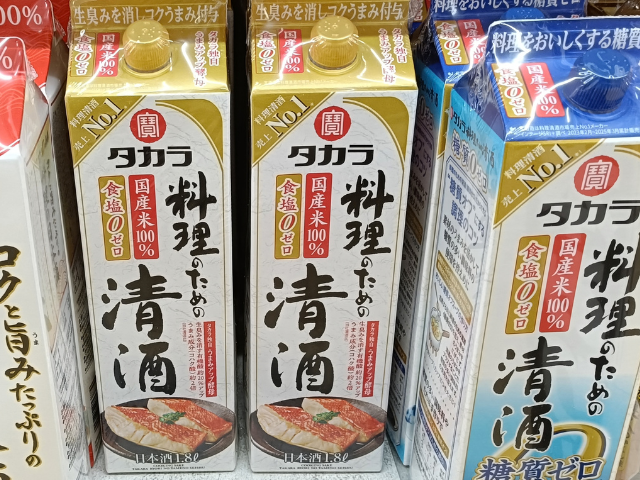
Takara Shuzo, for example, says its “Ryōri no Tame no Seishu” contains about 20 percent more organic acids that the company associates with reducing strong meat and fish smells, and about twice as much succinic acid as the company’s average drinking sake.
The company also says it uses a yeast developed to increase these cooking-related components. That is a very different idea from taking an inexpensive bottle of drinking sake and putting “for cooking” on the label.
The product is designed around how it performs in food.
Succinic acid is generally associated with savory depth and umami-like character, and organic acids more broadly may influence how strongly meat or fish smells are perceived.
So a cooking seishu may behave differently in a dish even when it does not taste especially impressive on its own. That is the point: its destination is the food, not the sake cup.
Why Does Some Cooking Sake Contain Salt?
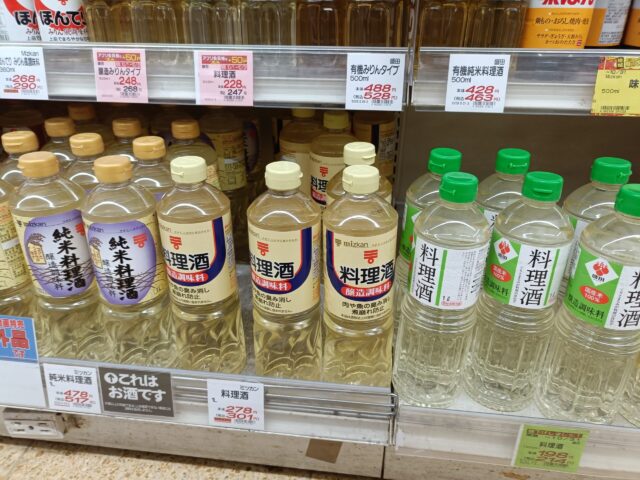
Salted cooking sake follows a different idea. The salt is not there simply because Japanese cooks want salty sake.
One practical reason is that adding salt can make the product unsuitable for drinking. In Japan, this can allow some products to be handled as seasonings rather than ordinary alcoholic beverages, depending on their composition and classification.
That can affect taxation and distribution. It also changes where the product fits in a store: salted cooking sake is generally treated as a seasoning, not as a bottle of sake for drinking.
But there is a trade-off. The salt is already inside the bottle, so if a recipe then adds soy sauce, miso, or extra salt, the final dish can become saltier than expected.
This matters especially when the cook is also using a salted mirin-type fermented seasoning.
Neither product is necessarily bad. You simply need to know what is already inside them.
Why Do Japanese People Add Sake to Food?
Sake performs several functions at once, which is why it appears so frequently in Japanese home cooking.
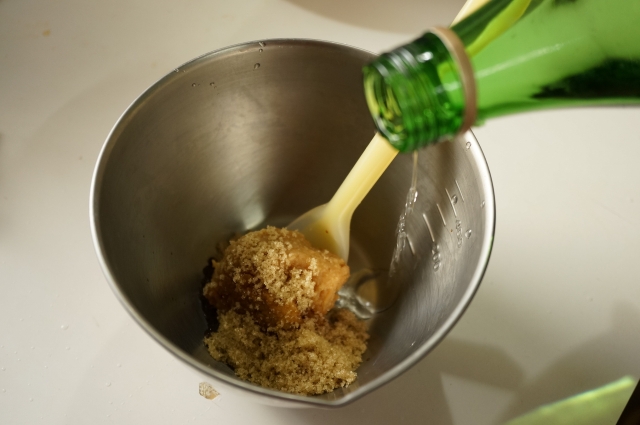
It Helps Reduce Unwanted Smells
Sake is commonly used with fish and meat. As alcohol evaporates during cooking, it can help carry some volatile odor compounds away, and organic acids and other components may also soften the perception of strong smells.
This does not mean sake removes the natural character of the ingredient. It simply helps keep unpleasant smells from dominating the dish.
It Adds Aroma and Depth
Fermentation gives sake a complex mixture of acids, amino acids, sugars, and aroma compounds. When sake is added to food, these components can contribute subtle depth.
The dish usually does not end up tasting strongly of sake. Instead, the flavor can feel more complete.
It Helps Flavors Blend
Alcohol can help some flavor compounds move through food and combine with other seasonings. This is one reason sake is useful in marinades, simmered foods, and sauces.
It also adds liquid without immediately adding the strong saltiness of soy sauce.
It Can Help Ingredients Remain Tender
Sake is also commonly used with meat and fish because it is believed to help ingredients remain tender during cooking.
This can be useful in marinades and simmered dishes where meat might otherwise become dry or firm. The effect is generally attributed to the combination of alcohol and other components in the sake rather than to one single ingredient.
Does Cooking Sake Need to Be Heated?
Not always. Sake is usually added directly to food and heated as part of the cooking process.
As the dish cooks, alcohol gradually evaporates while other flavor components remain behind.
Some recipes heat sake separately first to reduce its raw alcoholic aroma. This is sometimes called nikiri, or cooking off the alcohol.
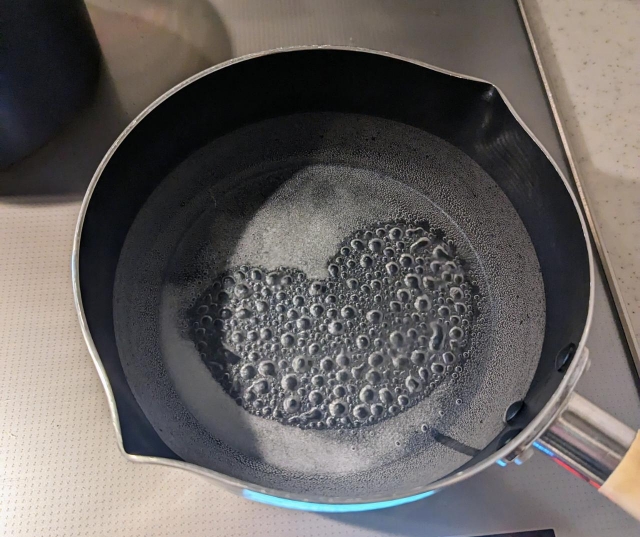 But there is no need to do this automatically. If the sake will simmer for a long time in a sauce or stew, separate heating may add little benefit.
The method depends on the dish.
Why Are Sake and Mirin Often Used Together?
Sake and hon mirin overlap more than beginners may expect. Both contain alcohol, both bring fermentation-derived compounds into the dish, and both can influence aroma, flavor penetration, and overall balance.
But their strengths are different.
Sake tends to work quietly in the background, helping manage smells, adding depth, and supporting the ingredients without adding much sweetness.
Mirin contributes much more sweetness, gloss, and a rounded character. This is why the two so often appear together: they overlap, but they are not redundant.
In a familiar combination of sake, mirin, and soy sauce, sake helps build the base, mirin rounds the flavor, and soy sauce provides saltiness and a strong aromatic center.
The three work together.
How Do Japanese People Actually Use Cooking Sake?
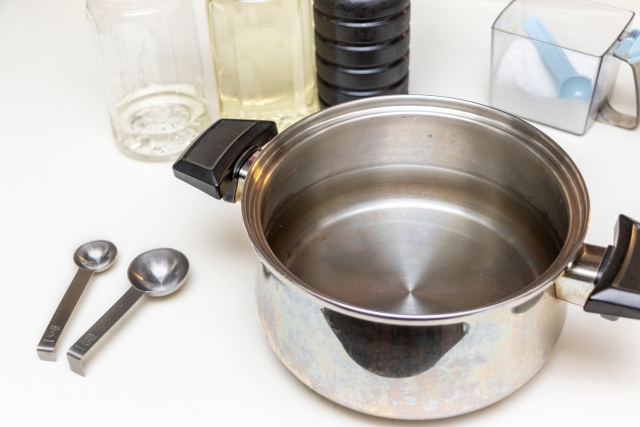
Sake appears in a wide range of ordinary home cooking. It is common in simmered fish, meat dishes, teriyaki-style sauces, marinades, rice bowls, soups, and steamed dishes.
Fish is an especially clear example, since sake can help soften strong fish smells while adding moisture and subtle depth to the simmering liquid.
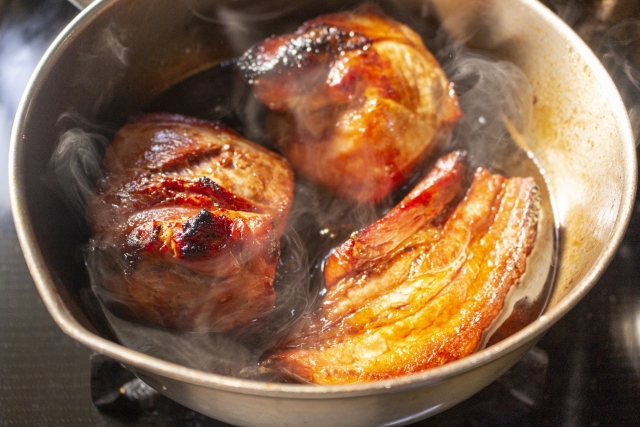 Sake is also frequently used with meat before or during cooking. In many recipes, it is part of the foundation, with soy sauce, mirin, sugar, or miso added later.
It rarely announces itself as the dominant flavor, but that does not mean it is doing nothing.
Can You Just Use Drinking Sake?

Yes. Regular sake works well in most Japanese recipes, but “works well” does not necessarily mean “works exactly the same.”
A cooking seishu may be designed specifically to suppress strong smells or increase savory depth after heating. In some dishes, a good cooking seishu may therefore suit the job better than a more expensive drinking sake.
You also do not need premium sake for ordinary cooking.
Highly aromatic ginjo-style sake can contain delicate qualities that are wonderful in a glass but unnecessary—or even distracting—in a simmered dish.
The goal is not to use the most expensive sake available, but to use the sake that fits the job.
Is “Cooking Wine” the Right Translation?
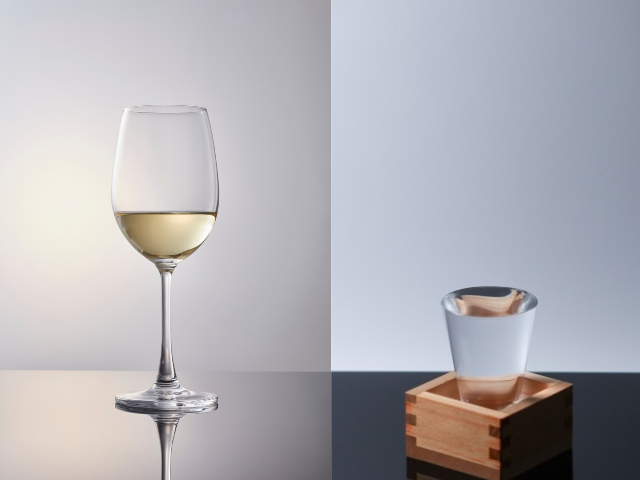
“Cooking wine” is understandable, but it can also create confusion.
In English-speaking countries, cooking wine often refers to wine containing salt or other additives and sold specifically for food. Some Japanese cooking sake resembles that kind of product.
But cooking seishu is still genuine sake.
For this reason, “cooking sake” is usually the clearest English term. It describes the intended use without suggesting that every bottle has the same composition.
Can You Substitute White Wine or Chinese Cooking Wine?
Dry white wine can work in some dishes if sake is unavailable. It provides alcohol and acidity, but its aroma and flavor balance are different.
The result may still taste good without being identical.
Chinese cooking wines such as Shaoxing wine are even more distinctive. They bring a deeper fermented aroma and darker flavor profile, so they should not be treated as neutral replacements for Japanese sake.
If regular Japanese sake is available, that is usually the closest and simplest substitute for cooking sake.
How Should You Choose Cooking Sake Outside Japan?
Start with the label.
First, check whether the product contains salt. If it does, the salt becomes part of your recipe, and you may need to reduce soy sauce, miso, or other salty seasonings.
Then look at the ingredients. A simple sake may contain rice, rice koji, water, and sometimes added alcohol, while a cooking seasoning may also contain salt, sugars, acids, or additional fermented ingredients.
Neither type is automatically better. They simply behave differently.
If you see a genuine cooking seishu, do not assume it is merely a cheap alternative to drinking sake.
Some products are deliberately designed for cooking and may emphasize organic acids, succinic acid, odor reduction, or umami.
If you want maximum control over seasoning, regular sake or salt-free cooking seishu is often the easiest choice.
What Cooking Sake Reveals About Japanese Home Cooking
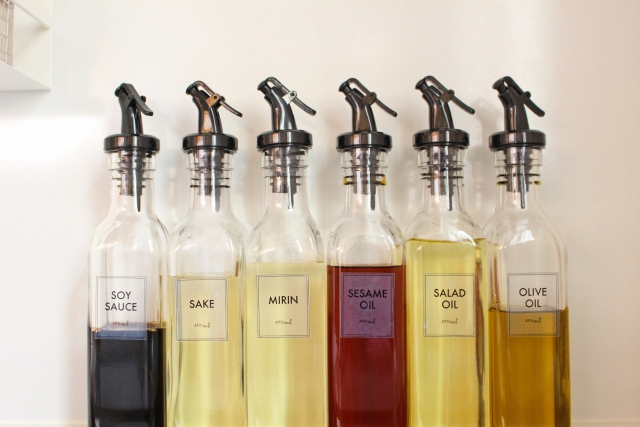
Cooking sake reveals something important about Japanese pantry ingredients: a product that looks simple on the supermarket shelf may have been designed around a very specific culinary role.
Regular sake can cook perfectly good food. But cooking seishu shows that some Japanese manufacturers have also asked a different question: what should sake be like if its final destination is not a glass, but a pot?
That leads to a different kind of product.
The goal is no longer to make the sake itself the star, but to make the food better.
This is also why cooking sake works so naturally alongside mirin, soy sauce, miso, dashi, and other basic Japanese seasonings. Each ingredient contributes something different, and their roles often overlap.
Japanese home cooking may use only a small number of pantry staples. But those staples can be more carefully designed—and more interesting—than they first appear.
Author’s Note
I had always thought of cooking sake as something slightly cheaper and less interesting than ordinary sake.
If someone had asked me whether I really needed it, I probably would have said, “Regular sake works, so why bother?” Regular sake does work, but after looking more closely at cooking seishu, I realized that was only half the story.
Some cooking sake is brewed toward a different goal.
The brewer is not asking how the sake will taste in a cup. The question is how it will behave with meat, fish, heat, soy sauce, mirin, and the rest of the dish.
That changed the way I look at the cooking-sake section in a Japanese supermarket.
It is not simply a shelf of cheaper sake. Some of those bottles are tools designed specifically for cooking.
FAQ
Is cooking sake the same as regular sake?
Not always. Some cooking sake is genuine sake designed specifically for cooking, while other products contain salt and are sold as seasonings.
Can I use regular sake instead of cooking sake?
Yes. Regular sake works well in most Japanese recipes, although specially brewed cooking seishu may perform differently in food.
Is cooking seishu just cheap sake?
No. Some cooking seishu is brewed specifically for culinary performance, with fermentation components adjusted for purposes such as odor control and savory depth.
Why does some cooking sake contain salt?
Salt can make a product unsuitable for drinking and may allow it to be handled as a seasoning rather than ordinary alcohol.
Is cooking sake salty?
Some types are. Cooking seishu can be salt-free, so check the label.
Is expensive sake better for cooking?
Not necessarily. A premium sake may be optimized for drinking, while a cooking seishu may be designed specifically for what happens after heating and mixing with food.
Is cooking sake the same as mirin?
No. Their functions overlap, but mirin contributes much more sweetness and gloss.
Can I use white wine instead of sake?
Sometimes. Dry white wine can work, but regular Japanese sake is a closer substitute whenever available.
Related Reading
What Is Mirin? 3 Types and How They Differ — Learn how hon mirin, mirin-type fermented seasoning, and mirin-style seasoning differ, and why mirin is so often used together with sake and soy sauce.
Japanese Pantry Guide — Explore how sake, mirin, soy sauce, miso, vinegar, dashi, and other basic seasonings work together in everyday Japanese home cooking.

