
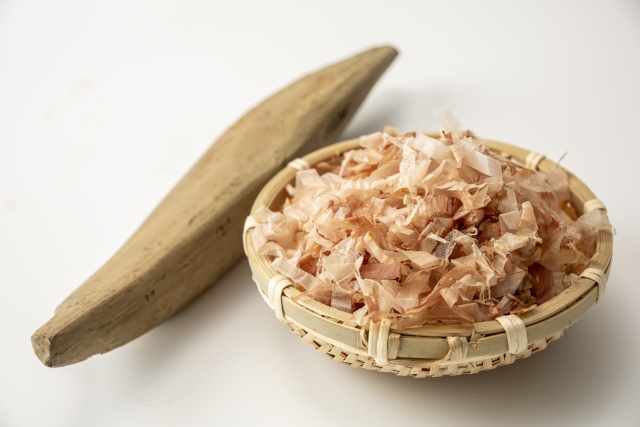
This process removes moisture, breaks down fats, and concentrates umami compounds such as inosinate, resulting in an extremely hard ingredient optimized for flavor extraction.
Katsuobushi is one of the most unusual foods in the world — a piece of fish so thoroughly transformed that it must be shaved like wood.This transformation is no accident.
It is the result of a carefully controlled process involving boiling, smoking, drying, and fermentation carried out over several months. Along the way, mold is deliberately introduced — not to spoil the fish, but to refine it.
Japanese Dashi Guide
What Katsuobushi Is (in This Context)
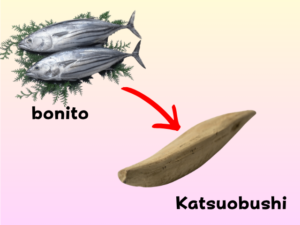
Bonito is transformed into katsuobushi through months of smoking, drying, and fermentation.
Katsuobushi is a smoked, dried, and fermented fish product made from bonito, but in this article, it is treated specifically as a processed ingredient shaped by a long transformation process rather than simply a food item.
The 120-Day Transformation Process
Step 1: Boiling and Bone Removal
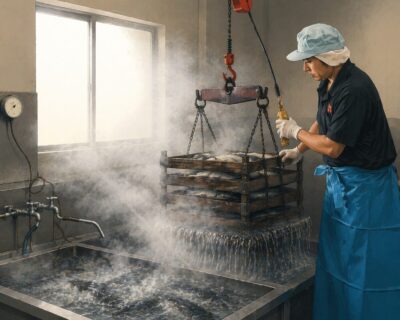
Fresh bonito is filleted and gently boiled. This step does more than cook the fish — it coagulates proteins, removes unwanted odors, and stabilizes the flesh for long-term processing.
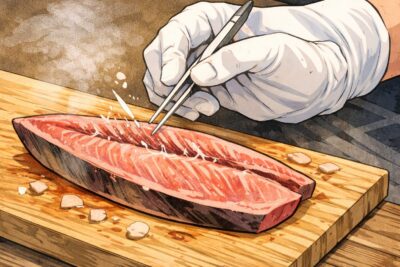
Once cooked, skilled craftsmen carefully remove the bones by hand. This delicate work ensures a clean texture and prevents structural damage in later stages.
Step 2: Initial Smoking, Repair, and Intermittent Drying
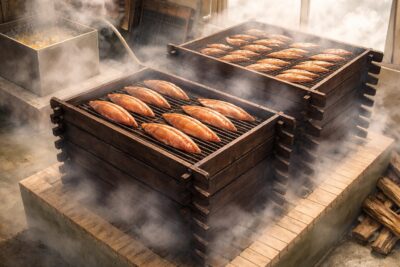
After boiling, the fish undergoes its first round of smoking. This initial smoking begins the drying process but also causes the surface to harden and small cracks to appear.
At this stage, craftsmen repair and reshape the fish, filling cracks with a paste made from fish flesh. This step is essential, as even minor defects can lead to breakage during later processing.
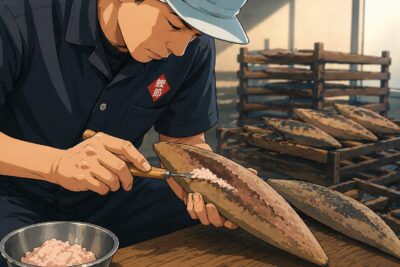
Following this, the fish enters a prolonged phase of intermittent drying. Instead of continuous smoking, it is repeatedly smoked and then rested.
If the fish were dried too quickly, only the surface would harden while moisture remained trapped inside. By allowing rest periods between smoking sessions, moisture gradually moves from the center to the surface, enabling even drying.
This cycle is repeated 10 to 15 times over many days. During this process, moisture content drops to around 20%, and the surface becomes dark and rough due to accumulated smoke.
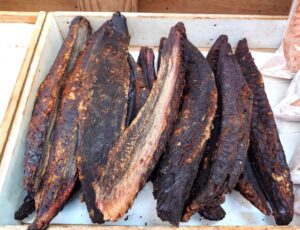
Arabushi is the smoked and dried stage before fermentation begins.
At this point, the product is known as arabushi — a fully smoked and dried form of katsuobushi. Although shelf-stable and widely used, it is not yet a fermented product, as the mold stage has not begun.
Step 3: Surface Preparation and Mold Fermentation
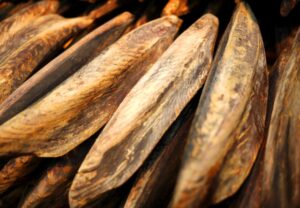
Before fermentation begins, the surface of the fish is shaved to remove tar and excess fat. This prepares it for controlled mold growth.
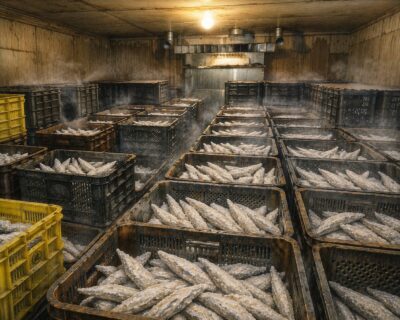
Katsuobushi is fermented in a controlled environment called a "muro."
Mold — typically from the Aspergillus genus (such as Eurotium herbariorum) — is introduced in a carefully regulated environment of temperature and humidity.
The fish then undergoes repeated cycles of drying, mold growth, and manual brushing.
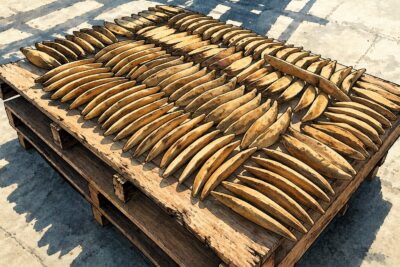
After the mold fully develops, the fish is laid out under the sun and thoroughly dried. The mold is then carefully brushed off by hand, piece by piece, before the fish is returned to the controlled environment for the next cycle.
This process — mold growth, sun drying, and brushing — is repeated three to six times over several months.
Over time, this transforms arabushi into honkarebushi, the most refined form of katsuobushi.
Each stage builds on the previous one, gradually transforming the fish from a perishable ingredient into a stable, concentrated source of umami.
Arabushi vs. Honkarebushi
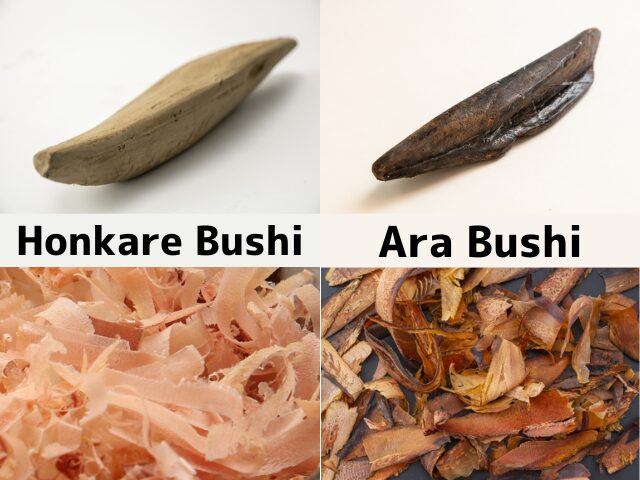
Arabushi has a stronger smoky flavor, while honkarebushi is more refined and delicate.
Most katsuobushi sold today is arabushi — smoked and dried, but not put through the full fermentation process.
- Arabushi: Pronounced smoky aroma, bold and direct flavor, with a slightly richer and more robust character
- Honkarebushi: Refined and elegant, with a cleaner taste, deeper umami, and a more delicate aroma
The difference is not simply about quality, but about how the fish has been transformed.
Because arabushi has not undergone mold fermentation, a small amount of fat remains. This does not create an oily broth, but it contributes to a stronger, more full-bodied flavor.
In contrast, honkarebushi has had much of its fat broken down during the mold process, resulting in a clearer and more refined dashi.
The contrast can be compared to young cheese versus aged cheese — one bold and immediate, the other subtle and layered.
ayered.
Why Mold Is Essential
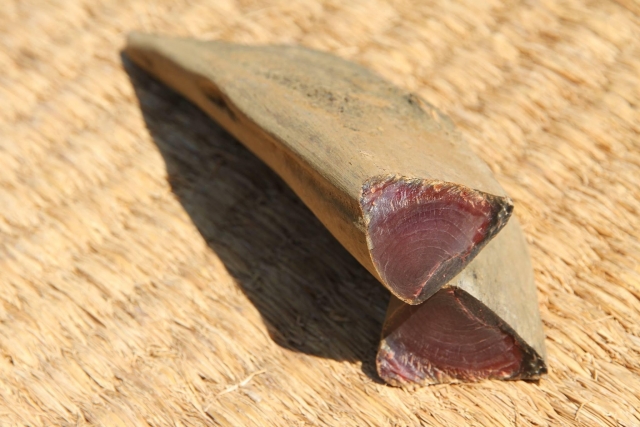
Mold is not simply added to katsuobushi — it is carefully managed through repeated cycles that transform the fish at a structural and chemical level.
- Draws moisture evenly from the center of the fish, enabling deep internal drying
- Breaks down fats through enzymes such as lipase
- Reduces fishy odors and refines the aroma
- Suppresses the growth of harmful bacteria
One of the most important effects is the breakdown of surface fats. As these fats are decomposed, the heavy, oily characteristics of the fish are reduced.
This is why katsuobushi — despite being made from a fatty fish — produces a remarkably clear and delicate broth.
This difference becomes clear when comparing arabushi and honkarebushi. While both produce clean-tasting broth, the fat reduction in honkarebushi results in a more transparent and refined dashi, whereas arabushi retains a slightly stronger and more robust character.
Why Katsuobushi Becomes Rock-Hard
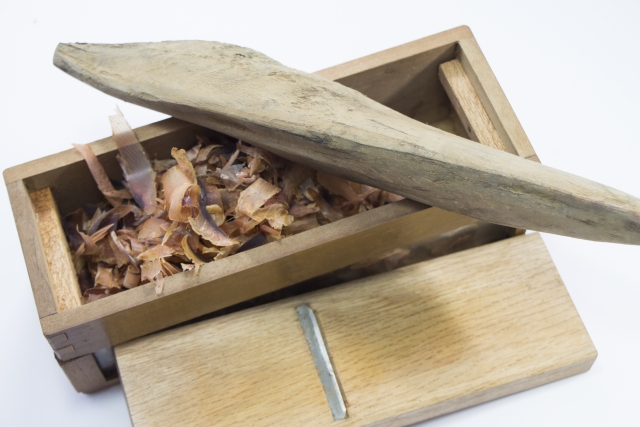
Katsuobushi is shaved using a tool similar to a carpenter’s plane.
By the end of the process, the moisture content has dropped to around 12–15%.
This extreme dryness means katsuobushi must be shaved into thin flakes using a tool called a kezuriki, which closely resembles a carpenter's plane. The analogy is apt — the fish has become nearly as hard as wood.
This hardness is not only about preservation. It also enables precise control over how flavor is extracted — a quality that aligns closely with the values of Japanese cooking.
Is Katsuobushi Really Like Cheese?
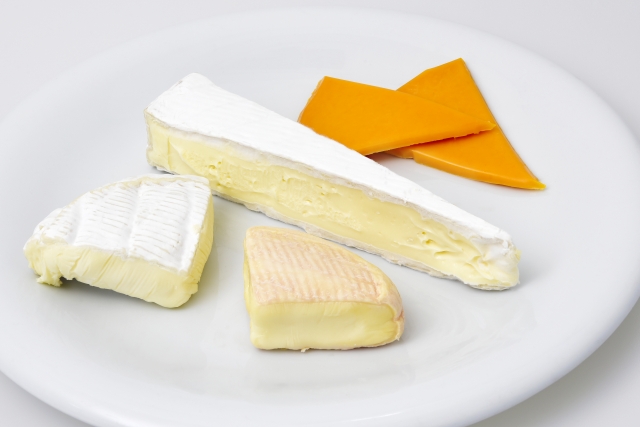
Katsuobushi is often compared to cheese because both rely on fermentation and extended aging to develop flavor.
The differences can be summarized as follows:
| Feature | Katsuobushi | Aged Cheese |
|---|---|---|
| Microorganisms | Mold (Aspergillus) | Bacteria / mold |
| Texture | Rock-hard | Firm but sliceable |
| Primary Umami | Inosinate | Glutamate |
The comparison is useful for explaining the fermentation process, but the two ingredients are fundamentally different in texture, flavor, and how they are used. Cheese retains moisture and fat and is eaten directly; katsuobushi is bone-dry, shaved into flakes, and steeped in liquid to release its flavor. The analogy opens a door, but the two belong to entirely different culinary worlds.
How This Process Creates Umami
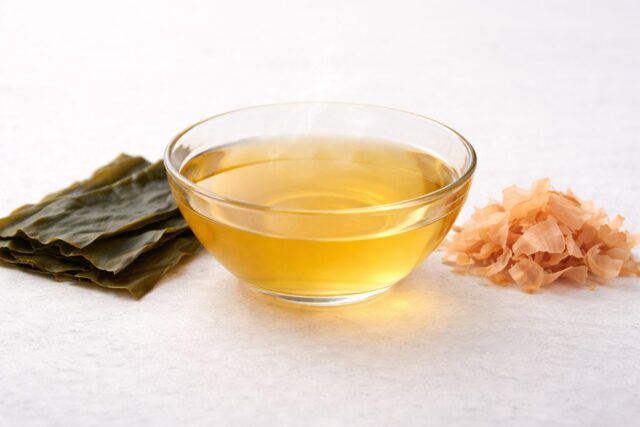
Kombu and katsuobushi create a clear broth through umami synergy.
The months-long transformation concentrates inosinate, a key umami compound found in fish.
When combined with kombu — which is rich in glutamate — the result is the powerful umami synergy that defines Japanese dashi.
When freshly shaved katsuobushi is added to hot liquid, its aroma blooms almost instantly: a deep, savory fragrance that reflects months of careful transformation.
Frequently Asked Questions

Why is mold used in katsuobushi?
Mold removes moisture, breaks down fats and proteins through enzymatic activity, enhances umami, and inhibits harmful bacteria — all essential to producing honkarebushi.
Why is katsuobushi so hard?
Repeated smoking, drying, and fermentation reduce the moisture content to around 12–15%, leaving the fish with the density and hardness of dry wood. This allows for long-term preservation and the precise, controlled shaving that Japanese cooking requires.
Is katsuobushi really like cheese?
Both involve fermentation and develop umami through aging, but they differ significantly in texture, moisture content, flavor profile, and use. The comparison helps explain the process, though the two ingredients are quite distinct in practice.
How can you tell high-quality katsuobushi?
High-quality pieces produce a clear, sharp sound when tapped together — closer to wood or ceramic than to fish. This resonance reflects the extreme dryness that marks a well-made piece.
Author’s Note
In Japan, most katsuobushi used in everyday cooking is arabushi rather than fully fermented honkarebushi. Yet many people have experienced the refined flavor of honkarebushi without necessarily knowing it — in carefully prepared dashi at restaurants or specialty shops.
This creates an interesting gap: people know the taste, but not always the process behind it. Many assume all katsuobushi is the same, even though the difference in production leads to a noticeable difference in flavor.
In that sense, katsuobushi is similar to cheese. Many people enjoy it without thinking about the role of mold or fermentation, only later discovering the craftsmanship behind it.
Related Reading on YUNOMI
Start Here
Core Ingredient
Related Ingredients
What Is Kombu?
What Are Dried Shiitake?
What Is Niboshi?
Applications in Dashi
What Is Awase Dashi?
What Is Ichiban Dashi?
How to Make Ichiban Dashi Step by Step
Understanding & Comparison
What Is Umami?
What Is Umami Synergy?
Dashi vs Broth

