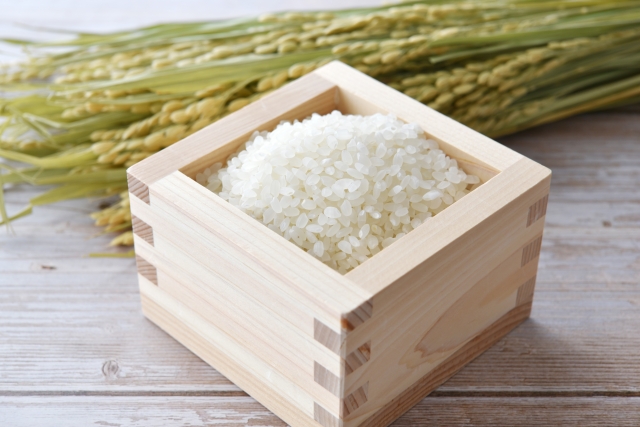
Rice is eaten in many parts of the world, but Japanese rice holds a particular place in Japanese food culture.
In Japan, rice is not usually treated as a side dish. It is the center of the meal. The soup, fish, pickles, vegetables, and small side dishes are often arranged around it.
Japanese rice is usually short-grain Japonica rice. When cooked, it becomes soft, moist, slightly sticky, and gently sweet. This texture matters. It allows rice to be eaten easily with chopsticks, shaped into onigiri, paired with sushi, and served as the quiet foundation of everyday meals.
This article explains what Japanese rice is, how it differs from other types of rice, why its texture matters, and what rice reveals about Japanese food culture.
Quick Summary
- Japanese rice is usually short-grain Japonica rice, known for its soft, moist, and slightly sticky texture.
- Its stickiness makes it easy to eat with chopsticks and shape into foods such as onigiri and sushi.
- In Japanese meals, rice is not just a side dish. It often functions as the center of the meal.
- The gentle sweetness and plainness of rice help balance salty, savory, fermented, and seasonal side dishes.
- Japanese rice culture connects everyday meals, home cooking, special occasions, and regional food traditions.
What Is Japanese Rice?
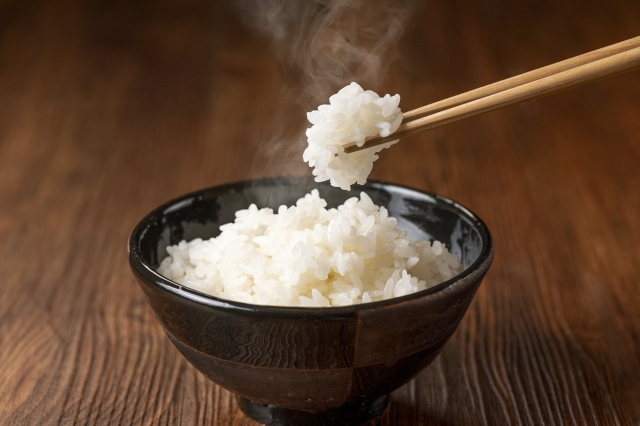
Japanese rice usually refers to short-grain Japonica rice — the type most commonly grown and eaten in Japan.
When cooked, Japanese rice becomes moist, tender, and slightly sticky. The grains cling together, but each one should still feel distinct and pleasant to eat.
This texture is one of the most important differences between Japanese rice and many long-grain varieties. Long-grain rice, such as basmati or jasmine, often cooks into separate, fluffy grains. Japanese rice is different. It is meant to hold together gently.
That quality makes it useful across many Japanese foods. It can be eaten with chopsticks, shaped into rice balls, pressed for sushi, or served in a bowl alongside soup and side dishes.
Japanese rice also has a mild sweetness. It is not strongly flavored, but its soft aroma and gentle taste allow it to work with many kinds of food.
This is why Japanese rice is not simply a source of carbohydrates. It is one of the ingredients that shapes how Japanese meals are built and eaten.
How Japanese Rice Differs from Other Rice
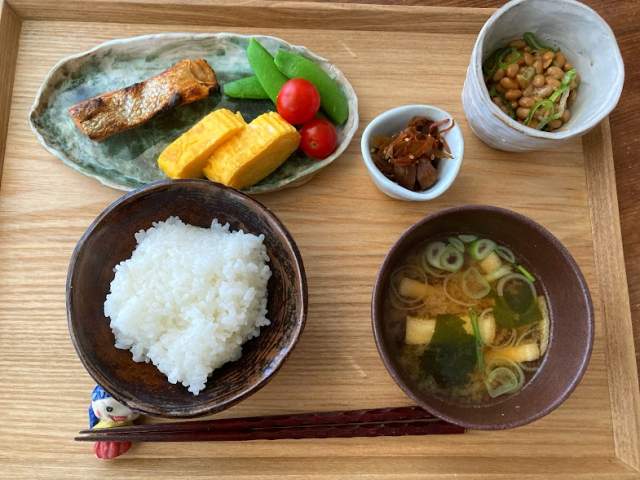
Japanese rice is often served as the quiet center of a meal, alongside miso soup, grilled fish, natto, and small side dishes.
Rice varies widely around the world. Long-grain rice, common in South and Southeast Asia, is often light, fragrant, and fluffy. Medium-grain rice is used in dishes such as risotto, where creaminess matters. Short-grain rice, including Japonica rice, is higher in moisture and stickiness.
Japanese rice belongs to this short-grain family.
The difference is not only visual. It affects the entire eating experience.
Japanese rice is designed to be eaten from a bowl, with chopsticks, alongside small dishes. Because the grains cling together, it is easy to lift a small bite cleanly. Because the flavor is gentle, it does not compete with the rest of the meal.
This is one reason Japanese rice works so naturally with grilled fish, miso soup, pickles, tamagoyaki, natto, and simmered vegetables. The rice does not need strong seasoning. It creates a calm base that lets other flavors come through clearly.
In this sense, Japanese rice is not only a variety of rice. It is part of a meal system.
Why Japanese Rice Is Sticky
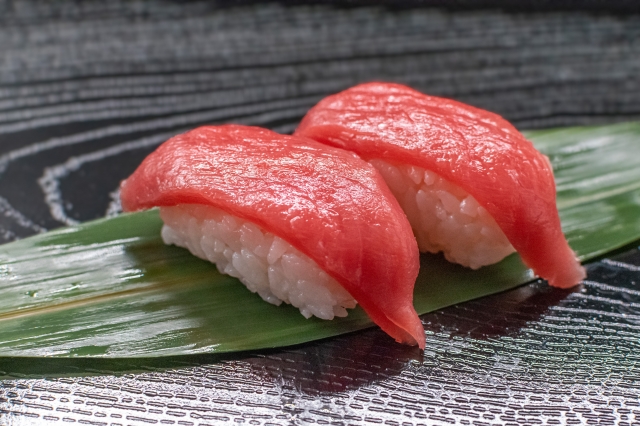
The slight stickiness of Japanese rice helps sushi keep its shape without becoming mushy.
The stickiness of Japanese rice comes from its starch structure.
Japanese short-grain rice contains a high proportion of amylopectin, a starch that makes cooked grains cling together. This does not mean the rice should be mushy. Well-cooked Japanese rice should be soft and moist, with each grain still holding a pleasant texture.
This stickiness is practical. It allows rice to be eaten neatly with chopsticks and makes it easy to shape.
Without this texture, onigiri would fall apart more easily. Sushi rice would not hold its form. A bowl of rice would be harder to eat in the way Japanese meals are designed.
The texture also affects how rice interacts with other foods. A bite of rice can absorb a little sauce, soften a strong flavor, or quietly balance saltiness. It becomes a steady partner to the rest of the meal.
This is one reason Japanese rice is valued not only for how it tastes, but for how it behaves.
Why Rice Is the Center of Japanese Meals
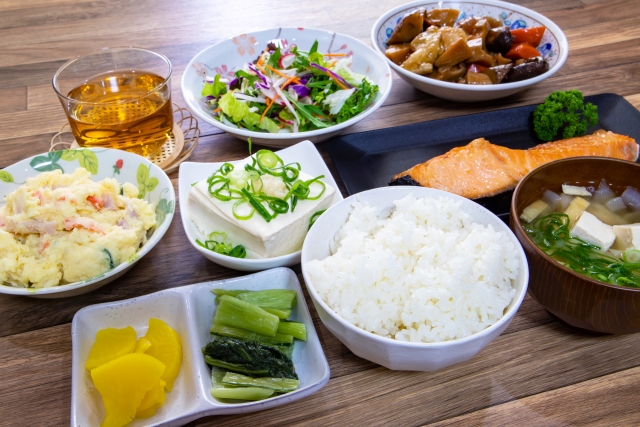
Rice serves as the quiet center of a Japanese meal, connecting a variety of flavors and side dishes.
In many Japanese meals, rice is the center around which other foods are arranged.
A typical meal may include rice, miso soup, a main dish, pickles, and one or more small side dishes. Those dishes may be salty, savory, fermented, grilled, simmered, or seasonal. Rice connects them.
This is different from meals built around one dominant main dish. In Japanese home cooking, the meal often works through balance. Rice provides a stable base. The other dishes add contrast.
Pickles give sharpness. Miso soup gives warmth. Fish or meat adds richness. Vegetables bring color and texture. Rice absorbs and quietly balances all of these elements.
This is why plain rice is not considered empty or boring in this context. Its plainness has a purpose. It allows the meal to breathe.
The Japanese word gohan can mean both cooked rice and a meal. This is not just a language detail. It reflects how closely rice has been woven into the very idea of eating in Japanese daily life.
Rice also shapes the pace of eating. A person may take a bite of fish, then rice. A sip of miso soup, then rice. A bit of pickle, then rice. The meal moves back and forth around the bowl of rice.
In this way, rice is not simply served alongside the meal. It helps organize it.
Why Japanese Rice Works for Sushi and Onigiri
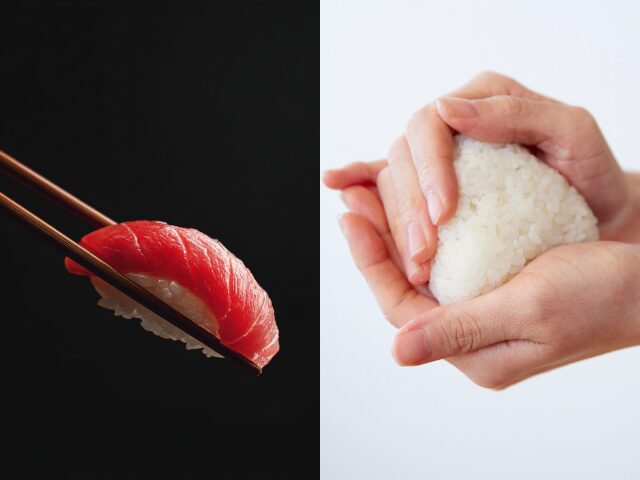
The same Japanese rice can become sushi or onigiri, showing how its texture adapts to different forms.
Two of the most internationally familiar rice foods from Japan are sushi and onigiri. Both depend on the qualities of Japanese short-grain rice.
Sushi rice must hold together without becoming heavy. It is seasoned with vinegar, sugar, and salt, but must still remain soft, cohesive, and balanced. If the grains fall apart too easily, sushi loses its shape. If the rice is too dense, it becomes unpleasant to eat.
Onigiri also depends on rice that can hold its form. A rice ball is simple, but that simplicity only works because Japanese rice can be shaped by hand and still feel tender when eaten.
This is where the texture of Japanese rice becomes part of food culture. The same grain can be a bowl of rice at dinner, a rice ball for lunch, or the base of sushi at a restaurant.
The rice adapts to different situations without losing its character.
This flexibility helps explain why rice appears in so many forms in Japan — plain, shaped, seasoned, wrapped in nori, mixed with other ingredients, or prepared for celebrations.
How Japanese Rice Is Cooked and Served
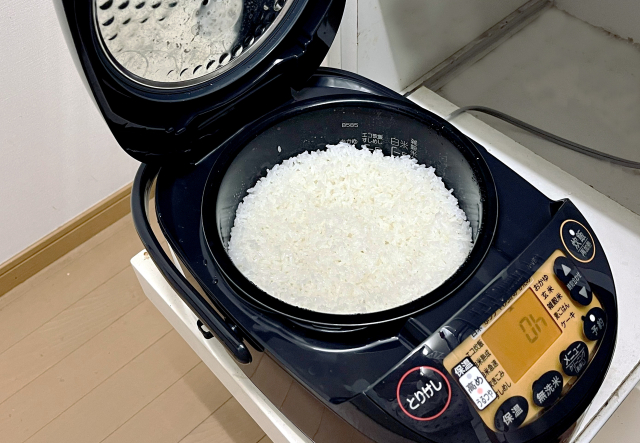
Cooking Japanese rice is straightforward, but the goal is specific: soft, moist grains that hold together without becoming heavy.
Before cooking, rice is usually washed to remove excess surface starch. After cooking, it is left to rest so moisture settles evenly through the grains. Today, most Japanese households use a rice cooker, which makes this process easy and consistent.
But the cultural detail that matters most is not only how rice is cooked. It is how rice is served and eaten.
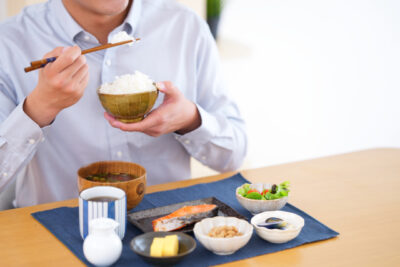
Japanese rice is usually served in a small bowl and eaten with chopsticks, becoming the steady center of the mea
Japanese rice is usually placed in a small bowl called a chawan. The bowl is often held in one hand while the person eats with chopsticks in the other. Because the rice clings together gently, it can be lifted cleanly in small bites.
The bowl of rice is not just a container. It shapes the physical experience of the meal.
Rice is close to the body, held in the hand, and returned to again and again between bites of other dishes. It becomes the steady center of the eating rhythm.
Rice in Everyday and Special Meals
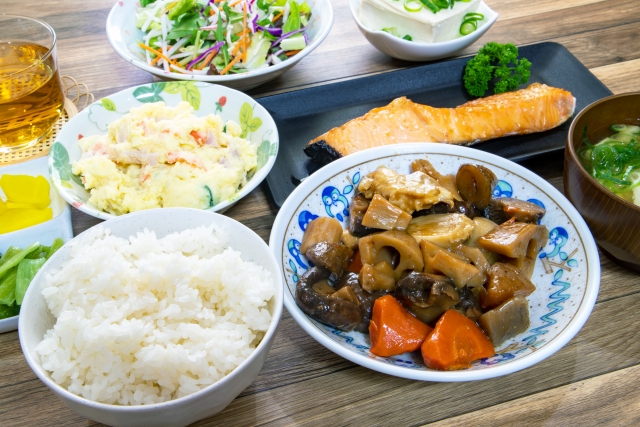
Rice appears in both ordinary and meaningful moments in Japanese life. It is not limited to one type of meal or one kind of occasion. Instead, it moves easily between daily routines, packed lunches, seasonal dishes, celebrations, and comfort food.
Rice in Everyday Meals
On an ordinary day, rice might be served with miso soup, grilled fish, pickles, eggs, natto, or the previous night's leftovers. It is practical, filling, and flexible.
In this everyday setting, rice does not need to stand out strongly. It works because it can sit quietly beside many different foods. Salty, fermented, grilled, simmered, or lightly seasoned dishes can all be balanced by a bowl of plain rice.
Onigiri and Rice Outside the Home
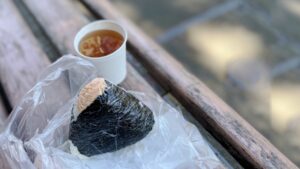
Easy to carry and simple to eat, onigiri shows how naturally Japanese rice fits into life beyond the home.
Rice also travels well. Onigiri can be taken to school, work, a picnic, or a train journey — one of the clearest examples of how Japanese rice moves naturally into everyday life outside the home.
This is possible because Japanese short-grain rice can hold its shape while still remaining soft. A simple rice ball can be portable, filling, and easy to eat, yet it still feels closely connected to the same rice served at home.
Rice for Celebrations and Seasons
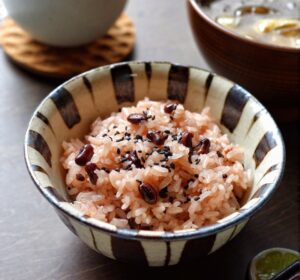
There are also rice dishes connected to special occasions. Sekihan, made with glutinous rice and red beans, is served at celebrations because its reddish color is associated with good fortune. Takikomi gohan, rice cooked with seasonal ingredients, reflects the changing seasons and what local produce is at its best.
Rice is also connected to seasonality through shinmai, or newly harvested rice. Each autumn, many people look forward to shinmai for its fresh aroma, extra moisture, and particularly gentle sweetness. The arrival of new rice is a reminder that even the most familiar staple can carry a seasonal feeling.
Rice as Comfort Food
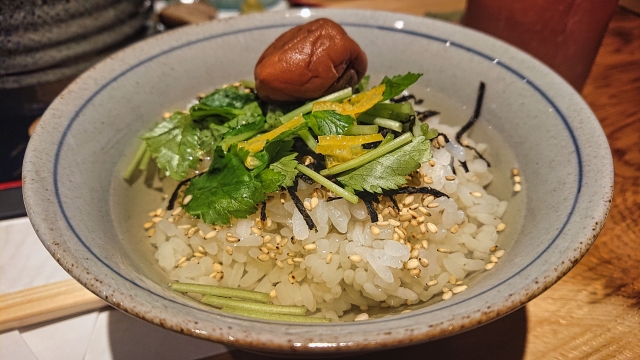
Rice can also become comfort food. Tamago kake gohan — rice mixed with raw egg and soy sauce — is simple but deeply familiar to many people in Japan. Ochazuke, rice with tea or broth poured over it, is another quiet, comforting way to eat rice at the end of a day.
These dishes show how rice moves between ordinary routine, convenience, celebration, seasonality, and memory. It can be plain, shaped, seasoned, mixed with other ingredients, or softened with tea or broth. In each form, rice remains one of the most familiar anchors of Japanese eating.
Popular Japanese Rice Varieties
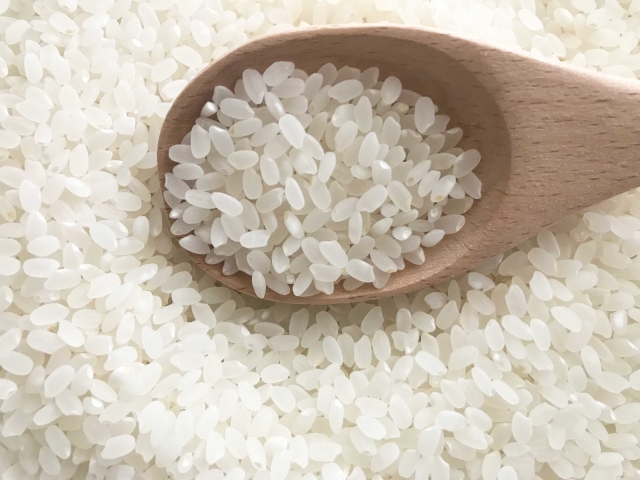
Japanese rice varieties differ in texture, sweetness, and stickiness, even when the grains look similar to the eye.
Japan grows many rice varieties, and different regions are known for different qualities.
Koshihikari is one of the most widely recognized. Known for its glossy appearance, pleasant stickiness, and full flavor, it is often associated with high-quality everyday table rice.
Sasanishiki, from Miyagi Prefecture, is lighter and less sticky than Koshihikari. Its clean texture has made it a long-standing choice for sushi.
Akitakomachi, from Akita Prefecture, is valued for its softness and mild sweetness, making it popular for everyday meals.
Hitomebore, grown mainly in the Tohoku region, is appreciated for its balanced texture and flavor. Its name means "love at first sight" — a reflection of its reputation as a reliably appealing table rice.
These varieties show that Japanese rice is not one single product. Like miso, tea, or sake, it varies by region, carries local identity, and reflects preferences shaped by climate and taste over time.
What Japanese Rice Reveals About Food Culture
Japanese rice points to an important idea in Japanese food culture: the quiet base of a meal can matter just as much as the most flavorful dish.
Rice does not need to be bold. It does not need strong seasoning to play an essential role. Its purpose is to receive, balance, and connect.
This is why rice works so well alongside miso soup, pickles, soy sauce, grilled fish, natto, and many other foods. Those ingredients can be salty, fermented, smoky, sour, or rich. Rice gives them somewhere to settle.
Japanese rice also shows how texture can shape food culture. Its stickiness is not just a technical characteristic. It makes chopstick eating easier, supports onigiri and sushi, and creates a particular relationship between rice and the dishes around it.
Finally, rice connects daily life with occasion. The same basic ingredient appears in an ordinary breakfast, a convenience store rice ball, a sushi counter, or a celebratory bowl of sekihan.
That is why Japanese rice is more than a staple food. It is one of the quiet structures that holds Japanese meals together.
Author's Note
For many Japanese people, rice is not something we think about every time we eat it. It is simply there.
It is in the small bowl beside miso soup. It is in the onigiri taken to school or work. It is in the smell of freshly cooked rice when the rice cooker opens.
But many Japanese people also notice the character of Japanese rice more clearly when they travel abroad. Rice in other countries can be long, dry, fragrant, fluffy, or served in ways that feel unfamiliar at first — even in a salad. Those forms of rice are not wrong. They belong naturally to their own food cultures.
That experience can make Japanese rice feel more specific. Its softness, moisture, stickiness, and gentle sweetness are not universal qualities of rice. They are part of what Japanese taste has come to value over time.
Because rice is so familiar, it is easy to overlook. But in Japanese meals, it quietly determines how everything else fits together.
Japanese rice does not try to be the loudest flavor on the table. It supports everything else — softening saltiness, carrying side dishes, and giving the meal a center.
On YUNOMI, I try to explain Japanese food not only through special dishes, but through the ordinary things that quietly shape daily life. Rice may be the clearest example of that.
FAQ
Is Japanese rice the same as sushi rice?
Not exactly. Japanese rice usually refers to short-grain Japonica rice. Sushi rice is Japanese rice that has been cooked and seasoned with vinegar, sugar, and salt specifically for sushi.
Why is Japanese rice sticky?
Japanese short-grain rice contains a high proportion of amylopectin, a starch that makes the grains cling together when cooked. This produces Japanese rice's characteristic soft, slightly sticky texture.
Is Japanese rice different from jasmine or basmati rice?
Yes. Jasmine and basmati are long-grain varieties that typically cook into separate, fluffy grains. Japanese rice is short-grain and becomes moist, tender, and slightly sticky.
Why is rice so important in Japanese meals?
Rice often acts as the center of the meal, balancing salty, fermented, grilled, and seasonal side dishes. It works naturally with miso soup, pickles, fish, vegetables, and many other foods.
What rice is used for onigiri?
Onigiri is usually made with Japanese short-grain rice, which holds its shape when pressed by hand while remaining soft and pleasant to eat.
What rice is used for sushi?
Sushi is made with Japanese short-grain rice that has been cooked and seasoned with vinegar, sugar, and salt. The rice must hold together without becoming too dense.
Do Japanese people eat rice every day?
Many people in Japan eat rice frequently — often at breakfast, lunch, or dinner. However, modern diets are more varied than in the past, and bread, noodles, and other foods are also common.
What does gohan mean in Japanese?
Gohan can mean cooked rice, but it can also mean a meal. This reflects how closely rice has been tied to the idea of eating itself in Japanese daily life.
What is shinmai?
Shinmai means newly harvested rice. Enjoyed in autumn, it is valued for its fresh aroma, extra moisture, and particularly gentle sweetness.
Is Japanese rice healthy?
Japanese rice is a source of carbohydrates and energy. In Japanese food culture, it is generally understood less as a health food on its own and more as part of a balanced meal that includes soup, vegetables, protein, and side dishes.

