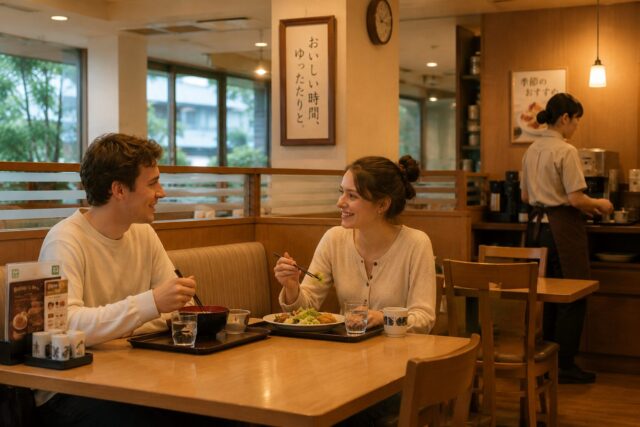
In some countries, servers frequently return to the table to ask "How is everything?" or "Can I get you anything else?" In Japan, however, staff often keep a greater distance unless customers actively request something.At first, this can feel cold or inattentive to visitors unfamiliar with Japanese restaurant culture. In reality, it is usually intended to create a calmer, smoother, and less pressured dining experience.
This reflects a broader Japanese preference for low-pressure hospitality, minimal interruption, and a calm dining atmosphere.
In Japan, "Not Interrupting" Can Be Considered Good Service
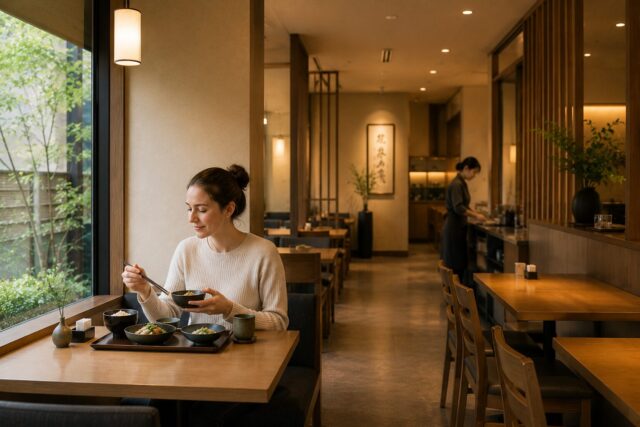
Many Japanese restaurants are designed to let customers enjoy meals without constant interruption from staff.
In many Western countries, attentive service means frequent interaction — servers returning to refill drinks, check whether the food is good, or ask if anything else is needed.
In Japan, many restaurants take a different approach. Staff often try to avoid interrupting customers unless there is a clear reason to do so.
For many Japanese diners, this creates a more comfortable atmosphere: conversations can flow, meals can proceed, and personal space is respected without repeated social interruptions.
Where Western service often emphasizes visible care and active engagement, Japanese service tends to emphasize respect for the customer's own rhythm. In this sense, quietly stepping back is itself a form of hospitality.
Customers Are Expected to Request Help When Needed
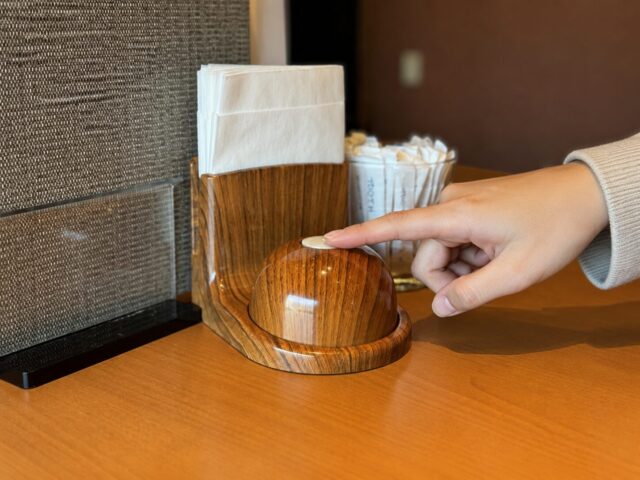
Many Japanese restaurants use table call buttons so customers can request help only when needed.
One reason Japanese restaurants can operate with less table interruption is that customers are generally expected to signal staff when they need something.
Many restaurants — especially family restaurants, izakaya, and larger chains — place call buttons directly on the table.
When customers want additional water, another order, or the bill, they press the button and staff come to the table.
In restaurants without call buttons, saying "Sumimasen" in a normal speaking voice is usually enough to get attention. Because customers can request help whenever they need it, staff do not have to check on every table repeatedly throughout the meal.
This gives customers more control over when interaction happens — and reduces unnecessary back-and-forth for both sides.
Pro Tip: You Are Not Being Ignored
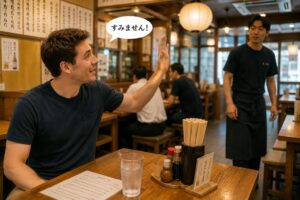
In restaurants without call buttons, customers often say “Sumimasen” to politely get staff attention.
If staff are not checking on your table constantly, it is usually not a sign of poor service. In many Japanese restaurants, giving customers uninterrupted time is considered a form of respect.
If you need something, simply press the call button or say "Sumimasen" — clear communication from customers is completely normal and welcomed.
The Goal Is Often to Preserve a Calm Atmosphere
Japanese restaurants often place strong value on maintaining a calm, organized atmosphere in the dining space. Frequent interruptions from staff can break the rhythm of conversation or create subtle social pressure to respond politely each time.
By limiting unnecessary interaction, restaurants create a quieter environment where customers feel more relaxed and less observed.
Staff may also avoid prolonged eye contact for the same reason — to prevent customers from feeling watched or pressured during their meal. This is part of why many restaurants in Japan feel noticeably quieter than those in some other countries.
The service style is designed to feel present when needed, and unobtrusive the rest of the time.
Japanese Staff Are Often Watching Quietly in the Background
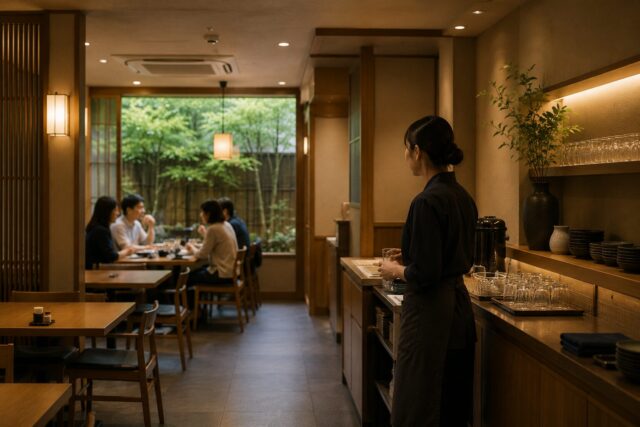
Japanese restaurant staff often watch quietly in the background rather than interrupting customers repeatedly.
Although Japanese staff may appear less attentive because they are not constantly approaching the table, they are often carefully observing the dining area from a distance.
Experienced staff notice empty glasses, finished plates, customers glancing around for help, or signs that a table may soon be ready to pay — all without making their presence feel intrusive.
This creates a style of service that can feel almost invisible compared to more interaction-heavy restaurant cultures.
It might be described as "invisible hospitality" — support that is genuinely present, but designed to work quietly in the background rather than at the forefront of the experience.
Some Restaurants Still Use More Interactive Service
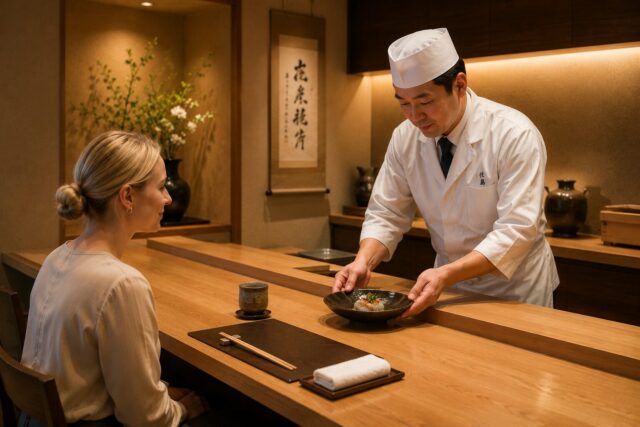
High-end Japanese restaurants may provide more personalized interaction while still avoiding unnecessary interruption.
Not all Japanese restaurants follow the same approach.
High-end restaurants, small traditional establishments, and luxury hospitality settings often involve much closer staff interaction and highly personalized service — where staff may quietly anticipate needs before anything is requested.
Even in these settings, however, attentive Japanese service tends to avoid excessive casual conversation or repeated interruption during the meal itself.
The underlying goal usually remains the same: supporting the dining experience without dominating it.
This Service Style Reflects Broader Japanese Social Values
The low-interruption approach found in many Japanese restaurants reflects broader social patterns throughout Japanese life. In many situations, people try to avoid imposing unnecessarily on others or initiating interaction unless it is clearly welcome.
This is not unfriendliness or emotional distance — rather, smooth coexistence, quiet attentiveness, and respect for personal space are considered natural signs of consideration.
Japanese restaurant service reflects these same values in a very practical setting.
FAQ
Why don't Japanese waiters check on tables frequently?
Many Japanese restaurants prefer to avoid unnecessary interruption during meals. Customers are generally expected to request assistance when they need it rather than waiting to be approached.
Are Japanese restaurant staff ignoring customers?
Usually not. Staff are often quietly observing the dining area while trying not to disturb customers unnecessarily. The attentiveness is real — it is simply expressed differently.
How do you call staff in Japanese restaurants?
Many restaurants use table call buttons. In others, customers say "Sumimasen" clearly enough to be heard, often with a light raise of the hand.
Why do Japanese restaurants feel quieter?
Many Japanese restaurants intentionally minimize unnecessary staff interaction to maintain a calmer, more relaxed atmosphere throughout the meal.
Do all Japanese restaurants use this service style?
No. High-end and traditional restaurants often provide much more personalized and attentive service, though even these tend to avoid excessive interruption.
Is this considered polite in Japan?
Yes. Giving customers space and avoiding unnecessary interruption is widely considered respectful and considerate in Japanese restaurant culture.
Do Japanese customers prefer less interaction while eating?
Many do. Quiet, low-pressure dining is generally considered more relaxing and comfortable than frequent check-ins.
What should I do if I need something during the meal?
Press the call button if there is one, or say "Sumimasen" clearly. Staff generally respond quickly once called — there is no need to hesitate.
Related Reading on YUNOMI
- Japanese Restaurant & Hospitality Culture: Why Dining in Japan Feels So Different
- Why Do Japanese Restaurants Feel So Quiet?
- Why Do Japanese Restaurants Call Out “Sumimasen” Instead of Waiting Quietly?
- Why Do Japanese Restaurants Have Call Buttons on the Table?
- Why Do Japanese Restaurants Bring the Bill Before You Ask?

