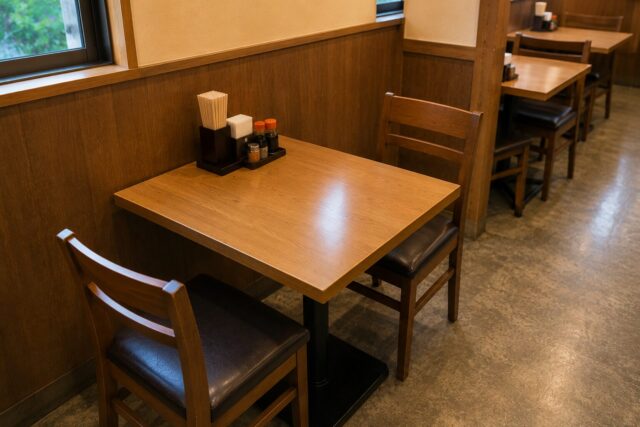
Many visitors to Japan notice that restaurant tables can feel surprisingly small.
At first, it is easy to assume this is simply because Japanese cities have limited space.
Many Japanese people, however, rarely think about the tables themselves at all.
Perhaps that is because many restaurants in Japan are quietly understood as shared spaces. Without strict rules or written instructions, customers naturally adjust to the atmosphere around them — and the size of the table becomes part of that experience.
Quick Summary
- Limited space is one reason Japanese restaurant tables can feel smaller.
- Many everyday meals are designed for individual diners.
- Different restaurants are built for different kinds of experiences.
- Many customers naturally use only the space they need.
- Compact tables reflect a shared understanding that the dining space belongs to everyone.
Different Restaurants Are Designed for Different Purposes
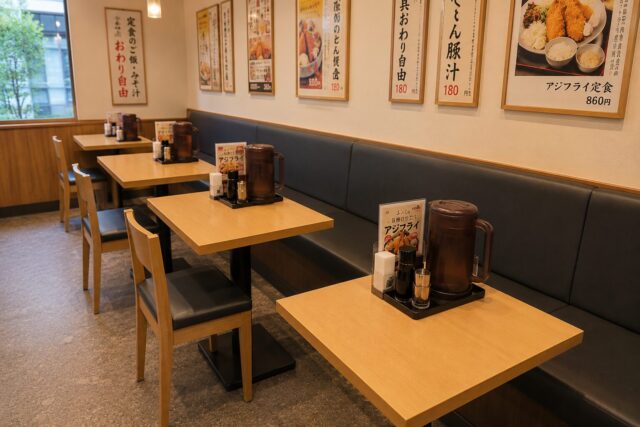
Not every restaurant in Japan is meant to be used in the same way.
A café may be a place to linger over coffee and conversation for hours. An izakaya is often a place for sharing drinks and food with friends.
Many everyday restaurants, however, are built around the meal itself.
Ramen shops, soba restaurants, teishoku restaurants, and many specialty shops are places where the food is the main event. The space is often designed to support that purpose.
The table is simply one part of that design.
Many Meals Naturally Fit Into a Smaller Space
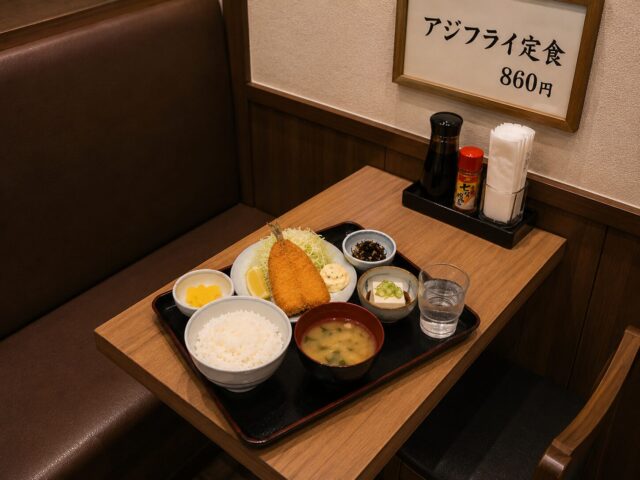
The way food is served also plays a role.
Many Japanese meals come as individual servings rather than large shared dishes.
A teishoku meal usually arrives on a tray with rice, soup, and side dishes arranged for one person. Ramen, soba, sushi sets, and many other meals create a complete personal dining space in the same way.
For many Japanese customers, if there is enough room for the meal, a drink, and a few personal items, the table already feels like enough.
A Shared Space Without Many Rules
One of the more striking aspects of Japanese restaurant culture is how much is left unspoken.
There are usually no rules telling customers to choose a smaller table, sit at the counter, or leave when the restaurant gets busy.
Even so, many people naturally adjust to the situation around them.
Someone dining alone may gravitate toward a counter seat. A couple may choose a smaller table rather than occupying a larger one. During a busy lunch hour, many customers quietly become aware that others may be waiting.
Nobody needs to say anything.
For many people, it simply feels like the natural way to share a space with others.
Restaurants and Customers Quietly Support Each Other
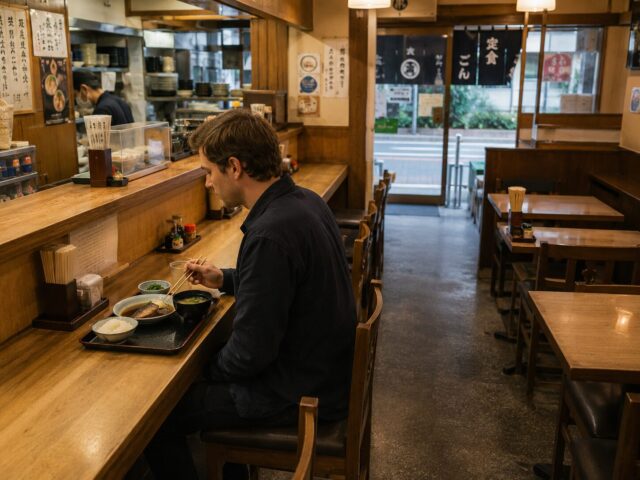
Many people dining alone in Japan naturally choose a counter seat, helping restaurants and customers share the space comfortably.
Restaurants need enough seats to operate successfully, while customers want enough space to enjoy their meal in comfort.
Rather than pulling in opposite directions, these needs often meet somewhere in the middle.
A busy ramen shop, for example, may never ask customers to leave quickly. At the same time, many people naturally wrap up their meal and make room for the next customer when they notice others waiting outside.
The same quiet understanding shows up when someone chooses a counter seat while dining alone, or feels that a smaller table is perfectly sufficient for a small group.
In many ways, the compact tables that visitors notice are one result of this unspoken agreement between restaurants and their customers.
A Different Idea of Hospitality
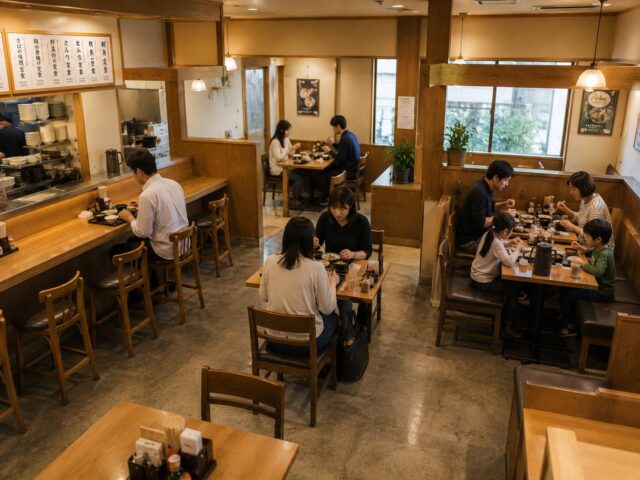
Some visitors may feel that offering the largest possible table would be the more generous approach.
Many Japanese restaurants see it differently.
Rather than trying to give each customer as much space as possible, many aim to create an environment where everyone can enjoy the restaurant comfortably.
Many people also naturally try not to inconvenience those around them, and the table itself becomes one small expression of that shared consideration.
The goal is not simply efficiency.
It is to keep unnecessary friction out of the experience and allow everyone to share the space with ease.
Perhaps that is why many Japanese people barely notice that the tables are small.
To them, they simply feel right.
Author's Note
As a Japanese person, I had never really thought about restaurant tables being small until someone from overseas brought it up.
When I eat alone, I naturally gravitate toward a counter seat or a smaller table. When a restaurant is busy, I find myself thinking about the customers waiting behind me.
Nobody has ever told me to do this, and there are no written rules requiring it.
I simply feel that taking only the space I need is the more natural way to be in a shared place.
Looking back, I think many Japanese people quietly try to avoid causing inconvenience — to the restaurant or to the people around them.
Perhaps that shared understanding is one reason compact restaurant spaces feel so natural to us.
FAQ
Why are restaurant tables often small in Japan?
Limited space is one reason, but many restaurants are also designed around individual meals and smaller groups.
Are Japanese restaurants trying to make customers leave quickly?
Usually not. Many customers naturally adjust to the mood of the restaurant, especially when it gets busy.
Is it rude to stay a long time?
There is usually no strict rule. However, many people become more mindful of others when the restaurant is crowded.
Where should I put my bag?
Many restaurants provide baskets, hooks, or storage boxes for personal belongings.
Are all restaurant tables in Japan small?
No. Cafés, family restaurants, and many izakaya tend to have larger tables because they are designed for different kinds of experiences.
Related Reading on YUNOMI
- Japanese Restaurant & Hospitality Culture: Why Dining in Japan Feels So Different
- Why Do Japanese Restaurants Have So Many Counter Seats?
- Why Do Japanese Restaurants Feel So Quiet?
- Why Are So Many Japanese Restaurants Specialized in One Dish?
- Why Do Japanese People Line Up for Restaurants?

