In many cases, they wait because a restaurant has earned their trust, built a reputation, and created the belief that the experience will be worth it.
Why Are Restaurant Lines So Common in Japan?
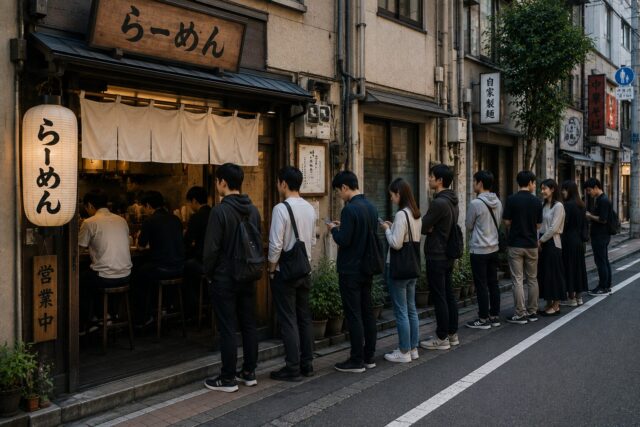
Restaurant lines are especially common in busy cities, shopping districts, and neighborhoods known for good food.
Some restaurants have only a handful of counter seats. Others prepare a limited number of bowls or portions each day.
When a restaurant becomes popular, demand can easily outpace the number of seats available.
This is particularly true for small specialty restaurants.
A ramen shop, soba restaurant, curry shop, or tonkatsu specialist may focus on doing one thing exceptionally well — but that also means it cannot always serve large crowds quickly.
Lines naturally follow.
A Long Line Often Signals Trust
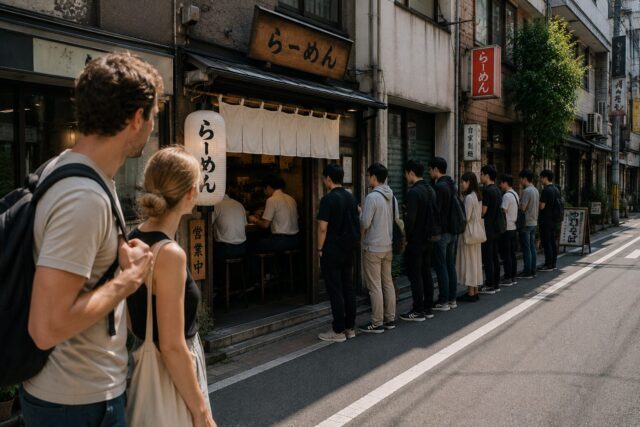
In Japan, a long line outside a restaurant often sends a powerful message.
It tells passersby that others believe the food is worth waiting for.
A queue does not automatically guarantee that a restaurant is excellent.
Even so, many people read it as a sign of reputation.
If that many customers are willing to wait, there is probably a reason.
This creates a kind of social proof.
The line itself becomes part of the restaurant's public reputation.
Specialty Restaurants Make Lines More Understandable
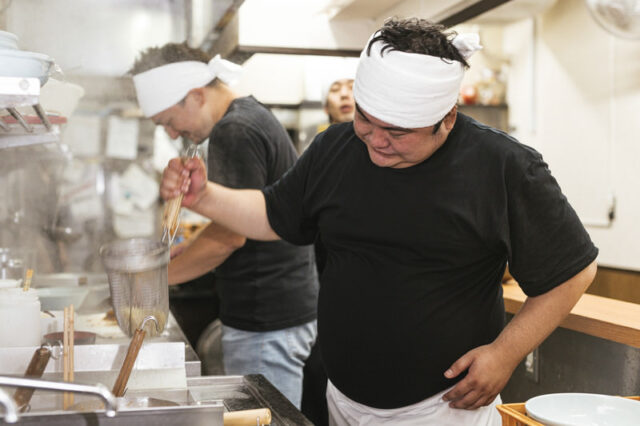
Restaurant lines in Japan are closely tied to specialty restaurant culture.
Many Japanese restaurants build their identity around a single dish or a narrow category of food.
A ramen shop may be known for a particular broth. A soba restaurant may be celebrated for its handmade noodles. An unagi restaurant may be known for its grilling technique and signature sauce.
When customers want that specific experience, no nearby alternative feels quite like an equal substitute.
They are not simply looking for something to eat.
They are looking for that bowl, that sauce, that texture — that particular chef's version of a dish.
This is one reason people are willing to wait.
The line is not only about hunger.
It is about anticipation.
Waiting Does Not Mean People Enjoy Waiting
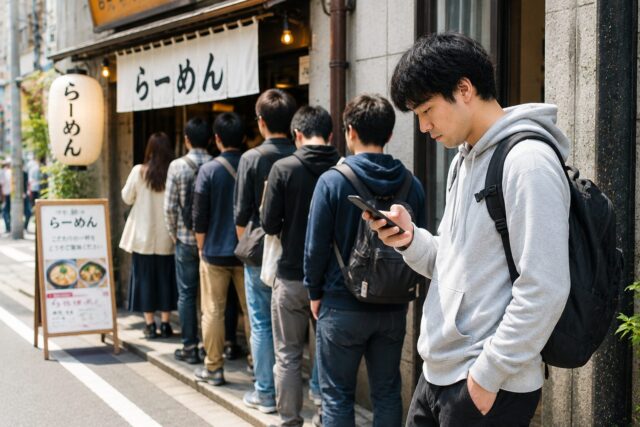
It is worth being clear about this part of Japanese culture.
Most Japanese people do not enjoy waiting in line for its own sake.
A long queue can still be tiring, inconvenient, or frustrating.
The difference is that many people are willing to accept the wait when they believe the experience on the other side will be worthwhile.
The value is not in the waiting itself.
The value is in what comes after.
Orderly Lines Help Make Waiting Easier
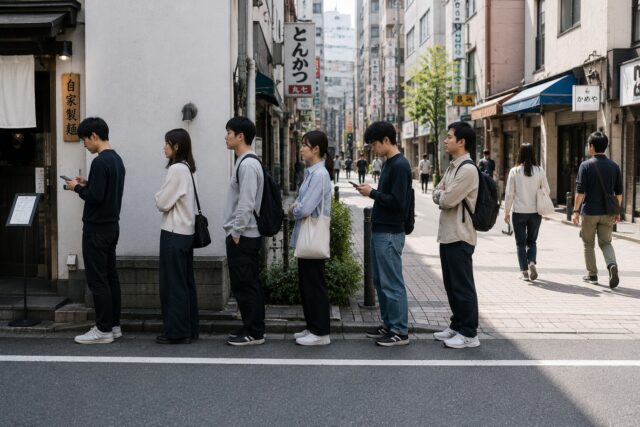
Part of the reason restaurant lines work as smoothly as they do in Japan is that people are generally expected to queue in an orderly way.
Customers wait their turn, follow any posted instructions, and do not cut in front of others.
Some restaurants place signs explaining where to stand, when to enter, or whether to purchase a meal ticket before joining the queue.
None of this makes waiting enjoyable.
But it does make the process straightforward.
When everyone follows the same basic order, the line feels less chaotic and more manageable.
Pro Tip: Check the Entrance Before You Wait
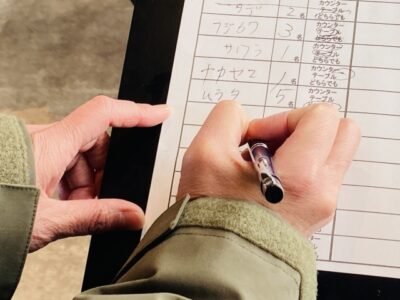
Before joining a restaurant line, take a quick look at the entrance.
Some popular restaurants, especially ramen shops and small specialty restaurants, use a waiting list instead of a simple first-come, first-served line.
You may find a clipboard or sign-in sheet near the door where customers write their names and the number of people in their group before waiting.
If you see other customers writing their names, it is usually a good idea to do the same.
To avoid the busiest periods, try visiting a little before or after the main lunch or dinner rush.
Many Japanese customers also try not to linger too long after finishing their meal, especially when others are waiting outside.
This small consideration helps keep things moving for everyone.
Lines Can Also Build Anticipation
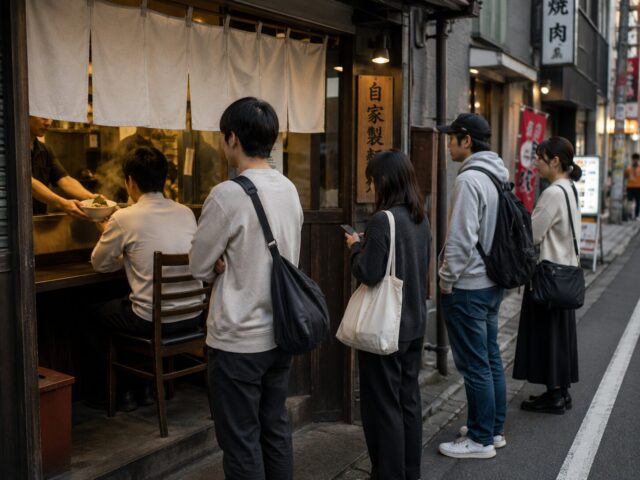
Waiting can sometimes make the meal feel more special.
Standing in line gives people time to take in the restaurant, catch the smell of the food, watch satisfied customers leave, and imagine what they are about to eat.
A ramen shop may let the aroma of its broth drift out into the street.
A small counter restaurant may offer a partial view of the cooking through the window.
By the time people finally sit down, the experience has already begun.
The line is not the main attraction.
But it can deepen the feeling that the meal ahead is something genuinely worth experiencing.
Not Every Popular Restaurant Has a Long Wait
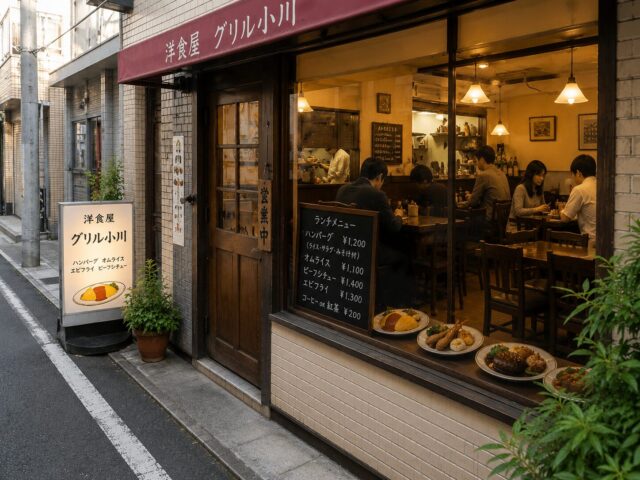
Of course, not every good restaurant in Japan has a line.
Many excellent restaurants accept reservations, have larger seating areas, or draw loyal crowds without ever attracting an obvious queue.
Some local favorites are only busy at certain times of day.
Others are known mainly to neighborhood regulars.
Japan is full of small restaurants that never appear in guidebooks but have quietly spent years perfecting their craft.
Finding one of those places can be just as rewarding as visiting a famous restaurant with a long queue out front.
A long line is one sign of popularity, but it is not the only measure of quality.
Travelers should not assume that a restaurant without a queue is not worth their time.
More Than Just Waiting for Food
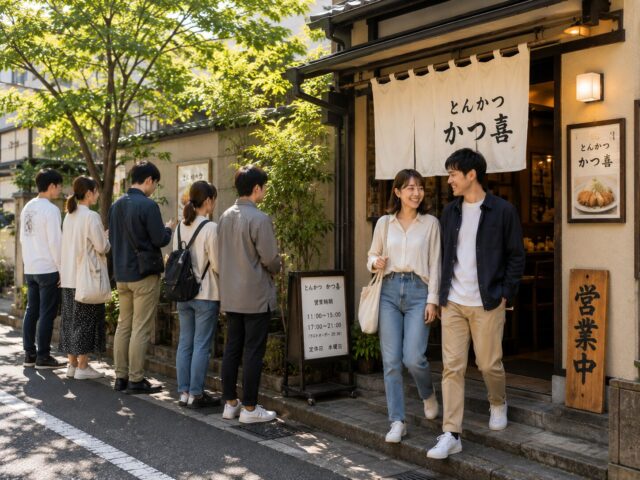
At a deeper level, restaurant lines in Japan reveal how trust, reputation, and expectation shape dining culture.
People are often willing to wait when they feel a restaurant has genuinely earned its reputation.
This connects directly with Japan's specialty restaurant culture.
When a restaurant spends years refining a single dish, and customers come to believe in that dedication, waiting becomes something easier to understand.
A queue is not simply a crowd of hungry people.
It is often a visible sign that many customers believe the experience is worth their time.
In the end, people are not simply waiting for lunch.
They are often waiting for the chance to experience someone's lifelong dedication to doing one thing exceptionally well.
FAQ
Should I buy a meal ticket before joining the line?
It depends on the restaurant.
Many popular ramen shops ask customers to purchase a meal ticket from a vending machine before joining the queue, while others do not.
Checking the entrance or any nearby signs is usually the safest approach.
Is it rude to leave the line if I change my mind?
No.
If the wait turns out to be longer than expected, quietly stepping out of the line is generally fine.
Is it normal to use a smartphone while waiting?
Yes.
Many people check their phones or chat quietly while waiting, as long as they stay in place and do not disturb others nearby.
How can I avoid the longest restaurant lines?
Arriving a little before or after the main lunch and dinner rush often makes a noticeable difference.
Many popular restaurants are significantly quieter outside peak hours.
Do I have to wait in line to enjoy good food in Japan?
Not at all.
Japan has countless excellent local restaurants that attract devoted regulars without ever forming a long queue.
Why do restaurant lines in Japan seem so orderly?
Most people naturally wait their turn, follow posted signs, and try not to inconvenience those around them.
This shared expectation makes the whole process feel calmer and less stressful than it might elsewhere.
Related Reading on YUNOMI
- Japanese Restaurant & Hospitality Culture: Why Dining in Japan Feels So Different
- Why Are So Many Japanese Restaurants Specialized in One Dish?
- Why Do Japanese Restaurants Display Food Replicas?
- Why Do Japanese Restaurants Often Have Small Tables?
- Why Do Japanese Restaurants Have So Many Counter Seats?

