Unlike phrases such as “thank you” or “goodbye,” the expression can feel difficult to translate directly.
Some travelers are unsure whether they are expected to say it themselves, while others wonder why Japanese customers say it even in casual restaurants or convenience stores.
In Japan, however, “Gochisousama” is often understood as a small expression of appreciation toward the meal, the effort behind it, and the people who made the dining experience possible.
In restaurants, many Japanese people say it quietly when leaving as a polite way to acknowledge the staff and the dining experience. The phrase reflects a broader cultural tendency in Japan to express appreciation at the end of shared social interactions, even in everyday situations.
What Does "Gochisousama" Mean?
"Gochisousama deshita" is commonly said after eating a meal in Japan. It is often translated into English as "Thank you for the meal," "That was delicious," or "Thank you for the food" — though none of these fully capture the nuance of the original phrase.
Historically, the word gochisou referred to the effort involved in preparing food and gathering ingredients. Over time, the phrase evolved into a broader expression of gratitude toward the meal itself and the people connected to it. Today, many Japanese people use "Gochisousama deshita" almost automatically after eating, especially in restaurants or shared meals.
The phrase is also widely understood as the natural counterpart to "Itadakimasu," which many Japanese people say before eating. Together, the two expressions frame the beginning and end of the meal experience.
Why Japanese People Say It When Leaving Restaurants
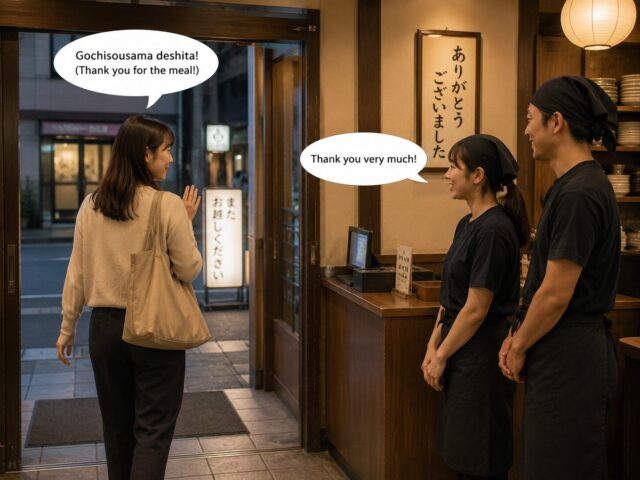
Many Japanese customers quietly say “Gochisousama deshita” when leaving a restaurant as a polite way to close the dining experience.
In Japanese restaurant culture, saying "Gochisousama deshita" when leaving is considered a polite way to close the dining experience. Rather than functioning as a formal rule, it works more like a small, natural gesture of appreciation. Customers may say it to the staff near the entrance, toward the chef at the counter, or quietly while walking out.
In many casual restaurants, the phrase may simply receive a smile, a nod, or "Arigatou gozaimasu" in return. Unlike tipping cultures, where appreciation is often expressed financially after service, Japanese restaurant culture tends to place more emphasis on verbal politeness and smooth social interaction. For many Japanese people, saying "Gochisousama deshita" feels like the natural final step that completes the meal.
The Phrase Reflects Gratitude Beyond the Food Itself
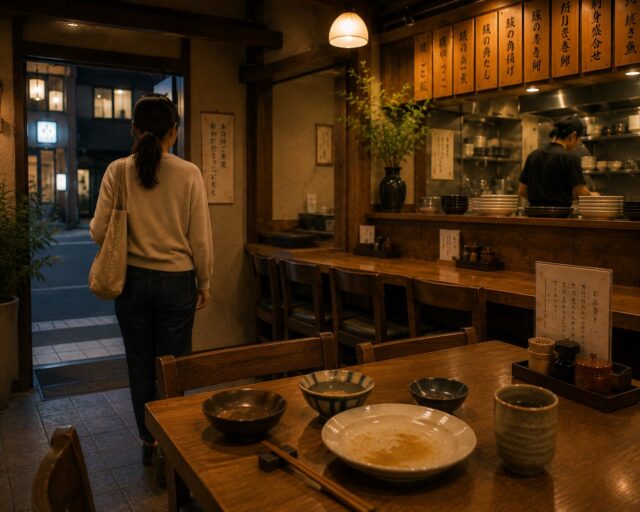
In Japan, even small moments when leaving a restaurant are often treated as part of the overall dining experience.
One reason the phrase can feel difficult to translate is that it does not only refer to the taste of the food. In many situations, "Gochisousama deshita" also acknowledges the effort of cooking, the work of restaurant staff, the time spent together, and the hospitality of the space itself.
Even when meals are casual or inexpensive, many Japanese people still use the phrase naturally.
For this reason, "Gochisousama deshita" often feels slightly different from simply saying "thank you" in English. It carries a broader sense of appreciation toward the meal, the effort behind it, and the shared experience as a whole — reflecting a wider cultural tendency in Japan to recognize effort and maintain harmonious interaction through small acts of politeness.
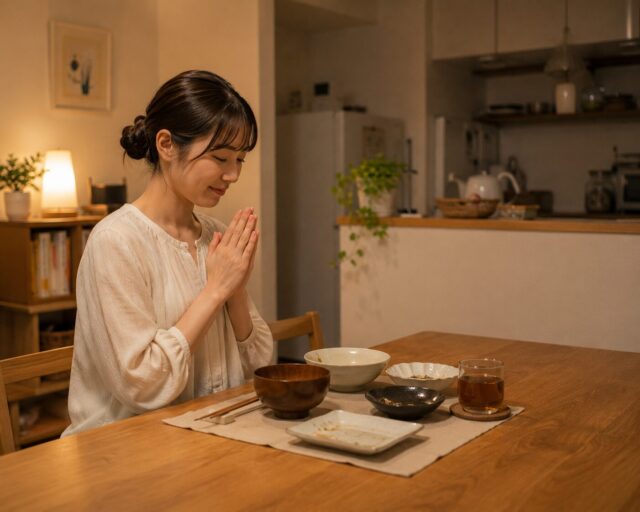
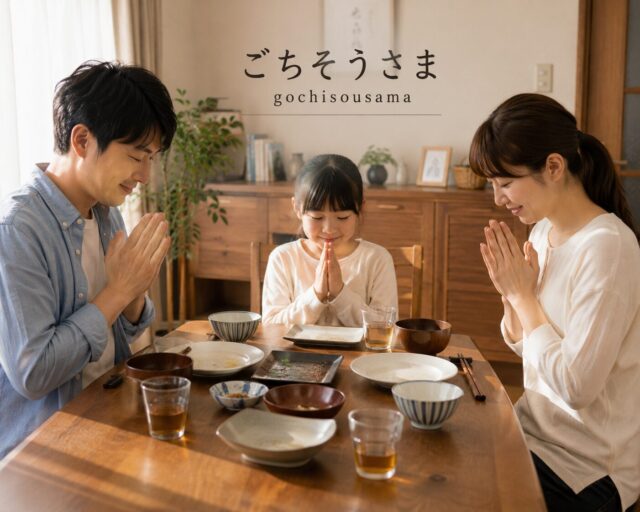
Many Japanese people naturally say “Gochisousama” not only in restaurants but also during everyday meals at home.
Some Japanese people may also lightly place their hands together while saying "Gochisousama deshita," especially at home or in more traditional settings.
Although the gesture may appear religious to some foreign visitors, most Japanese people today tend to see it more as a cultural habit or expression of gratitude than as a formal religious practice.
You Are Not Required to Say It — But Many Visitors Appreciate Learning It
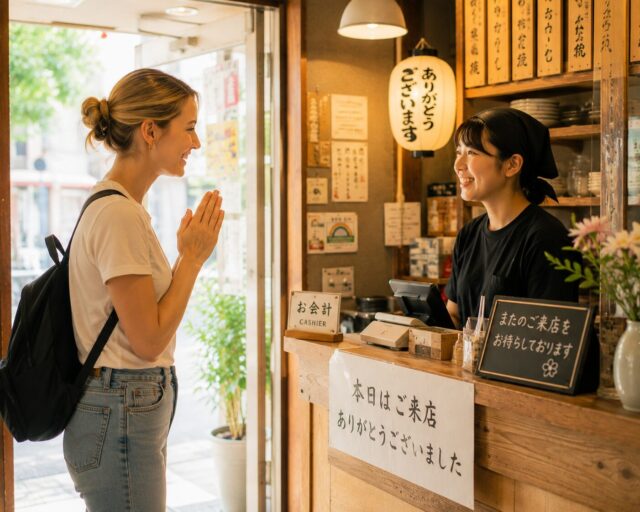
Foreign visitors are not expected to say “Gochisousama deshita,” but many staff members appreciate the polite gesture.
Foreign visitors are generally not expected to say "Gochisousama deshita." Most restaurant staff do not expect tourists to know Japanese dining expressions, and nobody will consider it rude if customers simply leave normally after paying.
At the same time, many visitors who learn the phrase enjoy using it because it often creates a small moment of warmth during the interaction. Many restaurant staff members also appreciate hearing it from foreign visitors, even if the pronunciation is not perfect — most people simply recognize it as a polite effort to engage with Japanese culture. Even a quiet "Gochisousama" or "Gochisousama deshita" said while leaving is usually more than enough.
Pro Tip: You Do Not Need to Say It Loudly
In Japan, "Gochisousama deshita" is usually said in a calm, natural tone rather than loudly across the restaurant. Many people simply say it softly near the register or toward staff when leaving. The timing does not need to be perfect — some people say it while standing up from the table, others near the register, and some quietly while walking out. In smaller counter-style restaurants, customers may say it directly to the chef before leaving.
Pro Tip: You Do Not Need Perfect Japanese
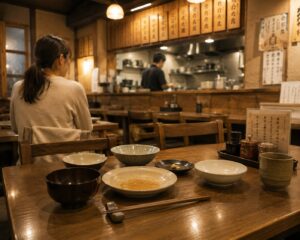
Many people in Japan also see finishing a meal respectfully and avoiding food waste as part of showing appreciation.
Even if you feel uncertain about the pronunciation, most Japanese restaurant staff will simply appreciate the polite gesture.
Many people in Japan also see finishing the meal respectfully and not wasting food as another quiet way of showing appreciation.
The Meaning Changes Depending on the Situation
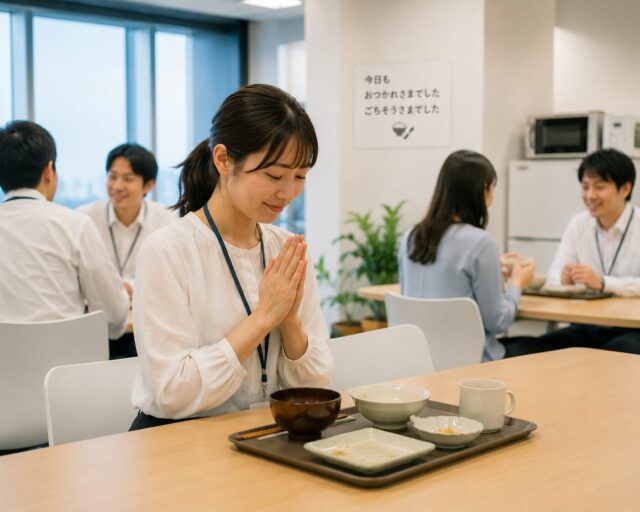
The atmosphere surrounding "Gochisousama" can vary depending on the type of restaurant. In small or counter-style establishments, customers may say it directly to the chef or owner before leaving. In larger chain restaurants, the phrase is often said more casually toward the front staff or simply while walking out. In restaurants using ticket machines or self-checkout systems, some people may give a small nod or say the phrase quietly while passing by.
The phrase also extends beyond restaurants. Many people say it at home after family meals, at school lunches, or after eating together with coworkers. In this sense, "Gochisousama deshita" is not limited to dining out — it functions as a broader social expression connected to the end of any shared meal.
Modern Restaurant Systems Have Not Replaced These Small Expressions
In recent years, Japanese restaurants have increasingly introduced self-checkout machines, tablets, mobile ordering systems, and serving robots. At first glance, these systems can make restaurants feel more automated than before.
Even so, many Japanese customers still continue saying small phrases such as "Sumimasen," "Arigatou gozaimasu," and "Gochisousama deshita" throughout the dining experience. Modern efficiency and traditional politeness often continue to coexist quite naturally within Japanese restaurant culture.
Small Closing Rituals Matter in Japanese Dining Culture
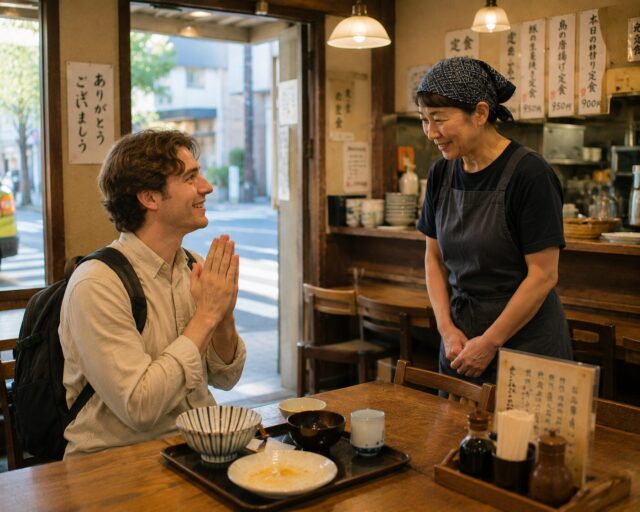
Even simple Japanese phrases can create small moments of warmth between visitors and restaurant staff.
In many ways, "Irasshaimase" and "Gochisousama deshita" function like the opening and closing moments of the restaurant experience in Japan. Customers are welcomed when they enter and quietly acknowledge the experience again when they leave. The exchange is usually brief and subtle, but it helps create a sense that the interaction has been completed respectfully on both sides.
Once visitors understand this cultural rhythm, "Gochisousama deshita" often starts to feel less like a difficult Japanese phrase — and more like a natural way to close a shared experience.
FAQ
What does "Gochisousama deshita" mean?
The phrase is commonly translated as "Thank you for the meal," but it also carries broader meanings connected to gratitude, effort, and appreciation for the overall dining experience.
Do Japanese people always say "Gochisousama" after eating?
Many Japanese people say it naturally after meals, especially in restaurants, at home, at school, and in other shared dining situations.
Do tourists need to say it in Japan?
No. Foreign visitors are not expected to know or use the phrase, and restaurant staff will not consider it rude if tourists simply leave normally after paying.
Should I say "Gochisousama" to the chef or staff?
In smaller or counter-style restaurants, customers sometimes say it directly to the chef or owner. In larger restaurants, people often say it casually toward the staff near the entrance or register.
Is "Gochisousama" the same as saying "thank you"?
Not exactly. While gratitude is central to the meaning, the phrase also reflects appreciation for the meal, the effort behind it, and the shared social experience — making it somewhat broader than a simple "thank you."
Do Japanese children learn to say it?
Yes. Many Japanese children grow up using both "Itadakimasu" before eating and "Gochisousama deshita" after meals as natural parts of daily life.
Can I just say "Gochisousama" instead of the full phrase?
Yes. In casual situations, many people shorten it to simply "Gochisousama," and this is completely natural.
Is it connected to Japanese restaurant hospitality culture?
Yes. The phrase reflects broader Japanese ideas about politeness, gratitude, smooth social interaction, and acknowledging shared experiences respectfully — values that run throughout Japanese dining culture.

