
Many people notice the difference, even if they cannot immediately explain why.
In reality, this feeling usually does not come from one dramatic feature.
It comes from many small details working together.
This guide explores the customs, service styles, and cultural values that shape the Japanese restaurant experience and explains why dining in Japan often feels so distinctive.
Quick Summary
- Japanese restaurant culture often prioritizes smooth flow and shared comfort.
- Many service styles are designed to reduce unnecessary interruptions.
- Customers are often expected to read the atmosphere and adjust naturally.
- Dining in Japan balances efficiency, comfort, and quiet consideration.
- Many customs reflect a shared understanding of how restaurant space is used.
The Philosophy Behind Japanese Restaurants
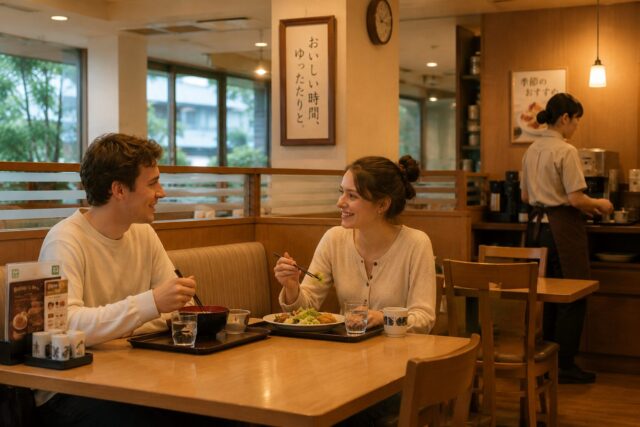
In many countries, restaurant service is closely associated with friendliness, conversation, and frequent interaction.
In Japan, hospitality often works differently.
Rather than constantly engaging with customers, many restaurants focus on creating an environment that feels smooth, predictable, and comfortable.
Staff remain attentive, but often in the background.
Customers are given the freedom to enjoy their meal at their own pace.
At first, many customs may seem unrelated.
But when viewed together, they reveal a common philosophy.
Many Japanese restaurants are designed to reduce friction and help many different people share the same space comfortably.
In many ways, Japanese restaurant culture balances efficiency, comfort, and quiet consideration.
Service & Hospitality
Japanese restaurants often minimize unnecessary interruptions while still making service easy and accessible.
- Why Do Japanese Staff Say “Irasshaimase?”
- Why Do Japanese Restaurants Feel So Quiet?
- Why Don’t Japanese Waiters Interrupt Your Meal?
- Why Do Japanese Restaurants Call Out “Sumimasen” Instead of Waiting Quietly?
- Why Do Japanese Restaurants Have Call Buttons on the Table?
- Why Is Water Free in Japan?
- Why Do Japanese Restaurants Serve Ice-Cold Water Even in Winter?
- Why Do Japanese Restaurants Give Wet Towels Before a Meal?
- Why Do Japanese Restaurants Bring the Bill Before You Ask?
- How Payment Works in Japanese Restaurants
- Why Don’t Japanese Restaurants Expect Tips?
- Why Do Japanese People Say “Gochisousama” After Eating?
Food & Dining Culture
Japanese restaurant culture is also shaped by deeper attitudes toward food, specialization, and customer expectations.
- Why Do Japanese Restaurants Display Food Replicas?
- Why Are So Many Japanese Restaurants Specialized in One Dish?
- Why Do Japanese People Line Up for Restaurants?
Space & Dining Experience
The physical design of Japanese restaurants also reflects cultural ideas about space, comfort, and shared environments.
- Why Do Japanese Restaurants Often Have Small Tables?
- Why Do Japanese Restaurants Have So Many Counter Seats?
Together, these design choices help create restaurants that feel calm, efficient, and comfortable—even in busy cities with limited space.
Author's Note
As I worked on this series, I began to notice how connected these customs really are.
Small tables, counter seats, quiet service, automatic water, early bill placement, and no tipping may seem like unrelated details.
But together, they reveal a surprisingly consistent way of thinking.
Japanese restaurants often try to create spaces where many different people can share the same environment comfortably.
Perhaps that quiet balance between efficiency, comfort, and consideration is what makes dining in Japan feel so distinctive.