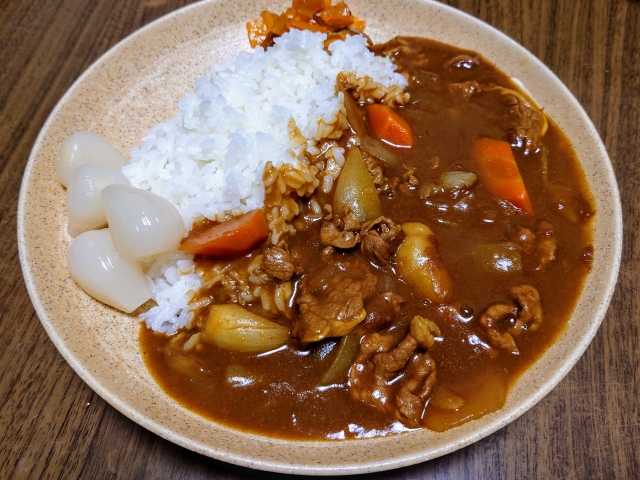
Japanese curry may look simple: white rice, thick brown sauce, vegetables, and usually some kind of meat.
But for many visitors, the first bite is surprising.
Japanese curry is usually thicker, milder, and more savory than many curries found elsewhere in Asia. It often has a gentle sweetness, a rich texture, and enough spice to be warming without necessarily being very hot.
More importantly, curry in Japan does not feel like an exotic foreign dish.
It is everyday food.
People eat it at home, in school lunches, at casual restaurants, in curry specialty shops, and even at beef-bowl chains. Supermarkets devote entire sections to curry roux and ready-to-heat curry pouches.
For many Japanese people, it is simply curry.
Quick Summary
- Japanese curry is usually thick, savory, mildly sweet, and relatively mild in spice.
- The most familiar form is curry rice, or kare raisu.
- Packaged curry roux is widely used in Japanese home cooking.
- Typical ingredients include onions, carrots, potatoes, and beef, pork, or chicken.
- Curry is easy to make in a large pot and difficult to ruin, which makes it an ideal family food.
- Households can change the meat, vegetables, and spice level, or even mix different roux products together.
- Popular variations include katsu curry, curry udon, and curry pan.
- Japanese curry is easy to find across Japan, but trying a curry specialty restaurant at least once is worthwhile.
What Is Japanese Curry?
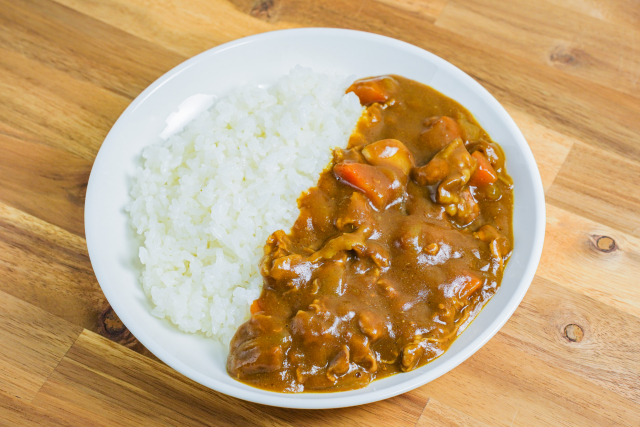
Japanese curry is a thick curry sauce most commonly served with steamed Japanese white rice.
In Japanese, curry rice is called kare raisu (カレーライス), although in ordinary conversation people usually just say kare — curry.
A typical home version contains onions, carrots, potatoes, and meat simmered in a thick brown sauce.
What Does Japanese Curry Taste Like?
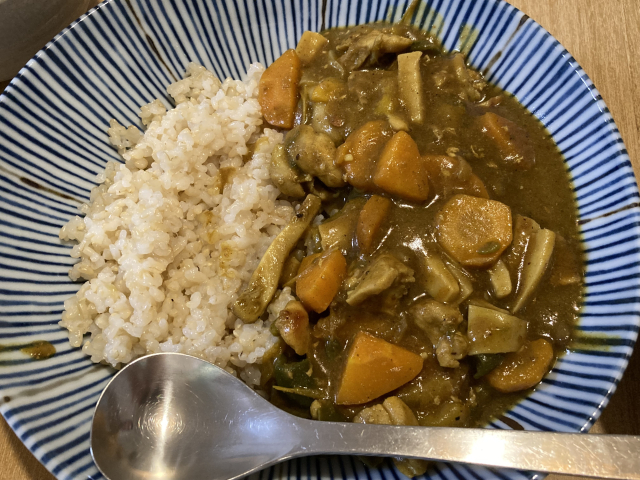
The flavor is usually savory and rich, with some sweetness and moderate spice. Heat is only one part of the experience. Japanese curry tends to emphasize depth, richness, and comfort more than extreme spiciness.
Onions add sweetness, while meat, stock, vegetables, and seasonings build savory flavor. Some commercial curry roux also use ingredients such as fruit or honey to soften the spices.
That makes Japanese curry easy for children to enjoy, but it does not mean all Japanese curry is mild. Hot versions are widely available, and specialty restaurants may offer spice levels far beyond what most families would serve at home.
For many Japanese people, curry is closer to comfort food than a test of spice tolerance.
Why Is Japanese Curry So Thick?
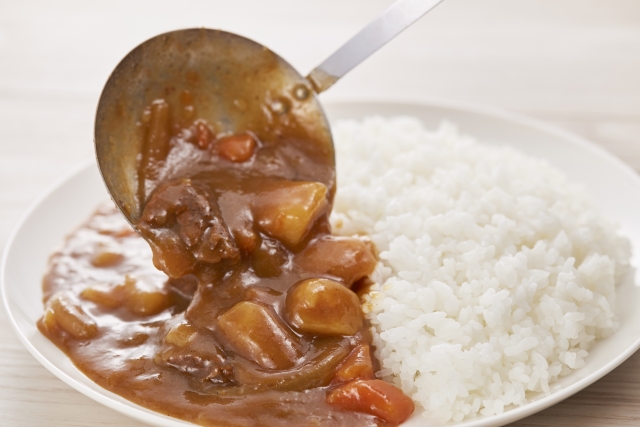
Japanese curry is known for its thick, smooth sauce, which pairs naturally with short-grain white rice.
One of the easiest ways to recognize Japanese curry is its texture.
Japanese curry is usually much thicker than soupier curry styles, largely because it is commonly made with curry roux.
Packaged roux typically combines curry spices with flour, fat, salt, and other seasonings. When dissolved into the cooking liquid, it creates the smooth, thick sauce associated with Japanese curry rice.
That texture also works particularly well with Japanese short-grain rice.
The sauce clings to the slightly sticky grains rather than immediately soaking through them. A spoonful can easily contain rice, curry, vegetables, and meat together.
Bread can certainly be eaten with Japanese curry, but curry rice is the standard combination for a reason.
The thick sauce and Japanese rice simply work well together.
How Is Japanese Curry Different From Indian Curry?
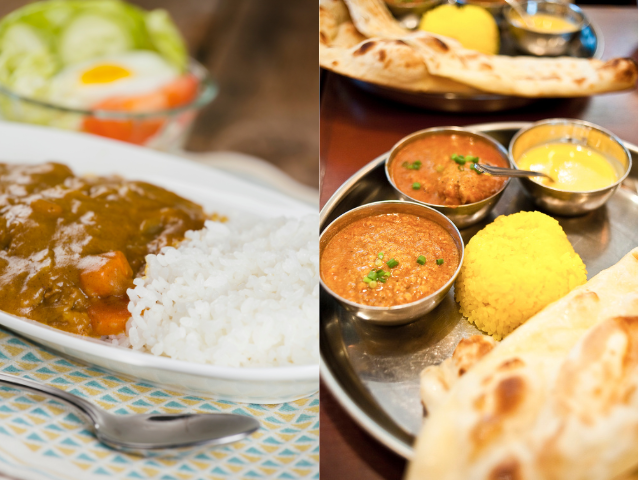
There is no single “Indian curry.”
India has enormous regional diversity, with different ingredients, spice combinations, techniques, and dishes. Comparing all Indian food with one Japanese dish would therefore be misleading.
Still, the Japanese curry rice commonly eaten at home has some recognizable characteristics.
It is usually:
- thickened with roux
- relatively mild in spice
- savory with some sweetness
- served with Japanese short-grain rice
- cooked with fairly large pieces of meat and vegetables
How Is Japanese Curry Usually Made at Home?
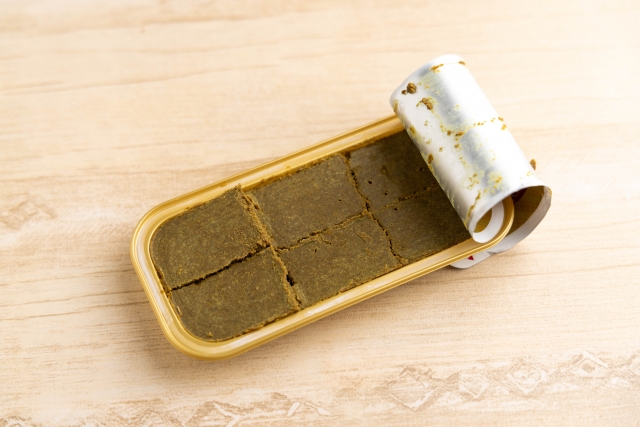
Another important difference is how Japanese curry is commonly prepared at home.
Many Indian dishes build flavor from individual spices, aromatics, legumes, vegetables, dairy products, or other ingredients.
Japanese households often take a much simpler route.
The typical process is straightforward: the meat and vegetables are cooked, water is added, the pot is simmered, and packaged curry roux is dissolved in at the end.
The roux provides most of the seasoning, spice, richness, and thickness.
That simplicity is one reason Japanese curry became such an effective home-cooked staple.
How Did Curry Come to Japan?
Curry did not arrive in Japan in exactly the form people eat today.
Indian spice traditions influenced British curry during the colonial period, and British-style curry later reached Japan as part of Western food culture during the Meiji era.
Japan then gradually changed the dish.
The curry became thick and well suited to eating with rice. It appeared in military and institutional cooking, restaurants, and eventually ordinary households.

Curry remains a familiar meal in Japan’s modern Self-Defense Forces as well.
By the early twentieth century, curry rice had become one of Japan's familiar Western-style dishes.
Over time, however, it stopped feeling particularly Western.
Generations of Japanese people grew up eating it, and packaged curry roux made it even easier to prepare at home.
Eventually curry became so familiar that most people no longer needed to think about its foreign origins while eating it.
Why Is Curry So Popular in Japanese Homes?
Curry solves many practical problems at once.
Easy to Make, Hard to Ruin
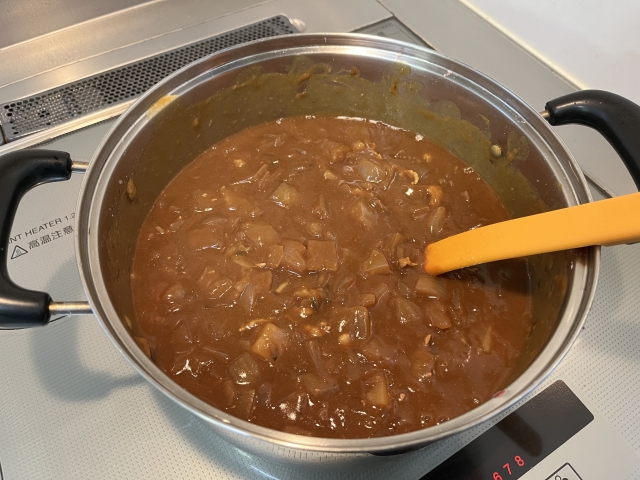
Japanese curry is easy to cook in a large pot, which makes it practical for families and groups.
First, it is easy to make in a large pot.
Cooking curry for several people does not require dramatically more effort than cooking it for two. That makes it convenient for families and groups.
Second, it is difficult to ruin.
Japanese people sometimes joke that even someone who is not very good at cooking can still say:
“At least I can make curry.”
The joke works because packaged curry roux is remarkably forgiving.
The vegetables do not need to be cut perfectly.
The cook does not need a detailed knowledge of spices.
The type of meat can change.
As long as the basic proportions are reasonable, the roux usually brings everything together into something reliably good.
And using packaged roux is not considered cheating.
It is normal Japanese home cooking.
Walk through a Japanese supermarket and you will usually find several brands, spice levels, and styles of curry roux arranged in boxes.
Every Family Makes It a Little Differently
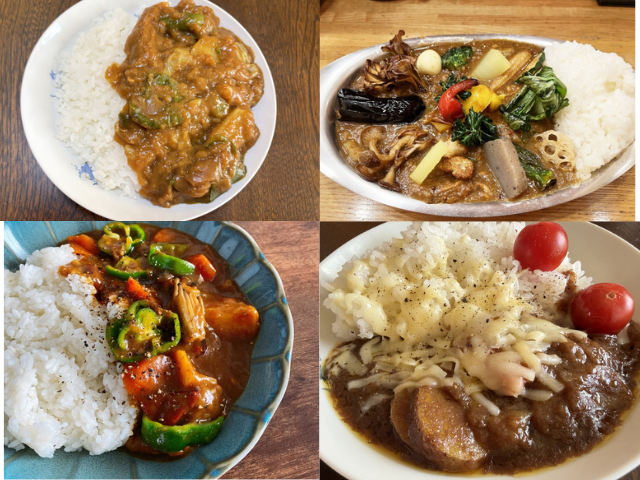
Even when families use curry roux, Japanese home curry can look and taste quite different from one household to another.
But packaged roux does not mean every family's curry tastes the same.
Some households use one favorite product. Others mix two or more kinds of roux. Some add small amounts of apple, honey, Worcestershire-style sauce, soy sauce, ketchup, coffee, chocolate, or other ingredients.
There is no universal secret ingredient.
The meat can change from beef to pork or chicken. The vegetables can change. The spice level can become hotter as children grow older.
So Japanese curry is not necessarily a fixed family recipe preserved unchanged for decades.
It may be better understood as a family taste that keeps changing with the people who eat it.
That flexibility is one of its strengths.
And of course, practicality alone would not make curry this popular.
People keep cooking it because it is also very good.
What Goes Into Japanese Curry?
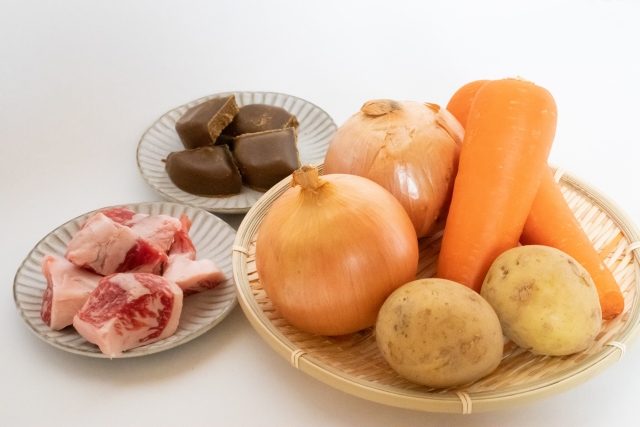
Typical Japanese curry often includes onions, carrots, potatoes, meat, and packaged curry roux.
The classic home-style combination is simple:
- onions
- carrots
- potatoes
- meat
- curry roux
- water
Beef, pork, and chicken are all common.
But curry is extremely flexible.
Mushrooms, eggplant, pumpkin, tomatoes, seafood, and seasonal vegetables can all appear.
A summer vegetable curry, for example, might feature eggplant, zucchini, peppers, tomatoes, or pumpkin alongside the usual curry sauce.
Importantly, names such as “vegetable curry” or “summer vegetable curry” describe what ingredients are being highlighted.
They do not necessarily mean the dish is vegetarian.
Common Ways to Eat Japanese Curry
Curry rice is the standard form, but Japanese curry has developed into many variations.
Katsu Curry and Other Toppings
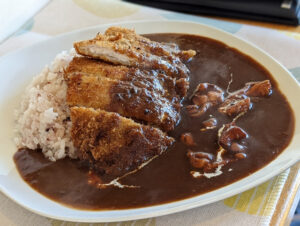
Katsu curry combines curry rice with a breaded and deep-fried cutlet, usually pork or chicken.
But katsu is only one of many toppings. Curry specialty restaurants may also offer hamburger steak, croquettes, cheese, eggs, sausages, or vegetables.
Customers can often choose the rice portion and spice level as well, making the dish highly customizable.
Soup Curry
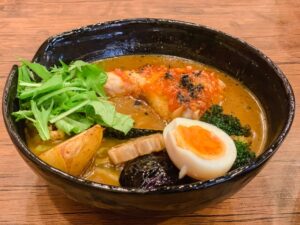
Soup curry is much thinner than ordinary Japanese curry and is usually served with large pieces of vegetables and meat.
It is especially associated with Hokkaido, particularly Sapporo, and feels quite different from the thick roux-based curry rice commonly eaten at home.
Curry Udon
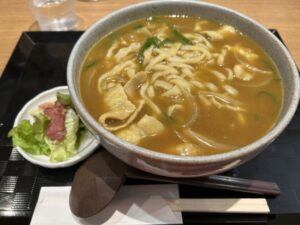
Curry udon combines curry flavor with thick udon noodles.
The sauce is looser than curry rice and may incorporate Japanese dashi.
Curry Pan

Curry pan encloses thick curry inside bread, coats it with breadcrumbs, and usually fries it.
What Are Fukujinzuke and Rakkyo?
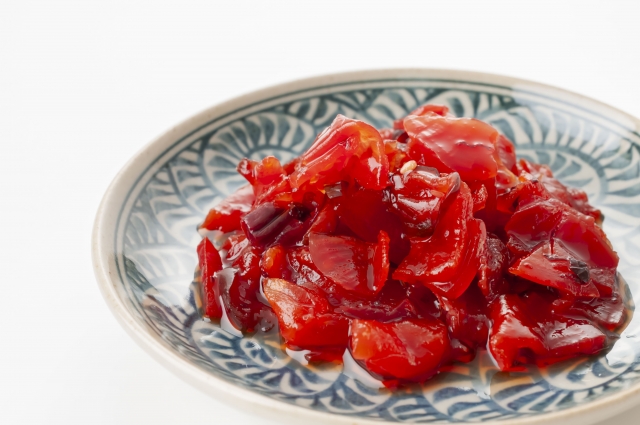
Fukujinzuke is a sweet-savory mixture of chopped pickled vegetables often served with Japanese curry.
Japanese curry is sometimes served with a small amount of something sharp and crunchy.
One familiar accompaniment is fukujinzuke, a mixture of chopped pickled vegetables with a sweet and savory flavor.
Some versions are bright red, while others are brown or more naturally colored.
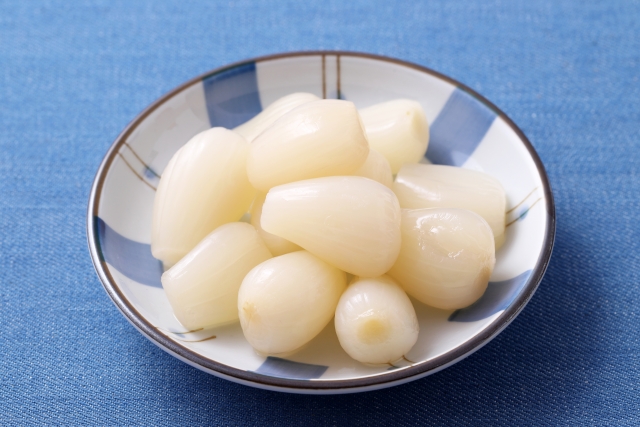
Rakkyo are small pickled bulbs with a crisp texture and sweet-sour flavor.
Another traditional accompaniment is rakkyo, small pickled bulbs with a crisp texture and sweet-sour flavor.
Neither is required.
Some restaurants serve one, some serve the other, and some serve neither.
But both provide contrast against the rich curry and soft rice.
Curry and Childhood in Japan
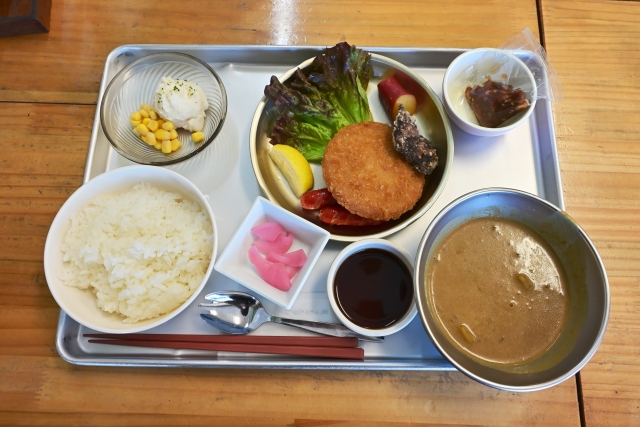
Curry is a familiar part of childhood for many Japanese people, including in school meals.
For many Japanese people, curry begins in childhood.
It appears at home, in school meals, at camps, and in other situations where food needs to be prepared for many people.

That familiarity matters.
A person who has eaten curry since childhood does not usually think:
“This is a Japanese version of foreign cuisine.”
They simply think:
“Curry.”
The smell alone can evoke family dinners, school lunches, or large pots prepared for a group.
That emotional familiarity is one reason Japanese curry works so well as comfort food.
Where Can Visitors Try Japanese Curry in Japan?

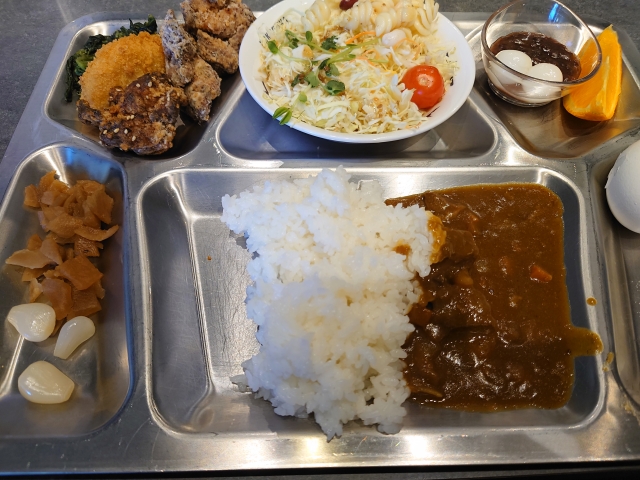
Japanese curry is easy to find beyond curry specialty shops — even beef-bowl and noodle chains may have curry on the menu.
Almost anywhere.
You do not need to search for a famous curry restaurant simply to find Japanese curry.
It appears at:
- curry specialty restaurants
- family restaurants
- cafeterias
- casual diners
- some soba and udon restaurants
- beef-bowl chains
- supermarkets
- convenience stores
- bakeries, in the form of curry pan
Even restaurant chains whose main product is something else often have curry somewhere on the menu.
That says a lot about how completely curry has entered everyday Japanese food culture.
Still, visitors should consider trying a dedicated curry restaurant at least once.
A widely available specialty chain such as CoCo Ichibanya gives visitors an easy introduction to the restaurant side of Japanese curry.
Customers can choose the curry, the amount of rice, the spice level, and a wide variety of toppings.
The difficult part may be deciding what to put on it.
Beef-bowl chains also offer another useful perspective.
Their curry may be simpler than what you would find at a specialty restaurant, but that is precisely what makes it interesting.
Being able to walk into a restaurant known for beef bowls and casually order curry — or sometimes enjoy both — shows how little ceremony surrounds the dish.
Curry is simply part of the everyday menu.
What Japanese Curry Reveals About Japanese Food Culture
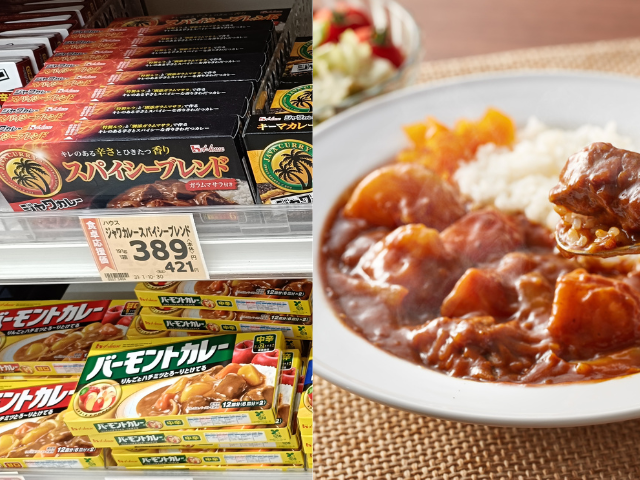
Japanese curry shows that Japanese food culture is not defined only by foods that originated in Japan.
Foreign dishes can enter the country, adapt to local tastes and habits, and eventually become so familiar that their foreign origins fade into the background.
Curry changed because people in Japan kept using it.
It became a natural partner for Japanese rice.
Commercial roux made it easy for ordinary households.
Mild versions made it accessible to children.
Families changed the meat, vegetables, and spice level according to their own preferences.
Restaurants covered it with cutlets, cheese, eggs, and other toppings.
Cooks combined curry with udon.
Bakeries put it inside bread.
These changes were not attempts to perfectly preserve a foreign original.
They happened because curry had become something Japanese cooks felt free to adapt.
That may be the most interesting thing about Japanese curry.
It came from abroad, but today it belongs comfortably inside everyday Japanese life.
Author's Note
The curry I ate as a child was usually mild and made with beef.
Today, my preferences have changed.
I usually use chicken because beef fat feels a little heavier to me now, and I prefer a hotter curry because I enjoy more spice.
I also use fewer potatoes than I once did.
At home, we often mix three or four different curry roux products together, so even our own curry does not taste exactly the same every time.
And yet it still feels like our curry.
That is why I hesitate to describe Japanese curry simply as ofukuro no aji — “mother's taste.”
For many families, curry is not one recipe preserved forever.
It changes as the family changes.
Perhaps “family taste” is more accurate: familiar and recognizable, but never completely fixed.
FAQ
Is Japanese curry spicy?
It can be, but many everyday Japanese curries are relatively mild. Packaged curry roux is commonly sold in mild, medium-hot, and hot versions, while specialty restaurants may offer much hotter options.
Is Japanese vegetable curry vegetarian or vegan?
Not necessarily.
In Japan, names such as “vegetable curry” or “summer vegetable curry” usually describe the ingredients being highlighted, not whether the dish follows vegetarian or vegan rules.
Even if no meat is visible, the curry roux or sauce may contain dairy, meat extracts, stock, or other animal-derived ingredients.
Vegetarian and vegan Japanese curry does exist, especially in larger cities, but if a restaurant or product does not clearly label it that way, it is safer to check rather than judge by the name alone.
Is Japanese curry halal?
Not necessarily.
Japanese curry may contain pork, non-halal meat, or animal-derived ingredients in the roux or sauce. Even beef or chicken curry should not automatically be assumed to be halal.
Halal and Muslim-friendly Japanese curry can be found, particularly in larger cities, but travelers should look for clear labeling, certification, or confirmation from the restaurant before ordering.
What are the pickles served with Japanese curry?
The most familiar are fukujinzuke, a sweet-savory mixture of chopped pickled vegetables, and rakkyo, small sweet-sour pickled bulbs. Neither is required, but both are traditional accompaniments.
Where should I try Japanese curry in Japan?
Japanese curry is easy to find in curry specialty restaurants, casual chains, family restaurants, cafeterias, noodle shops, supermarkets, convenience stores, and even beef-bowl chains.
For a first dedicated curry experience, a specialty restaurant is a good choice because you can explore different spice levels, rice portions, and toppings.
Related Reading on YUNOMI
What Are Japanese Pickles? Why Tsukemono Matter in Everyday Japanese Meals
Learn more about Japanese pickles, including the role that small, crunchy accompaniments play beside rice and rich dishes such as curry.
Japanese Bread: How Bread Developed Its Own Identity in Japan
Curry pan is one example of how Japan adapted imported foods and turned them into something distinctly familiar.
What Is Onigiri? Why Japanese Rice Balls Are So Common in Japan
Discover why Japanese short-grain rice is so important in everyday food and how its texture shapes the way Japanese dishes are eaten.
What Is a Japanese Breakfast? How Rice, Miso Soup, and Small Dishes Work Together
See another side of everyday Japanese home food and how rice remains the foundation around which familiar dishes are built.

