You buy a drink at a convenience store, step outside, and start looking for a trash bin.
A minute passes. Then five. Still nothing.
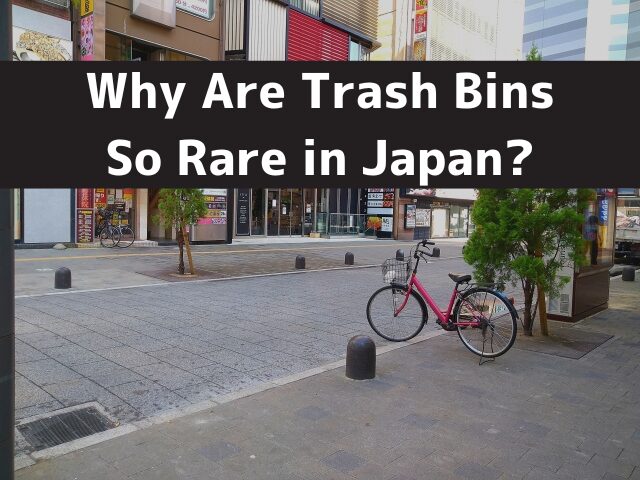
And yet the street is strangely clean.A survey of international visitors to Japan found that the scarcity of public trash bins was one of the most common frustrations during their tripIn some surveys, it ranked as the single biggest difficulty travelers experienced in Japan.
If you have ever walked around Tokyo or Kyoto holding an empty bottle and wondering,
“Where am I supposed to throw this away?” — you are not alone.Trash bins are rare in Japan, especially on sidewalks and in public spaces.
This is not simply because Japan is “clean.”
It reflects a different system: waste is generally treated as personal responsibility rather than something managed by widely available public bins.
Quick Summary
Trash bins are limited in Japan because public space is not designed to absorb unlimited private waste.
Instead of placing bins on every street corner, Japan relies on carry-it-with-you behavior, careful household sorting, and disposal points located inside commercial facilities.
While this can feel inconvenient at first, understanding where bins are typically found makes the system much easier to navigate during your visit.
Why Are Trash Bins Rare in Japan?
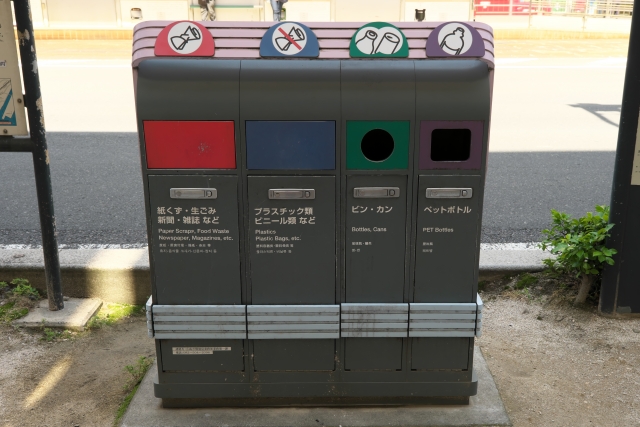
Public recycling bins in Japan are typically divided by material type rather than offering a single general trash container.
Trash bins are limited in Japan because public space is not designed to absorb unlimited private waste.
Instead, the system assumes that people will manage what they bring.
When street bins were widely available in the past, a predictable problem appeared.
They quickly overflowed. They smelled. They became unsanitary.
Investigations showed that many of these bins were not filled with small snack wrappers from passersby.
They were filled with:
- Household kitchen waste
- Pet waste
- Large cardboard from businesses
- Entire convenience store meal containers
Bins designed for light public use were being treated as full-scale disposal sites.
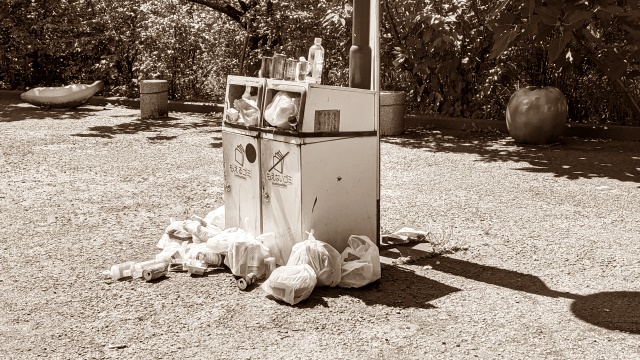
When public bins are overused, they quickly overflow and become unsanitary.
This created a paradox:
when you provide a place that clearly says “throw it here,” people will throw everything there.
In many areas, removing bins actually resulted in cleaner streets.
It sounds contradictory, but it worked.
The Cost Factor
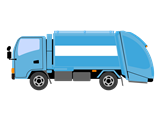
Waste disposal is expensive.
Collection, sorting, transport, and processing all require funding.
If public bins become substitutes for household disposal, municipalities end up managing private waste with public money.
Reducing bins was not only about cleanliness—it was also about sustainability and cost control.
Where Can You Throw Things Away?
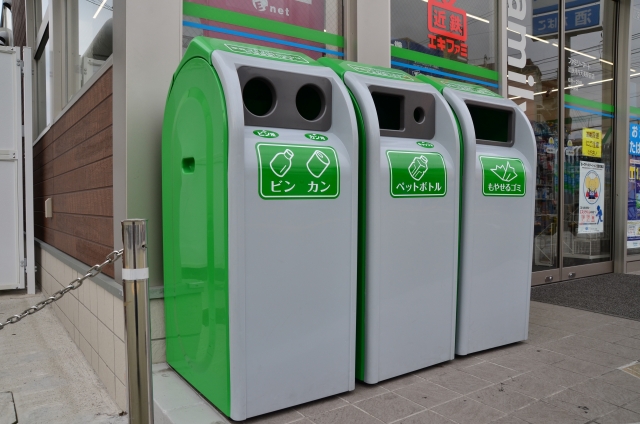
Convenience stores often provide recycling bins inside or near entrances, mainly for purchased items.
Trash bins are not completely gone in Japan.
They are simply not placed on sidewalks or street corners as frequently as in some other countries.
Instead, disposal points are usually located inside commercial facilities.
If you know where to look, it becomes much easier.
You are not expected to carry trash all day.
Don’t look for bins on the street—look for them inside buildings instead.
In practice, you can often find bins in places such as:
- Department stores and shopping malls (usually near restrooms or food courts)
- Supermarkets and home centers
- Convenience stores (typically inside; outdoor bins are less common in large cities)
- Vending machine recycling boxes (for bottles and cans only)
- Hotels
If you keep this pattern in mind, the system becomes far less stressful.
You may need to hold onto your trash for a while, but a suitable disposal point is usually not far away.
From “Trash Bin” to “Recycling Box”
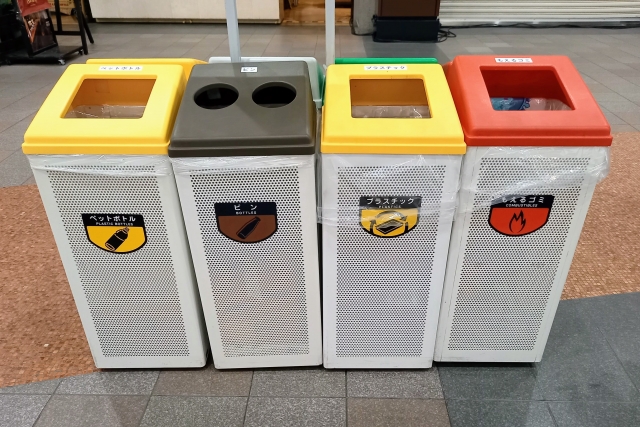
Disposal points in Japan are usually located inside commercial facilities rather than on sidewalks.
Another subtle shift is language.
Instead of labeling something as a “trash bin,” many places now use the term recycling box.
This changes expectations.
It is not a container for anything unwanted, but a place for specific, sorted materials.
The wording reflects the mindset: disposal is controlled, not casual.
Security Also Played a Role

Security concerns contributed to the reduction of bins in certain public facilities, especially around train stations.
Compared to decades ago, bins in high-traffic areas are clearly fewer.
However, security alone does not explain the broader system.
The deeper logic remains behavioral and structural.
The Cultural Logic Behind the Clean Streets
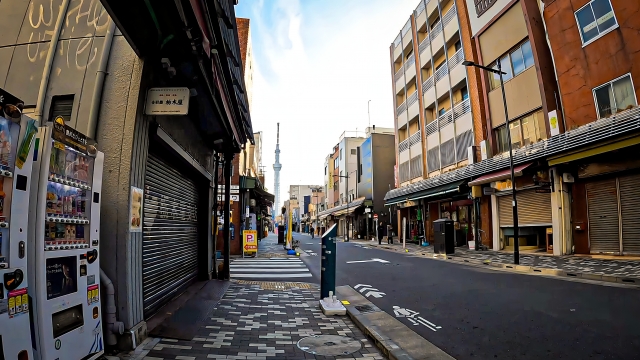
Japanese streets often remain clean despite the limited number of public trash bins.
Japan’s streets are not clean because bins are everywhere.
They are clean because people do not assume someone else will handle their waste.
Removing bins did not create chaos.
In many cases, it clarified responsibility.
At first, this system can feel inconvenient.
But once you understand where disposal points exist and how the system works,
the absence of bins feels less like neglect—and more like a different social contract.
Author’s Note
I grew up assuming that small trash is something you carry until you reach the right place.
It never felt unusual.
It was simply part of daily life.
Japanese people may feel a quiet resistance to dirtying public space.
A public place is shared—but it is also a place we personally use and spend time in.
Leaving trash there can feel similar to throwing garbage into your own yard.
It may not be an explicitly taught rule, but it often feels instinctively uncomfortable.
That small hesitation might be one reason the streets remain clean even without many bins.
Frequently Asked Questions

Did Japan remove bins because of terrorism?
Security concerns reduced bins in some public facilities, especially train stations.
However, the broader reason involves behavior, cost management, and waste systems rather than security alone.
Is it illegal to litter in Japan?
Yes, littering is prohibited, but social expectation is often a stronger deterrent than legal enforcement.
Can tourists throw trash in convenience stores?
Bins in convenience stores are generally intended for items purchased there.
Using them for unrelated household trash may lead stores to remove them.
Why are vending machine bins still common?
They are usually limited to bottles and cans and are directly connected to the purchase location.
Do I have to carry trash back to my hotel?
Carrying trash for a short time is common, but you can often dispose of it in department stores, supermarkets, shopping complexes, or appropriate store bins.
The key is waiting for the right place rather than expecting bins on every street corner.

