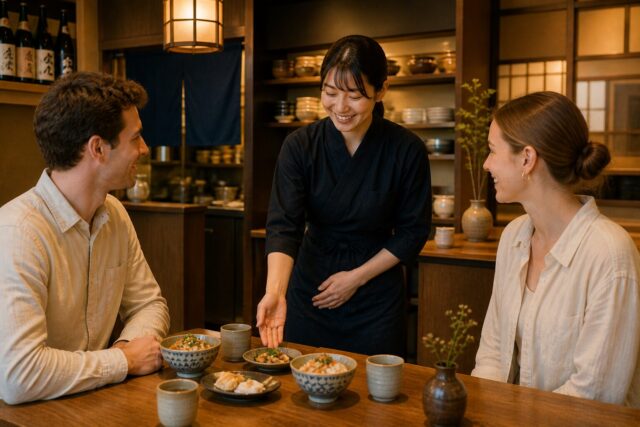
In many countries, tipping is treated as a normal part of dining — a way to reward good service or show appreciation directly to staff. In Japan, however, tipping is generally unnecessary and can sometimes create confusion.
This difference is not about generosity or service quality. It reflects a different philosophy of hospitality — one in which good service is expected as part of the experience itself, rather than something customers evaluate and reward afterward.
Rather than encouraging staff to compete for individual rewards, Japanese restaurant culture tends to prioritize consistency, equal treatment, transparent pricing, and hospitality that feels natural rather than performative.
Related Hub: Japanese Restaurant & Hospitality Culture
Service Is Already Included in the Price
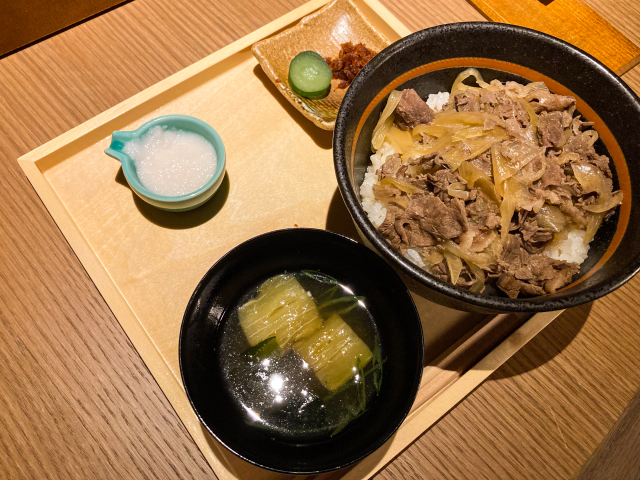
In Japan, food and service are typically included together in the price.
The most important reason tipping is not expected in Japan is that service is already built into the price of the meal. Restaurants provide a complete experience that includes both food and service, rather than separating them into different charges. Because of this, there is no need to add any extra payment after the meal.
An All-Inclusive Approach
This is similar to how water is served without a separate charge — it is not truly "free," but part of the overall service included in the cost of dining. Tipping would feel redundant in this context, because customers have already paid for the service.
Consistency Matters More Than Individual Reward
In many tipping cultures, service quality can vary depending on the situation or the customer. In Japan, restaurants aim to provide the same level of service to everyone. This consistency is considered more important than rewarding individual performance.
Equal Service for Every Customer
Staff are trained to treat all customers with the same level of attention and care, regardless of who they are or how much they have spent. This removes the need for customers to judge or evaluate service through tipping.
Why Tipping Can Feel Uncomfortable in Japan
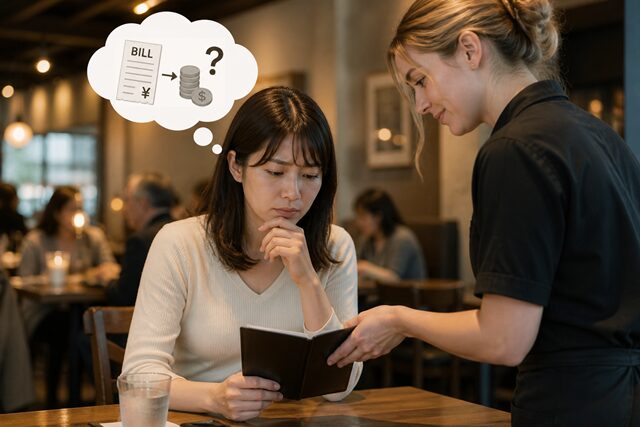
Tipping systems can make the total cost less predictable compared to fixed pricing in Japan.
For many Japanese people, tipping can feel unfamiliar or mildly uncomfortable. One reason is that it makes the total cost of a meal less predictable — instead of knowing the final price upfront, customers are expected to calculate an additional amount based on their own assessment of the service. This can create a sense that the meal has become more expensive than anticipated, even when the service itself was good.
For many people, it is not that tipping is disliked — it simply feels like an extra step in a system that is already considered complete.
Clear Pricing Is Preferred
In Japan, there is a strong preference for transparent pricing. Customers generally expect the listed price to reflect the full cost of the experience, with no additional calculation required at the end. From this perspective, it feels more natural for restaurants to include service costs in the menu price rather than leaving them open-ended. In this system, the responsibility for paying staff belongs clearly to the restaurant, not the customer.
What Happens If You Leave a Tip?
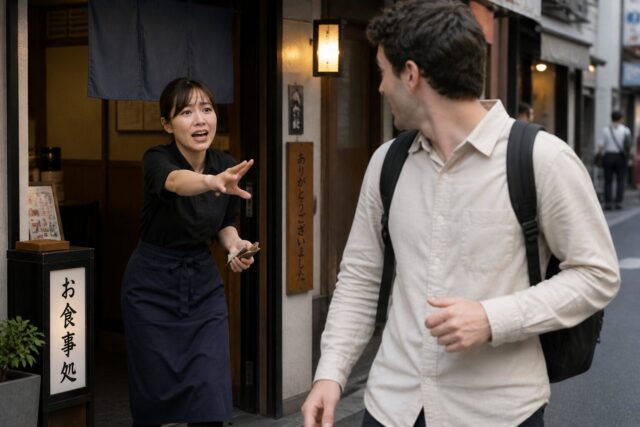
In Japan, unexpected money left on the table may be seen as something forgotten.
Because tipping is not part of the system, leaving money behind can sometimes create confusion. In some cases, staff may follow you to the door to return it, genuinely believing you forgot it. What is intended as a gesture of appreciation in one culture can easily be interpreted as a mistake in another.
A Mismatch of Good Intentions
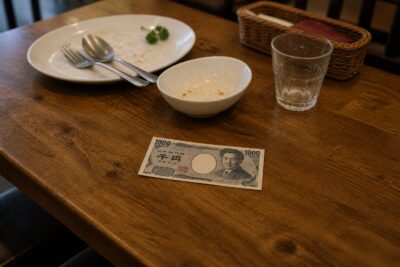
Leaving cash on the table can feel unusual in a system without tipping.
For many Japanese staff, unexpected cash is not seen as a bonus but as something that needs to be handled carefully — returned, logged, or reported. This is why tipping can feel not only unnecessary but actively out of place in Japan.
The Role of Hospitality in Japan
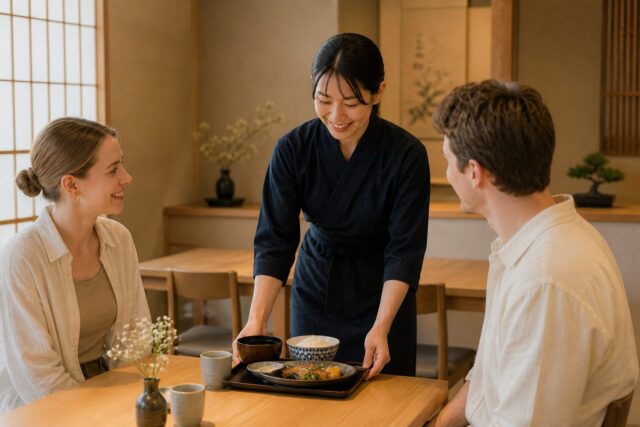
Service in Japan is treated as a professional standard, not dependent on tips.
Japanese hospitality emphasizes anticipating needs and providing comfort without requiring additional requests. This mindset is sometimes described as omotenashi, but in practice it functions as a system of delivering consistent, thoughtful service as a professional standard. Because this level of care is expected from the outset, tipping is not needed to encourage it.
Service as a Professional Standard
Staff take pride in providing good service as part of their role, independent of whether extra compensation is offered. This helps maintain a stable and predictable dining experience for every customer.
How to Show Appreciation Without Tipping
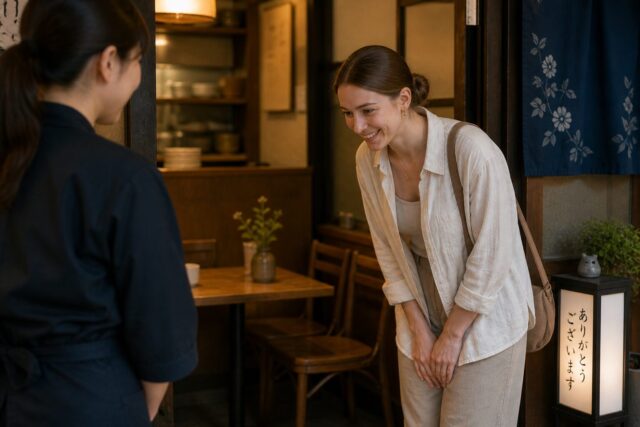
A polite bow and a simple "Gochisōsama deshita" are common ways to show appreciation.
If you are impressed by the service and want to express your gratitude, there are more natural ways to do so in Japan. Saying Gochisōsama deshita ("Thank you for the meal") when leaving is one of the most common and genuinely appreciated gestures. A small bow and a smile can communicate warmth just as effectively. Leaving a positive review on Google Maps or a travel platform is also one of the most practical ways to support a restaurant you have enjoyed.
Are There Any Exceptions?

In rare cases, small gifts are given in envelopes rather than as direct tips.
In certain settings, such as high-end ryokan (traditional inns), there is a custom called kokoro-zuke — a small monetary gift offered to express personal gratitude. However, this is not common in everyday dining, and even in ryokan it is often considered unnecessary. When it is given, it is typically placed inside a small envelope rather than handed over directly, which reflects the care taken around the gesture itself.
Author's Note
As a Japanese person, tipping felt surprisingly stressful to me the first time I traveled abroad. Instead of simply enjoying the meal, I found myself constantly wondering how much to leave, whether the amount was appropriate, and exactly when I was supposed to pay it.
That experience made me realize how differently restaurant systems can define comfort. In Japan, many people prefer service to feel smooth, predictable, and already complete from the very beginning.
FAQ
Do you tip in Japan?
No, tipping is not expected in Japan, especially in restaurants. The price you pay already includes service, so there is no need to add anything extra.
Is tipping rude in Japan?
It is not necessarily rude, but it can feel unusual or unnecessary. Staff may decline it, and in some cases may even try to return the money, not out of offense but because the gesture does not fit within the existing system.
Why don't Japanese restaurants rely on tips?
Because service is already included in the price of the meal, and restaurants aim to provide consistent service to all customers. This removes the need for customers to evaluate or reward service through tipping.
What happens if you leave a tip?
In many cases, staff will try to return it, assuming you left it by mistake. Unexpected cash is typically treated as a forgotten item rather than a reward.
Is there any similar system to tipping in Japan?
Some restaurants, especially izakaya, may include a small fixed table charge called otoushi, which often comes with a small appetizer. This is part of the dining structure rather than a voluntary payment, and is unrelated to tipping.
Is service better in Japan because there is no tipping?
Service in Japan is generally consistent and attentive, but this comes from cultural expectations and professional training rather than the absence of tipping alone. Staff are expected to maintain a high standard regardless of individual customer behavior.
Related Reading on YUNOMI
- Japanese Restaurant & Hospitality Culture: Why Dining in Japan Feels So Different
- Why Is Water Free in Japan?
- Why Do Japanese Restaurants Serve Ice-Cold Water Even in Winter?
- Why Do Japanese Restaurants Give Wet Towels?
- Why Don't Japanese Waiters Interrupt Your Meal?
- Why Do Japanese Restaurants Feel So Quiet?

