Rather than pressuring customers to leave, the system is designed to let customers finish and pay whenever they feel ready.
Why the Bill Often Arrives Early in Japan
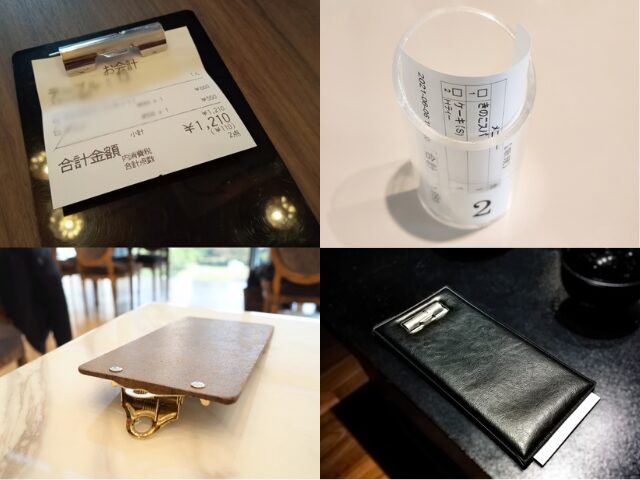
In many Japanese restaurants, the bill is placed inside a tray, holder, or binder rather than directly on the table.
In many Japanese restaurants, staff bring the bill shortly after the food arrives or after the final dish has been served. The bill is often placed quietly on the corner of the table inside a small tray, holder, or clipboard-style binder. For many foreign visitors, this moment can feel confusing at first.
Some people wonder:
- "Are we supposed to leave now?"
- "Did we stay too long?"
- "Is the restaurant trying to hurry us?"
In most cases, however, the answer is no. The bill is usually delivered early simply so customers can pay smoothly whenever they feel ready to leave. For Japanese customers, the tray or holder quietly signals that the bill is part of the normal dining process — not a message that anyone should leave immediately.
The Customer Controls the Timing
One important feature of Japanese restaurant culture is that customers are often expected to control the timing of interaction themselves. Rather than staff repeatedly approaching the table during the meal, many restaurants try to minimize interruption and allow customers to proceed at their own pace. This idea appears in several parts of the dining experience:
- customers call staff when needed
- staff avoid excessive table-checking
- the bill is prepared in advance
Instead of waiting until the very end to start the payment process, the restaurant quietly removes one extra step in advance. When customers are ready to leave, they can simply stand up and head to the register without needing to wait for staff attention. From a Japanese perspective, this often feels smoother and less stressful for both customers and staff.
The Bill Is Often Left on the Table Throughout the Meal
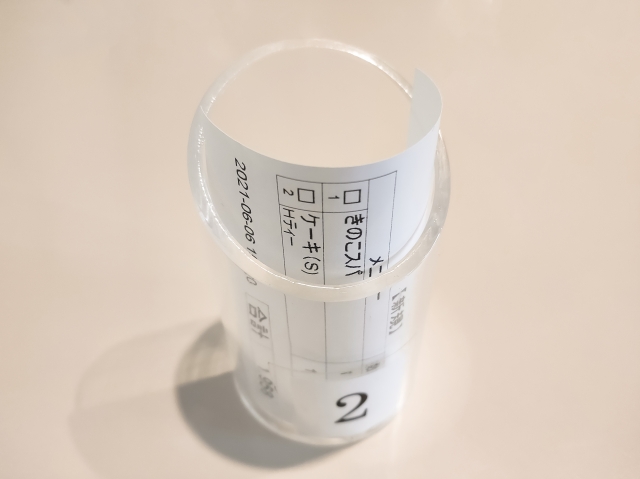
Some Japanese restaurants use numbered bill holders that customers bring to the register when paying.
In some restaurants — especially casual restaurants and izakaya — the bill may remain on the table for much of the meal. This does not usually mean the restaurant wants customers to leave quickly. Instead, the bill functions more like a running record of the order. Additional items can still be added later, and staff may replace or update it as needed.
Because many Japanese restaurants process payment at a central register near the entrance, customers usually bring the bill with them when paying. For Japanese customers, this system feels normal and practical, but for visitors unfamiliar with it, the early arrival of the bill can sometimes create unnecessary anxiety.
Japanese Restaurants Often Prioritize Smooth Exits
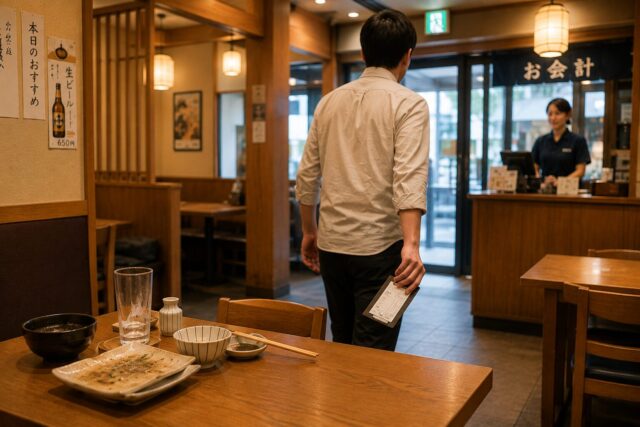
In many Japanese restaurants, customers bring the bill to a central register when they are ready to pay.
Many Japanese restaurants are designed around the idea that customers should be able to leave smoothly whenever they choose. Rather than waiting for eye contact, requesting the check, waiting again for payment processing, and then signing paperwork at the table, the process is often simplified into:
- receive the bill early
- finish eating at your own pace
- pay at the register when ready
This system reduces unnecessary waiting and helps maintain a calm atmosphere inside the restaurant. In busy restaurants, it also helps staff manage many tables efficiently without constantly interrupting customers.
The process is further simplified by the fact that tipping is generally not expected in Japan — since payment is treated as a straightforward completion of service rather than an extended social interaction, many restaurants optimize checkout for speed and smooth flow.
Pro Tip: The Bill Usually Doesn't Mean "Please Leave"
If the bill arrives before you ask for it in Japan, you usually do not need to worry.
In most restaurants, it is simply part of the normal service flow.
You can continue eating, talking, or relaxing at your own pace unless the restaurant is extremely crowded or close to closing time.
Pro Tip: The Small Tray at the Register
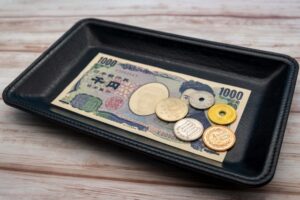
When paying at the register in Japan, you may notice a small tray placed on the counter.
In many restaurants and stores, customers place cash or their credit card into the tray rather than handing it directly to staff.
This keeps the payment process organized, smooth, and easy to confirm for both sides.
Modern Restaurants Are Becoming Even More Self-Service
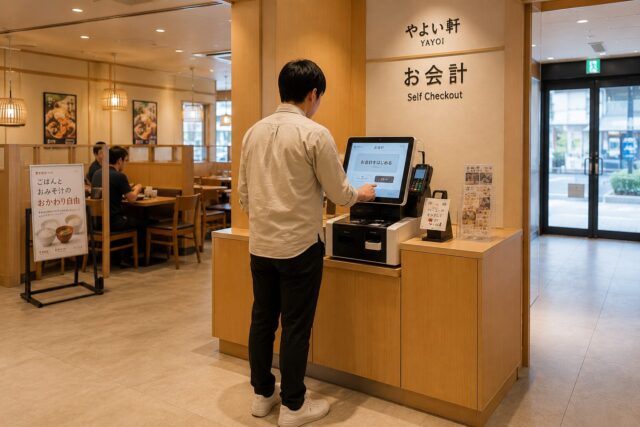
Self-checkout systems have become increasingly common in Japanese chain restaurants and family restaurants.
In recent years, many Japanese restaurants have introduced systems that further reduce the need for direct payment interaction.
Tablet ordering systems, self-checkout counters, cashless payment terminals, and QR-code ordering have become increasingly common, especially in chain and family restaurants.
Part of this shift accelerated during and after the COVID-19 pandemic, as restaurants faced labor shortages, rising operating costs, and growing demand for contactless service.
Even so, the underlying goal remains the same: creating a dining experience that feels smooth, efficient, and minimally disruptive. The early arrival of the bill is therefore less about rushing customers and more about reducing friction throughout the entire dining process.
Efficiency and Calmness Often Go Together in Japan
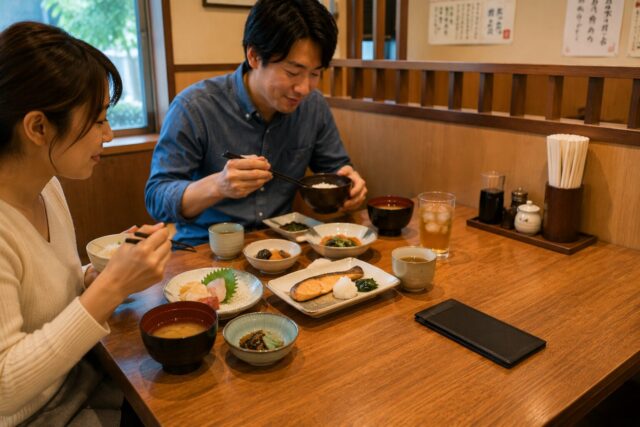
In Japan, bringing the bill early is usually intended to make payment smoother rather than to pressure customers to leave.
At first glance, bringing the bill before customers ask for it can seem unexpectedly direct. Within Japanese restaurant culture, however, the practice is generally understood as a form of practical consideration rather than pressure.
The goal is to avoid making customers wait unnecessarily while also preserving a quiet and relaxed atmosphere.
In this sense, the bill itself becomes part of a broader hospitality style that tries to balance efficiency, attentiveness, and low-pressure communication.
Once visitors understand this logic, the early arrival of the bill often starts to feel less uncomfortable — and more like another example of how Japanese restaurants try to make interaction flow smoothly without constant interruption.
FAQ
Why do Japanese restaurants bring the bill before customers ask?
In many Japanese restaurants, the bill is prepared early so customers can pay smoothly whenever they are ready to leave, without needing to wait for staff.
Does the early bill mean the restaurant wants customers to leave?
Usually not. In most cases, it is simply part of the normal service system and is not intended to pressure customers.
Do Japanese customers think this is rude?
Generally no. Most Japanese customers see the early bill as practical and convenient rather than impolite.
Can I continue sitting after the bill arrives?
Yes. In most restaurants, customers can continue eating or talking at their own pace after the bill is placed on the table.
When should I go to the register to pay?
In most Japanese restaurants, customers simply go to the register after finishing their meal and conversation. You do not need to wait for staff permission or request the bill again.
How close should I stand in line at the register?
In Japan, people generally leave a small amount of personal space when queuing at registers. Standing too close to the person in front of you may feel uncomfortable to some people.
How long can I stay after finishing my meal?
In many casual restaurants, customers can usually stay for a while after finishing if the restaurant is not crowded. During busy hours, however, people tend to leave sooner to allow other customers to use the table.
Why do many Japanese restaurants use a central register?
A central register near the entrance simplifies the payment flow and allows staff to manage tables more efficiently without needing to process payments tableside.
Do all Japanese restaurants use this system?
No. Some high-end restaurants or hotel restaurants may still process payment at the table instead.
Are self-checkout systems becoming more common in Japan?
Yes. Many restaurants now use self-checkout systems, tablets, and cashless payment technologies to reduce waiting time and improve efficiency.
Is this connected to Japanese restaurant culture overall?
Yes. The system reflects a broader hospitality style that prioritizes smooth interaction, minimal interruption, and efficient customer flow throughout the dining experience.
Related Reading on YUNOMI
- Japanese Restaurant & Hospitality Culture: Why Dining in Japan Feels So Different
- Why Don’t Japanese Waiters Interrupt Your Meal?
- Why Do Japanese Restaurants Have Call Buttons on the Table?
- How Payment Works in Japanese Restaurants
- Why Don’t Japanese Restaurants Expect Tips?

