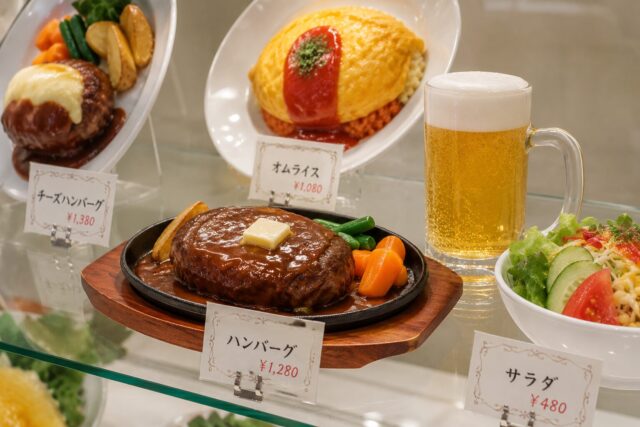
"Wait... is that real?"
These displays are called food replicas — realistic models designed to show customers what a restaurant serves.
At first glance, they seem like practical menu aids.
But their story is far more interesting than that.
What started as a simple restaurant tool gradually evolved into a unique craft form, a marketing device, a tourist attraction, and perhaps one of the most striking examples of Japanese attention to detail.
As craftsmen pushed for ever-greater realism, food replicas evolved from practical displays into a distinctive part of Japanese culture admired around the world.
Why Are Japanese Food Replicas So Realistic?
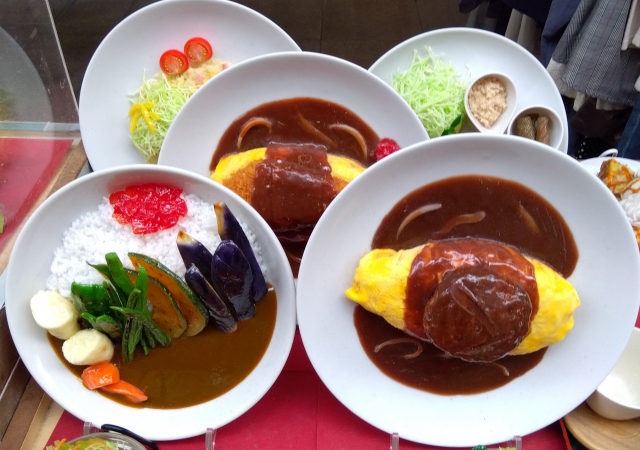
Highly realistic food replicas help customers instantly understand dishes while making them look especially appealing.
Many countries use photographs to illustrate menu items.
Japan uses photographs too.
Yet Japanese food replicas often go far beyond what a photograph can do.
A bowl of ramen might show noodles dramatically lifted by chopsticks. A beer mug displays a perfect head of foam. Melted cheese stretches naturally across a pizza. Tempura looks permanently crisp.
If food replicas existed purely to identify dishes, this level of detail would be unnecessary.
A simple picture would do the job.
Instead, many Japanese replicas try to capture food at the exact moment it looks most appetizing.
The goal is no longer just recognition.
The goal is temptation.
Food replicas don't simply tell customers what's on offer.
They make customers want to eat it.
Food Replicas Began as Practical Restaurant Tools
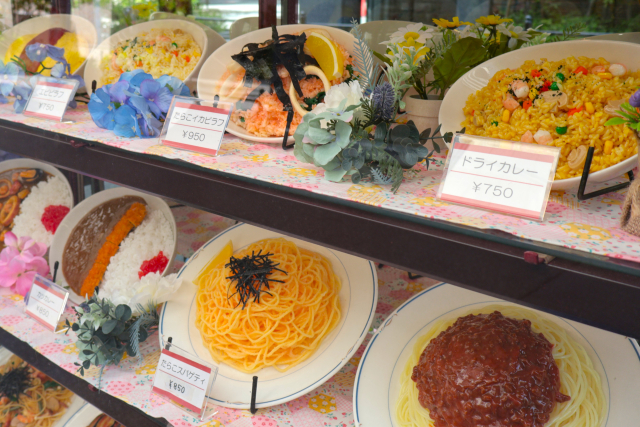
Food replicas originally served as practical visual menus, helping customers understand dishes before ordering.
The original purpose of food replicas was surprisingly straightforward.
Restaurants needed a clear way to show customers what they were serving.
Long before smartphones, digital menus, and widespread food photography, visual displays helped customers understand dishes immediately.
Rather than reading a description and imagining the result, customers could simply look at the display.
The idea caught on in the early twentieth century and spread quickly across Japan.
Customers could instantly gauge portion size, ingredients, presentation, and meal style.
What began as a practical communication tool soon became a familiar part of the Japanese dining experience.
Early food replicas were typically made from wax, which let craftsmen recreate colors and shapes in remarkable detail.
Today, most replicas are made from materials like PVC and synthetic resins, making them more durable and better suited to long-term display.
The materials have changed, but the purpose hasn't: helping customers understand a dish before they order it.
Seeing Is Faster Than Reading
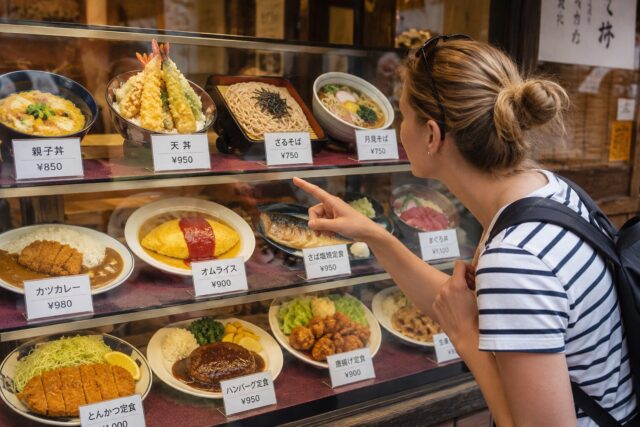
Even without reading Japanese, customers can quickly understand dishes by looking at food replicas displayed outside restaurants.
One reason food replicas survived even after photography became widespread is simple:
People process visual information quickly.
A menu item like oyakodon, tendon, or zaru soba may mean nothing to someone unfamiliar with Japanese cuisine.
A realistic display, however, communicates instantly.
- What ingredients are included
- How large the portion is
- Whether the dish is hot or cold
- What sides come with it
- How the meal is presented
There's no need to picture the food in your head.
It's right there in front of you.
This makes food replicas a remarkably effective form of visual communication.
They Help Customers Before They Even Step Inside
Food replicas don't just help customers decide what to order.
They influence a decision that happens much earlier:
Should I eat here at all?
When several restaurants line the same street, customers naturally compare them before choosing.
A well-stocked display window lets people picture their meal before they walk in.
A bowl of ramen can suddenly look exactly right on a cold evening. A beautifully presented curry rice might edge out the restaurant next door.
Many people have changed their plans after spotting a particularly appealing display.
In that sense, food replicas aren't just informational — they're quiet advertisements, letting the food speak for itself.
Unlike a host calling out to passers-by, the display simply invites customers in by showing them exactly what's waiting inside.
When Practical Design Became Art
At some point, something shifted.
Food replicas stopped evolving purely as practical tools.
Craftsmen began pushing realism further and further.
Accurately depicting a dish was no longer enough.
As competition grew, restaurants wanted displays that looked even more enticing than their neighbors'.
Craftsmen responded by chasing ever-finer details — subtle touches that many customers might never consciously register.
The result was a gradual shift from simple restaurant displays to highly specialized craftsmanship.
The challenge became recreating the precise textures, colors, and details that make food look irresistible.
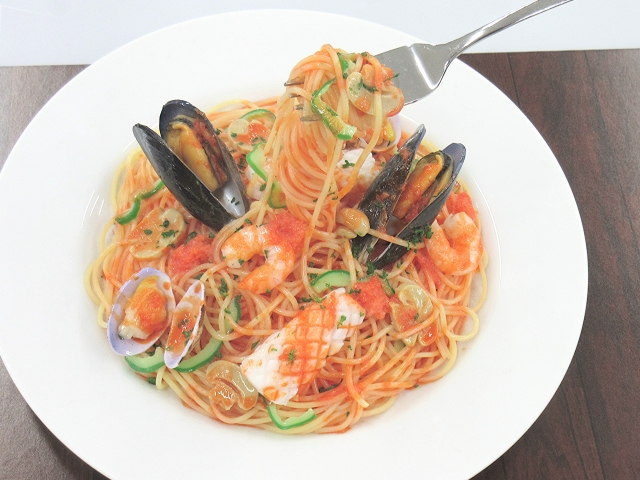
Noodles hang suspended mid-air. Beer foam looks freshly poured. Ice cubes seem on the verge of melting.
Many replicas are designed to capture food at its most appealing — a moment that might last only seconds in real life.
What started as a display gradually became a craft.
For many visitors, this craftsmanship is part of the appeal.
The replicas are useful, but they're also impressive objects in their own right.
A Tool That Accidentally Broke Language Barriers
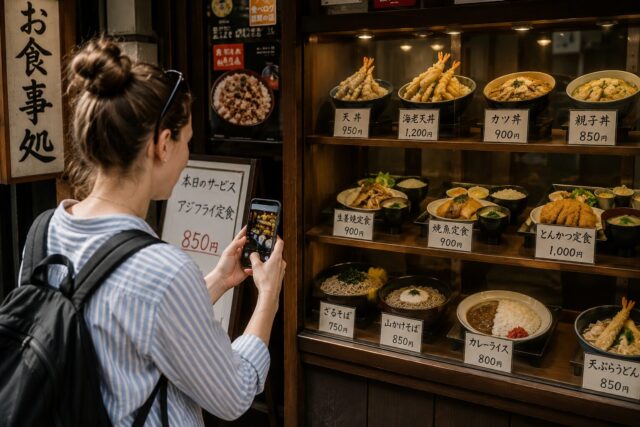
Many visitors use food replicas as a visual reference, taking photos before entering the restaurant to make ordering easier later.
Interestingly, food replicas weren't originally designed with international visitors in mind.
Yet they turned out to be enormously useful for people who can't read Japanese.
A visitor might not understand the menu, but they can immediately recognize ramen, tempura, curry rice, parfaits, or sushi just by looking at the display.
Without trying to, food replicas became a form of communication that works across languages, ages, and backgrounds.
A customer does not need to read Japanese to understand what is being offered. In many ways, food replicas became a surprisingly effective example of universal design.
Rather than relying on written descriptions, they communicate through sight alone. You don't need to know the language to understand what's on offer.
In a country where restaurants serve an enormous variety of dishes, that ability to communicate instantly proved remarkably powerful.
Pro Tip: One of the Easiest Ways to Order
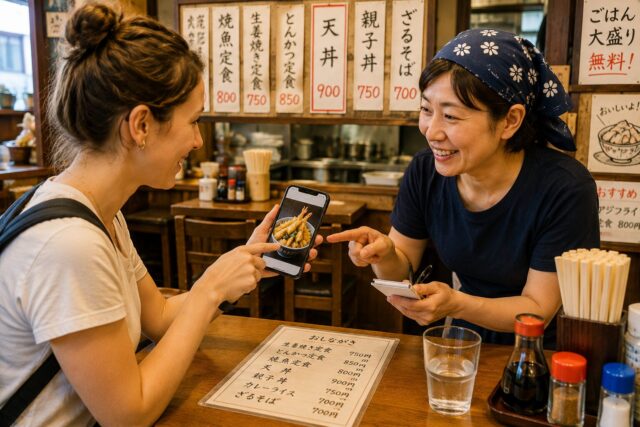
Food replicas often help visitors communicate their order, even when they cannot read Japanese menus or speak the language fluently.
If you spot a dish you like in the display window, note what it looks like or check the name shown beneath it, and use that when ordering inside.
Many visitors use food replicas as a visual reference throughout the ordering process. Showing a photo of the replica on your phone, or describing what you saw in the window, is perfectly common and widely understood.
Staff at casual restaurants are generally very used to helping customers identify dishes this way.
From Restaurant Tool to Cultural Icon
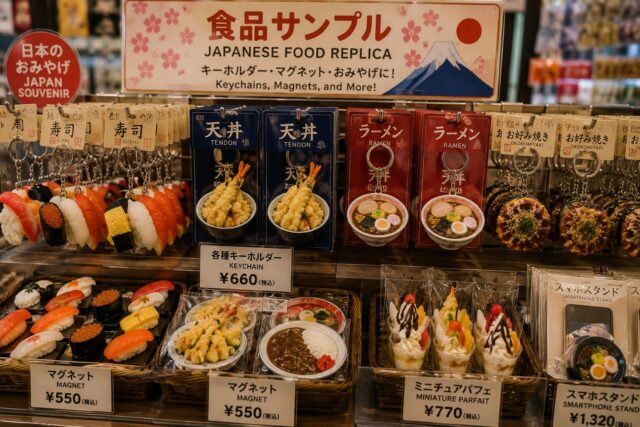
What began as restaurant displays has evolved into a popular souvenir culture, with food replicas now appearing as keychains, magnets, and even smartphone stands.
Today, food replicas have moved well beyond restaurant windows.
One place now closely associated with food replica culture is Gujo Hachiman in Gifu Prefecture.
The town built a reputation for replica production and is now known for workshops where visitors can make their own miniature food samples.
What began as a practical trade has become a cultural attraction in its own right.
Visitors can also pick up miniature replica keychains, magnets, smartphone stands, and other souvenirs.
Few of the people who first created food replicas could have imagined this outcome.
A simple restaurant display grew into a cultural symbol recognized around the world.
More Than Just Fake Food
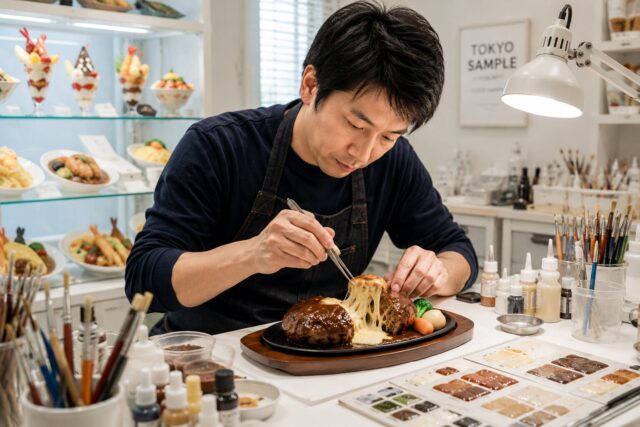
Food replicas continue to evolve through the work of skilled craftsmen who constantly refine details to make them look even more realistic and appealing.
Food replicas help customers understand menus.
They help restaurants communicate visually.
They draw attention and encourage people to come inside.
They ease uncertainty and make ordering less daunting.
And they showcase remarkable craftsmanship.
What began as a practical restaurant tool eventually became something much larger.
Today, food replicas are advertisements, works of craft, tourist attractions, and one of the most distinctive features of Japanese dining culture.
Perhaps the most surprising part of their story is that they were never meant to become a cultural symbol.
They started as a practical solution to a practical problem. Yet through craftsmanship, competition, and a persistent desire to make things clearer and more appealing, they evolved into something far beyond what their creators ever envisioned.
And perhaps that's the most fitting thing about them — a reminder of what can happen when people keep asking the same question:
"How can we make this even better?"
FAQ
Why do Japanese restaurants display food replicas?
Japanese restaurants display food replicas to help customers understand dishes visually before ordering. Over time, they also became a way to attract customers, reduce uncertainty, and convey the restaurant's style.
Are Japanese food replicas real food?
No. They are realistic models crafted to look like the actual menu items served inside the restaurant.
What are Japanese food replicas made of?
Early food replicas were often made from wax. Today, most are made from PVC or synthetic resins, which are more durable and better suited to long-term display.
Why are Japanese food replicas so realistic?
Many food replicas are crafted with a high level of detail not just to identify dishes, but to make the food look genuinely appealing and memorable.
Are food replicas only for tourists?
No. They're useful for everyone — Japanese customers, children, older guests, and anyone unfamiliar with a particular dish or restaurant.
Can I point to a food replica when ordering?
In many casual restaurants, yes. If you can't read the menu, pointing to a display or showing a photo of it on your phone is a perfectly acceptable and well-understood way to order.
Do all Japanese restaurants use food replicas?
No. They're common in many casual restaurants and department store dining areas, but smaller local spots, high-end establishments, and modern restaurants may use photos, handwritten menus, or digital systems instead.
What is Gujo Hachiman known for?
Gujo Hachiman in Gifu Prefecture is closely associated with Japanese food replica culture and is known for workshops where visitors can make their own miniature food samples.
What do food replicas reveal about Japanese culture?
They show how a practical tool can be refined far beyond its original purpose — reflecting a broader tendency in Japanese culture to improve useful things until they become something truly distinctive.

