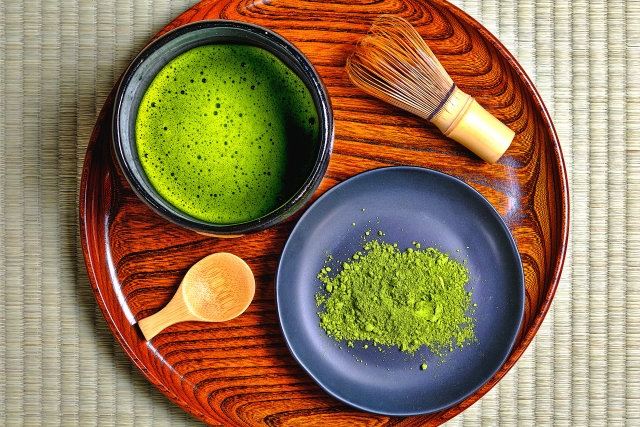
Why is matcha a powder, while most green tea comes as leaves? If both come from the same plant, why can one be whisked and consumed whole while the other must be brewed and strained?
Matcha is powdered because it is designed to be consumed as the entire leaf — not extracted in water and discarded. This article explains why matcha is ground into powder, how its production makes that possible, and why simply grinding other green tea does not create matcha.
Matcha is a finely ground powder made from specially cultivated tea leaves that are intended to be consumed whole, rather than steeped and discarded.
Matcha Is Powdered Because It Is Meant to Be Consumed Whole
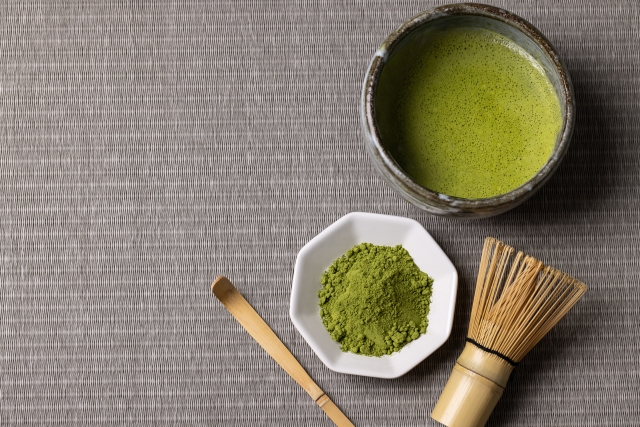
Unlike most teas, matcha is not brewed to extract flavor — it is consumed as the entire leaf. This is why it must be in powdered form.
Grinding the leaf into an extremely fine powder allows it to disperse evenly in water, so all of its components — amino acids, caffeine, and antioxidants — are ingested together. As a result, matcha delivers a more concentrated flavor and a richer, fuller experience than brewed green tea.
Extraction vs. Consumption
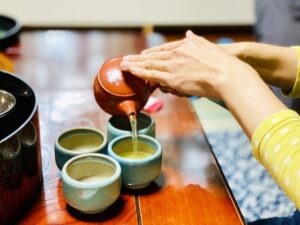
Most Japanese tea is brewed and poured, unlike matcha which is consumed whole.
Most teas are designed for extraction: hot water draws out selected flavors while leaving behind fibers and compounds that would otherwise taste harsh.
Matcha bypasses this process entirely — nothing is filtered out.
Matcha Is Designed to Become Powder — Not Just Ground into It
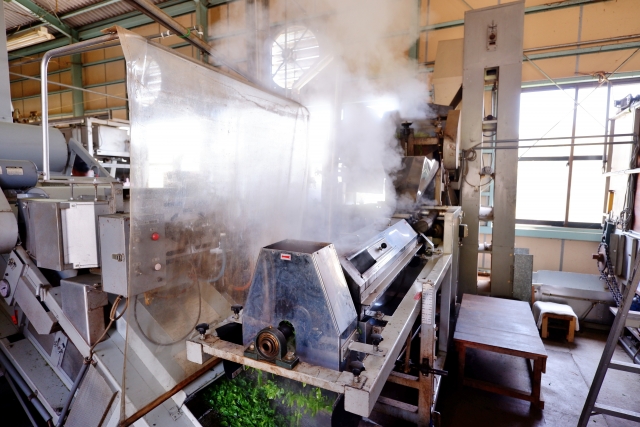
Steaming stops oxidation, keeping the leaves as green tea instead of becoming black tea.
A crucial point is that matcha is not simply ground tea. Grinding regular tea produces powder, but it does not produce matcha.
Matcha works because every stage of its production is designed so that the leaf can be consumed directly, without harshness.
Only the youngest leaves are selected, and they are quickly steamed after harvest to halt oxidation. Without this step, the leaves would continue to oxidize and eventually become oolong or black tea.
Tencha: The Leaf That Becomes Matcha
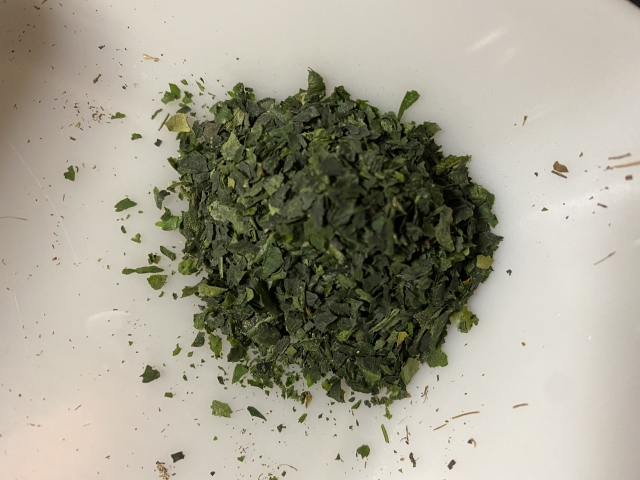
Tencha is dried without rolling, preserving the structure needed for matcha production.
After steaming, the leaves are dried without rolling. This produces tencha — the raw material for matcha. Unlike other green teas, tencha is not shaped for brewing. Instead, it remains flat, and the stems and veins are later removed, leaving only the soft leaf tissue. This refined material can then be ground into a smooth powder suitable for direct consumption.
Rolling Changes Everything: Why Other Tea Cannot Become Matcha
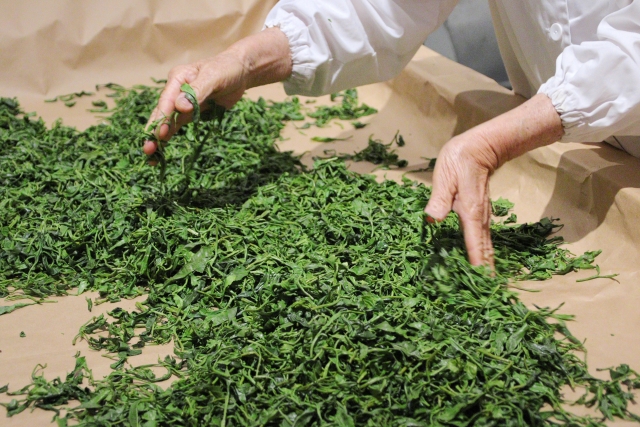
Rolling changes the leaf structure, making it suitable for extraction rather than whole consumption.
Most green teas — including sencha and gyokuro — are rolled during processing. This step breaks down the leaf structure and prepares it for extraction in hot water.
Once a leaf has been rolled, its internal structure is fundamentally altered: it is no longer suitable for being consumed whole in powdered form. If rolled tea is ground into powder, the result is a harsh, unbalanced taste and a rough texture.
Why Gyokuro Is Not “Almost Matcha”
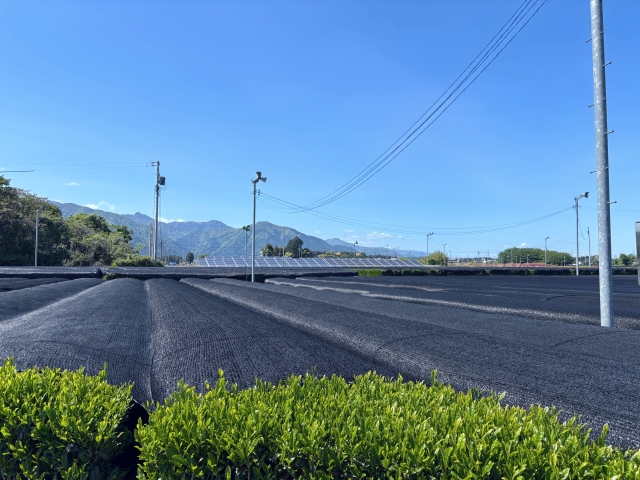
Tea plants are shaded before harvest to increase sweetness and umami in matcha.
Gyokuro shares one important feature with matcha: both are grown under shade, which increases sweetness and umami. However, gyokuro is still rolled and processed as a leaf tea for brewing.
Because of this, even though gyokuro is closer to matcha in cultivation than most green teas, it cannot become matcha simply by grinding it.
Why Sushi Restaurants Use Konacha Instead of Matcha
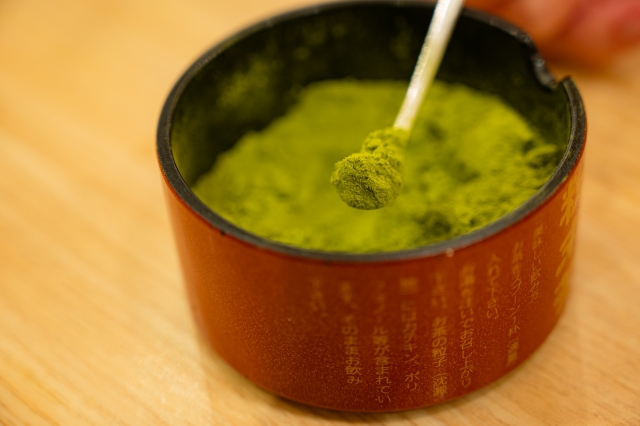
Even in Japan, tea that looks powdery is not always matcha.
Sushi restaurants typically serve konacha — a tea made from small, broken pieces of green tea leaves. Konacha is designed for rapid extraction: it produces a strong, slightly bitter infusion almost instantly, which helps cleanse the palate after fatty foods like sushi.
Matcha, by contrast, is far richer and more aromatic. Because it is consumed whole, it can feel too heavy and complex for this role. This contrast highlights an important point: not all fine-textured tea is meant to be consumed as powder.
Matcha is unique precisely because it is designed for that purpose from the very beginning.
Powdered Form Changes Both Flavor and Nutrition
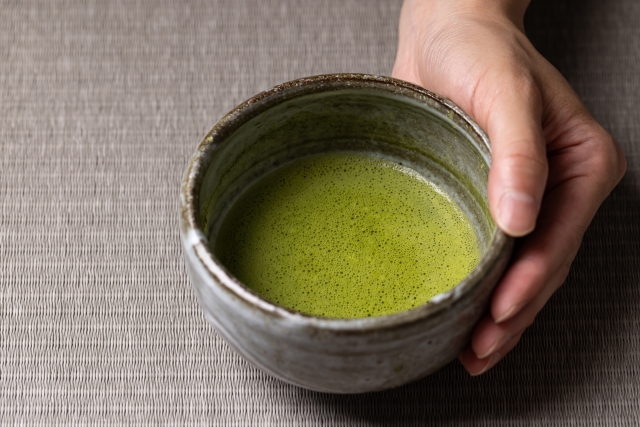
Because matcha is consumed whole, it contains higher concentrations of nutrients than brewed tea — including caffeine, catechins, and the amino acid L-theanine.
Together, these compounds create a distinctive balance of alertness and calm.
The powdered form also intensifies umami and produces a thicker, more immersive drinking experience.
A Different Way to Experience Tea
Rather than a light infusion, matcha feels richer and more direct — closer in some ways to eating than to drinking. This is why its flavor is often described as deep and lingering, and why a single bowl can feel complete on its own.
Author’s Note
In Japan, matcha being powdered rarely feels unusual — especially within tea culture, where the form is simply taken for granted. But when you step back, it becomes clear how distinctive it is to design a tea around whole-leaf consumption rather than extraction.
This reflects a deeper philosophy: not pulling flavor out of an ingredient, but experiencing everything it has to offer.
FAQ

Is matcha made from the same plant as green tea?
Yes. Both come from Camellia sinensis. The difference lies entirely in how the leaves are cultivated and processed, not in the plant itself.
Can you make matcha by grinding regular green tea?
No. Grinding regular tea only produces powder — not matcha. Without the specific cultivation and processing steps that make whole-leaf consumption possible, the result will be harsh and unbalanced.
Why does matcha taste smoother than other powdered tea?
Because matcha is made from leaves that have been specifically grown and processed to minimize bitterness and enhance sweetness before they are ever ground.
Is gyokuro similar to matcha?
Gyokuro and matcha share the same shaded cultivation method, but gyokuro is processed as a leaf tea for brewing and cannot be consumed whole in the same way as matcha.
Why is matcha ground with stone mills?
Stone grinding generates very little heat, which preserves the delicate aroma of the leaf. It also produces an exceptionally fine powder, resulting in the smooth texture that defines properly made matcha.

