In some countries, pressing a button to call staff might feel unusually direct or even impersonal.
In Japan, however, table call buttons are often considered one of the smoothest and least stressful ways to request assistance.
Rather than forcing customers to search for staff or repeatedly make eye contact, the system allows communication to happen only when needed.
The system reflects a broader Japanese service style that prioritizes quietness, efficiency, and minimal interruption. Instead of staff repeatedly checking on tables, customers control the timing of interaction themselves. In recent years, call buttons have also become part of larger self-service systems that include tablets, mobile ordering, self-checkout, and restaurant automation.
Why Japanese Restaurants Use Call Buttons
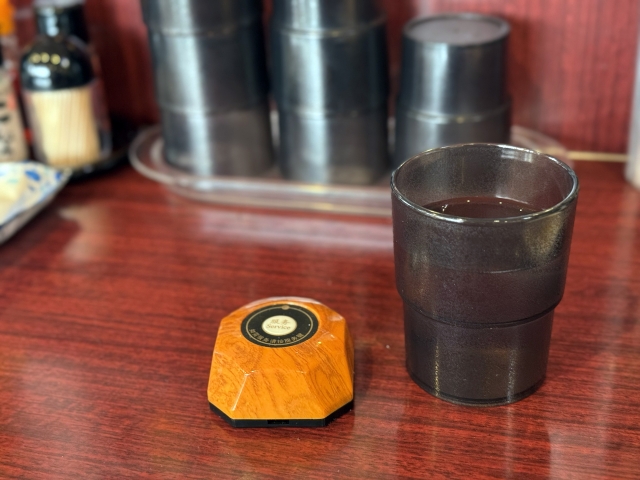
Call buttons are commonly placed directly on restaurant tables so customers can request assistance whenever needed.
In many Japanese restaurants, staff members do not constantly walk around checking on tables. Instead, restaurants often rely on systems that allow customers to request assistance exactly when they need it — and one of the simplest solutions is the table call button.
When customers want additional water or tea, another order, the bill, or any kind of help from staff, they simply press the button and someone comes to the table.
From a Japanese perspective, this is often considered smoother and less stressful than trying to catch a server's attention from across the room.
The System Matches Japan's Quiet Restaurant Culture
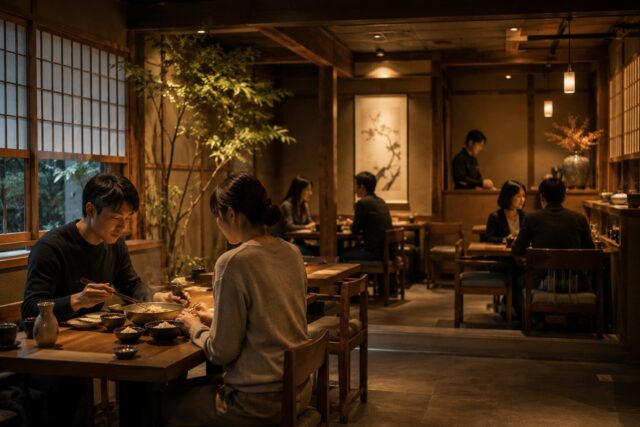
Many Japanese restaurants try to maintain a calm atmosphere by minimizing unnecessary interruption during meals.
One reason call buttons became so common in Japan is that they fit naturally into the broader atmosphere of many Japanese restaurants. Restaurants in Japan often try to balance two ideas at the same time: staff should remain attentive, and customers should not feel constantly interrupted.
Rather than repeatedly approaching the table to ask whether anything is needed, staff often wait for customers to signal when interaction is necessary.
In some Western restaurants, customers are assigned a specific server who checks on the table regularly throughout the meal. In Japan, restaurant service is more often handled collectively by the staff as a whole rather than by one dedicated person.
Call buttons allow communication to happen quickly without disrupting the calm atmosphere of the restaurant.
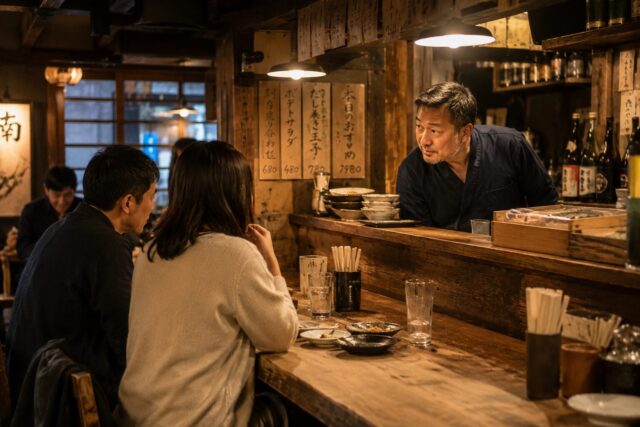
Some smaller Japanese restaurants rely more on direct observation and personal interaction instead of call buttons.
That said, not every restaurant in Japan uses call buttons.
Many smaller restaurants, traditional izakaya, and higher-end establishments still rely more on direct observation and personal interaction. In these places, attentive staff may notice empty glasses, finished dishes, or customers glancing around before anyone says a word.
In this sense, the presence or absence of a call button can reflect the personality and service style of the restaurant itself — the goal in both cases is the same: making interaction feel smooth and unobtrusive for both sides.
Customers Control the Timing of Interaction
Call buttons also reflect a broader pattern within Japanese restaurant culture: customers often control the timing of interaction themselves. This idea appears throughout the dining experience — customers call staff when needed, staff avoid excessive table-checking, the bill is often prepared early, and payment is frequently handled at a central register.
Rather than creating constant back-and-forth throughout the meal, the system tries to reduce friction while still allowing customers to receive assistance quickly whenever they need it. For many Japanese customers, this style of service feels efficient, calm, and low-pressure.
The Button Creates Benefits for Both Customers and Staff
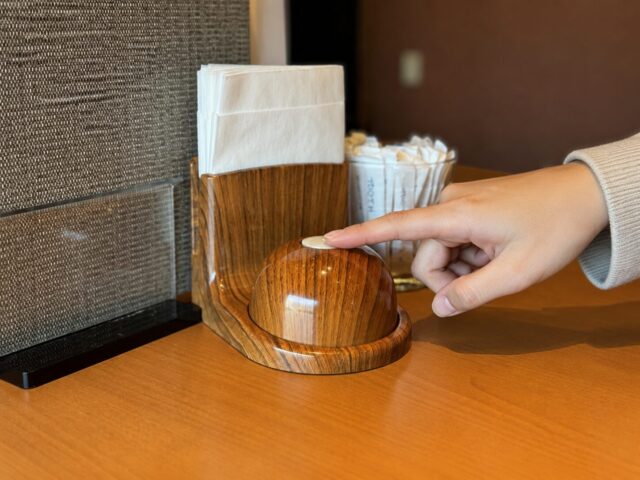
In Japan, pressing the call button is considered a normal and polite way to request service.
Call buttons also solve several practical problems that can arise in busy restaurants. Customers do not need to raise their voices across the room, worry about interrupting staff at the wrong moment, or wait for eye contact from someone passing by.
At the same time, staff members do not need to constantly scan the dining area for raised hands or try to identify which table called out "Sumimasen."
In busy restaurants, verbal calls can be difficult to hear clearly — especially when several tables need assistance at once.
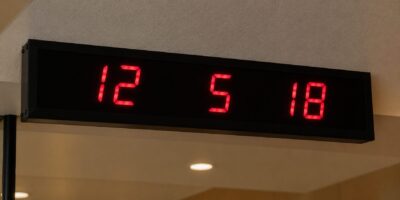
Some restaurant systems display table numbers in the order requests were made to help staff respond fairly and efficiently.
Many call button systems display the table number and the order in which requests were made, helping staff respond fairly and reducing situations where customers feel another table was helped first even though they called earlier.
Because requests are organized through the system itself, available staff can respond efficiently without relying entirely on memory, eye contact, or guesswork during crowded periods.
The result benefits both sides: customers can request help comfortably without disrupting the atmosphere, while restaurants can maintain smoother communication and more efficient service overall.
Pro Tip: You Usually Only Need to Press Once
In most Japanese restaurants, pressing the call button once is enough. Staff are usually alerted immediately through speakers, displays, or handheld devices.
Pressing it repeatedly is generally unnecessary unless nobody responds after a long time.
Pro Tip: Some Restaurants Have a Separate Bill Button
In some Japanese restaurants, there may be a separate button specifically for requesting the bill. Pressing it may alert staff to bring the final check, or simply signal that you are ready to pay at the register.
The exact system differs from restaurant to restaurant, so many Japanese customers quickly check how things work after sitting down.
Modern Japanese Restaurants Often Combine Multiple Systems
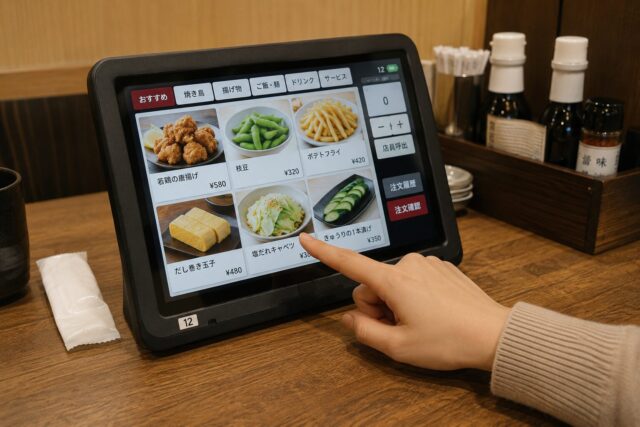
Modern Japanese restaurants often combine call buttons with tablet ordering systems and self-service technology.
In recent years, many Japanese restaurants have expanded well beyond simple call buttons.
Today, restaurants may combine tablet ordering systems, QR-code ordering, self-checkout machines, cashless payment, and serving robots — especially in chain and family restaurants.
In many ways, modern tablet ordering systems can be seen as an evolution of the traditional call button. What once served as a simple way to summon staff has gradually expanded into systems that allow customers to order, request assistance, and pay entirely from the table.
Serving robots have become increasingly common in some Japanese chain and izakaya
Part of this shift accelerated during and after the COVID-19 pandemic, as restaurants faced labor shortages, rising operating costs, and growing demand for contactless service.
Even for Japanese customers, these systems can occasionally feel confusing at first, since each restaurant may use slightly different machines and ordering styles. Even so, the overall goal usually remains familiar: making the dining experience smoother, quieter, and less stressful for everyone.
Call Buttons Are Part of a Broader Hospitality Style
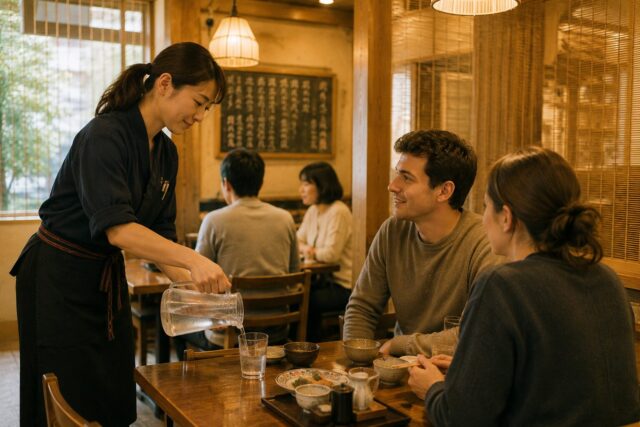
Even in restaurants that use call buttons, attentive staff still continue watching the flow of the dining space.
At first glance, table call buttons may seem cold or mechanical compared to traditional face-to-face service. Within Japanese restaurant culture, however, many people see them differently.
Rather than replacing hospitality, the system functions as a tool that helps restaurants maintain quick response times, minimal interruption, a calm atmosphere, and efficient communication all at once.
Even in restaurants that use call buttons, human attentiveness still matters. Staff often continue watching the overall flow of the space, refilling water, clearing dishes, and noticing small customer needs when possible.
The button is not meant to replace hospitality entirely — it supports smoother communication during busy periods when staff cannot constantly monitor every table.
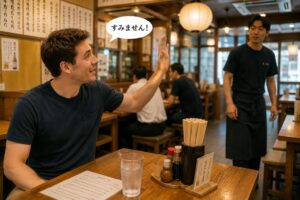
Customers in Japan may still say “Sumimasen” when staff are nearby or when no call button is available.
Of course, call buttons do not replace verbal communication altogether. In restaurants without buttons, or when staff are already nearby, customers may still simply say "Sumimasen" to get attention.
In Japan, many people naturally switch between the two depending on the situation. The button is simply one more part of a broader approach to restaurant service — one that tries to balance attentiveness with personal space.
Once visitors understand this logic, pressing the button often starts to feel less awkward — and more like a natural part of dining in Japan.
FAQ
Why do Japanese restaurants have call buttons on the table?
Many Japanese restaurants use call buttons so customers can request assistance whenever they need it, without waiting for staff to approach the table unprompted.
Is it rude to press the button?
Not at all. The button is specifically placed there for customers to use, and pressing it is completely normal in Japan.
Do all Japanese restaurants use call buttons?
No. Call buttons are especially common in chain restaurants, family restaurants, izakaya, and conveyor belt sushi restaurants, but many smaller or higher-end restaurants may not use them.
Should I press the button more than once?
Usually not. In most restaurants, pressing it once is enough to alert staff immediately.
Why don't Japanese waiters check on customers more often?
Many Japanese restaurants try to avoid interrupting customers unnecessarily. Customers are generally expected to control the timing of interaction themselves, signaling staff when assistance is actually needed.
Are call buttons replacing human service in Japan?
Not entirely. Most restaurants still rely heavily on staff interaction, but call buttons help make communication more efficient and less disruptive to the dining atmosphere.
Are tablet ordering systems becoming more common too?
Yes. Many restaurants now combine call buttons with tablets, QR-code ordering, self-checkout systems, and cashless payment technologies as part of a broader move toward self-service dining.
Do Japanese people ever feel confused by these systems?
Yes. Even Japanese customers sometimes feel uncertain because different restaurants use different machines, layouts, and ordering styles. It is not unusual to take a moment to figure out how a particular system works.
Related Reading on YUNOMI
- Japanese Restaurant & Hospitality Culture: Why Dining in Japan Feels So Different
- Why Don’t Japanese Waiters Interrupt Your Meal?
- Why Do Japanese Restaurants Call Out “Sumimasen” Instead of Waiting Quietly?
- Why Do Japanese Restaurants Bring the Bill Before You Ask?
- How Payment Works in Japanese Restaurants

