Setsubun is a Japanese seasonal tradition that marks the “turn of the season” in late winter, usually on February 3 (sometimes February 2).
Families do simple rituals at home—throwing roasted soybeans and eating a lucky-direction sushi roll—to symbolically sweep out misfortune and welcome good luck.
In modern Japan, Setsubun is less about religion and more about a yearly “reset”: a fun, family-centered moment that combines food, actions, and sometimes decorations into one memorable night.
And honestly, you could sum it up like this:
Setsubun is the day Japan throws beans… and then takes a big bite of a giant sushi roll.
It sounds ridiculous at first.
Beans? A whole sushi roll? Facing one direction?
But once you understand what “oni” represents, why beans are roasted, and what the lucky direction means, it becomes a very Japanese way of handling winter:
Push bad luck out.
Pull good luck in.
What Is Setsubun and When Does It Happen?
Setsubun is Japan’s traditional “seasonal boundary” day.
In modern Japan, it usually refers to the boundary between winter and spring, celebrated in early February.
Most years it falls on February 3, but in some years it shifts to February 2 because it follows seasonal/calendar calculations rather than a fixed date.
The Two Main Stars of Setsubun
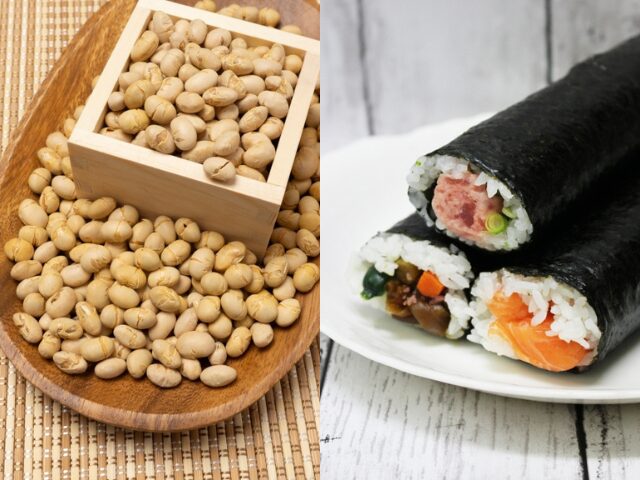
If you’re trying to understand Setsubun as living culture, focus on the two things most people associate with it today:
- Mamemaki: throwing roasted soybeans
- Ehōmaki: eating a thick sushi roll facing the lucky direction
Everything else—masks, festivals, regional variations—makes more sense once these two “core actions” click.
Mamemaki: Throwing Beans at Oni
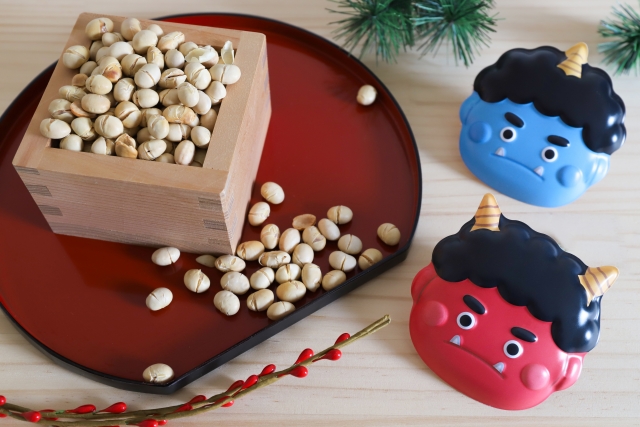
Mamemaki is the act of throwing roasted soybeans to chase away “oni.”
In Setsubun, oni are not the Western devil.
They are folklore symbols of misfortune—trouble, sickness, bad luck, or simply “what you don’t want to carry into the new season.”
That’s why the scene is so memorable:
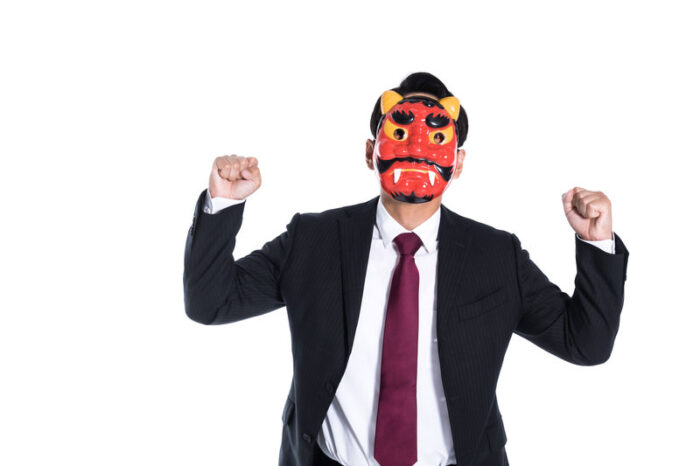
Dad gets home… and immediately becomes the “oni” for mamemaki.
Someone puts on an oni mask.
Then the family throws beans at them.
It looks like a game.
But culturally, it’s a simple story everyone understands—“misfortune is here, so we push it out.”
A common home pattern goes like this

- Open a door or window, throw beans outside, and say something like “Oni wa soto!” (Out with oni!)
- Close it, then throw a few beans inside and say “Fuku wa uchi!” (Fortune in!)
Afterward, people often eat some of the roasted soybeans as a health wish for the year ahead—commonly the same number of beans as your age (and sometimes one extra).
Why Soybeans? (And Why Roasted?)
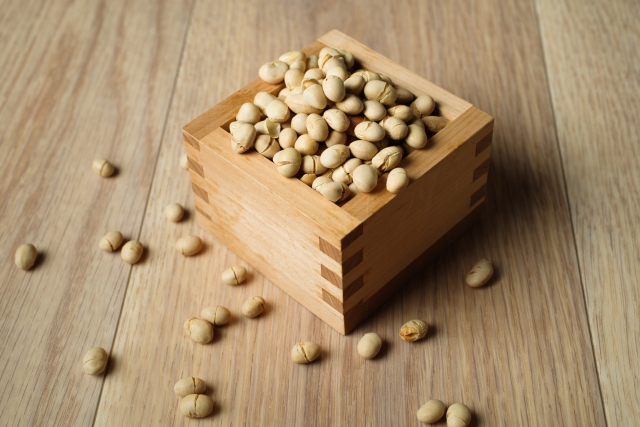
“Why beans?” is one of the most common questions about Setsubun.
There are a few overlapping explanations, and Japan often keeps multiple layers of meaning in traditional customs.
One popular explanation links beans to the traditional gokoku (“five grains”), staple foods believed to carry vitality and protective power in folk belief.
The five grains are often listed as:
- Rice
- Barley
- Millet (awa)
- Foxtail millet (hie)
- Beans (often soybeans)
Among those grains, soybeans stand out as large, hard, and easy to throw—so they feel like the “strongest” grain for driving away something scary.
Another widely shared explanation is folk wordplay connecting mame (beans) with the idea of “destroying evil”—often explained as “ma (evil) + me (to destroy).”
And the beans are typically roasted, not raw.
A commonly mentioned practical reason is that roasted beans won’t sprout later.
Sprouting beans after the ritual can be considered unlucky in this context, so roasted beans became the standard.
Ehōmaki: The Giant Sushi Roll You’re Supposed to Eat “Correctly”

Ehōmaki is a thick sushi roll eaten on Setsubun.
The modern custom says you should face the year’s lucky direction (ehō) and eat the roll as a good-luck gesture.
What Is “Ehō” (the Lucky Direction)?

Ehō is traditionally described in onmyōdō (yin–yang style cosmology) as the direction where the year’s fortune is believed to “sit.”
That’s why people say to face that direction while eating ehōmaki.
“Eat It in Silence and Finish It” (But Most People Aren’t Strict)

Facing the year’s lucky direction (ehō) while eating ehōmaki—often described as “in silence,” but many families keep it casual.
You’ll often hear a “proper” version of the rule:
Face the lucky direction.
Don’t talk.
Finish the whole roll.
But in real life, many families treat this casually.
People talk.
Some share rolls.
Some choose smaller ones.
For most households today, it’s less a strict rule and more a playful seasonal challenge—one that feels fun because it’s a little absurd.
Food, Actions, and Small Seasonal Customs
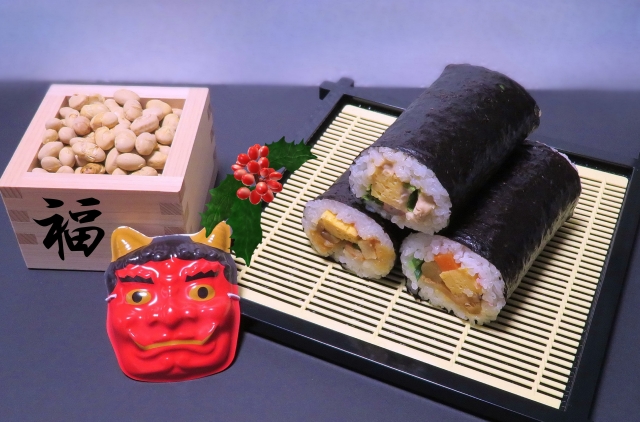
Setsubun is easiest to understand when you see how it combines food and action into one short ritual.
Food
- Roasted soybeans (fukumame) — thrown during mamemaki and often eaten afterward
- Ehōmaki — a thick sushi roll eaten as a seasonal “good luck” food
Actions
- Throwing beans (mamemaki) — sending misfortune out and inviting fortune in
- Calling out phrases — “Oni wa soto!” / “Fuku wa uchi!”
- Facing ehō — linked to ehōmaki in modern practice
Decorations
- Oni masks — used at home so someone can “play the oni”
- Bean packets — often sold with small masks or seasonal designs
Regional Variation: Sardines (Iwashi)
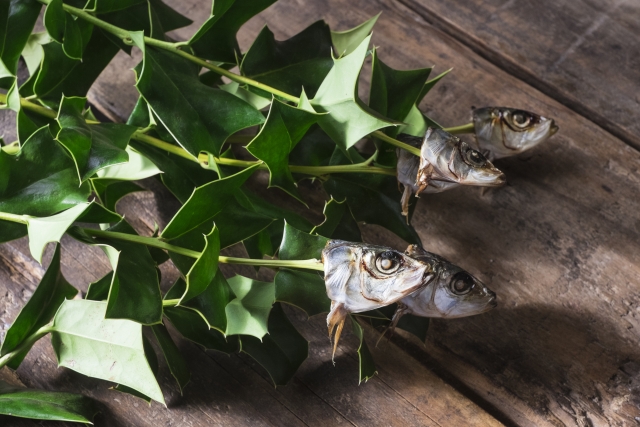
Hiiragi iwashi: a regional Setsubun charm—holly leaves and sardine heads, traditionally used to keep misfortune away.
Some regions (often mentioned in parts of Kansai) have customs involving iwashi (sardines).
People may eat sardines, or use sardine-related folk practices as a protective symbol.
A common explanation is the strong smell and smoke from grilling sardines—thought to discourage “oni” (misfortune)—plus the idea of wishing for health through nutritious food.
How Setsubun Is Celebrated in Japan Today
Modern Setsubun comes in many “levels.”
Some families do the full set (bean-throwing + phrases + eating beans + ehōmaki).
Others do a very small version, or focus mainly on seasonal food.
This flexibility is one reason Setsubun stays alive as everyday culture.
Common Misunderstandings
- “Setsubun is strictly religious.”
For many households today, it’s seasonal life culture—a custom, not a doctrine. - “Oni are the devil.”
In Setsubun, oni are folklore symbols of misfortune, not a single religious figure. - “Everyone follows the same rules.”
Practices vary by family and region, and modern versions are often more casual.
FAQ

Is Setsubun a religious holiday?
For most people in Japan today, Setsubun is a seasonal tradition rather than a religious holiday.
Temples and shrines may hold ceremonies, but many families celebrate it at home as everyday culture.
Why do people throw beans on Setsubun?
Throwing roasted soybeans (mamemaki) is a symbolic way to drive out misfortune and invite good luck. Oni represent “trouble” in folklore, so the ritual becomes a simple, physical reset before spring.
Why soybeans specifically, not another food?
There are several common explanations. Soybeans are linked to the traditional “five grains” valued in Japan and are seen as strong, life-giving staple foods.
They are also large, hard, and easy to throw. Some people also connect beans to folk wordplay about “destroying evil.”
Why are the beans roasted instead of raw?
A commonly mentioned reason is practical: roasted beans won’t sprout later. Sprouting beans after the ritual can be considered unlucky in this context, so roasted beans became the standard.
What is ehō?
Ehō is the “lucky direction” for that year. It’s often explained through onmyōdō as the direction associated with the year’s fortune, which is why people say to face it when eating ehōmaki.
Do you have to eat ehōmaki in silence?
You’ll often hear that you should face the lucky direction, stay silent, and finish the whole roll. But many families treat this casually—people talk, share rolls, or choose smaller versions.
Why is Setsubun sometimes on February 2 instead of February 3?
Setsubun is tied to seasonal/calendar calculations rather than a fixed date, so in some years it shifts by one day.
Final Thoughts
Setsubun is one of Japan’s most “everyday” seasonal traditions—and that’s exactly why it’s culturally interesting.
It takes a big idea (seasonal change and uncertainty) and turns it into two unforgettable actions:
Throw beans to push bad luck out.
Eat a giant sushi roll to pull good luck in.
Ridiculous on the surface.
Surprisingly meaningful once you understand what it’s trying to do.
Author’s Note
I grew up in Japan, and Setsubun always felt like winter’s “turning point.”
Even when people do it casually, the idea of clearing the air—then welcoming something better—fits how seasonal change is often lived, not just noticed, in Japan.

