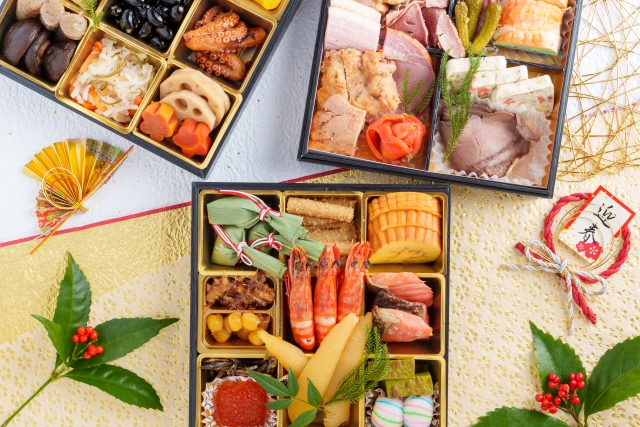
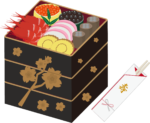
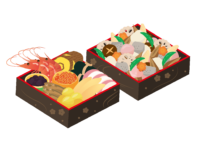
Osechi ryōri is Japan’s traditional New Year feast, prepared in advance and beautifully packed into lacquered boxes called jūbako.
Each dish carries symbolic meaning — from health and longevity to prosperity and family harmony.
This article explains what osechi is, why it’s prepared before New Year’s Day, and the cultural beliefs behind this centuries-old tradition.
What Is Osechi?
Osechi literally means “seasonal festival food,” originally referring to meals offered during important points in the calendar year.
Today, the word mainly refers to the special dishes eaten during Oshōgatsu — Japan’s New Year celebration.
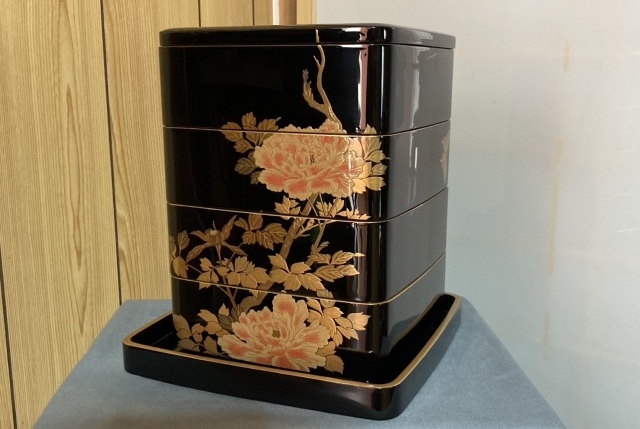
These dishes are packed into a multi-tiered lacquer box called a jūbako.
The layers symbolize “stacking up good fortune” for the coming year — a beautiful representation of Japanese hopes for happiness, health, and prosperity.
Why Osechi Is Prepared Before New Year’s Day
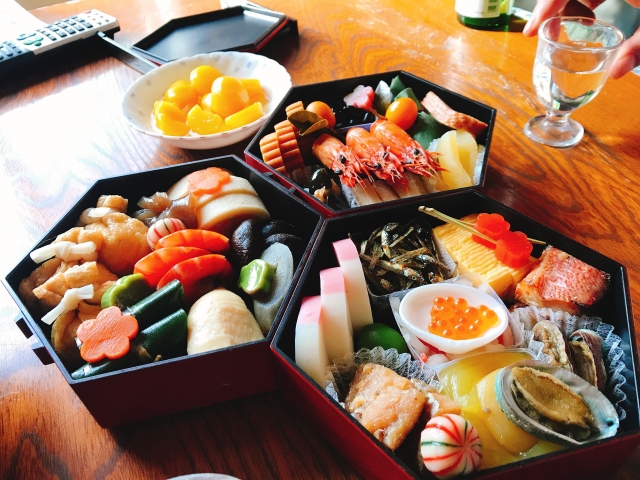
Although it is a New Year’s meal, osechi is almost always prepared before December 31st.
This tradition is rooted in two major beliefs:
1. Osechi Is Originally an Offering to the Gods
New Year’s Day welcomes Toshigami, the deity of the incoming year.
Osechi dishes were originally made as offerings and later shared by the family to receive the deity’s blessings.
Because of this, having osechi ready by the morning of January 1st was considered essential.
If the food was not prepared on time, it was seen as disrespectful to the gods.
2. Knives Should Not Be Used During New Year

In Japanese culture, knives symbolize “cutting ties”.
Using them on New Year’s Day was thought to cut away good fortune.
Another belief says that the household deity of the kitchen — the Kōjin (荒神様) — should be allowed to “rest” during the New Year.
Therefore, households avoided cooking, fire, and unnecessary kitchen tasks during the first few days of January.
3. New Year Is a Time for Rest and Family
Traditionally, families prepared dishes in advance to avoid cooking during the first three days of the year.
Osechi foods are preserved or seasoned to last several days, allowing everyone to relax and celebrate together.
Why Osechi Has So Many Symbolic Meanings
Osechi dishes are not chosen for taste alone — every item carries a wish for the new year.
The themes include:
- Health and longevity
- Prosperity and business success
- Fertility and family happiness
- Good harvest and abundance
Each ingredient and color has a role, and traditionally, families learned these meanings across generations.
Common Osechi Dishes (Overview)
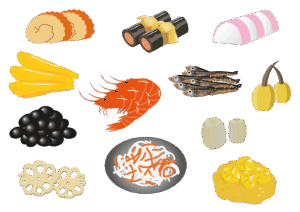
Here are some of the most recognizable osechi items and their general symbolic themes:
- Kuri-kinton – sweet chestnuts and mashed sweet potato; symbolizes wealth and prosperity.
- Kazunoko – herring roe; represents fertility and prosperous descendants.
- Kuromame – black soybeans; symbolizes health and working diligently.
- Tazukuri – small candied sardines; associated with good harvests.
- Datemaki – sweet rolled omelet; symbolizes knowledge, culture, and learning.
- Kohaku kamaboko – red and white fish cake; colors represent celebration and purity.
The Modern Evolution of Osechi
While many families still prepare osechi at home, modern lifestyles have brought new trends:
- Department-store osechi — luxurious multi-tier boxes sold in limited quantities.
- Convenience-store osechi — easy, affordable sets.
- Western-style or fusion osechi — roast beef, terrine, seafood gratin.
- Single-person osechi — designed for solo living households.
Even as lifestyles change, the symbolic heart of osechi remains the same.
Why Osechi Still Matters Today
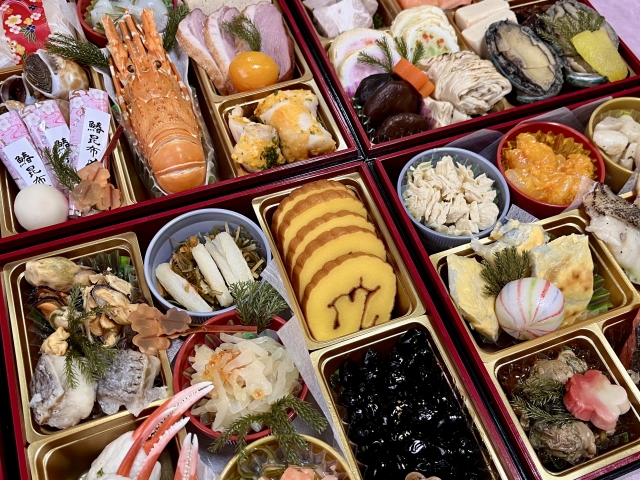
Even in a fast-paced, modern society, osechi continues because:
- It preserves Japanese heritage and seasonal values
- It provides a rare moment of slow, intentional celebration
- It brings families together around shared tradition
- It symbolizes starting the year with gratitude and harmony
For many, opening the jūbako on New Year’s Day feels like opening a box full of hope.
Conclusion
Osechi ryōri is far more than a meal — it is a collection of prayers, history, and family memories passed down through generations.
Whether homemade, purchased, or adapted for modern tastes, osechi remains a cherished symbol of Japanese New Year.

