
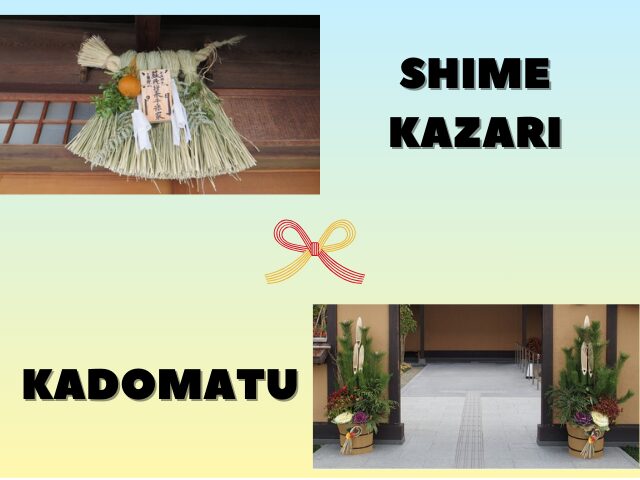
In Japan, the New Year is welcomed not just with celebrations but with a deep sense of renewal and spiritual preparation.
Two traditional decorations — shimekazari and kadomatsu — are placed at entrances to purify the home and invite the New Year deity, Toshigami, to bring blessings for the coming year.
What Is a Shimekazari?
A shimekazari is a sacred New Year decoration made from twisted rice straw, pine, zigzag paper strips, and various auspicious ornaments.
Hung above the doorway, it marks the entrance as a purified, protected space suitable for welcoming the divine.
Although simple in appearance, each component carries symbolic meaning rooted in Shinto beliefs.
The Meaning Behind Each Element
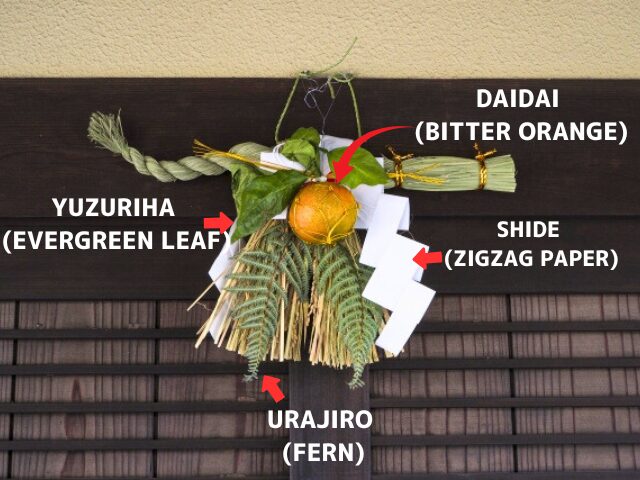
Urajiro (fern)
Two symmetrical leaves symbolize marital harmony.
The pale underside represents purity and a sincere heart.
Yuzuriha (evergreen leaf)
As new leaves grow, older leaves naturally fall away.
This expresses generational continuity — the passing of fortune and responsibility to the next generation.
Daidai (bitter orange)
A fruit that can remain on the tree for years.
Because one branch may bear fruit across multiple “generations,” it symbolizes long-lasting prosperity.
(Modern shimekazari often use a durable plastic daidai for convenience.)
Shide (zigzag paper)
A Shinto symbol marking sacred or purified spaces, inviting divine protection.
Different Types of Shimekazari
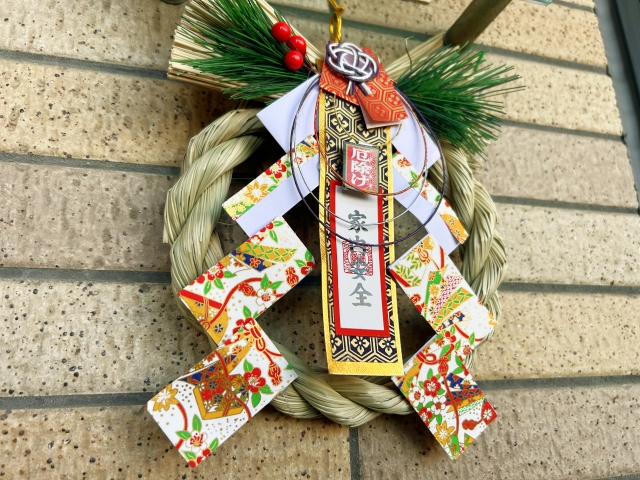
Shimekazari come in various styles across Japan, reflecting regional customs and differences in lifestyle.
Tamakazari: A thick circular rope decorated with fern, shide, daidai, a folding fan, and sometimes shrimp (symbol of longevity).
Common in eastern Japan and often used for front entrances.
Wakazari (loop-style): A simple circular rope with minimal ornaments.
Popular in modern apartments and smaller homes.
Goboujime: A more traditional braided rope hung horizontally, often seen at shrines or traditional houses.
Modern compact styles: Smaller, lightweight designs suitable for city living, widely used today.
Shimekazari Traditions in Ise
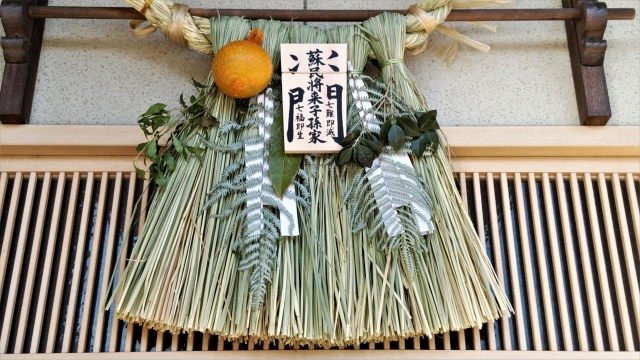
In Ise — home to the revered Ise Jingu — a unique custom exists.
Many households display their shimenawa year-round, not just for the New Year.
This reflects the belief that the home should remain constantly connected to purity and divine protection.
A distinctive feature of Ise-style shimenawa is the wooden tag attached to the decoration, symbolizing blessing and spiritual connection.
When Do People Hang Shimekazari?

Traditionally, families hang shimekazari after completing their year-end cleaning (ōsōji).
This prepares the home to receive Toshigami.
Modern timing generally follows these guidelines:
- ◎ December 25–28 — most common today
- △ After December 13 — historically acceptable
- ❌ December 29 — avoided because “29” sounds like “double suffering”
- ❌ December 31 — considered too last-minute and disrespectful
This practice reflects the cultural desire to welcome the New Year with respect and readiness.
What Is a Kadomatsu?
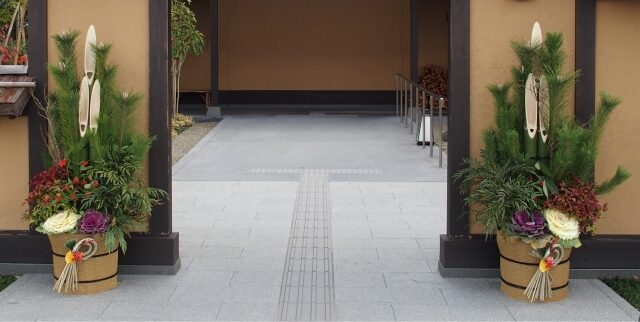
Kadomatsu — “gate pines” — are paired arrangements of bamboo and pine placed on both sides of an entrance.
They serve as temporary resting places for the New Year deity and symbolize strength, vitality, and longevity.
Traditional kadomatsu include:
- three bamboo stalks of different lengths
- pine branches
- straw ropes and bindings
Bamboo expresses resilience and upright growth, while pine represents endurance through all seasons.
Kadomatsu in Modern Japan
While once common at the entrances of ordinary homes, kadomatsu have become rare in modern residential areas.
They require space, come in pairs, and can be costly.
Today, kadomatsu are mostly seen at:
- companies and office buildings
- hotels and ryokan
- department stores
- traditional or historic homes
For most families, a shimekazari alone serves as the primary New Year decoration.
When Are the Decorations Taken Down?

Shimekazari and kadomatsu are usually removed around January 7th.
In many regions, they are burned in a ritual called dondoyaki, returning their sacred energy to the divine.
Common Questions About New Year Decorations
Q: When is the best time to display Shimekazari and Kadomatsu?
A: The most ideal time is between December 25th and 28th. Traditionally, people avoid putting them up on December 29th (associated with "double suffering") and December 31st (known as "one-night decoration," which is considered disrespectful to the deity).
Q: When should these decorations be taken down?
A: They are usually removed at the end of the Matsunouchi period. In many regions (including Tokyo), this is January 7th. However, in some areas like Kansai, it is common to keep them until January 15th.
Q: What should I do with the decorations after removing them?
A: The most respectful way is to bring them to a local shrine for a ritual bonfire called Dondoyaki (usually held around January 15th). If you must dispose of them at home, it is traditional to wrap them in white paper and sprinkle them with salt before placing them in the bin.
Conclusion: A Welcoming Gate for the New Year
Shimekazari and kadomatsu express Japan’s reverence for beginnings.
They protect the home, purify the entrance, and create a symbolic gateway for blessings.
Whether elaborate or simple, traditional or modern, these decorations remind people to greet the New Year with purity, gratitude, and hope.
Related Articles
- Ōsōji: Japan’s Year-End Cleaning Tradition
- Toshikoshi Soba: Year-End Noodles of Renewal
- Japanese New Year Traditions in Japan
Quick Tip for Travelers
If you are in Japan during late December, you will see these beautiful decorations everywhere—from giant Kadomatsu at hotel entrances to small Shimekazari on taxi mirrors.
They aren't just for show; they are a sign of the Japanese spirit of starting the year with a pure heart.

