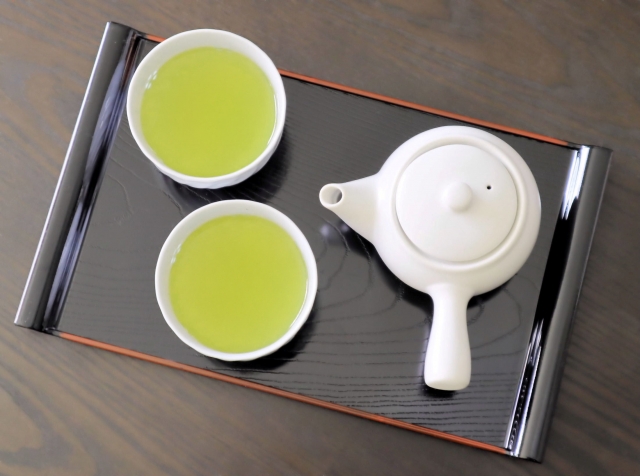
If you ask what Japanese green tea tastes like, the answer is almost always sencha. It is the reference point — the tea against which all others are understood.
This article explains what sencha is, how it became Japan’s standard tea, and why its balance of sweetness, bitterness, and aroma defines everyday green tea.
Sencha is Japan’s most common green tea, grown in full sunlight and brewed to balance theanine (sweetness) and catechins (bitterness).
To understand how this fits into the broader system, see
Japanese Green Tea Culture.
Sencha as the Baseline of Japanese Tea
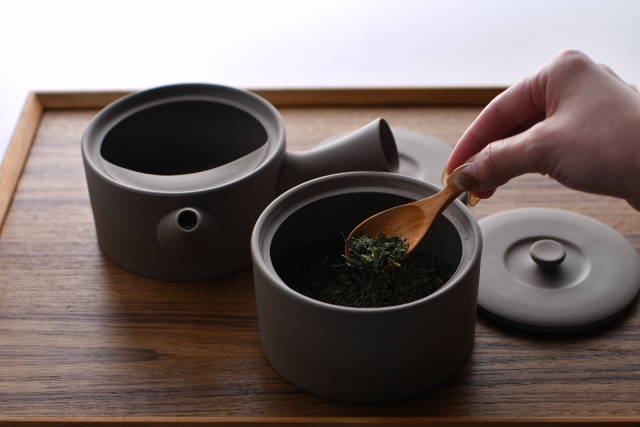
Sencha is not just popular — it defines what “green tea” means in Japan.
Other teas can be understood in relation to it:
- Fukamushi-cha → softer, faster-extracting version of sencha
- Gyokuro → shaded, umami-focused extreme
- Hojicha → roasted transformation
Because of this, sencha represents the balanced middle point — where sweetness, bitterness, and aroma are all present in harmony.
What Is Sencha?
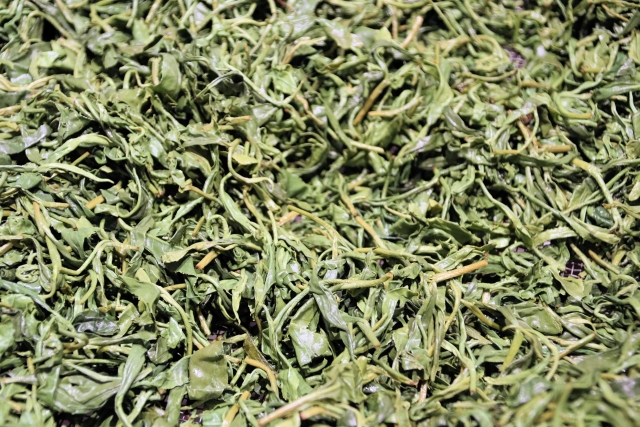
Sencha is produced by steaming freshly picked leaves to prevent oxidation, then rolling and drying them into needle shapes.
Unlike gyokuro, it is grown in full sunlight. This increases catechins, giving sencha its characteristic brightness and slight astringency.
Today, it accounts for roughly 70–80% of tea production in Japan.
How Sencha Is Made
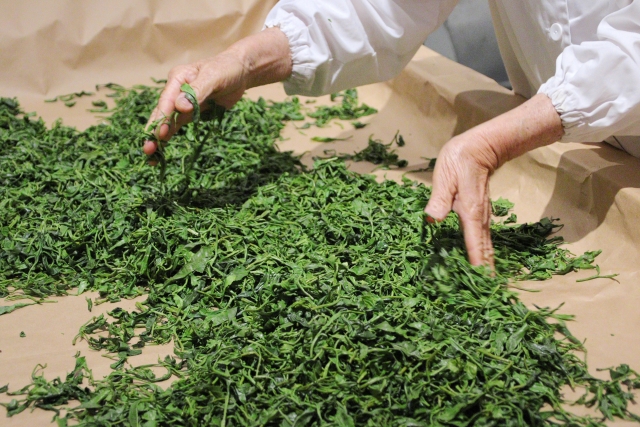
Rolling shapes the leaves and prepares them for extraction.
Steaming preserves green color and aroma, while rolling helps release flavor compounds during brewing.
This method distinguishes Japanese tea from Chinese pan-fired tea.
Why Sencha Tastes Balanced
Sencha’s flavor comes from a balance between:
- Theanine → sweetness and umami
- Catechins → bitterness and structure
Unlike gyokuro (which emphasizes sweetness) or fukamushi (which softens bitterness), sencha sits between both — making it the most versatile and recognizable green tea.
Ichibancha and Nibancha
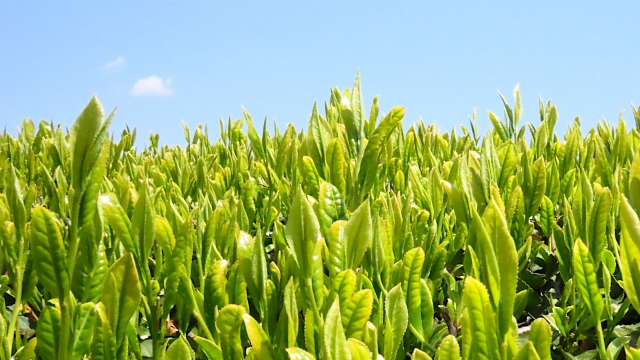
First harvest tea is rich in sweetness.
Ichibancha (first harvest) is softer and sweeter.
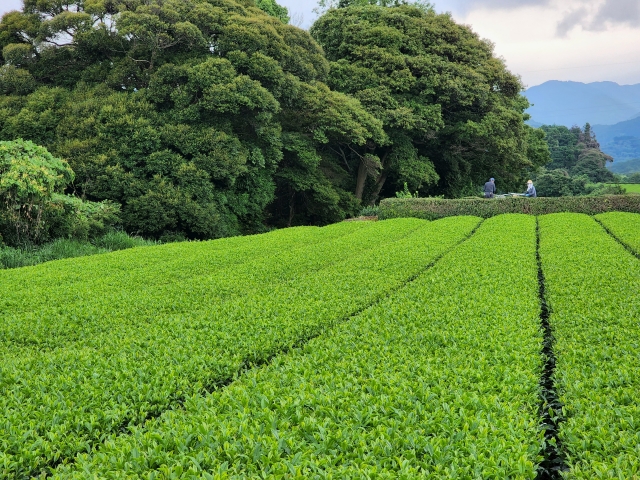
Nibancha (second harvest) is stronger and more astringent.
This seasonal shift reflects how tea adapts to both celebration and daily life.
How to Brew Sencha
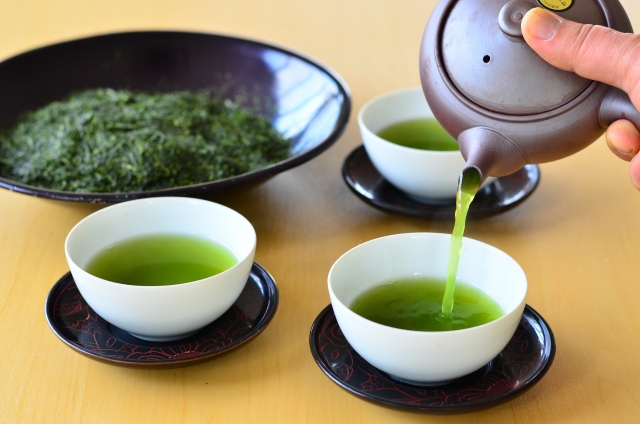
Temperature controls flavor balance.
- Temp: 70–80°C
- Time: ~60 sec
Sencha is where brewing technique matters most.
Lower temperature emphasizes sweetness, while higher temperature increases bitterness and aroma.
Full guide:
How to Brew Japanese Green Tea
Cold Brewing Sencha
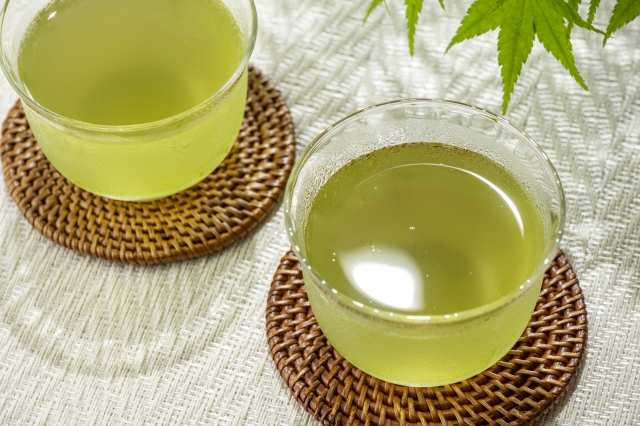
Sencha also works well for cold brewing.
This follows the logic of
reicha,
where slower extraction emphasizes sweetness and reduces bitterness.
Sencha and Everyday Life
Sencha is not ceremonial. It is the tea of daily life — served after meals, during breaks, and to guests.
Its balance makes it easy to pair with food and easy to drink repeatedly.
Author’s Note
In Japan, sencha is so common that it often goes unnoticed. It is simply “tea.”
But that normality is exactly what defines it — a quiet standard that supports everyday life.
FAQ

Is sencha the same as green tea?
Sencha is a type of green tea — and the most common one in Japan. When people in Japan say “green tea,” they usually mean sencha.
Why does sencha taste bitter?
Because the water is too hot. Try lowering the temperature to around 70–80°C to reduce bitterness and bring out sweetness.
Does sencha contain caffeine?
Yes, it contains moderate levels of caffeine. It provides a gentle boost, but is usually milder than coffee.
How is sencha different from matcha?
Sencha is brewed from whole leaves, while matcha is a powdered tea mixed directly into water. They differ in cultivation, preparation, and flavor.
Can sencha be cold brewed?
Yes. Cold brewing slows extraction, reducing bitterness and enhancing sweetness, especially for high-quality leaves.

