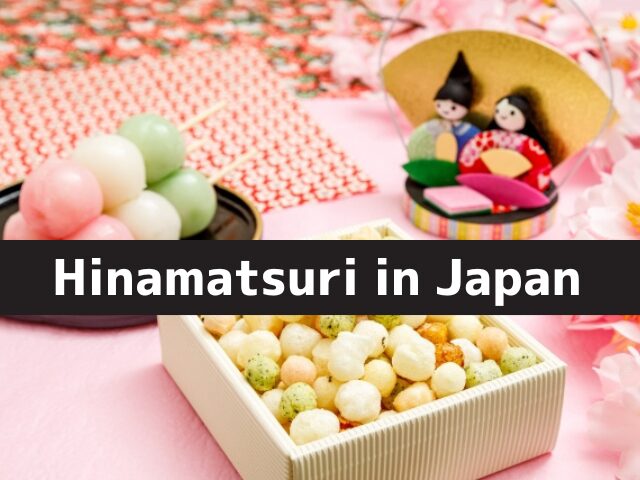
It is not a formal religious ceremony, but a family-centered seasonal custom practiced at home—often with hina dolls, symbolic foods, and a quiet wish for the year ahead.
What Is Hinamatsuri?
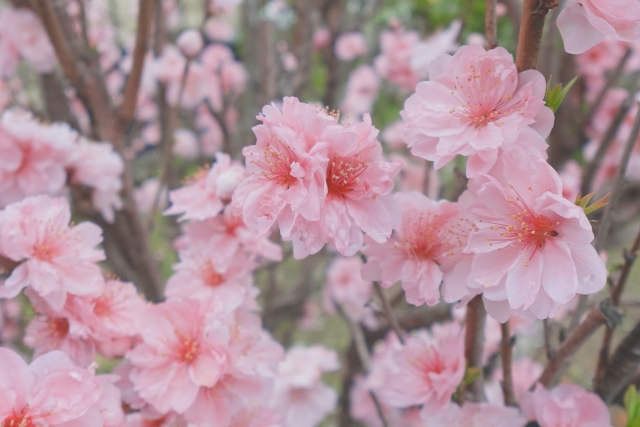
Peach blossoms symbolize protection and the arrival of spring, which is why Hinamatsuri is also called the Peach Festival.
Hinamatsuri is a seasonal custom in Japan that marks early spring and expresses wishes for a girl’s health, safety, and future happiness.
Rather than being a shrine ritual or a formal rite of passage, it works as a domestic celebration of growth: families acknowledge that a child is growing, time is moving forward, and a new season has arrived.
It is sometimes translated as “Girls’ Day,” but the Japanese meaning is more symbolic than literal.
It is not a birthday, and not every household celebrates it in the same way.
The Meaning Behind the Hina Dolls
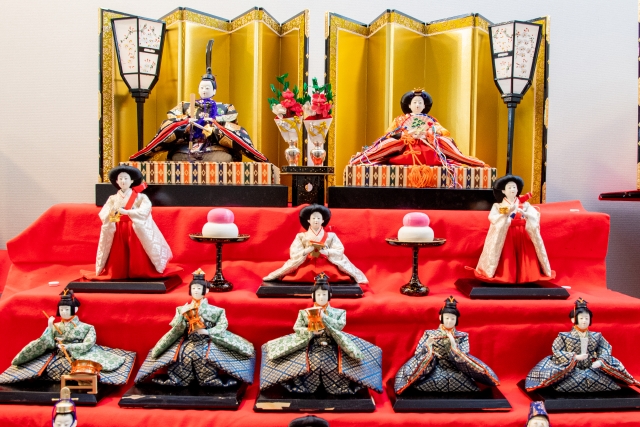
Hina dolls are displayed during Hinamatsuri as symbolic protectors wishing for a child’s healthy growth and well-being.
Dolls as Symbols of Protection
The most recognizable feature of Hinamatsuri is the display of hina dolls—typically an emperor and empress dressed in traditional court clothing.
Historically, these dolls were connected to the idea of purification: misfortune could be symbolically transferred away from a child.
Over time, this evolved into decorative dolls that quietly represent protection and well-being.
Today, hina dolls are not treated as sacred objects, but as symbolic guardians placed in the home during the season.
Traditional Displays vs Modern Homes
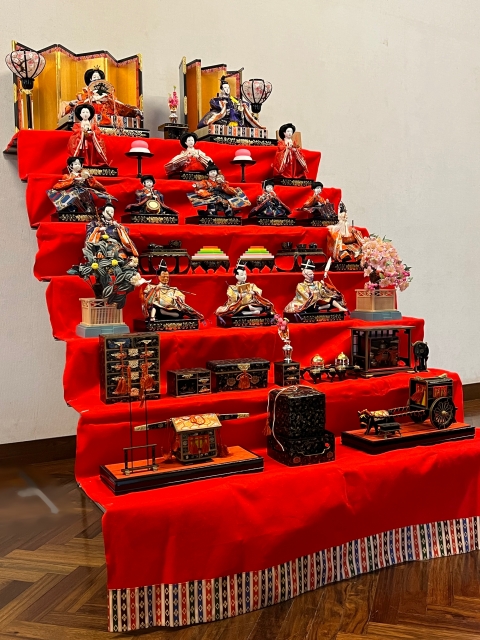
Large multi-tier hina doll displays are traditional but are now mostly seen in exhibitions or special displays rather than everyday homes.
In the past, families displayed large, tiered platforms covered in red cloth, with many dolls and accessories arranged in a set order.
These still appear in museums and seasonal exhibitions.
In everyday life, however, most modern homes use simpler versions:
- a single emperor-and-empress pair
- compact sets designed for apartments
- framed illustrations instead of physical dolls
Some families do not display dolls at all and celebrate only through food or a brief family moment.
When to Display Hina Dolls
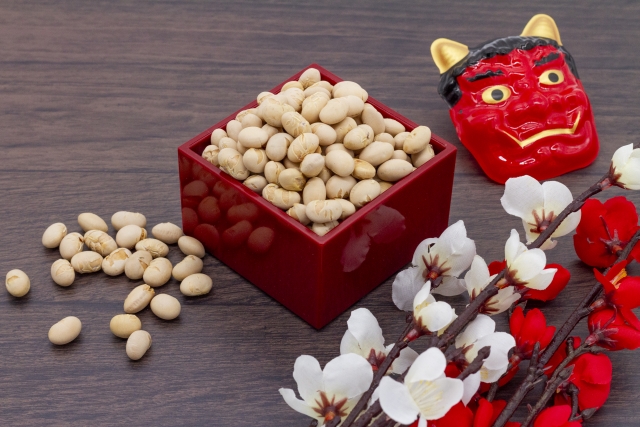
After Setsubun, which symbolically removes misfortune, many families begin preparing for spring events like Hinamatsuri.
In Japan, hina dolls are typically displayed sometime after Risshun, the beginning of spring on the traditional calendar (around February 4).
A common household flow is: Setsubun marks the “reset” of misfortune, and after that, hina dolls are brought out to welcome the new season.
Many families display the dolls from early February to mid-February, though there is no strict rule.
In modern life, timing is often adjusted for convenience—some households set them up only a week or two before March 3, especially in smaller homes.
When to Put Hina Dolls Away — and Why Timing Matters
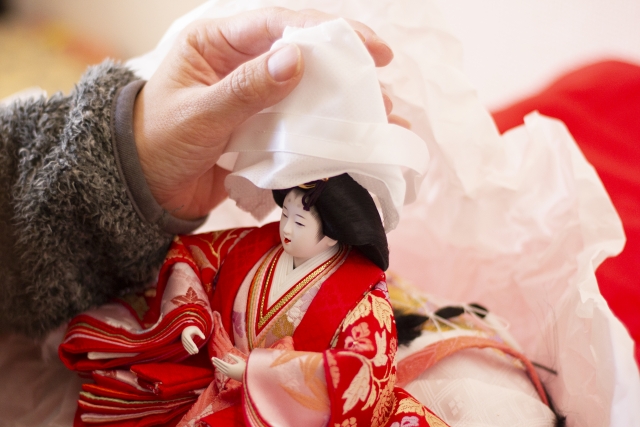
Hina dolls are usually put away soon after March 3 on a dry day, reflecting practical care rather than superstition.
It is generally said that hina dolls should be put away soon after March 3, once Hinamatsuri has passed.
A common guideline is to put them away in early to mid-March—often by around mid-March, or (in traditional seasonal terms) by Keichitsu, a marker in early March.
Many people also prefer to pack them on a dry, sunny day to avoid moisture.
The reason is practical rather than superstitious: hina dolls are delicate, and humidity can cause mold or fabric damage.
You may hear the saying that leaving the dolls out too long will delay marriage, but most people today treat this as a light, old-fashioned line—not a serious belief.
How Long Do Families Display Hina Dolls?
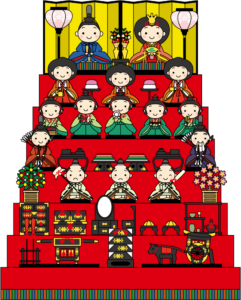
There is no fixed age limit for displaying hina dolls.
Traditionally, the dolls are given to a girl to wish for her safe growth and well-being.
From that perspective, once she has grown into adulthood, the dolls are often seen as having fulfilled their role.
In real life, families choose what fits their circumstances:
- some stop displaying them after adulthood
- others continue until milestones such as coming of age, marriage, or moving out
- some display them every year as long as space and family rhythm allow
The decision is usually based on space, timing, and emotional attachment rather than a strict rule.
Hinamatsuri Food: Eating Wishes for Growth
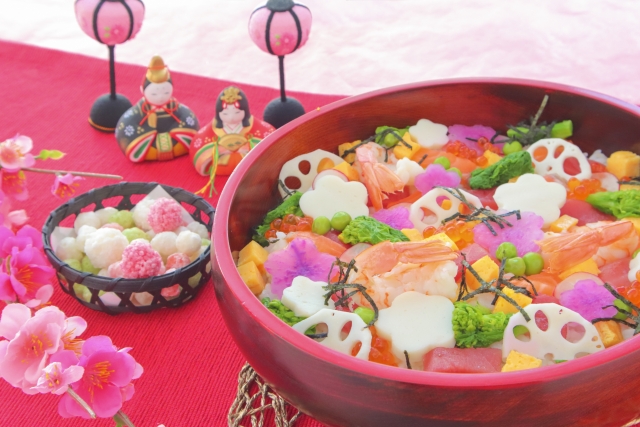
Hinamatsuri foods are symbolic rather than ceremonial, expressing wishes for health, growth, and seasonal change.
Food plays an important role in Hinamatsuri—not as an offering, but as a seasonal way of expressing wishes.
Each dish carries a meaning: health, abundance, and a gentle hope for the future.
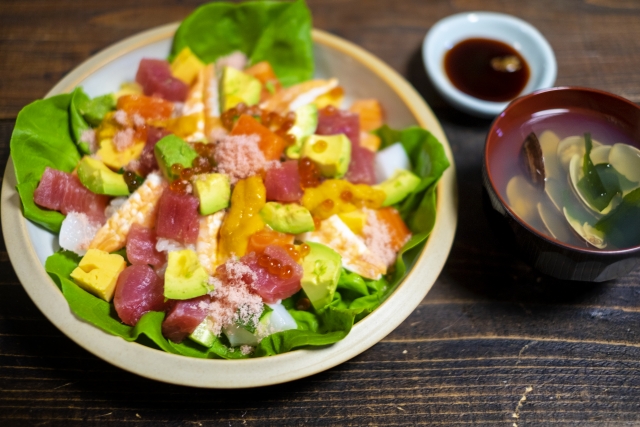
Chirashizushi
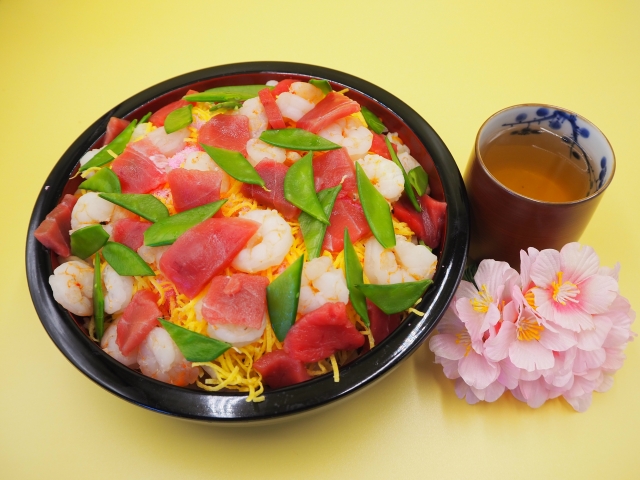
Chirashizushi is a colorful sushi dish topped with fish, eggs, and vegetables.
Its bright appearance represents celebration and abundance, which is why it is commonly chosen for Hinamatsuri.
Hina-arare
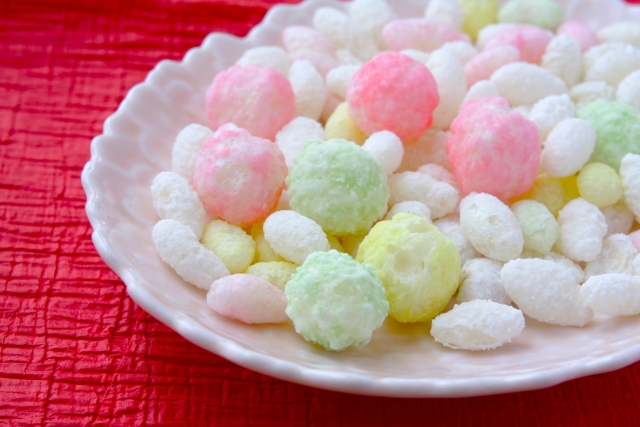
Hina-arare are lightly sweet and slightly salty rice crackers enjoyed only during the Hinamatsuri season.
Hina-arare are small rice crackers, often in pastel colors.
They are sometimes said to represent good health across the seasons of the year.
Hina-arare are small rice crackers made especially for Hinamatsuri, and they are surprisingly good.
They are lightly sweet, slightly salty, and very easy to keep eating once you start.
Because they are sold only for a short time around early March, they can disappear quickly from stores.
If you happen to come across them during this season, it’s worth trying them—even just once—to taste a flavor that exists only for this moment of spring.
Shirozake and Amazake
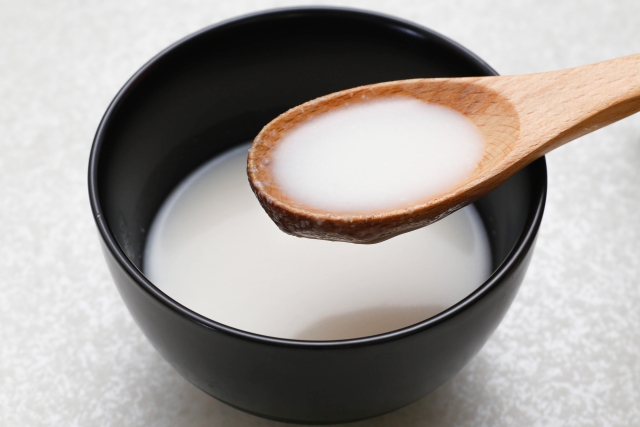
Amazake is often enjoyed during Hinamatsuri today as a non-alcoholic alternative to traditional sweet sake.
Traditionally, sweet white sake (shirozake) was associated with Hinamatsuri.
Today it is often replaced by non-alcoholic amazake, or skipped altogether.
The meaning remains the same: wishing for a gentle, prosperous future.
What Families Actually Do Today
In contemporary Japan, Hinamatsuri is often simple.
A typical modern celebration might include:
- briefly displaying dolls or a compact decoration
- eating one symbolic dish at dinner
- saying a short wish for health or happiness
There is no fixed ceremony and no required prayer.
Convenience-store versions of Hinamatsuri food are common, showing how the tradition adapts to busy schedules and smaller living spaces.
Why Hinamatsuri Still Matters
Hinamatsuri continues to exist because it fits naturally into everyday life.
It encourages families to notice seasonal change, acknowledge a child’s growth without pressure, and share a quiet moment together.
Rather than celebrating achievement, it focuses on continuity—growing up as a gradual process supported by care, routine, and time.
FAQ

Is Hinamatsuri a religious festival?
No. Hinamatsuri is a seasonal custom practiced at home, not a shrine ritual or required religious ceremony.
Do all families in Japan celebrate Hinamatsuri?
No. Participation varies widely depending on household, region, space, and personal preference.
Are hina dolls required for Hinamatsuri?
No. Many families simplify the display, use a compact set, or skip dolls entirely and celebrate through food or a small family moment.
Is Hinamatsuri only for girls?
Traditionally, yes. However, the underlying themes—growth, protection, and seasonal change—can feel meaningful beyond gender.
What does hina-arare taste like?
Hina-arare are typically lightly sweet and slightly salty, with a gentle crunch. The sweet-and-salty balance is part of their appeal.
Is hina-arare only sold during Hinamatsuri?
Mostly yes. In Japan, hina-arare are usually seasonal items sold for a short period around early March, and they can disappear quickly after Hinamatsuri.
Author’s Note
Growing up in Japan with only brothers, Hinamatsuri was never a major event in my family.
There were no dolls to display and no special preparations. Most years, it simply meant eating hina-arare—and sometimes sakura mochi—and quietly realizing that spring was on its way.
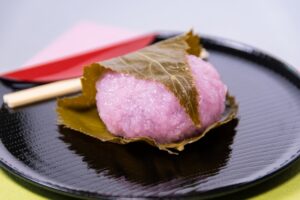
Sakura mochi is a spring sweet whose gentle aroma and slight saltiness of the leaf highlight the sweetness of red bean paste.
Sakura mochi carries a gentle aroma that feels inseparable from spring.
The slight saltiness of the leaf deepens the sweetness of the red bean paste, and when paired with green tea, the flavors settle calmly rather than standing out.
It is the kind of seasonal sweet that doesn’t announce spring loudly, but lets you notice it has arrived.
That everyday looseness—celebrating lightly, or sometimes barely at all—is, to me, the most realistic side of Hinamatsuri: a quiet seasonal signal woven into ordinary life.

