
Osechi ryōri is Japan’s traditional New Year feast, where each dish carries a symbolic wish for the year ahead.
Presented in layered lacquer boxes, these foods blend flavor, tradition, and hope — offering a deeper look into how Japanese people welcome the New Year.
Below is a guide to the most iconic osechi dishes, arranged in the traditional order used inside the jubako boxes.
Kazunoko (Herring Roe)
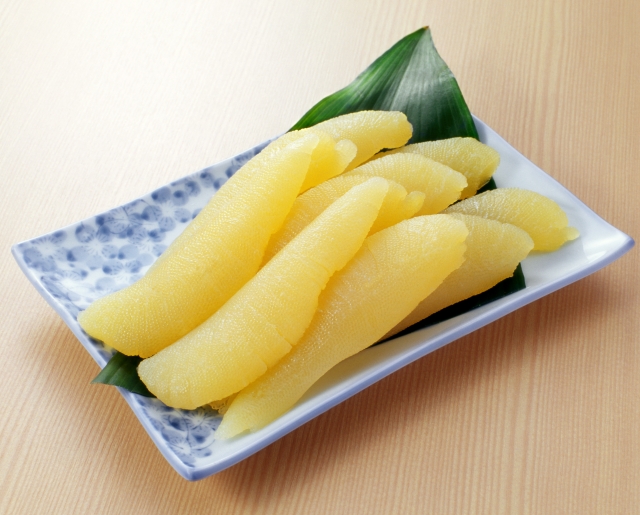
Kazunoko symbolizes prosperity and the wish for a family line to continue.
Its firm texture comes from strong salt curing, so the roe is typically soaked before eating to remove excess salt.
The countless tiny eggs represent a future filled with children and good fortune.
Kuromame (Sweet Black Soybeans)
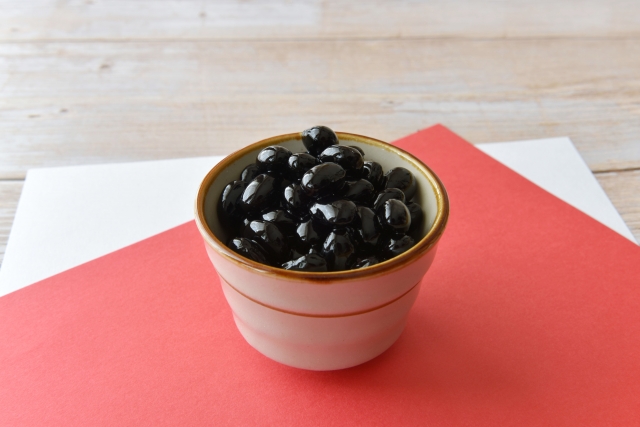
Sweet simmered black soybeans.
“Bean” (mame) is associated with working diligently and staying healthy, so kuromame represents health and hard work.
Their glossy black finish is considered beautiful and auspicious, while the slow simmering process reflects patience and care.
Tazukuri (Candied Baby Sardines)
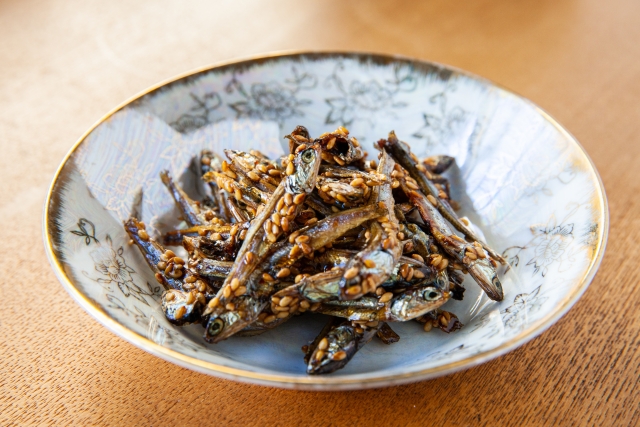
Dried baby sardines cooked in a sweet soy glaze.
The name comes from the past practice of using dried fish as fertilizer for rice fields, symbolizing abundant harvests and financial stability.
The dish is crunchy and slightly sticky, with a savory-sweet flavor.
Datemaki (Sweet Rolled Omelet)
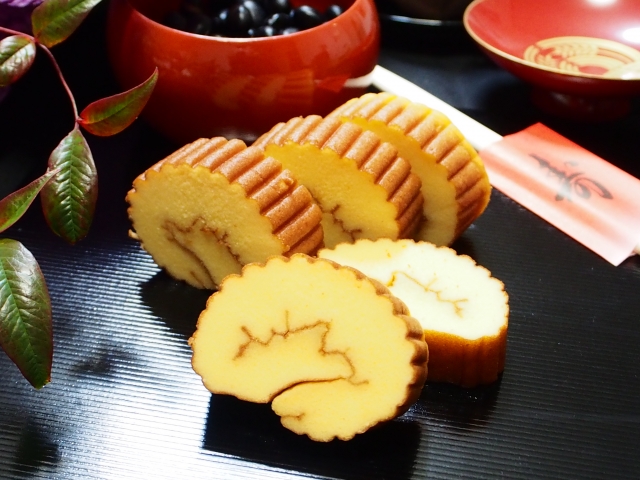
A sweet rolled omelet made from eggs and fish paste (or hanpen).
Its scroll-like shape resembles old documents, symbolizing wisdom, learning, and cultural refinement.
This dish is especially loved by children thanks to its soft fluffy, and lightly sweet texture.
Kurikinton (Sweet Chestnut Mashed Potatoes)
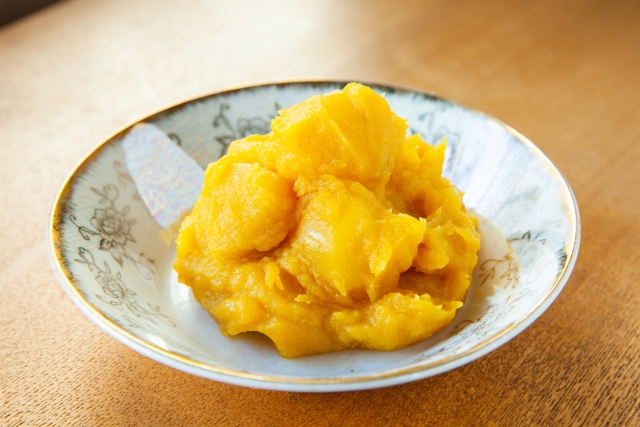
Kurikinton, with its bright golden color, represents wealth and good fortune.
Made from mashed sweet potatoes and candied chestnuts, it resembles a mound of gold — a hopeful start for financial prosperity in the new year.
Kōhaku Kamaboko (Red and White Fish Cake)
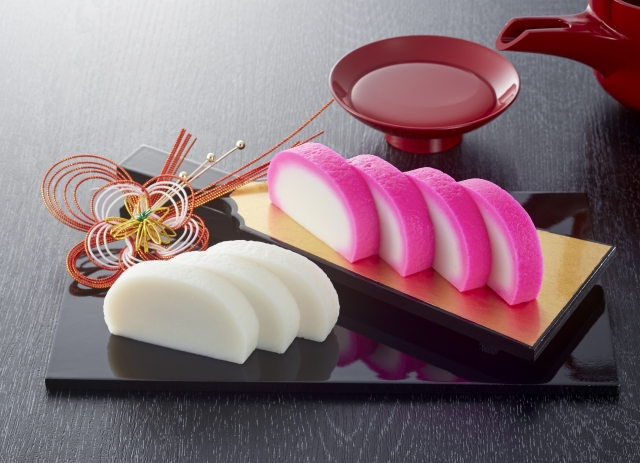
Kamaboko is made from white fish paste that is steamed until firm.
The red and white color pairing symbolizes purity, celebration, and protection against misfortune.
When sliced, the semicircular shape resembles the rising sun, making it a perfect addition to New Year celebrations.
Ebi (Shrimp)
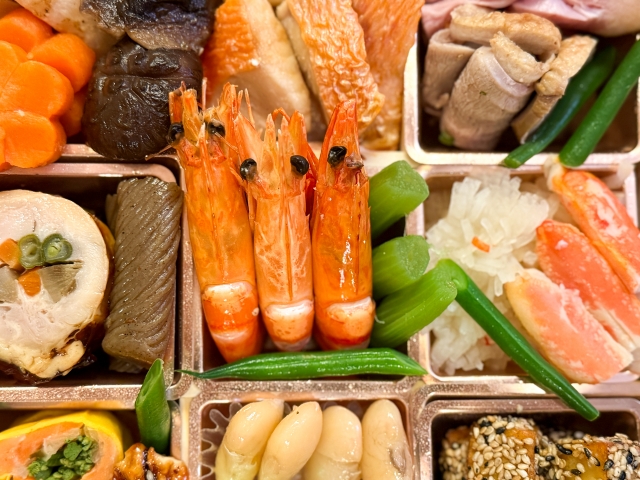
Shrimp is associated with longevity — its curved shape suggests the bent back of a wise elder.
The red color also represents protection, vitality, and good luck, making it a festive highlight in osechi ryōri.
Buri (Yellowtail)
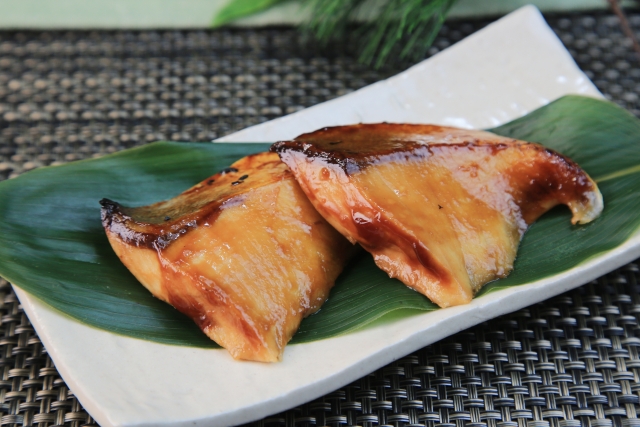
Buri is celebrated for its “career-changing” symbolism.
The fish receives different names as it matures, so it represents growth, success, and achieving higher status.
Grilled buri is often served to wish for advancement in school, work, or personal endeavors.
Nishime (Simmered Root Vegetables)
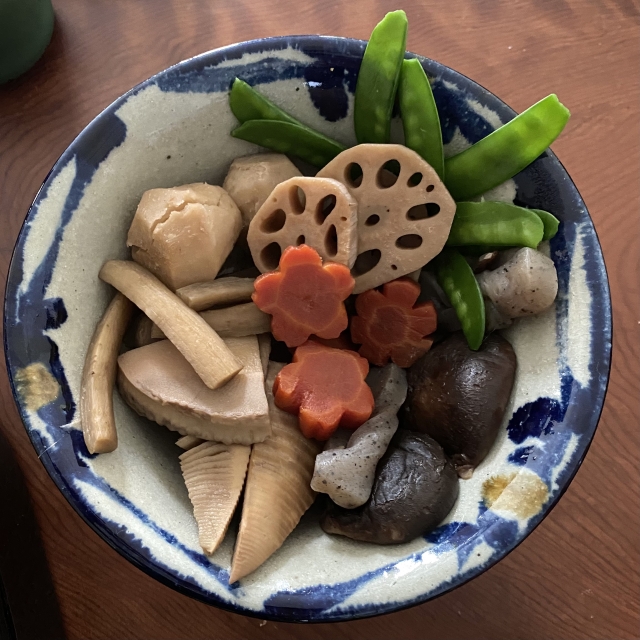
Nishime brings together symbolic vegetables, each with its own meaning:
- Lotus root: Its holes represent a clear, unobstructed view of the future.
- Burdock root: Its long shape symbolizes a strong foundation and longevity.
- Satoimo (taro): Known for producing many small bulbs, it represents fertility and the flourishing of family lines.
This dish brings warmth and grounding to the osechi box.
Kōhaku Namasu (Pickled Daikon and Carrot)

Namasu is a refreshing dish of thinly sliced daikon and carrot in a light vinegar dressing.
The red and white colors symbolize purity and celebration, echoing the colors of the Japanese flag.
Its crisp acidity cleanses the palate between richer osechi dishes.
Conclusion
Each osechi dish carries a story — a wish for health, prosperity, longevity, or family happiness.
Together, they form a New Year tradition that connects households across generations.
Understanding the meaning behind these foods offers a deeper appreciation of Japanese culture and the hopes placed upon the year ahead.
🍱 Where to Find Osechi
During late December, you can see and buy beautiful Osechi boxes at major department store basements (Depachika).
- Isetan Shinjuku (Depachika)
Official Website (English) ↗
View on Google Maps ↗ - Nihombashi Mitsukoshi Main Store
Official Website (English) ↗
View on Google Maps ↗ - Daimaru Tokyo (Next to Tokyo Station)
Official Website (English) ↗
View on Google Maps ↗

