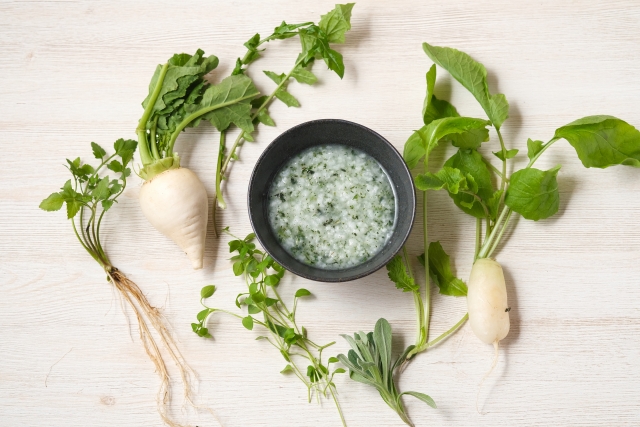
On January 7, a very simple dish appears on Japanese tables: rice porridge mixed with seven young greens.
It is called nanakusa-gayu (七草粥), or seven-herb rice porridge.
Compared with osechi, mochi, sake, sweets, and the other foods and drinks associated with the New Year holidays, nanakusa-gayu can look surprisingly plain.
That contrast is part of its role.
Traditionally, people eat nanakusa-gayu with wishes for good health in the year ahead. The custom is associated with Jinjitsu no Sekku, a traditional observance on January 7, and developed from older traditions involving the gathering and eating of young greens.
Today, the dish also arrives at a fitting moment.
After several days of special meals and relaxed holiday routines, a bowl of lightly salted porridge feels very different from the foods that came before it.
In that sense, nanakusa-gayu is not only a traditional New Year food.
It also marks a small turning point.
Quick Summary
- Nanakusa-gayu is rice porridge made with the traditional seven herbs of spring.
- It is associated with January 7 and wishes for good health during the coming year.
- The custom developed from older traditions involving young seasonal greens rather than from a scientifically designed combination of medicinal herbs.
- Most people in modern Japan would find it difficult to identify and gather all seven plants themselves.
- Supermarkets keep the custom easy to follow by selling ready-made seven-herb packs every January.
- The porridge is lightly salted, mild, and simple, with a little green flavor from the herbs and the natural sweetness of rice.
What Is Nanakusa-gayu?
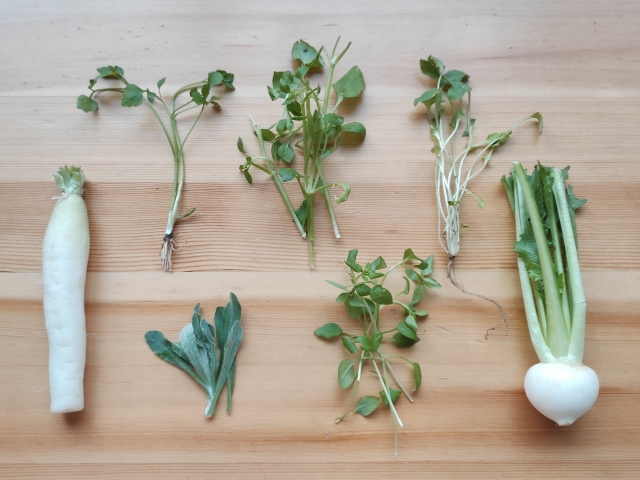
The traditional seven herbs of spring used in nanakusa-gayu, shown separately for easier identification.
Nanakusa-gayu is a Japanese rice porridge made with seven traditional young greens.
The seven are:
- seri (せり)
- nazuna (なずな)
- gogyō (ごぎょう)
- hakobera (はこべら)
- hotokenoza (ほとけのざ)
- suzuna (すずな), turnip
- suzushiro (すずしろ), daikon radish
Together, they are known as the haru no nanakusa, or "seven herbs of spring."
The greens are chopped and added to soft rice porridge, usually with simple seasoning.
It is a very modest dish, especially compared with the foods eaten during the first days of the New Year.
Why Do Japanese People Eat Nanakusa-gayu on January 7?
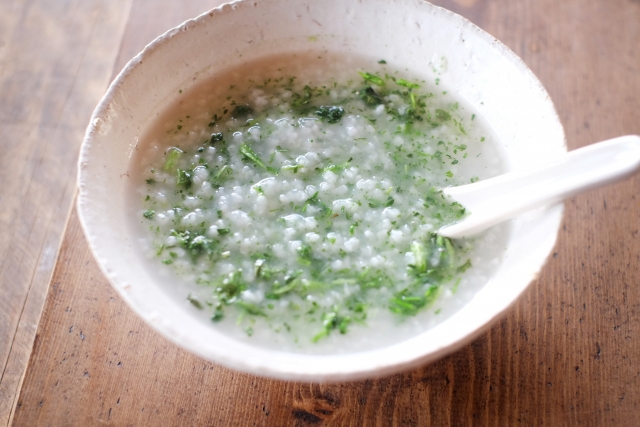
Nanakusa-gayu is traditionally eaten on January 7 with wishes for good health in the year ahead.
January 7 is traditionally associated with Jinjitsu no Sekku.
The custom has roots in an old Chinese observance connected with eating several kinds of vegetables and wishing for good health.
In Japan, this became linked with an existing tradition of gathering young greens at the beginning of the year.
Over time, the practice developed into the familiar custom of eating seven greens in rice porridge.
Nanakusa-gayu therefore carries a traditional wish for mubyo sokusai — good health and freedom from illness during the year ahead.
The timing also makes sense in modern life.
The first few days of January are often filled with special-occasion foods: osechi, ozoni, mochi, sweets, richer meals, and sometimes more alcohol than usual.
Nanakusa-gayu is almost the opposite.
It is soft, plain, and lightly seasoned.
Why These Seven Herbs?
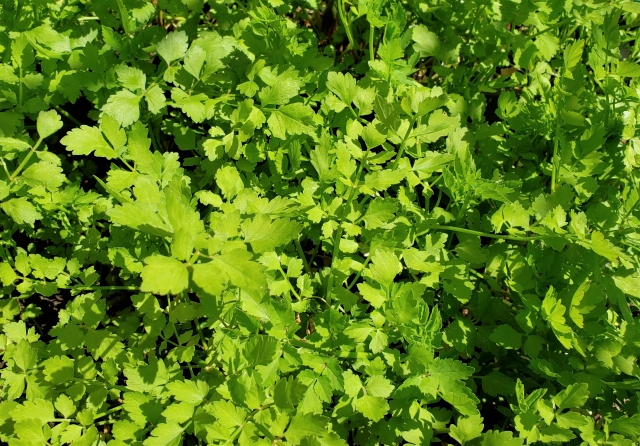
Seri is one of the seven traditional spring herbs. Young edible greens like these were once gathered seasonally and became part of the nanakusa-gayu custom.
It is easy to imagine that the seven plants were carefully selected because each had a particular medicinal effect.
That is probably the wrong way to understand the tradition.
People in the past did not choose food using modern nutritional science. The custom developed in a culture where gathering edible young greens at the beginning of the year was already familiar.
Young plants appearing during the cold season could also represent vitality and the beginning of a new seasonal cycle.
The original idea was therefore probably much closer to:
Gather the edible young greens of the season, eat them at the beginning of the year, and wish for health and life.
Over time, the familiar group of seven plants became standardized.
This does not mean the herbs have no nutritional value.
But nanakusa-gayu makes more sense as a seasonal ritual than as an ancient medicinal formula.
Why Are They Called the "Seven Herbs of Spring" in January?

Even while snow remains, new green growth can signal the beginning of the next seasonal cycle — an older sense of “spring” behind the seven herbs.
January is still winter in modern Japan.
So why are they called the seven herbs of spring?
The answer lies in an older seasonal sense.
The first young plants appearing during the cold part of the year represented the return of new growth and the start of another turn of the seasons.
"Spring" did not necessarily mean the warm weather and cherry blossoms that many people imagine today.
These young greens were small signs that nature was beginning to move again.
How Modern Japan Keeps the Custom Alive
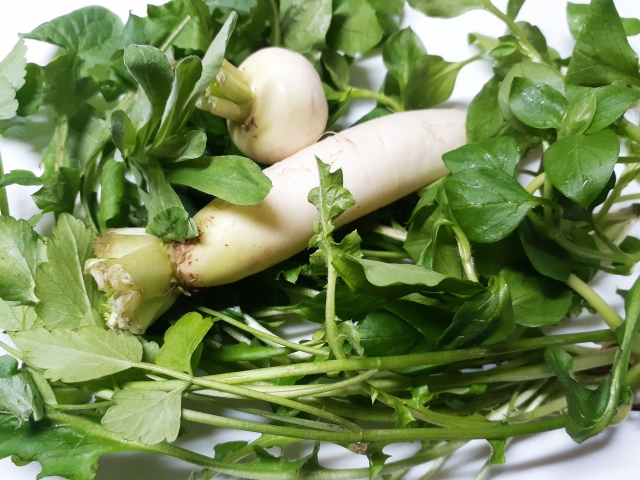
Can People Still Gather the Seven Herbs Themselves?
For many people in modern Japan, gathering all seven herbs themselves would be difficult.
Turnip and daikon are easy enough to recognize.
Wild greens such as gogyō, hakobera, or hotokenoza are another matter.
Knowing what nanakusa-gayu is does not mean knowing how to walk into a field and confidently identify every plant used in it.
For many people today, that knowledge is simply no longer part of everyday life.
Supermarkets Help Keep the Tradition Alive
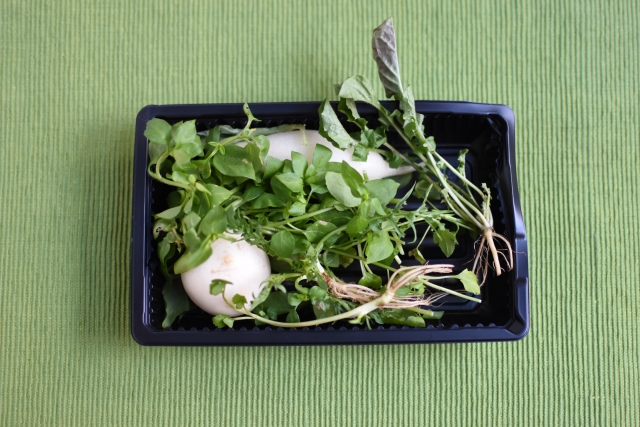
Supermarkets commonly sell all seven herbs together in early January, making the tradition easy to continue in modern life.
Fortunately, there is little need to gather the seven herbs yourself.
At the beginning of January, Japanese supermarkets begin selling small packs containing all seven herbs together.
You do not need to know where seri grows.
You do not need to recognize nazuna beside a road.
You do not even need to remember all seven names.
You simply buy the pack, chop the greens, and add them to porridge.
This is an interesting example of how an old tradition can survive after everyday life has changed.
The knowledge needed to gather the plants has become less common, but the custom itself remains visible.
Every January, the packs return to the vegetable section.
Simply seeing them can remind shoppers:
It is almost time for nanakusa-gayu.
In that sense, supermarkets now help keep the tradition alive.
The method has changed.
The date has not.
What Does Nanakusa-gayu Taste Like?
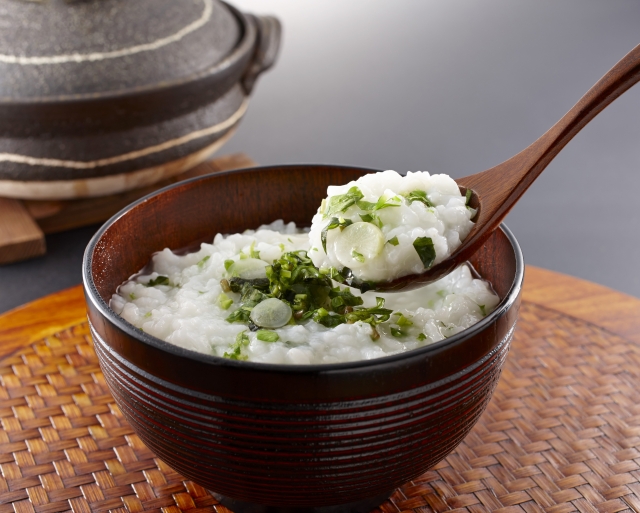
Nanakusa-gayu has a very simple taste.
The rice porridge is lightly salted, while the herbs add a mild green, slightly grassy flavor.
Because the seasoning is restrained, the natural sweetness of the rice can be easier to notice.
There is little of the strong umami, richness, or seasoning found in many Japanese dishes.
That does not mean it tastes bad.
Some people genuinely enjoy its quiet simplicity.
But nanakusa-gayu is closer to a seasonal ritual meal than something people wait all year to enjoy.
Its plainness is part of its character.
Is Nanakusa-gayu Really Good for Your Health?
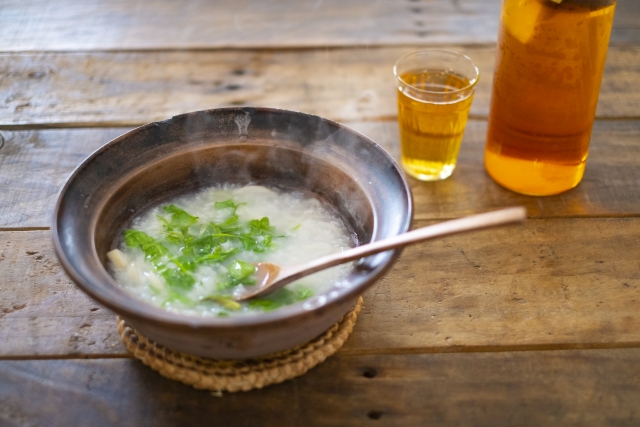
Nanakusa-gayu is traditionally associated with wishes for good health.
That does not mean it should be treated as a detox food or medical treatment.
Rice porridge is soft and easy to eat, while leafy greens provide nutrients. A simple bowl may also feel welcome after several days of richer food.
But there is no need to assign a special medical function to each of the seven herbs.
The older meaning is much simpler:
People ate young greens at the beginning of the year and wished for health.
Is Nanakusa-gayu Still Common in Japan?
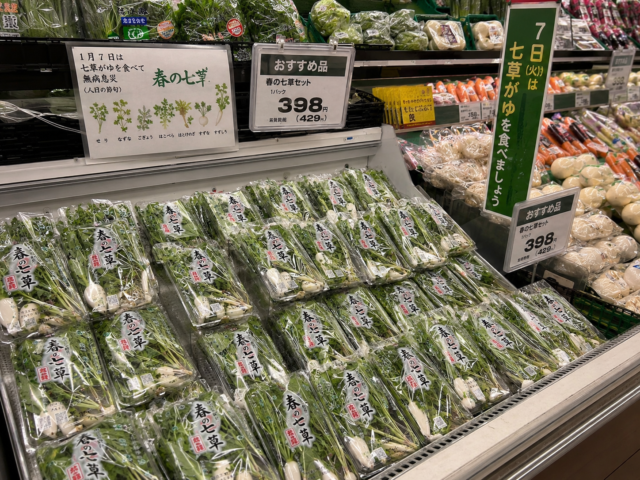
In early January, supermarkets in Japan often display spring seven-herb packs like these, helping keep the nanakusa-gayu tradition visible and easy to follow.
Nanakusa-gayu is still widely familiar, but not every household eats it every year.
Some families make it regularly.
Others eat it only occasionally.
Some people simply see the nanakusa packs in the supermarket and walk past them.
That is normal for a living tradition.
What matters is that the custom remains visible.
Every January, the seven herbs return to stores and January 7 becomes associated with nanakusa-gayu once again.
The tradition survives even though fewer people could gather the plants themselves.
What Nanakusa-gayu Reveals About Japanese Food Culture
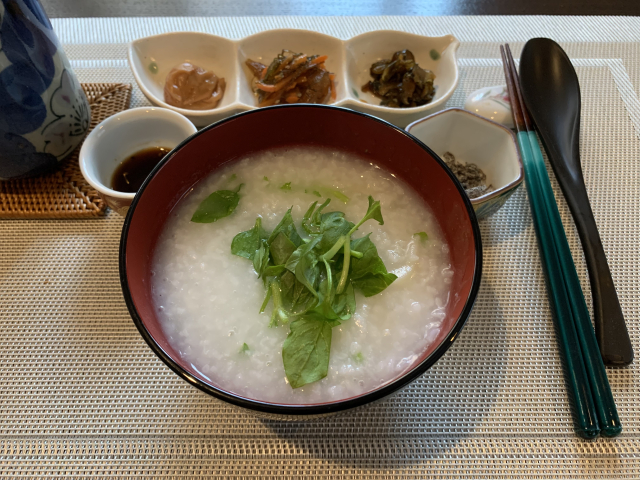
Nanakusa-gayu is a modest seasonal meal that can mark the shift from New Year celebrations back to ordinary daily life.
Nanakusa-gayu shows that a traditional food does not need to remain unchanged in order to survive.
People once gathered young greens themselves.
Most people today do not need to.
The herbs now arrive together in a supermarket package.
Some of the old practical knowledge has faded, but the seasonal ritual remains.
Nanakusa-gayu also shows how food can mark time.
Osechi helps announce the arrival of the New Year.
Nanakusa-gayu quietly marks the point when the holiday begins to end.
Traditionally, people eat it while wishing for health in the year ahead.
In modern life, it can also feel like a small signal to return to ordinary meals, ordinary schedules, and ordinary days.
January 1 begins the calendar year.
Nanakusa-gayu helps ordinary life begin again.
That may be more important than anything the porridge itself is supposed to do.
Author's Note
For me, gathering all seven herbs myself would be difficult.
I know nanakusa-gayu, but that does not mean I could walk into a field and confidently identify every plant used in it.
That is probably why supermarket nanakusa packs feel so normal today.
We no longer need all of the old knowledge in order to continue the custom.
And the taste?
Nanakusa-gayu is very plain.
The lightly salted porridge lets you notice the sweetness of the rice, and the herbs add a little green flavor.
But personally, I still want just a little more.
A small side of tsukemono would be enough.
Karaage would probably defeat the purpose.
That simplicity is part of what makes nanakusa-gayu feel appropriate for January 7.
FAQ
What is nanakusa-gayu?
Nanakusa-gayu is Japanese rice porridge made with the traditional seven herbs of spring. It is associated with January 7 and wishes for good health during the year ahead.
When do Japanese people eat nanakusa-gayu?
It is traditionally eaten on January 7, which is associated with Jinjitsu no Sekku.
What are the seven herbs in nanakusa-gayu?
They are seri, nazuna, gogyō, hakobera, hotokenoza, suzuna, and suzushiro. Suzuna is turnip, while suzushiro is daikon radish.
Do Japanese people collect the seven herbs themselves?
Some may, but most people do not need to. Supermarkets commonly sell packages containing all seven herbs around the beginning of January.
What does nanakusa-gayu taste like?
It is lightly salted and very mild. The herbs add a slightly green, grassy flavor, while the simple seasoning makes the natural sweetness of the rice easier to notice.
Is nanakusa-gayu healthy or a detox food?
It is better understood as a traditional seasonal food associated with wishes for health rather than as a detox treatment. Rice porridge is simple and easy to eat, and the greens provide nutrients, but the dish should not be treated as medicine.
Why is nanakusa-gayu eaten after New Year?
January 7 is its traditional date. Its simple character also fits naturally after several days of special New Year foods, making it feel like a small seasonal marker between the holiday period and the return to everyday life.
Related Reading on YUNOMI
Osechi Dishes and Their Meanings: A Complete Guide to Japan's New Year Feast — See the colorful and symbolic New Year foods that make such a strong contrast with the simplicity of nanakusa-gayu.
Kagami Biraki: Breaking and Eating Mochi to Close Japan's New Year — Another small food tradition that helps mark the gradual end of Japan's New Year season.
What Is Mochi? Understanding Japan's Traditional Rice Food — Learn why mochi appears so often during the New Year and throughout Japanese seasonal food culture.
What Are Japanese Pickles? A Guide to Tsukemono — Discover the salty and flavorful side dishes that provide contrast to simple rice dishes — and might be especially welcome beside a bowl of nanakusa-gayu.

